
PDF · A4 · 9 KB · Free, no sign-up. For home and classroom use.
Fox colouring page
A sitting fox in profile with a huge bushy tail curled around in front, free to print at A4 size.
The fox sits in profile with its tail swept around to the front, so the tail occupies the front of the drawing and sets the width of the whole figure. It is drawn very large, wider than the fox's own chest, and the fur along its edge is broken into pointed tufts instead of a smooth curve. The head carries two sharply pointed ears, a narrow muzzle tapering to the nose, and a single round eye. The body behind the tail is compact, and the legs are largely hidden where the tail crosses in front of them.
Two big open areas sit right next to each other on this page, the tail and the body, and deciding how those two differ is most of the work. Filling them with the same colour makes one broad mass and loses the curl entirely. Making the tail lighter, or leaving its tip white, separates them at once. The ears are small triangles with an inner shape drawn inside each, and the muzzle narrows to a point where several lines converge, so both of those want a sharpened pencil rather than a blunt crayon.
Because the tail's edge is drawn as tufts, the tool shows more here than anywhere else on the sheet. Short strokes pulled outward from the body, following the direction the tufts point, read as fur. A flat even fill reads as a shape. Coloured pencil is the tool with the finest point of the three. Crayon manages it if you work with the tip rather than the side. Markers fill the tail beautifully but leave you no way to suggest direction, so they belong to a bold poster-like version of this fox rather than a furry one.
The familiar fox is rust or orange across the back and head, with a paler chest and throat, dark points on the ears and legs, and a white tip at the end of the tail. All of that is available here without inventing anything: the ear insides, the muzzle and the tail tip are drawn as separate closed shapes precisely so they can be treated on their own. Foxes also come in grey and in near-black. A purple one with a mint tail is a perfectly good use of a sheet of paper.
A fox's tail is long enough to look oversized when it is curled around in front like this. It serves as a balance while the animal runs and as a wrap in cold weather, laid over the nose and feet. The pointed ears swivel to locate sound, which is how a fox finds small animals it cannot see. Foxes belong to the same family as dogs and wolves, though the narrow muzzle and the low, light body make the silhouette unmistakable even with nothing but an outline to go on.
Print at actual size on ordinary A4 paper. Fit-to-page shrinks the tufts along the tail edge until they close up into a plain wavy line, and the fur effect leaves with them. If markers are the plan, use the heaviest stock the printer will take, because the tail is a large area of solid colour and thin paper will show every stroke of it on the reverse. Two copies side by side make this sheet's point quickly, since the same fox in orange and in grey barely looks like the same animal.
This one holds up well as a cut-out. The tail curve and the ear tips make an interesting outline, so cutting around the whole fox and gluing it to darker card gives a clean silhouette with all the colouring held inside it. Taped low on a window, the tail catches light through the paper better than the body does. If the sheet is staying whole, the empty space above the ears is the natural spot for a name or a date added afterward.
This drawing is built from points: two ear tips, the nose, and a whole edge of tufts running the length of the tail. Those points give the outline a spiky character the whole way around, where a rounded closed form would hold a smooth line instead. One decision governs the finished page, whether the tail matches the body or contrasts with it, and everything else settles around it: the ear insides, the muzzle, the dark points on the legs. That is reason enough to colour the sheet twice.
Before you print
- Decide the tail colour before touching the body, because that one contrast carries the whole page.
- Pull short strokes outward along the tufted tail edge instead of filling it flat.
- Keep the tail tip pale or white so the curl stays readable against the chest behind it.
- Use a sharp point for the ear insides and the narrow muzzle, where several lines converge.
- Print it twice and do one rust version and one grey one.
Published Updated 733 words
More in this section
Lion colouring page
One lion in profile with a full ruffled mane, ready to print on plain A4 paper and colour.
Colouring outline drawn by us.
Penguin colouring page
A penguin standing on a block of ice, drawn in a few big shapes that fill fast with any medium.
Colouring outline drawn by us.
Rabbit colouring page
A sitting rabbit with tall ears, whiskers and a fluffy tail, plus a carrot and two clover flowers.
Colouring outline drawn by us.
Snake colouring page
A coiled snake with a raised head, forked tongue, and a row of big diamonds down its back, free to print on A4.
Colouring outline drawn by us.
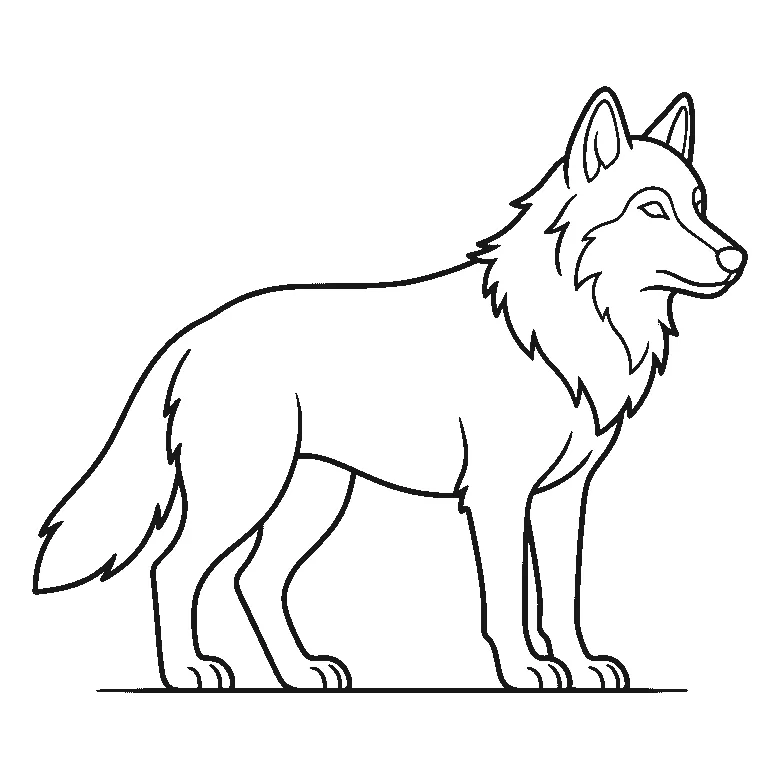
Wolf colouring page
A wolf in profile on a ground line, with a heavy neck ruff and a thick brush tail, printable free at A4.
Colouring outline drawn by us.
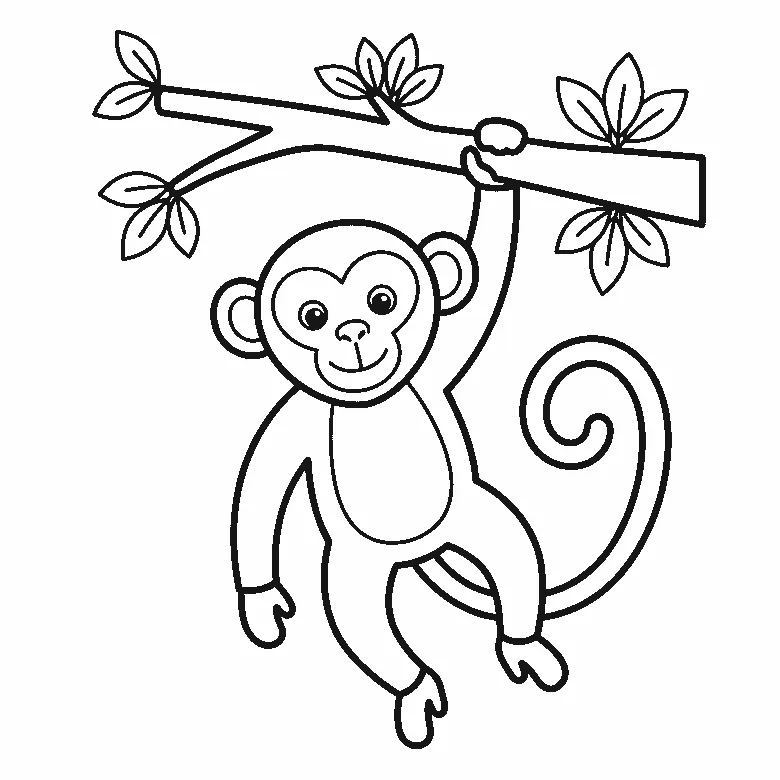
Monkey colouring page
A monkey swinging one-handed from a leafy branch with its tail curled into a spiral, free to print on A4.
Colouring outline drawn by us.
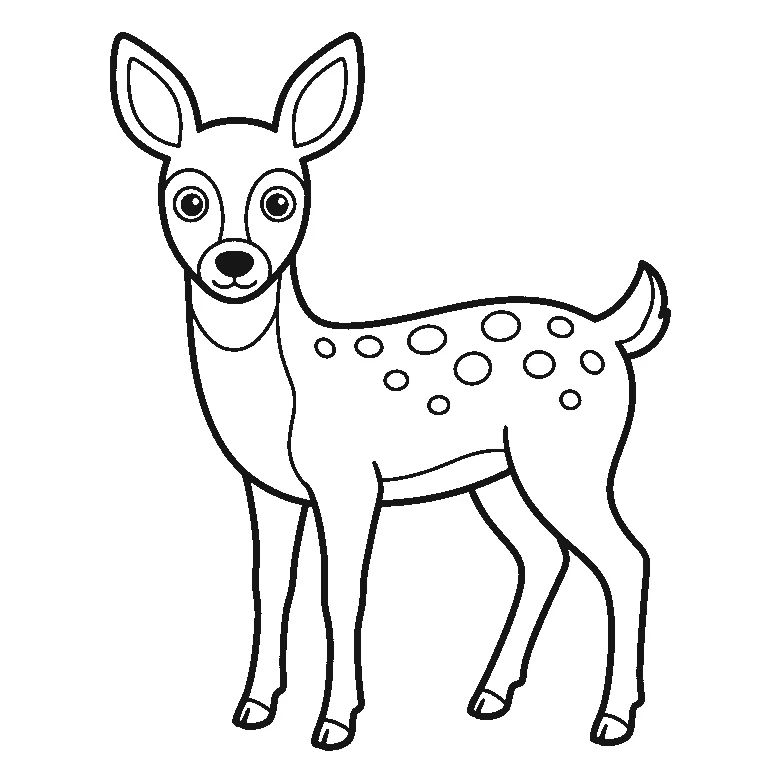
Deer colouring page
A young spotted fawn in profile, head turned forward, with rows of oval spots along the flank to fill one by one.
Colouring outline drawn by us.
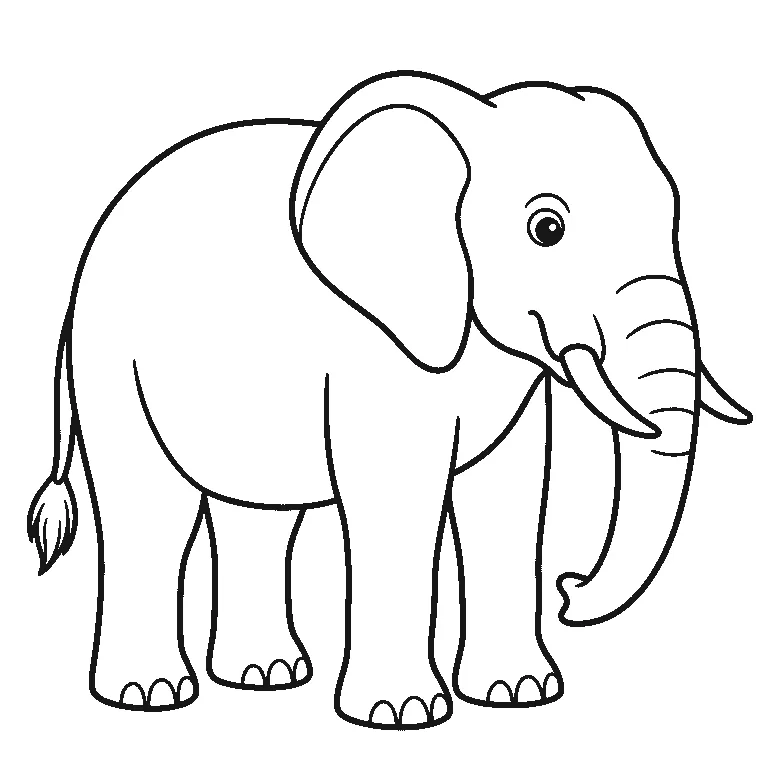
Elephant colouring page
An elephant in profile with a wide ear, two short tusks and a curling trunk, drawn in broad areas that fill fast.
Colouring outline drawn by us.
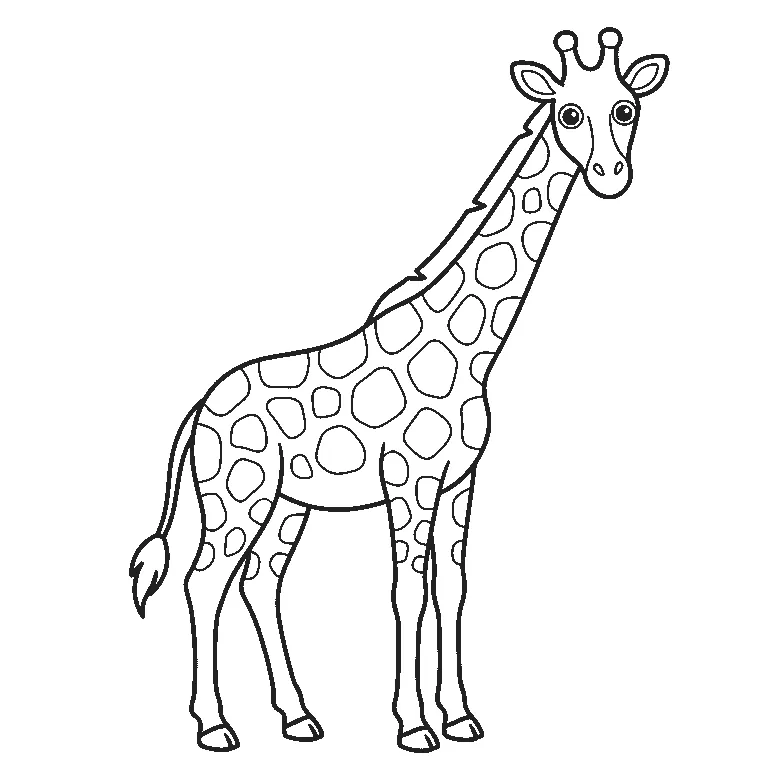
Giraffe colouring page
A tall giraffe in profile, patched from cheek to hoof, with dozens of small rounded shapes to colour one at a time.
Colouring outline drawn by us.
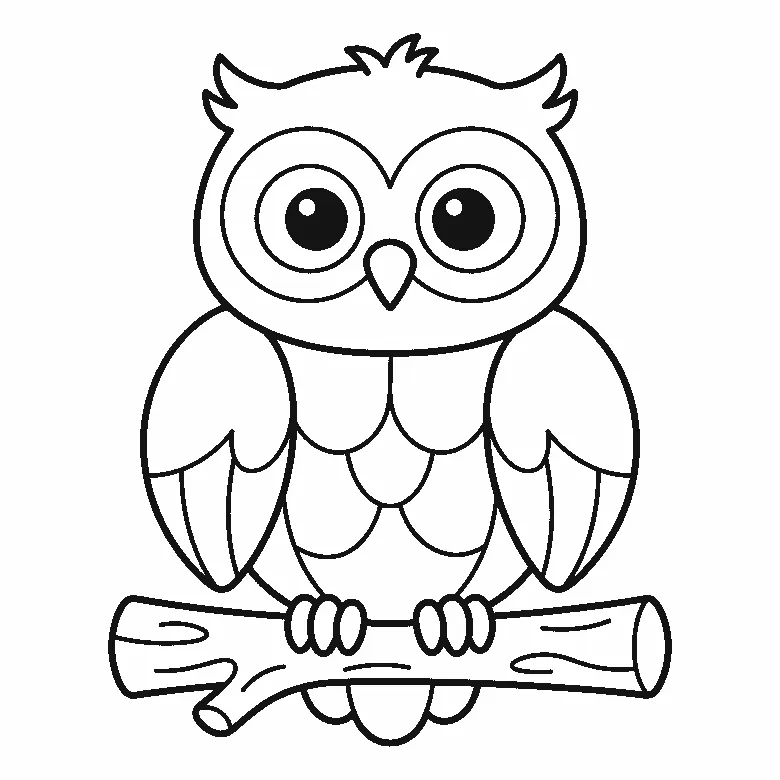
Owl colouring page
A front-facing owl on a thick branch, with two big round eyes and rows of wing feathers to fill in.
Colouring outline drawn by us.
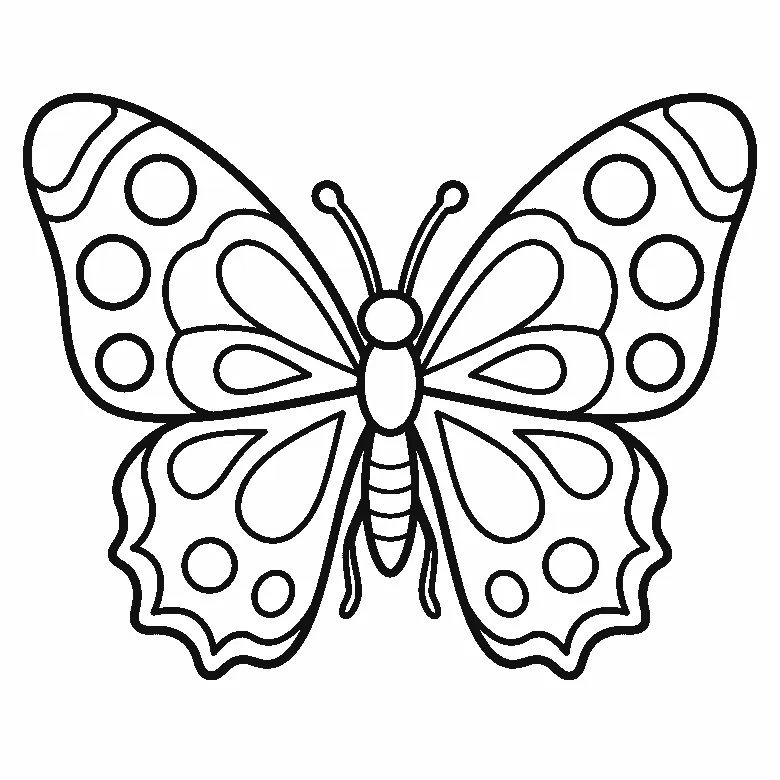
Butterfly colouring page
Wide open wings patterned in circles and teardrops, symmetrical enough to colour one half at a time.
Colouring outline drawn by us.
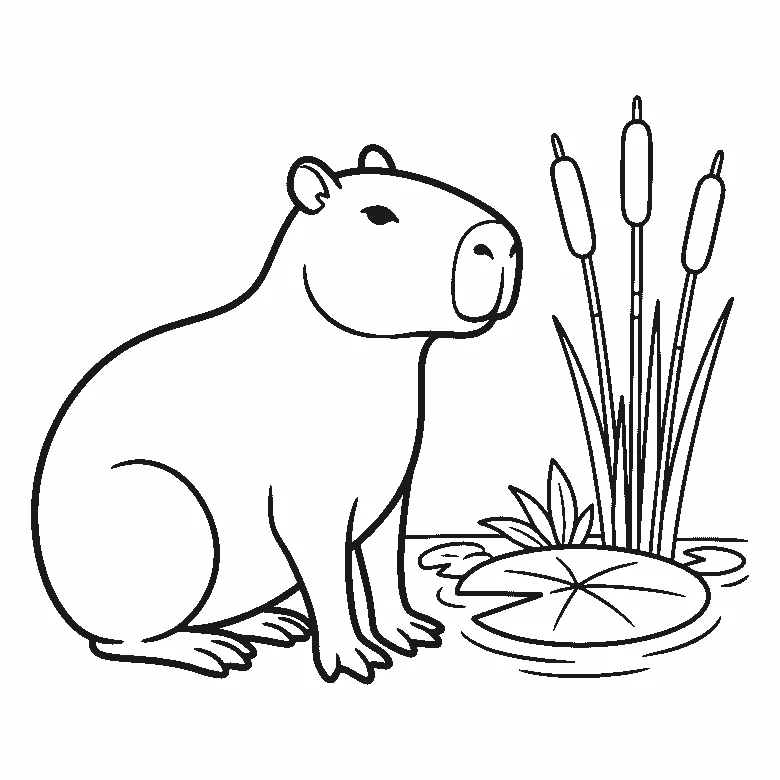
Capybara colouring page
A capybara sitting at the water's edge beside a lily pad and three bulrushes, in plain black outlines.
Colouring outline drawn by us.


