
PDF · A4 · 11 KB · Free, no sign-up. For home and classroom use.
Lion colouring page
One lion in profile with a full ruffled mane, ready to print on plain A4 paper and colour.
The lion stands in profile, facing the left edge of the page, so you see one side of him: a single eye, one visible ear set into the fur, and four legs in a standing pose. The mane is the largest shape on the sheet, a ruffled collar of overlapping locks that circles the head and spills down over the chest and shoulders. Behind the body the tail runs out in a long curve and finishes in a tuft. Everything is drawn in black outline on white, with no shading and no background scenery to work around.
Most of the work here is in the mane. It is broken into dozens of pointed locks, each one closed off by its own line, which means you can treat it as many small areas rather than one enormous one. Filling every lock the same flat tone is a perfectly good result. Alternating two close tones, one lock and then the next, gives the ruffled edge some depth without any blending at all. If you want the mane to look like it is catching light on one side, keep the locks near the top of the head lighter and let the ones under the jaw go darker.
The body, by contrast, is wide and mostly empty. The flank, the haunch and the upper legs form one continuous field with only a few interior lines, and it is the easiest part of the page to cover quickly. Small shapes are the opposite problem: the eye, the nose, the mouth line, the toes and the tuft at the end of the tail are all tight, and pressing hard inside them tends to push pigment past the outline. A sharpened pencil and light pressure hold those corners better than a blunt tip and force.
Crayon covers the flank fast and leaves a waxy texture that suits fur, though it skips over the narrowest locks in the mane. Coloured pencil is the safest choice for the whole page, since it layers and lets you build the mane up in passes. Markers give the strongest, flattest fill and make the black outline pop, but on thin paper the ink soaks through, and the mane's many small cells are hard to keep even. A gel pen is worth having on hand for the whiskers and the tail tuft, where a fine tip does more than a broad one.
Real lions run to sand and straw tones, with the mane darker than the coat and sometimes nearly black around its edge, so a tan body with a deep brown or rust mane is the true-to-life route. Nothing on the sheet requires it. The separate locks make an obvious place for a full spectrum, one colour per lock, and the body takes a single flat colour just as well in blue or green as in gold. The eye is small enough that whatever you put in it becomes the lion's expression, so choose it last, once the rest of the head is down.
A mane belongs to male lions, so the maned animal on this sheet is a male. The brush at the end of the tail is real and a little unusual: most cats have a tail that simply tapers, while a lion's finishes in a distinct tuft of longer hair. Lions live in groups rather than alone, and their roar carries a long way across open ground. None of that has to change how you colour the sheet, but it explains why the drawing gives this animal a heavy collar of fur and a tail that ends in a point of its own.
Print it on plain A4 paper at actual size rather than fit-to-page, so the mane keeps its full width and the thin gaps between locks do not close up. If markers are the plan, load the tray with the heaviest paper the printer will take, or slide a spare sheet underneath to catch what comes through. Two copies side by side let two people work on the same lion at once and compare where they took the fur. A second print is also useful insurance if the first attempt at the mane goes darker than you meant it to.
Finished, the sheet has an obvious centre of gravity in the head, which makes it easy to trim close around the mane and mount the whole animal on a folded card sheet or a folder cover. Taped to a window, a flat body colour glows and the dark mane holds its shape against the light. The line work on this drawing is packed into a single region: the flank and legs are carried by a few long curves and the tail runs out in one sweep to its tuft, while the lion concentrates nearly everything else in the fur around the face.
Before you print
- Colour the mane's locks in two close tones, alternating, to get depth without any blending.
- Save the single eye until the head is finished, since it sets the whole expression.
- Keep a sharp point for the tail tuft and the toes; a blunt crayon rides straight over those narrow shapes.
- Start on the flank, the biggest open field on the page, while your pencil is still long.
- Slide a scrap sheet under the page if you use markers, so the mane's ink does not print onto the table.
Published Updated 805 words
More in this section
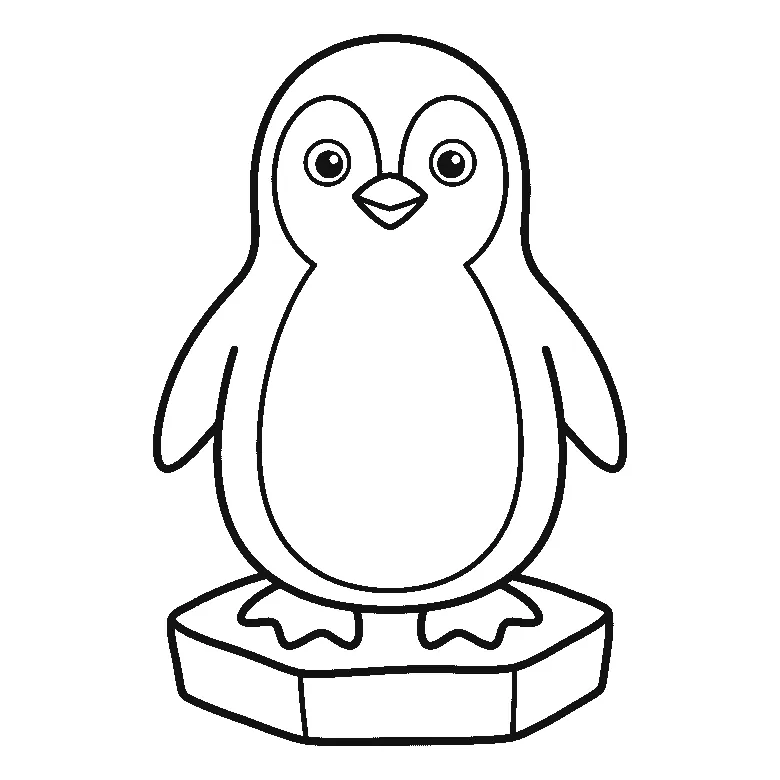
Penguin colouring page
A penguin standing on a block of ice, drawn in a few big shapes that fill fast with any medium.
Colouring outline drawn by us.
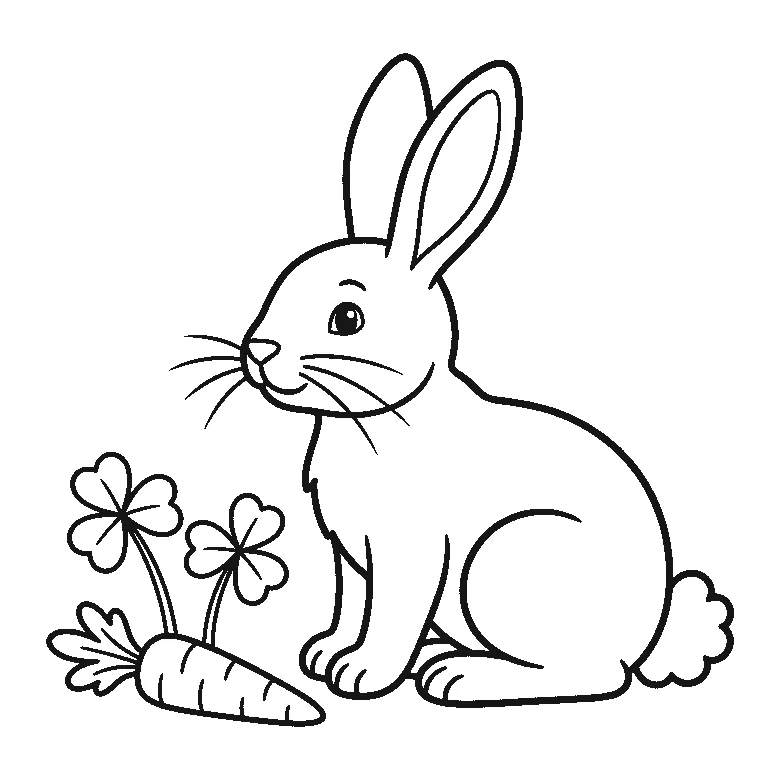
Rabbit colouring page
A sitting rabbit with tall ears, whiskers and a fluffy tail, plus a carrot and two clover flowers.
Colouring outline drawn by us.
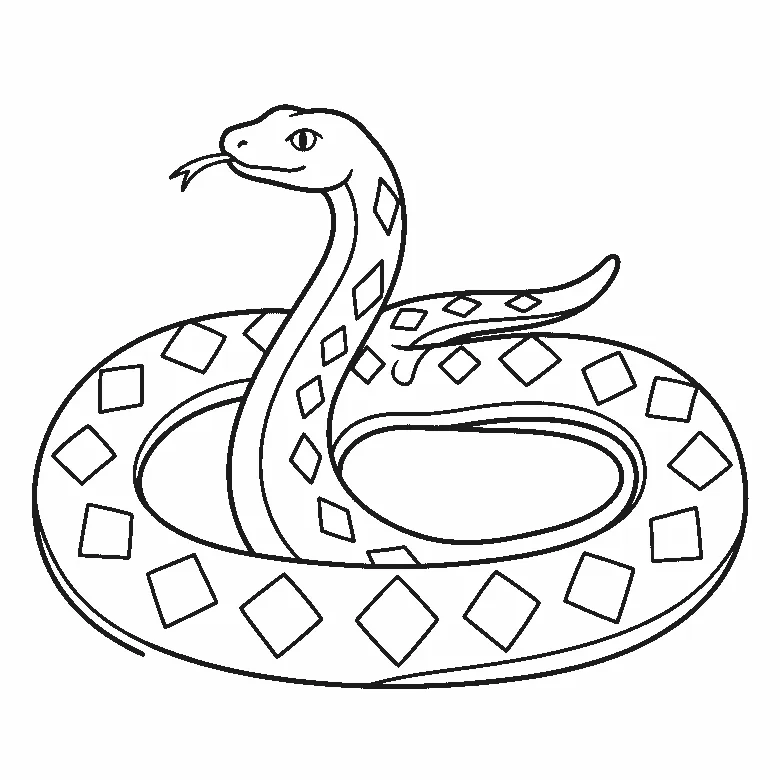
Snake colouring page
A coiled snake with a raised head, forked tongue, and a row of big diamonds down its back, free to print on A4.
Colouring outline drawn by us.
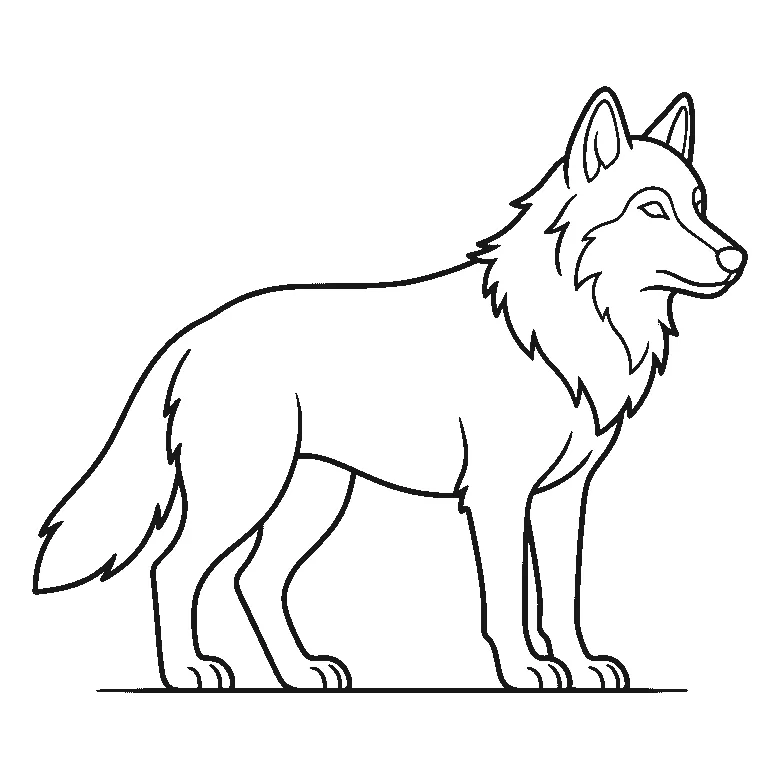
Wolf colouring page
A wolf in profile on a ground line, with a heavy neck ruff and a thick brush tail, printable free at A4.
Colouring outline drawn by us.
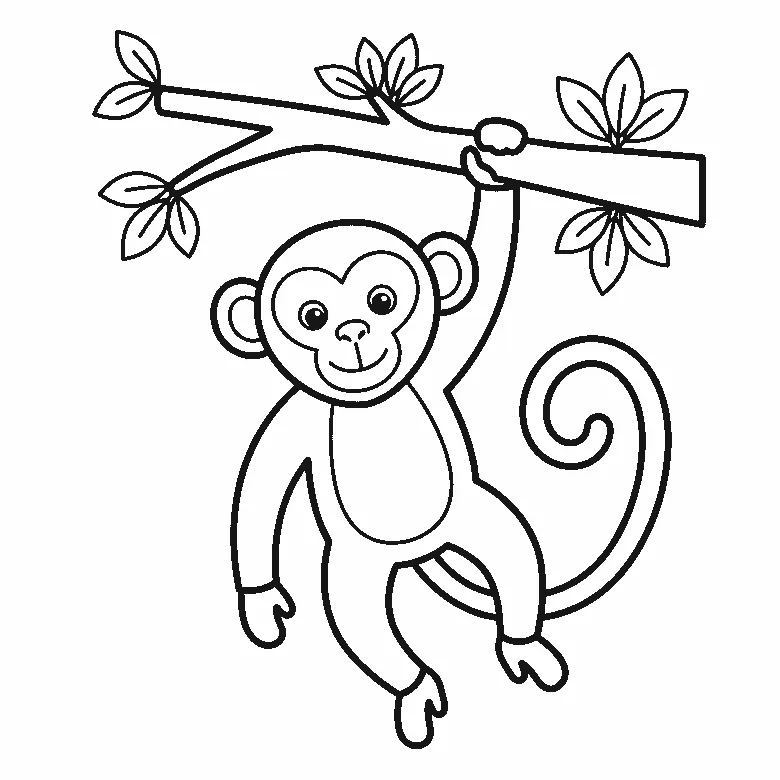
Monkey colouring page
A monkey swinging one-handed from a leafy branch with its tail curled into a spiral, free to print on A4.
Colouring outline drawn by us.
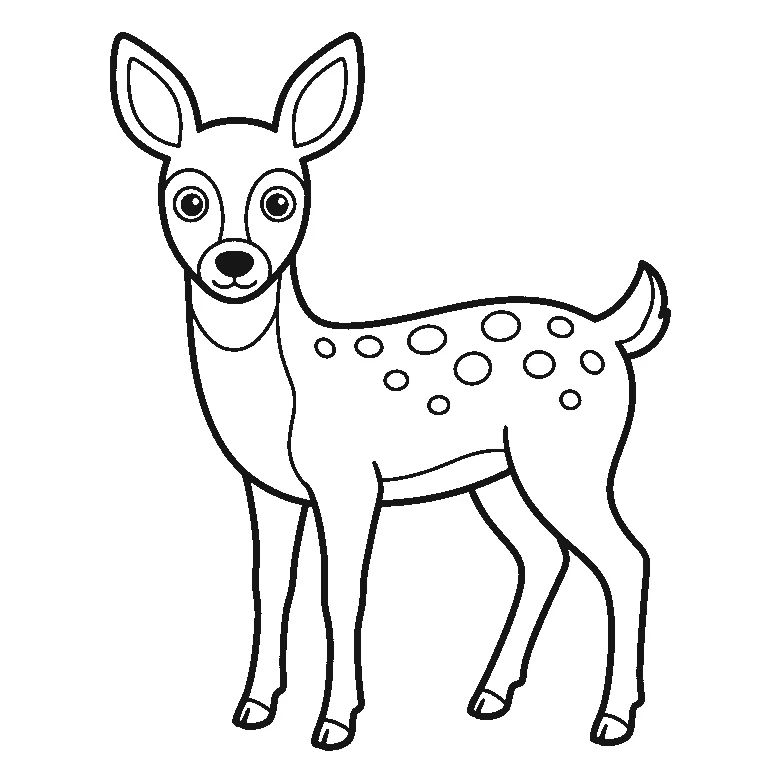
Deer colouring page
A young spotted fawn in profile, head turned forward, with rows of oval spots along the flank to fill one by one.
Colouring outline drawn by us.
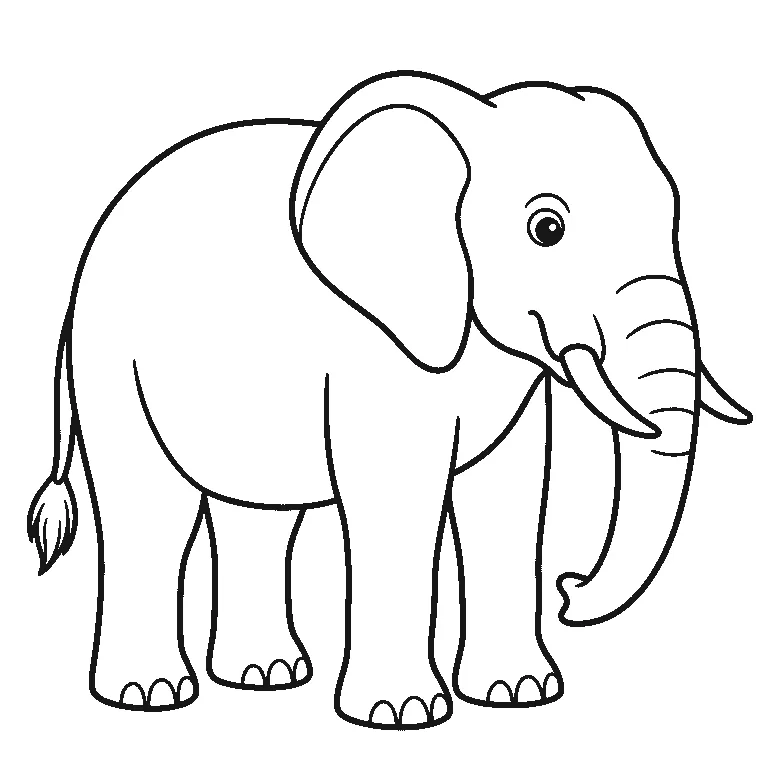
Elephant colouring page
An elephant in profile with a wide ear, two short tusks and a curling trunk, drawn in broad areas that fill fast.
Colouring outline drawn by us.
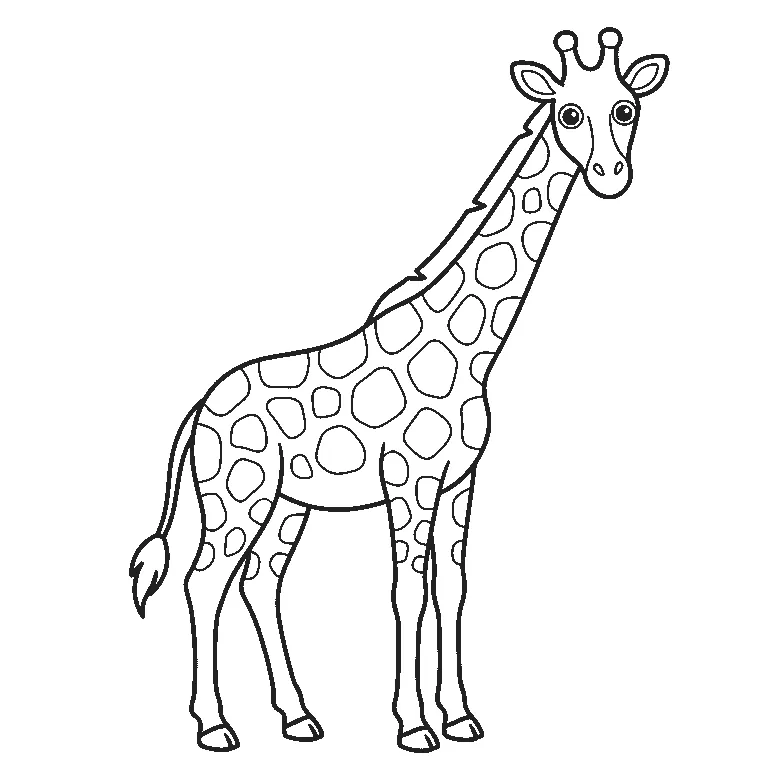
Giraffe colouring page
A tall giraffe in profile, patched from cheek to hoof, with dozens of small rounded shapes to colour one at a time.
Colouring outline drawn by us.
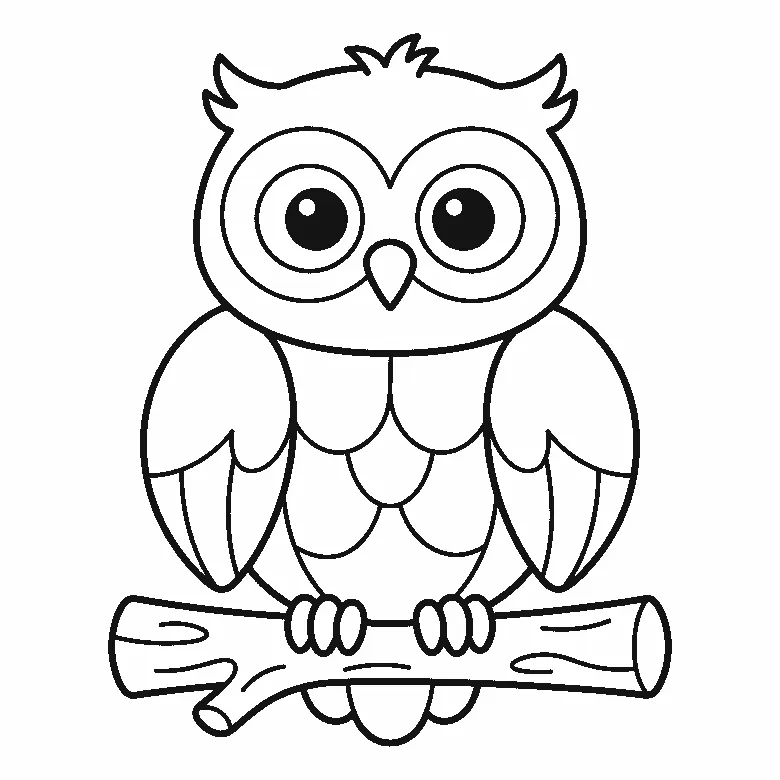
Owl colouring page
A front-facing owl on a thick branch, with two big round eyes and rows of wing feathers to fill in.
Colouring outline drawn by us.
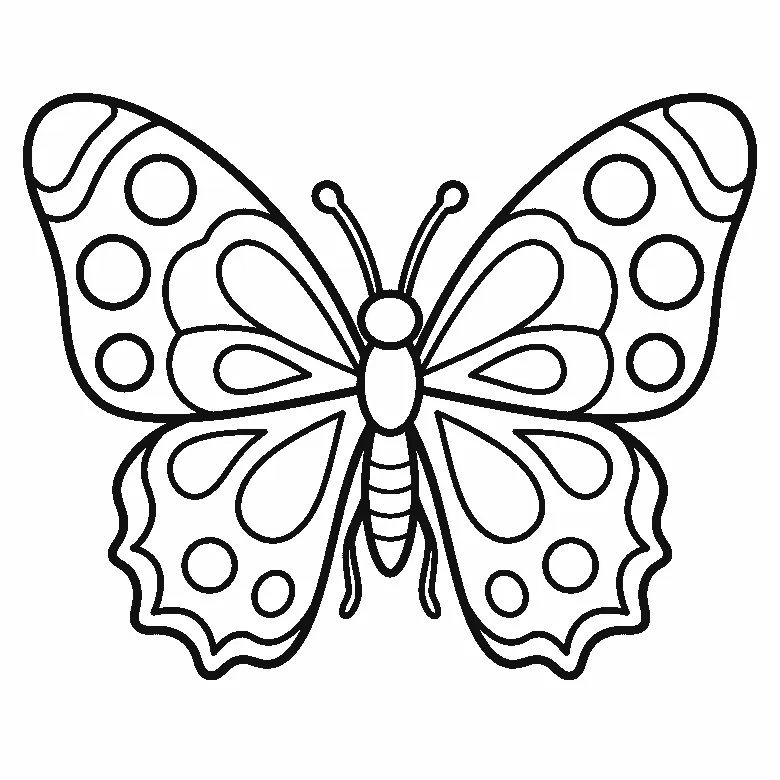
Butterfly colouring page
Wide open wings patterned in circles and teardrops, symmetrical enough to colour one half at a time.
Colouring outline drawn by us.
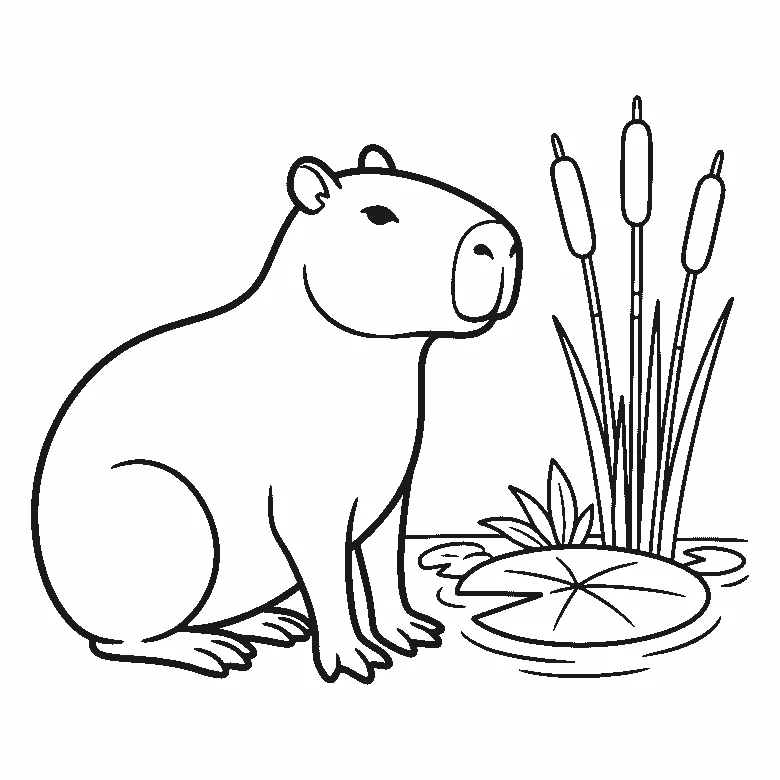
Capybara colouring page
A capybara sitting at the water's edge beside a lily pad and three bulrushes, in plain black outlines.
Colouring outline drawn by us.
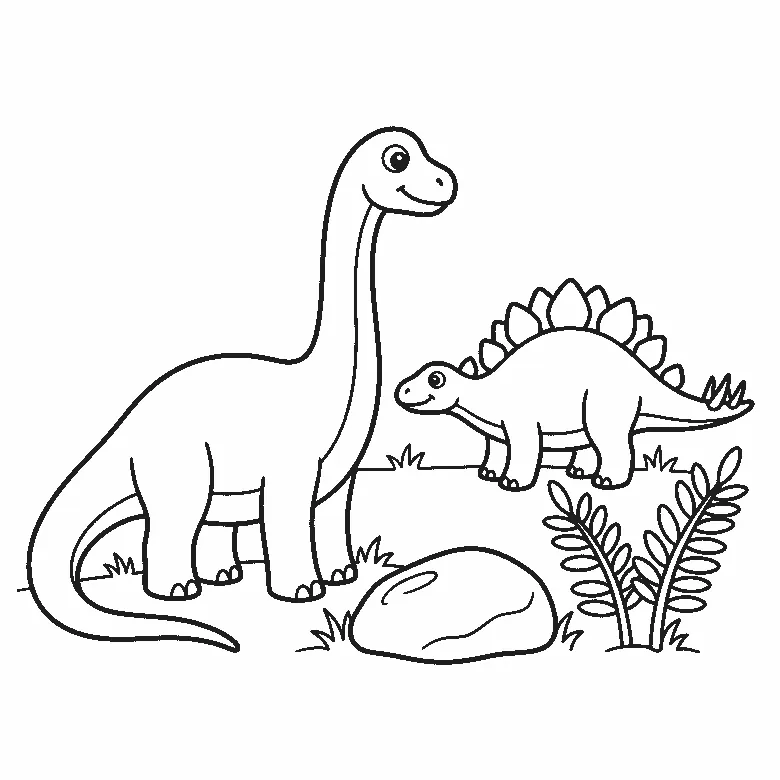
Dinosaur colouring page
Two dinosaurs, a boulder, a fern and tufts of grass in black outline, ready to print on A4 paper.
Colouring outline drawn by us.


