
PDF · A4 · 13 KB · Free, no sign-up. For home and classroom use.
Rabbit colouring page
A sitting rabbit with tall ears, whiskers and a fluffy tail, plus a carrot and two clover flowers.
Three things share this page. The rabbit sits in profile at the centre, two tall ears rising above the head, one eye visible, long whiskers sweeping forward from the muzzle and a round fluffy tail at the back. Beside it lies a carrot with its leafy top still attached. Two clover flowers stand nearby on their stems. Every shape is a black outline on white, and there is no ground line, so the three objects sit together on the paper as a small arrangement rather than a scene.
The ears are the natural place to begin. Each one is drawn with an inner shape set inside the outer edge, which hands you a two-tone ear for free: something soft and pink or warm grey inside, the coat colour outside. Once both ears are settled, the head and body follow as one large field, and the tail can stay almost bare, since a fluffy tail reads best when it is lighter than everything touching it. The carrot and the clover come last, as accents against an animal that is already finished.
The whiskers are the most fragile part of the drawing. They are long single lines running out past the muzzle into open white, and any colour stroked over them at speed will bury them. Work around each one, or bring the muzzle colour up to the whisker line and stop there. The eye is a small closed shape and is best filled slowly. The clover flowers are built from many little rounded lobes, and heavy pressure flattens those outlines until a flower turns into a blob, so keep a light hand across both of them.
Coloured pencil is the most forgiving tool for this sheet, because the coat looks better built from several light passes than from one heavy one, and a pencil point can be steered around the whiskers. Crayon works for the body and the carrot but is too wide for the clover lobes. A fine marker suits the carrot's flat orange and the green of the stems, where a solid block of colour is exactly what you want. If you own a white gel pen, light strokes drawn back over a coloured tail can lift a little texture out of the flat fill, and the round tail is the shape on this page with room for it.
Rabbits come in white, grey, brown, black and mixtures of those, so almost any muted colour is already believable, and the inside of the ear is usually pinker than the coat. The carrot has an obvious answer, orange root and green top, and the clover an equally obvious one. That is also a reason to consider breaking it: putting the two props in unlikely shades separates them from the rabbit rather than letting them merge into it. A blue rabbit beside a blue carrot still holds together.
A rabbit's ears are long, thin and carried upright, and they turn to catch sound from behind without the animal having to move. The short round tail sits high on the back and shows as a pale puff when the rabbit moves away from you. Clover is genuinely something rabbits eat, along with grasses and other leafy plants, so the two flowers here are more than decoration. A carrot is a root, not the leafy growth a rabbit would meet above ground, which is why the drawing keeps the green top attached: that is the part that would be visible.
Print at actual size on plain A4 paper so the whiskers survive; reduced on the page they thin out until the printer starts dropping pieces of them. If markers are the plan, heavier stock keeps the carrot's solid orange from bleeding into the rabbit's flank, since those two shapes nearly touch. Running two copies is worth it here for a particular reason: with three subjects on one page you can try a realistic coat with recoloured props on one print, and reverse the idea on the other.
Cut out, the rabbit and its two companions become three separate pieces, which is useful if you want to glue them onto card and set the spacing between them yourself. Left whole, the page works on a fridge door or as the front of a folder, with the tall ears filling the upper half. This sheet does not leave the rabbit alone on the paper; a carrot and two clover flowers are set beside it, and each one wants its own decision, so there is more to plan before the first colour goes down.
Before you print
- Colour the inner ear lighter or pinker than the outer ear; the drawing already gives you the separate shape.
- Stop your strokes at the whiskers instead of crossing them, or they vanish under the muzzle colour.
- Leave the round tail lighter than the body so it still reads as fluff.
- Keep the pressure light inside the clover lobes; hard strokes close the small gaps between them.
- Do the carrot and clover after the rabbit, so their colours answer the coat rather than compete with it.
Published Updated 758 words
More in this section
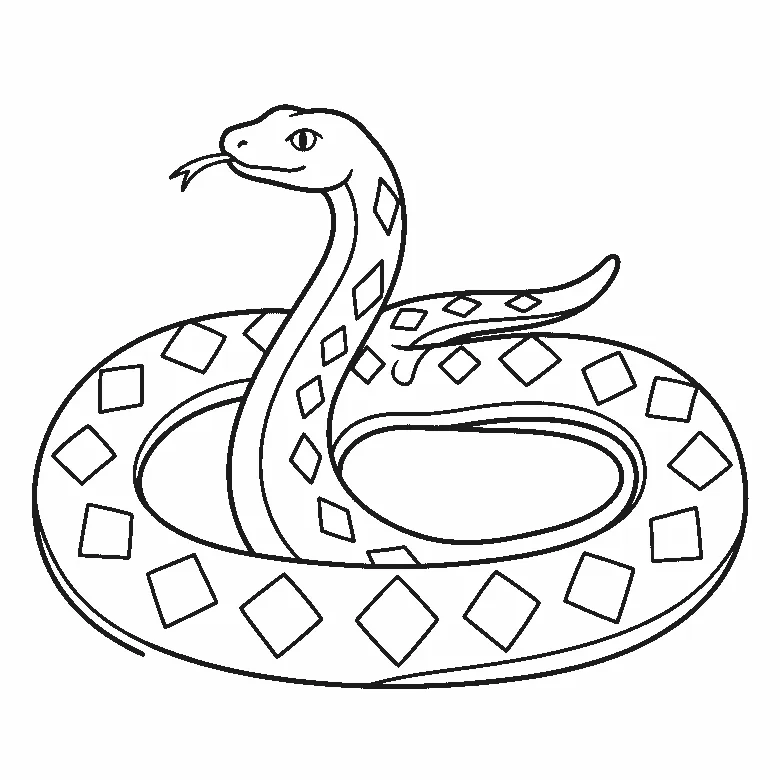
Snake colouring page
A coiled snake with a raised head, forked tongue, and a row of big diamonds down its back, free to print on A4.
Colouring outline drawn by us.
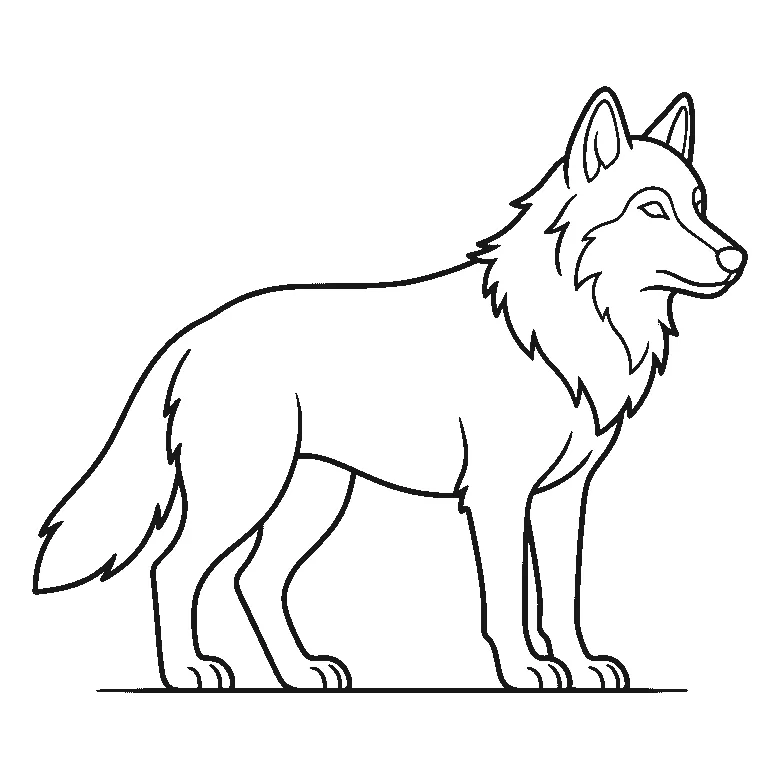
Wolf colouring page
A wolf in profile on a ground line, with a heavy neck ruff and a thick brush tail, printable free at A4.
Colouring outline drawn by us.
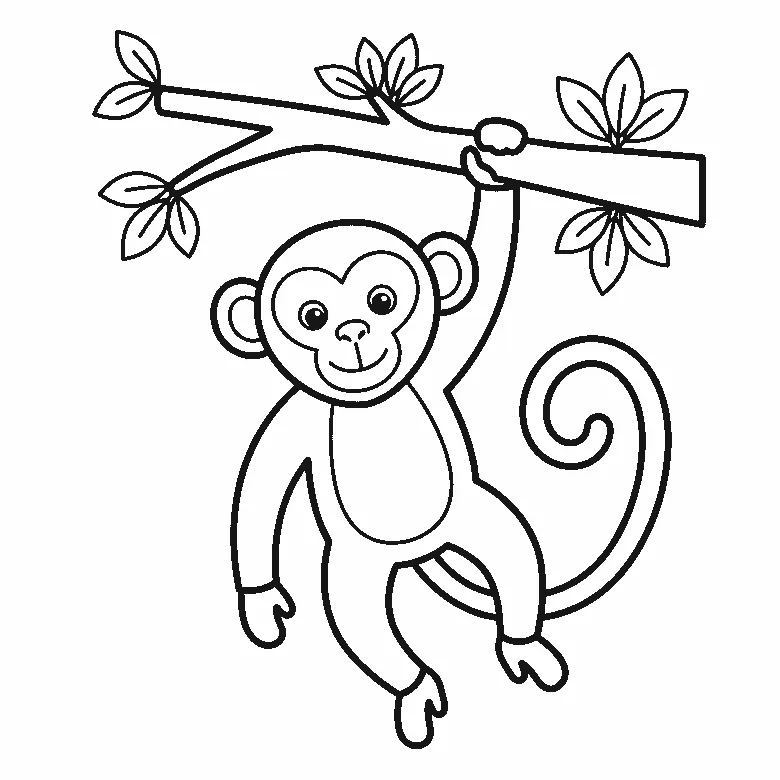
Monkey colouring page
A monkey swinging one-handed from a leafy branch with its tail curled into a spiral, free to print on A4.
Colouring outline drawn by us.
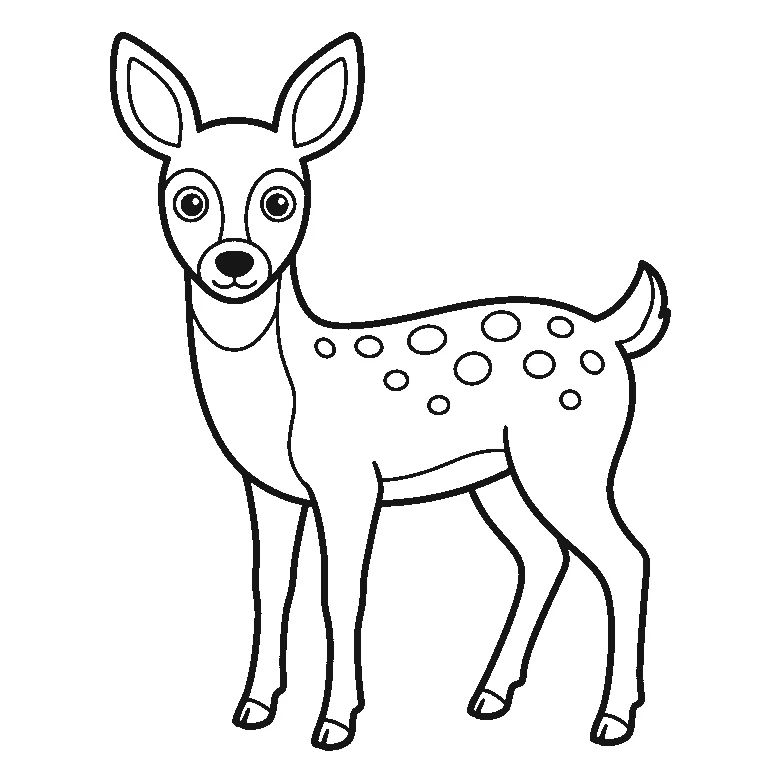
Deer colouring page
A young spotted fawn in profile, head turned forward, with rows of oval spots along the flank to fill one by one.
Colouring outline drawn by us.
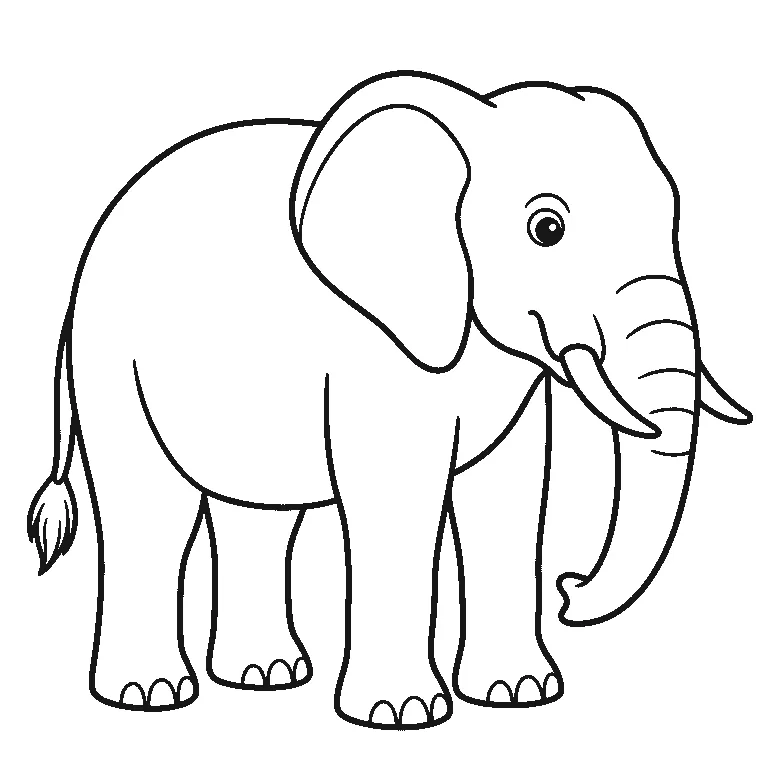
Elephant colouring page
An elephant in profile with a wide ear, two short tusks and a curling trunk, drawn in broad areas that fill fast.
Colouring outline drawn by us.
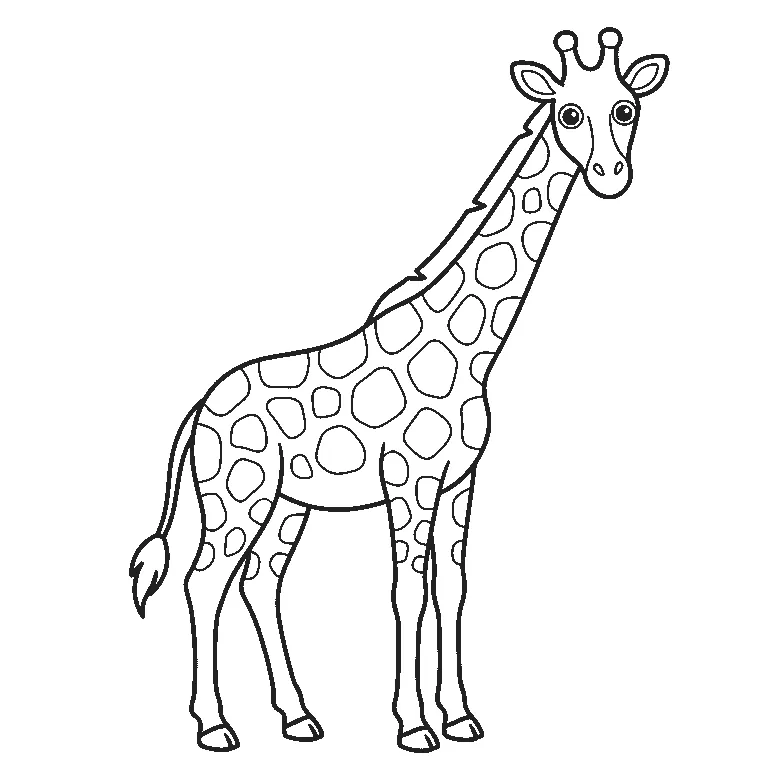
Giraffe colouring page
A tall giraffe in profile, patched from cheek to hoof, with dozens of small rounded shapes to colour one at a time.
Colouring outline drawn by us.
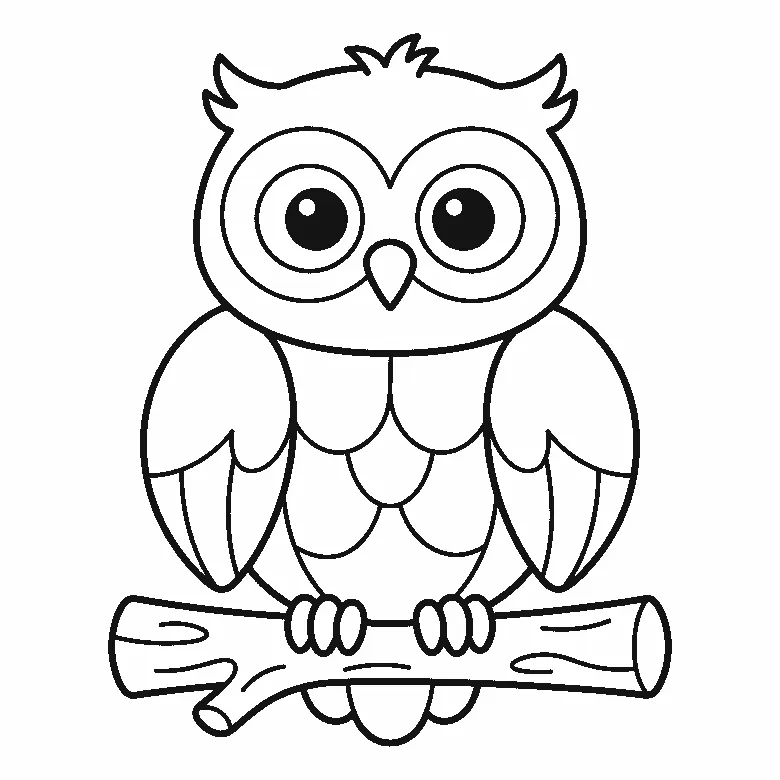
Owl colouring page
A front-facing owl on a thick branch, with two big round eyes and rows of wing feathers to fill in.
Colouring outline drawn by us.
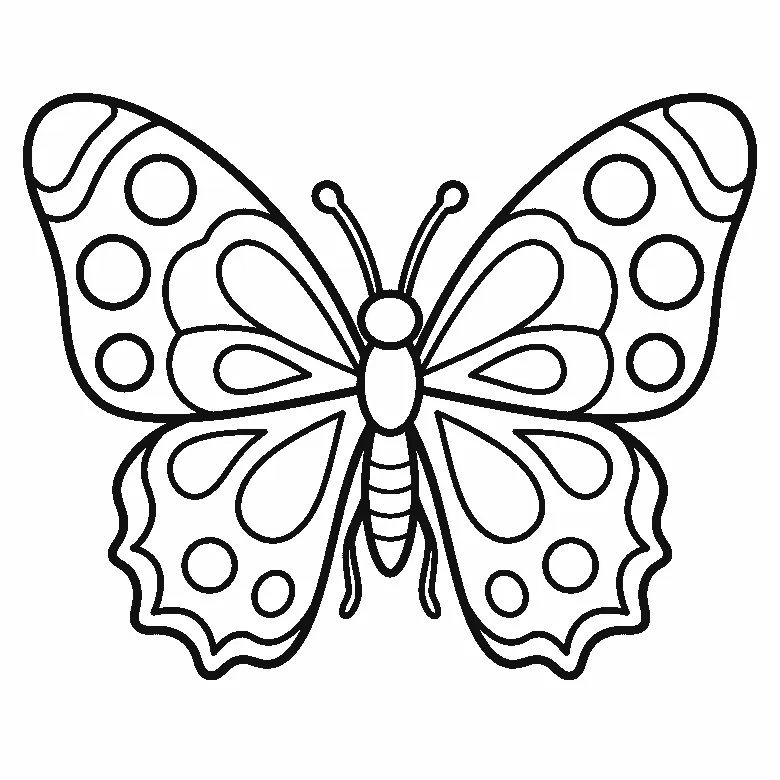
Butterfly colouring page
Wide open wings patterned in circles and teardrops, symmetrical enough to colour one half at a time.
Colouring outline drawn by us.
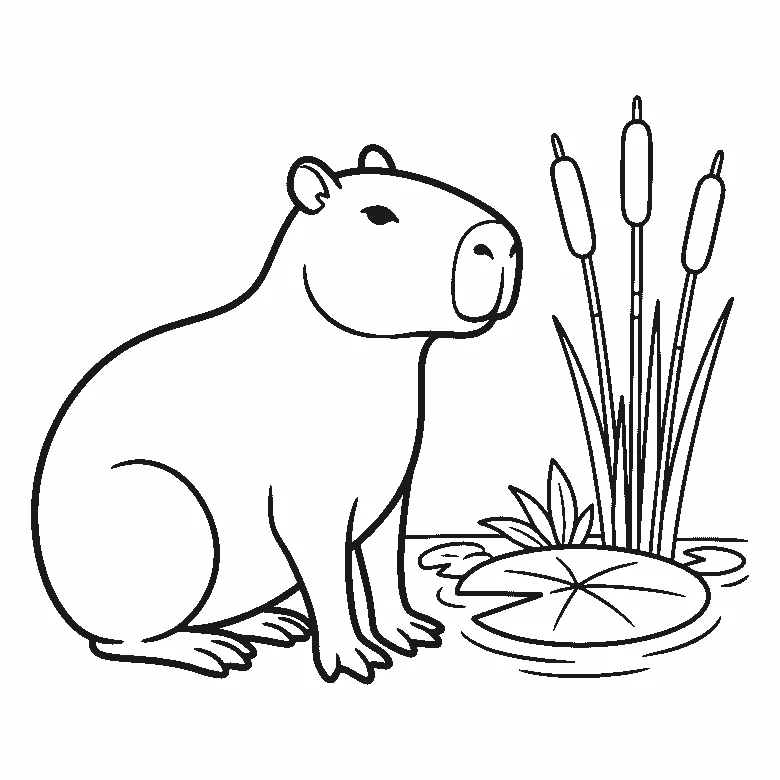
Capybara colouring page
A capybara sitting at the water's edge beside a lily pad and three bulrushes, in plain black outlines.
Colouring outline drawn by us.
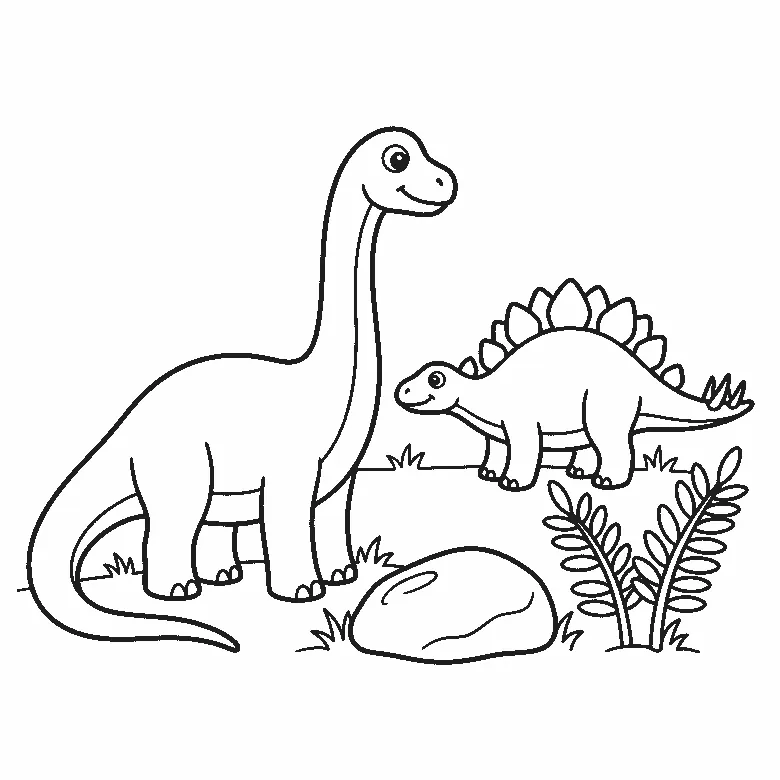
Dinosaur colouring page
Two dinosaurs, a boulder, a fern and tufts of grass in black outline, ready to print on A4 paper.
Colouring outline drawn by us.
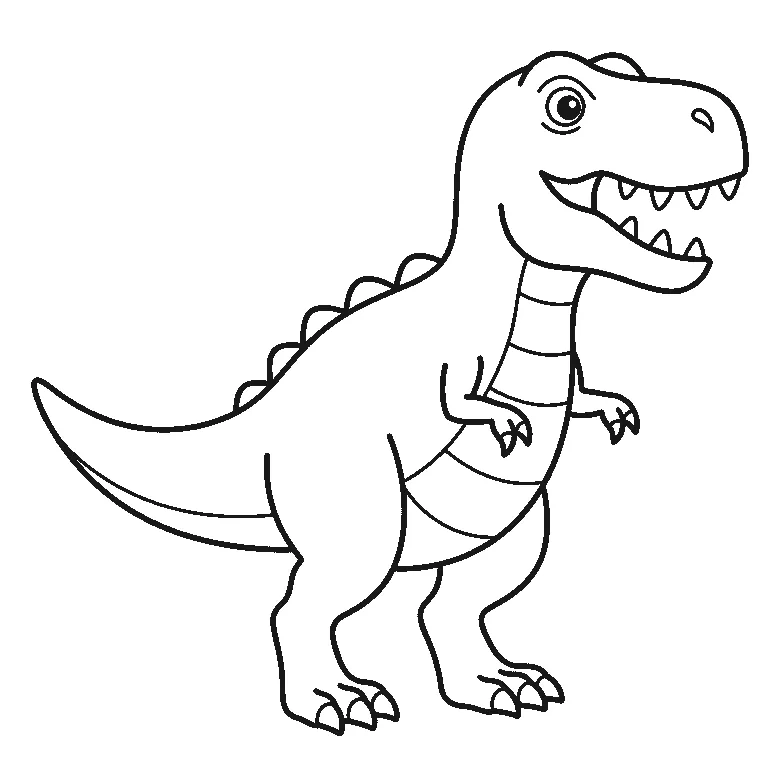
T. rex colouring page
A T. rex in profile with an open mouth, pointed teeth, small arms and a long tail, on plain white.
Colouring outline drawn by us.
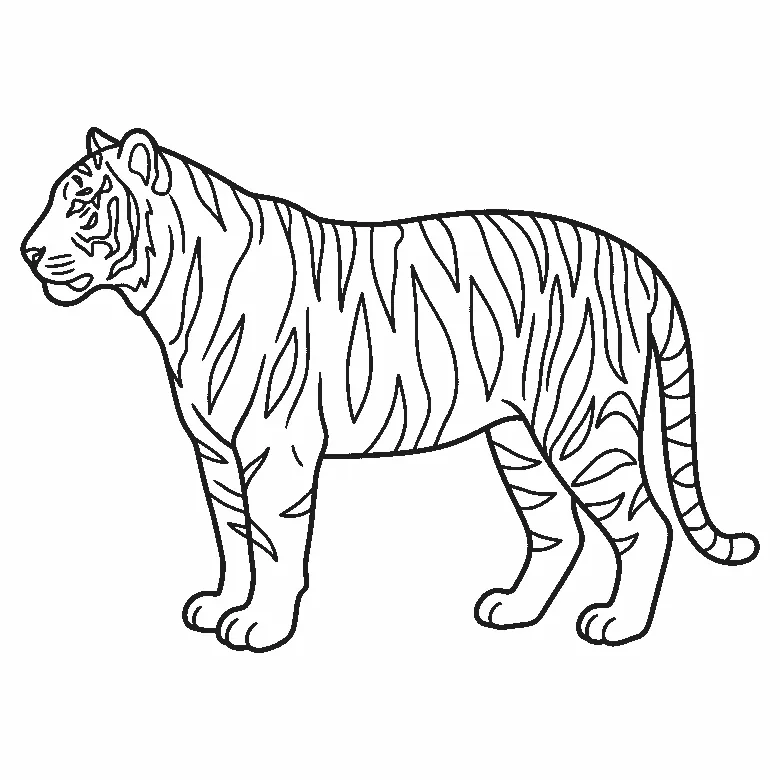
Tiger colouring page
One tiger standing in profile with every stripe drawn as a closed shape you can colour inside.
Colouring outline drawn by us.


