Food
Ice cream, fruit, a cut layer cake and a bubble tea — small subjects with big open shapes to fill in.
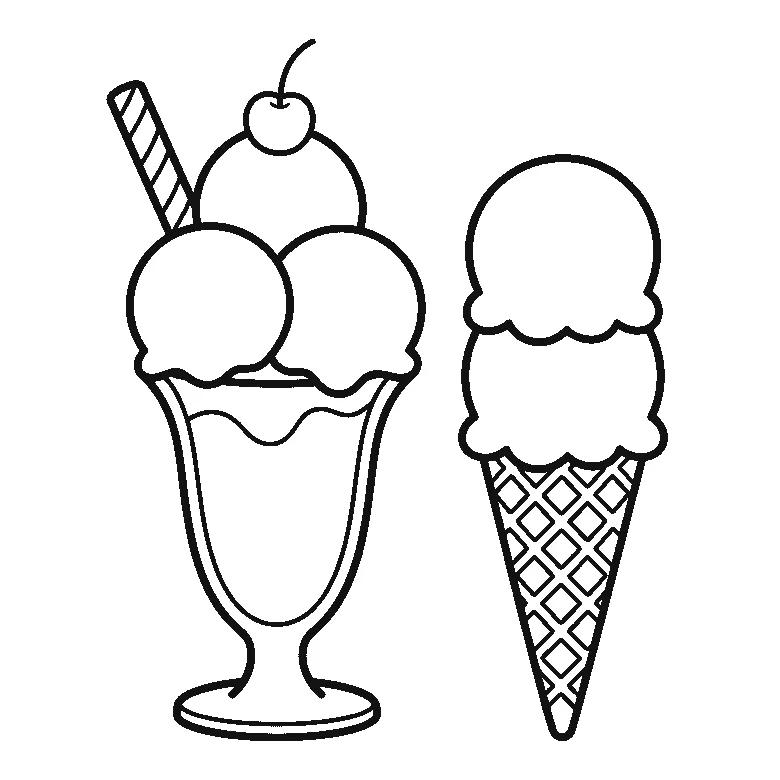
Ice cream colouring page
A tall sundae glass with three scoops and a cherry beside a two-scoop waffle cone, on one printable A4 sheet.
Colouring outline drawn by us.
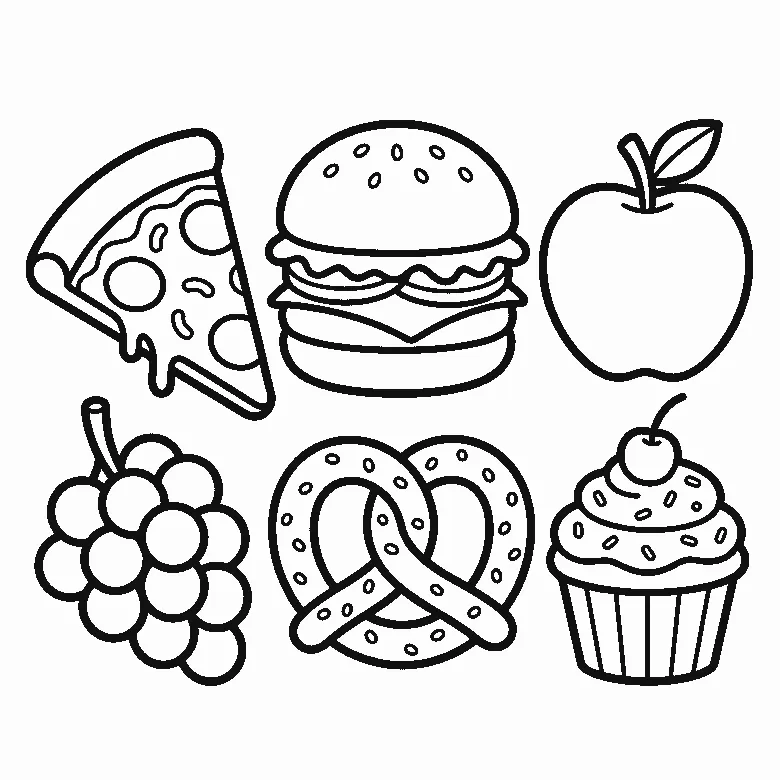
Food colouring page
Six foods in two rows, from a pizza slice to an iced cupcake, drawn as thick black outlines on an A4 sheet.
Colouring outline drawn by us.
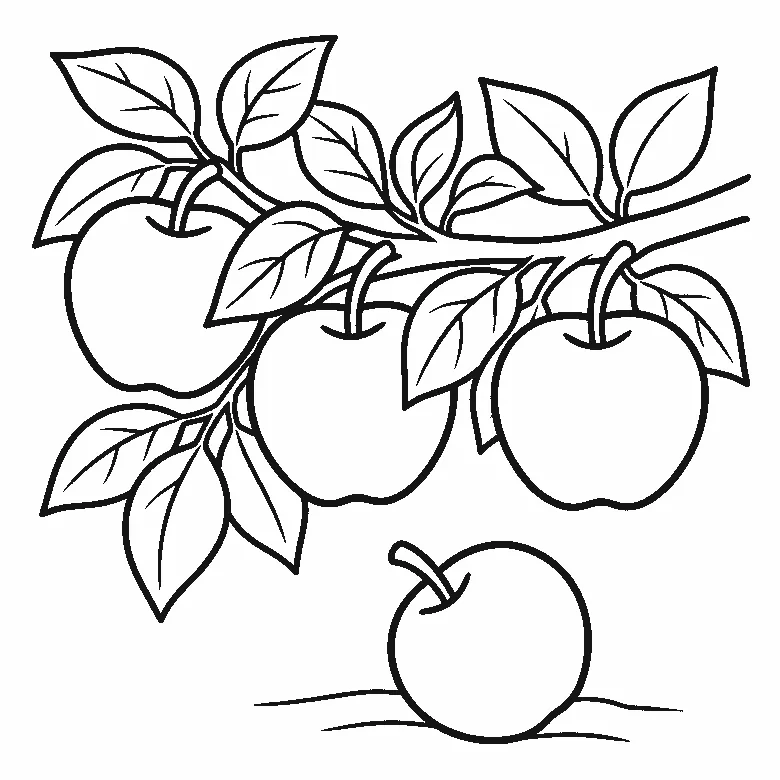
Apple colouring page
Three apples on a leafy branch and one on the ground, in thick outlines sized for crayons.
Colouring outline drawn by us.
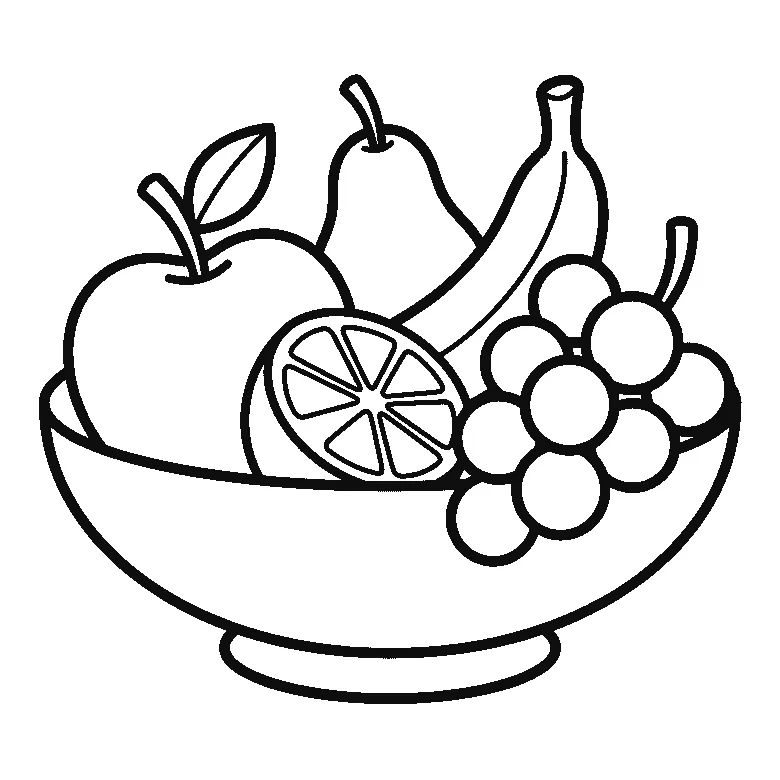
Fruit colouring page
A wide bowl holding an apple, a pear, a banana, half an orange and a bunch of grapes, all in open outline.
Colouring outline drawn by us.
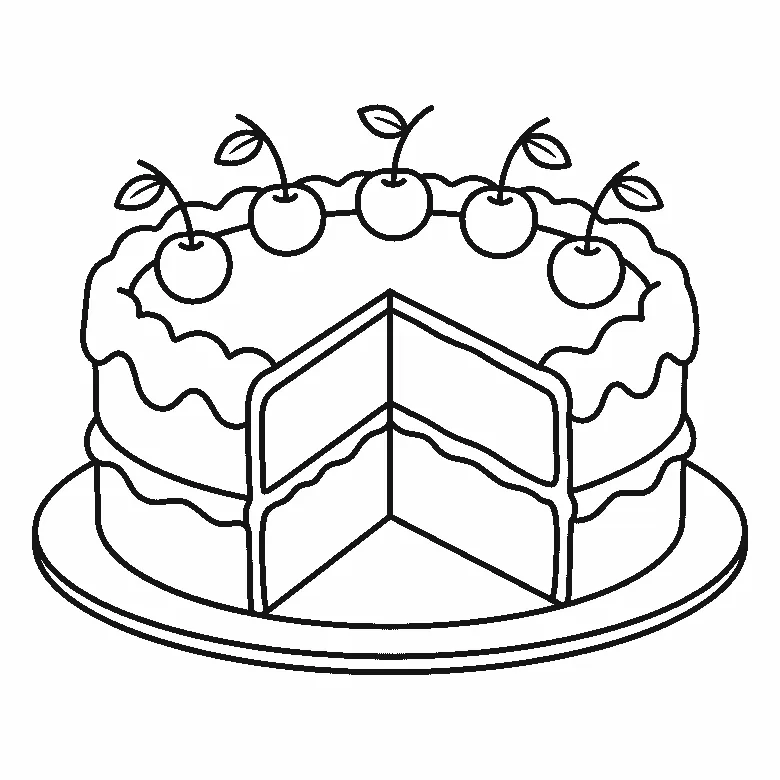
Cake colouring page
A two-layer cake on a plate with one wedge already cut out, a dripping icing border and five cherries.
Colouring outline drawn by us.
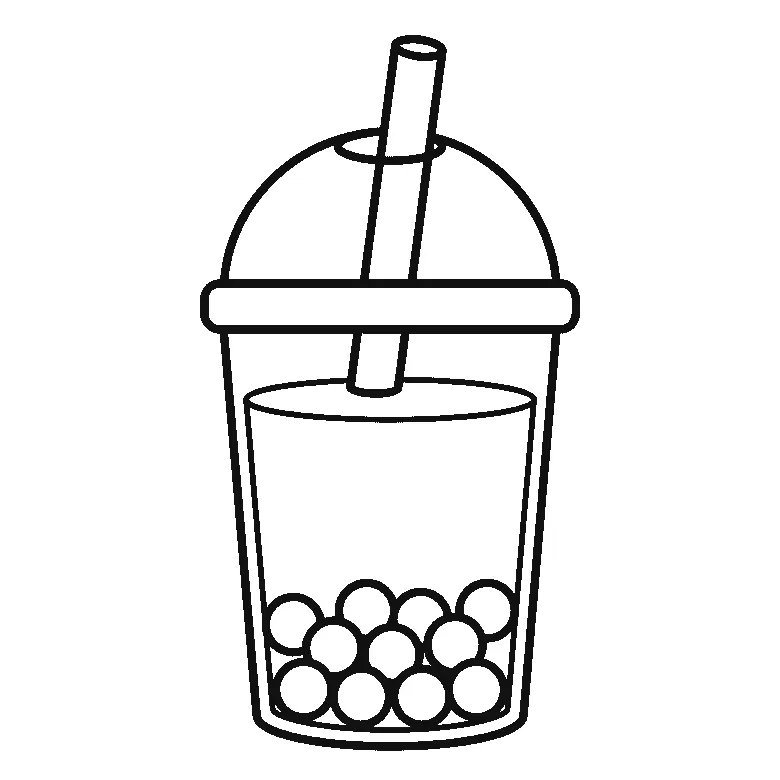
Bubble tea colouring page
A tall cup with a domed lid, a wide straw and a heap of round pearls filling the bottom.
Colouring outline drawn by us.


Every sheet in the food section takes a different bite of the same idea. There is an ice cream sheet, a plate-of-food sheet, a single apple, a fruit sheet with more than one thing on the paper at once, a layer cake with a wedge cut out of it, and a bubble tea in a lidded cup. None of them asks for a landscape or a crowd. They are close-up subjects drawn large, which is why the outlines enclose so much open room. If someone is picking a first sheet from anywhere on this site, this section is a reasonable place to start looking.
Pick by how much sorting you want to do before the first stroke. The apple asks for one decision and then stops: one subject, one stem end, one broad curved body, and it is finished long before patience runs out. The fruit sheet asks a little more, because separate pieces sit near each other and each one can take its own colour. The plate of food is a single dish drawn large, with its contents held inside one rim. The ice cream sheet lands in the middle, since the shapes stack rather than spread.
The cake and the bubble tea sit at opposite ends of that range. The cake is a page with a cut in it: one wedge has been taken out, and the gap shows two sponge layers and the filling between them as flat faces, which is a cross-section nobody normally gets to colour. The bubble tea is mostly one enormous open field of drink with a heap of small round pearls crowded into the bottom quarter, so a single sheet holds a very large empty area and a crowd of very small circles at the same time.
Big open areas change what a colouring tool does. A wide unbroken curve is where a crayon looks best, laying down a slightly uneven, waxy field that reads as texture rather than as a mistake. A marker floods the same area flat and even, which covers a broad shape in one pass and leaves no visible grain. A coloured pencil can go either way depending on how many passes are laid over each other, and layering two shades over a rounded shape is the simplest way to make it look like it has a lit side and a shaded side.
Thin printer paper and markers do not get along. Ink pushes through and prints a ghost of the sheet onto whatever is underneath, so put a spare sheet under the page or print onto heavier card if markers are the plan. Pencils and crayons have no such problem and are the safer default for a stack of sheets coloured on a kitchen table. Gel pens are worth saving for small interior details rather than for the wide areas, where they run dry and streak before the shape is covered.
Real food gives a starting palette, and the section is easy to work realistically: apples come in reds, greens and yellows, and often more than one of those on the same fruit; citrus runs orange or yellow with a paler segmented interior; an ice cream scoop can honestly be almost any colour, since flavours are not restricted to one part of the spectrum. That said, nothing here has to look edible. A blue apple and a green scoop are perfectly good outcomes, and the outline does not object.
A few plain things about these subjects are worth knowing while filling them in. An apple has a stem at one end and a small dry blossom scar directly opposite it, so the two ends of the shape are not identical. Many fruits are built in wedges around a centre, which is why a cut face looks like a wheel. Ice cream is frozen and softens as it sits, so a scoop drawn with a slumping edge is drawn accurately rather than drawn wrong. The filling in a layer cake is what holds the two sponges apart at an even thickness, which is why the cut face shows three bands and not one.
Print on plain A4 paper at actual size rather than letting the print dialogue scale the page to fit. Scaling shrinks the drawing, thins the outlines, and leaves a wider white margin than the sheet was laid out for. If two people are going to colour the same subject, print two copies and compare them at the end, since the same outline treated with different colours stops looking like the same picture surprisingly fast. A third copy is useful for testing a colour choice before committing to it.
Finished food sheets have an obvious home. They look right taped inside a kitchen cabinet door, stuck on a fridge, or trimmed and glued to the front of a card. The fruit sheet cuts apart neatly if the individual pieces are wanted separately, and a coloured apple makes a small flat ornament once it has a hole punched in the top. The subjects on these sheets are still and rounded, held in long unbroken outlines with little fine detail inside them, which leaves wide areas to simply fill.
Published Updated 6 sheets861 words