
PDF · A4 · 15 KB · Free, no sign-up. For home and classroom use.
Owl colouring page
A front-facing owl on a thick branch, with two big round eyes and rows of wing feathers to fill in.
The owl on this sheet sits square on a thick branch and looks straight out at you. Two round eyes take up most of the face, each drawn as a wide open ring with a smaller circle inside for the pupil. Below them sits a small triangular beak, and above them two ear tufts rise into points. The body is built from layered rows of wing feathers, each row a line of curved scallops, and the branch runs across the lower part of the page as a heavy horizontal bar. Nothing else competes for room, so the bird fills the sheet.
The eyes are the decision that sets the rest of the page. Leave the ring around each pupil pale and the bird reads as alert; fill it dark and the face goes heavy while the beak sinks into it. A workable order is to colour the pupils solid first, then work outward through the ring, then the feathered mask around both eyes, so the darkest value is down before anything light sits next to it. Shade the mask before the pupils and you lose your sense of how dark the darkest part still needs to be.
Each row of wing feathers is a narrow scalloped strip, and narrow strips are where a fat crayon tip starts skipping over the outline. Coloured pencil handles them better, since you can lay one direction of stroke inside each scallop and then a second lighter pass across it to build depth without crossing the black line. A marker fills a row in one stroke, but on thin paper the ink creeps under the outline and two neighbouring rows blur into one. If you want marker colour and crisp rows, run the marker across the wide chest and switch to pencil at the feather edges.
The branch is the largest single shape after the bird itself, a thick bar carrying a bark texture of short broken lines. It gives you somewhere to be careless on purpose. Scribbling brown at an angle across the whole bar, letting the stroke direction stay visible, reads as bark far better than a flat even fill does. The claws gripping it are small and closed, so keep a light touch there; a hard press in that little space flattens the toes into a single blob that no amount of later shading will separate again.
Owls face forward, which is unusual among birds, and this drawing puts that head-on stare at the centre of the page. Their eyes barely move in the socket, which is why an owl swivels its whole head to follow something across a room. The tufts standing up above the eyes are not ears at all, just feathers; the real ear openings sit hidden under the facial feathers at the sides of the head. Owl flight feathers carry soft fringed edges that muffle the sound of air passing over them, which is why the birds hunt so quietly.
Brown, tawny, buff and grey all suit an owl, and a barred pattern of two close browns across the chest looks convincing without much effort. The eyes are the one place worth committing to a strong colour, since yellow, amber or near-black each change the bird's expression completely. None of that is required. A green owl on a purple branch is exactly as finished as a brown one, and the broad flat chest is a fine place to try a colour you would never normally put on an animal.
Print it at actual size rather than letting the print dialogue scale it to fit, or the feather rows tighten up and the small shapes beside the beak become hard to reach. Plain A4 paper is enough for crayon and pencil. If markers are the plan, use the heaviest paper the printer will take and slide a spare sheet underneath so nothing soaks through onto the table. Two copies let two people colour the same owl side by side and then compare what each of them decided to do with the eyes.
A finished owl holds up well taped to a window, because those wide eyes stay readable from across a room. Cut close around the outer feather line and mounted on a darker sheet, it becomes a card front with no further work. This sheet is built around a face, and the animal section also holds a butterfly whose two halves are matched and a capybara set inside a small scene, while the owl mainly asks you to decide what one bird is looking at.
Before you print
- Colour the pupils before anything else so you can judge every lighter value against them.
- Keep crayon out of the scalloped feather rows and save it for the wide chest.
- Let your stroke direction show on the branch instead of filling it evenly.
- Press lightly around the closed claws, which are the smallest shapes on the page.
- Print two copies if you want the ear tufts done two different ways.
Published Updated 757 words
More in this section
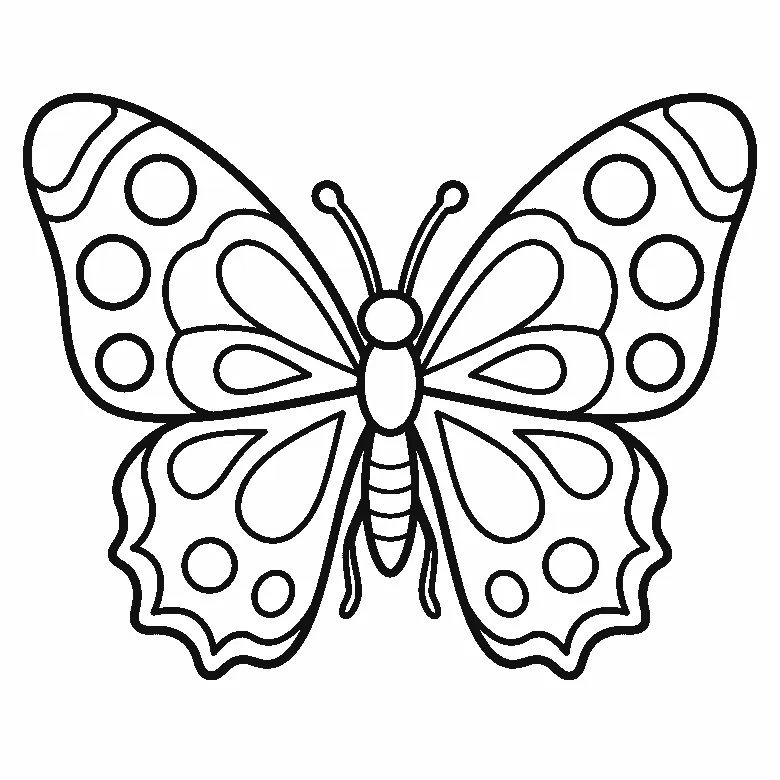
Butterfly colouring page
Wide open wings patterned in circles and teardrops, symmetrical enough to colour one half at a time.
Colouring outline drawn by us.
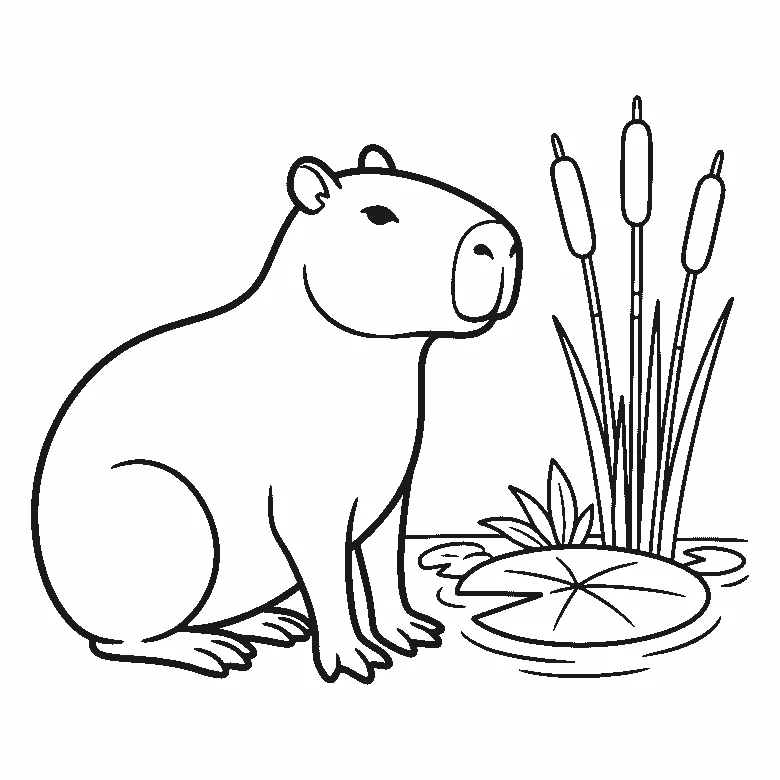
Capybara colouring page
A capybara sitting at the water's edge beside a lily pad and three bulrushes, in plain black outlines.
Colouring outline drawn by us.
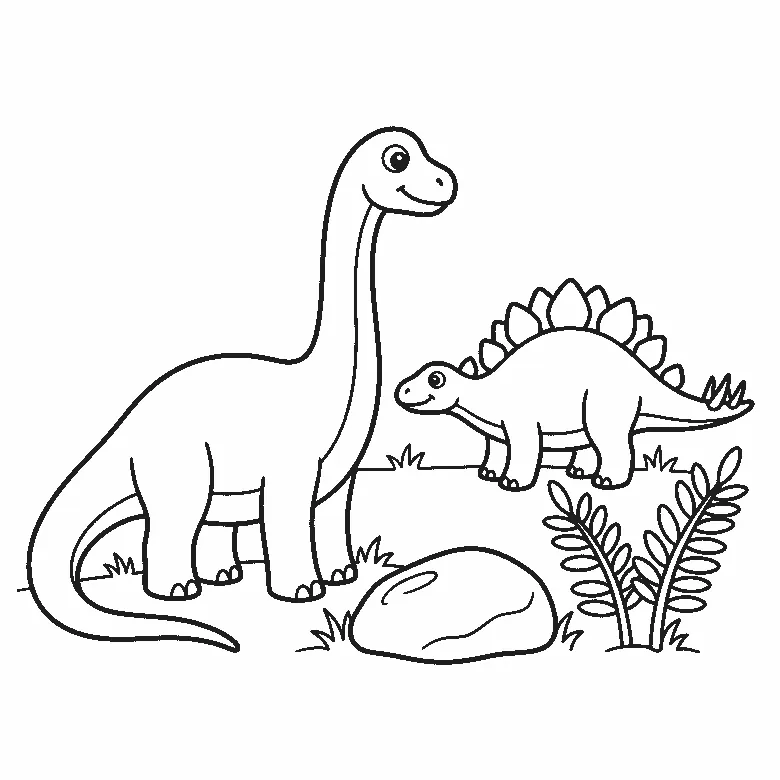
Dinosaur colouring page
Two dinosaurs, a boulder, a fern and tufts of grass in black outline, ready to print on A4 paper.
Colouring outline drawn by us.
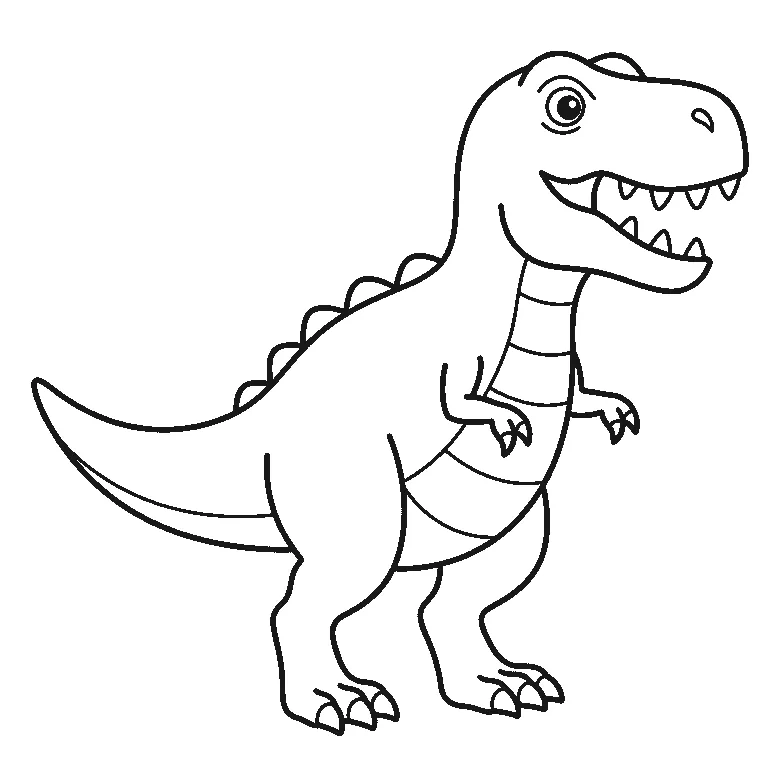
T. rex colouring page
A T. rex in profile with an open mouth, pointed teeth, small arms and a long tail, on plain white.
Colouring outline drawn by us.
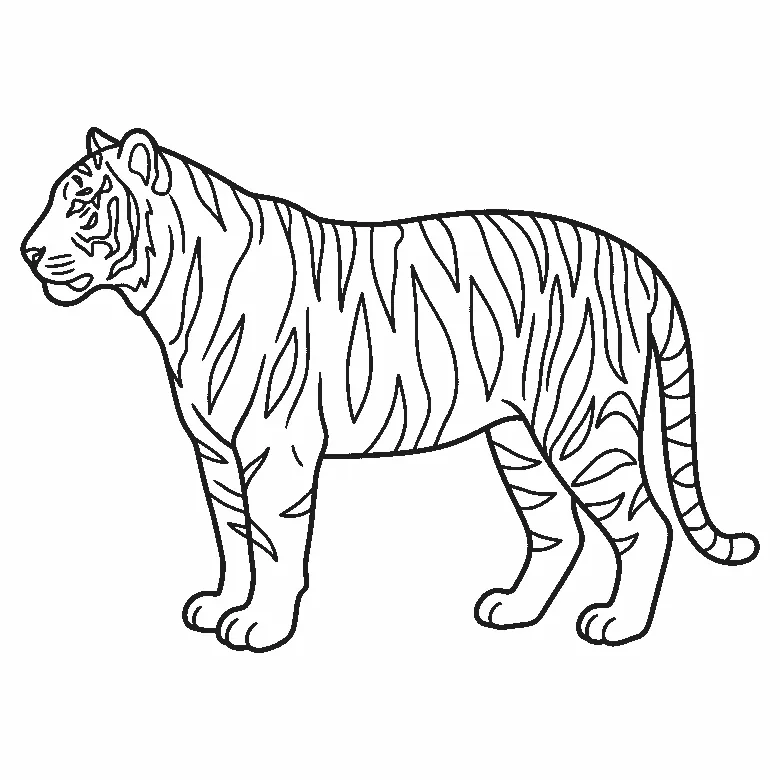
Tiger colouring page
One tiger standing in profile with every stripe drawn as a closed shape you can colour inside.
Colouring outline drawn by us.
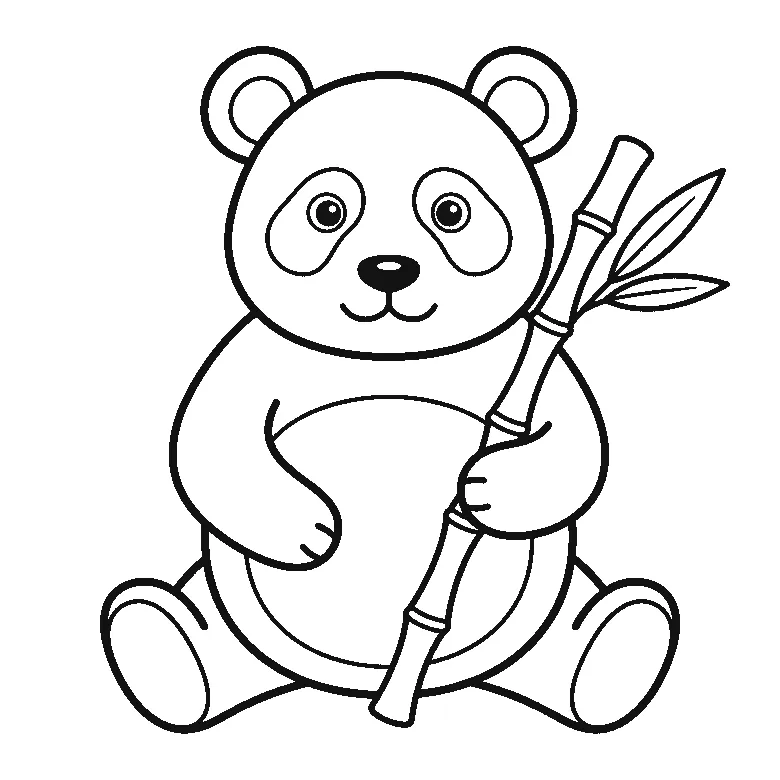
Panda colouring page
A giant panda sitting upright with a bamboo stalk, drawn as a small set of large closed shapes.
Colouring outline drawn by us.
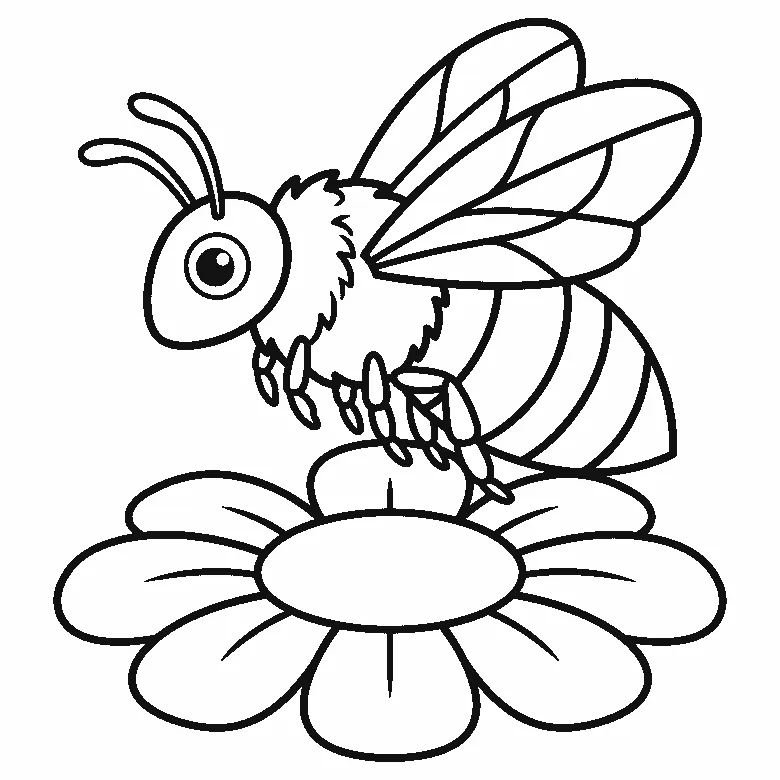
Bee colouring page
One bee on a wide flower, its body already divided into four stripe panels to fill.
Colouring outline drawn by us.
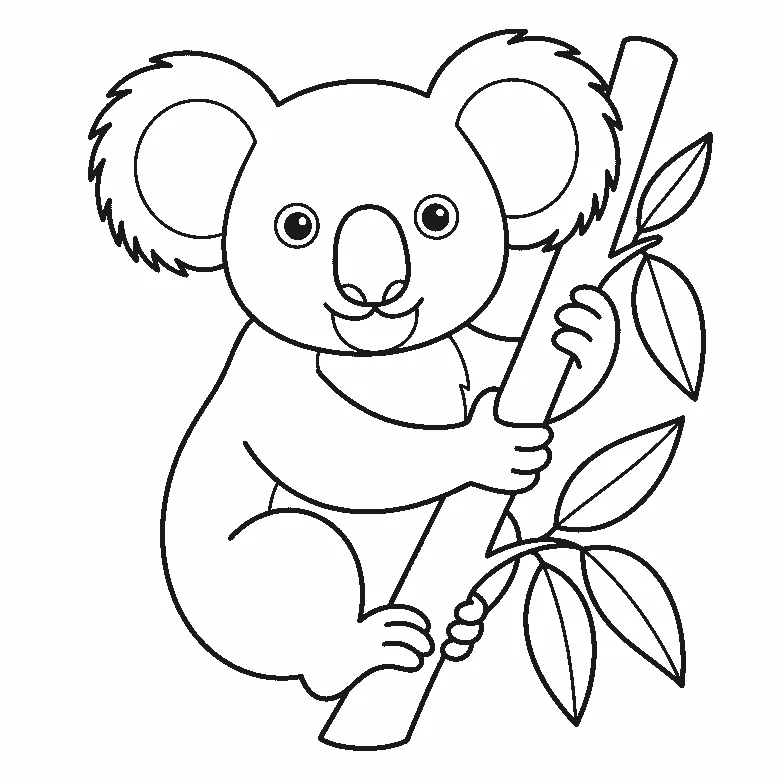
Koala colouring page
A koala hugging a eucalyptus branch, facing forward, with two very large fringed ears.
Colouring outline drawn by us.
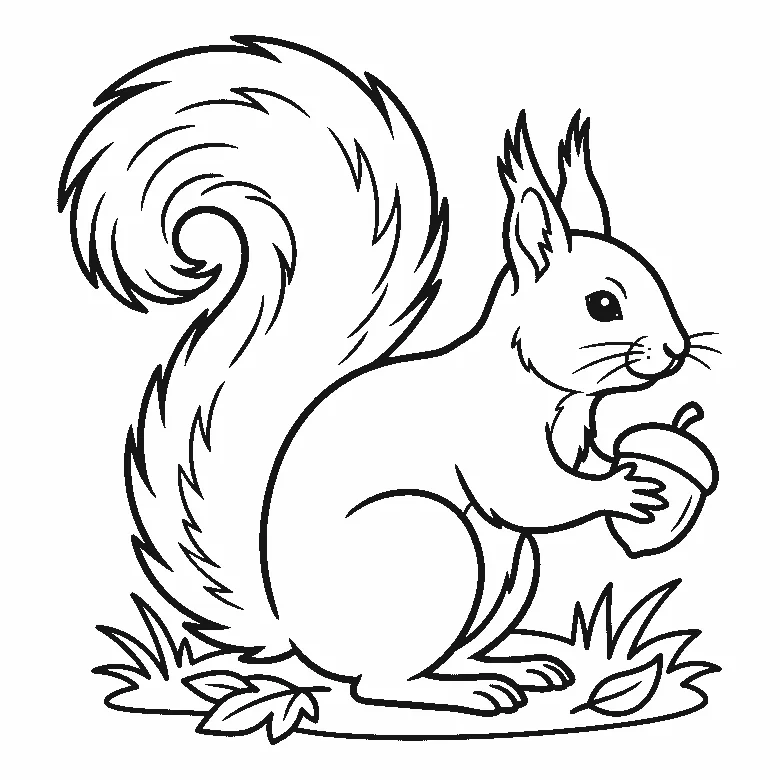
Squirrel colouring page
A squirrel in profile holding an acorn, with a very large curled tail drawn as separate strands.
Colouring outline drawn by us.
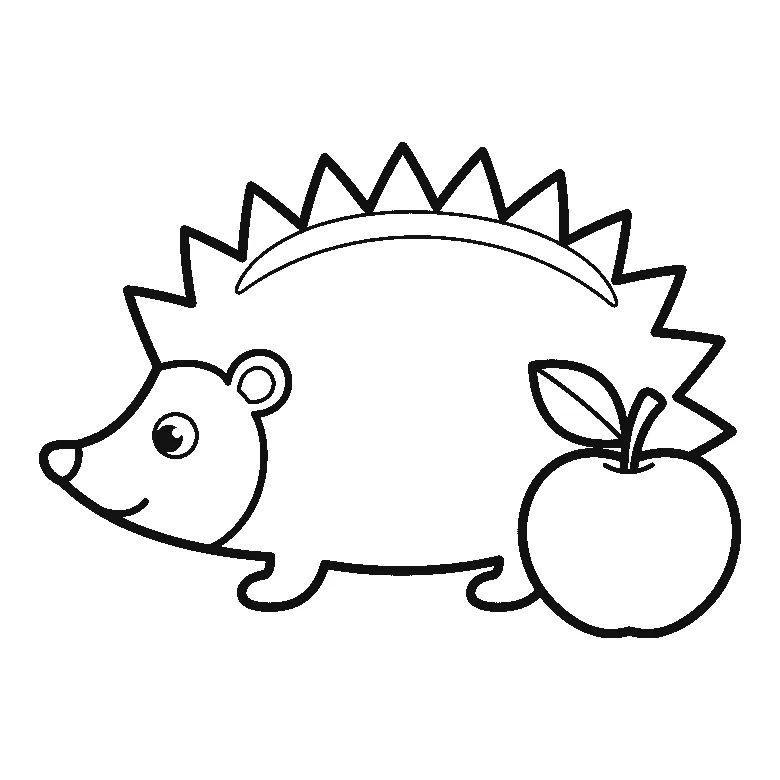
Hedgehog colouring page
A hedgehog in profile beside an apple, its whole back drawn as one row of big triangular spikes.
Colouring outline drawn by us.
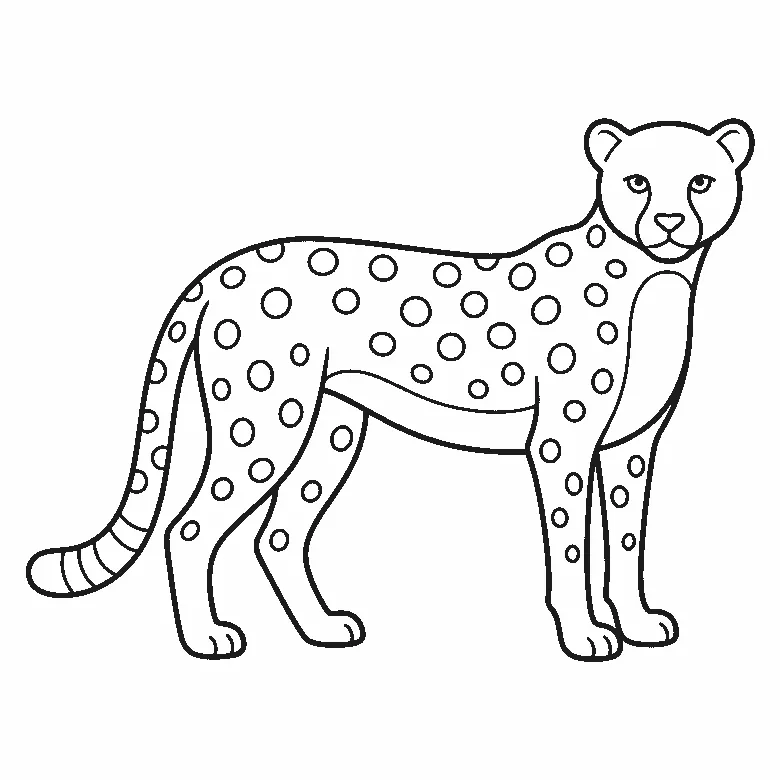
Cheetah colouring page
A cheetah in profile with its head turned to you, covered in solid round spots and a banded tail tip.
Colouring outline drawn by us.
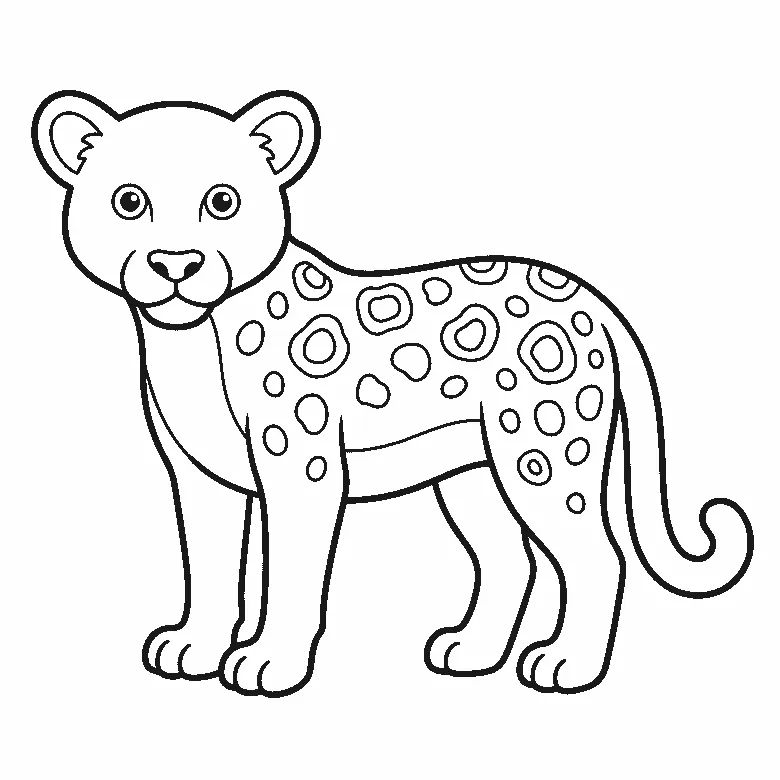
Leopard colouring page
A leopard with its head turned to you, its coat drawn as open rosette rings of different sizes.
Colouring outline drawn by us.


