
PDF · A4 · 16 KB · Free, no sign-up. For home and classroom use.
Snake colouring page
A coiled snake with a raised head, forked tongue, and a row of big diamonds down its back, free to print on A4.
The snake on this sheet is drawn as one long body that folds into two wide loops, the way a rope falls when you drop it in a slow circle. The head comes up out of the top of the coil and turns towards you, mouth slightly open, with a forked tongue reaching into the white space above. Down the length of the body runs a row of large diamonds, each one outlined separately, so the pattern reads as a chain of shapes rather than a texture. Everything is black outline on white paper.
Start with the loops themselves. The two curves of the body are the largest continuous areas on the page, and filling them first gives you a base to judge every other choice against. Work along the curve rather than across it, letting your strokes follow the direction the body travels, and the coil will look rounded instead of flat. If you want a sense of weight, keep the outer edge of each loop slightly darker than the middle. The diamonds can wait, since they sit on top of whatever you lay down here.
The diamonds are the part that rewards patience. Each one has a point at the top and bottom and two corners at the sides, and the outline narrows sharply into those points. Press hard there and the tip of your pencil or crayon will slide past the line before you notice. A lighter touch, taken in from the corners towards the centre, keeps the shape clean. Filling every diamond the same way gives one steady band; alternating two fills turns the pattern into a repeating rhythm down the back.
The head holds the smallest shapes on the sheet. There is one eye, the curve of the jaw, and the tongue, which splits into two thin prongs. A fine-tipped coloured pencil or a gel pen handles the tongue better than a marker, which will flood past the outline and turn the fork into a blob. If markers are what you have, colour the body with them and switch to a pencil for the head. Crayons skip on shapes that small, and the skipping shows more on white than it does inside a filled loop.
Browns, tans and dull greens sit naturally on a diamond-patterned body, and holding the diamonds a shade or two off the body colour lets the pattern show without shouting. That is one option. Nothing on this page requires it. A purple snake with orange diamonds is exactly as printable, and because the pattern is made of separate outlined shapes, you can give each diamond its own colour and let the page turn into a chain of small stained-glass panels. The white paper between the shapes will hold it all together.
A snake's forked tongue is not a weapon. It flicks out to collect scent from the air and carries it back into the mouth, and on this sheet the tongue is caught mid-flick, reaching out past the open mouth into the white above the head. Snakes have no eyelids, so the eye here is drawn as an open shape with no lid line above it, and they shed their skin as they grow. None of that changes how you colour the page, but it does explain why the head looks the way it does.
Print it on plain A4 paper at actual size rather than fit-to-page, so the diamonds keep their proportions and the outline stays crisp at the edges. If markers are the plan, a sheet of thicker card stops the ink reaching the table underneath. Two copies printed at once lets two people work on the same coil side by side and compare what they did with the same set of diamonds. We laid the PDF out for A4, and the PNG preview is there so you can see the drawing before you spend the ink.
When it is done, the coil is worth taping to a window if you want to try it, since light coming through the paper can catch the diamonds and leave the two loops readable from across a room. It also cuts out well: trim just outside the outline and you get a single curved shape to mount on a darker piece of card. This sheet gives the snake no ground line to stand on and no setting behind it, no horizon and no plants at any edge. The snake floats on white, and the empty space around it is part of the design.
Before you print
- Follow the curve of each loop with your strokes so the body looks round rather than flat.
- Ease off at the four corners of every diamond, since that is where a hard stroke jumps the line.
- Save the forked tongue for a fine point, because a marker will fill the gap between the two prongs.
- Alternating two colours down the row of diamonds makes the pattern read from across the room.
- Print at actual size so the diamonds keep their spacing and the head stays sharp.
Published Updated 751 words
More in this section
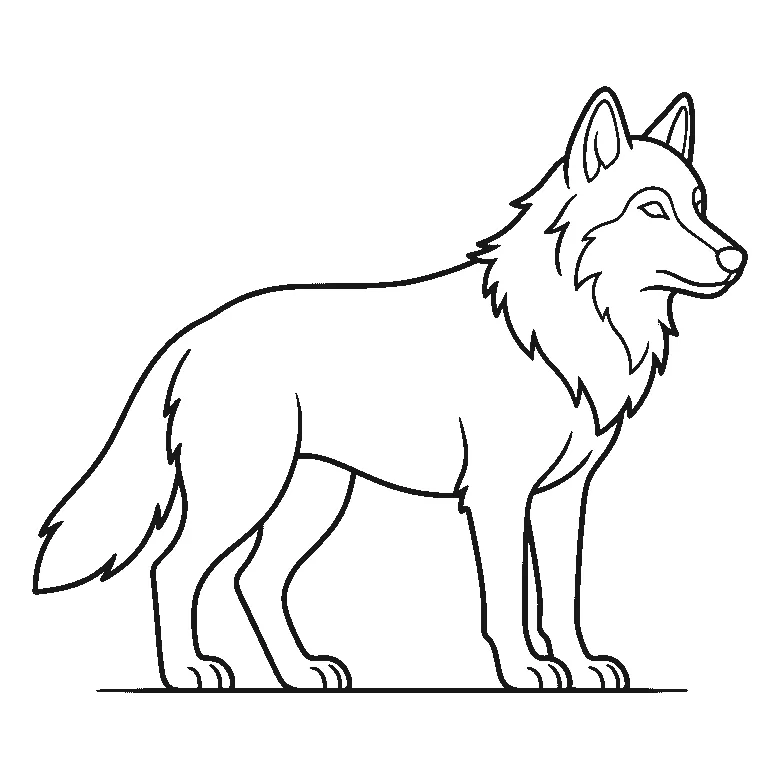
Wolf colouring page
A wolf in profile on a ground line, with a heavy neck ruff and a thick brush tail, printable free at A4.
Colouring outline drawn by us.
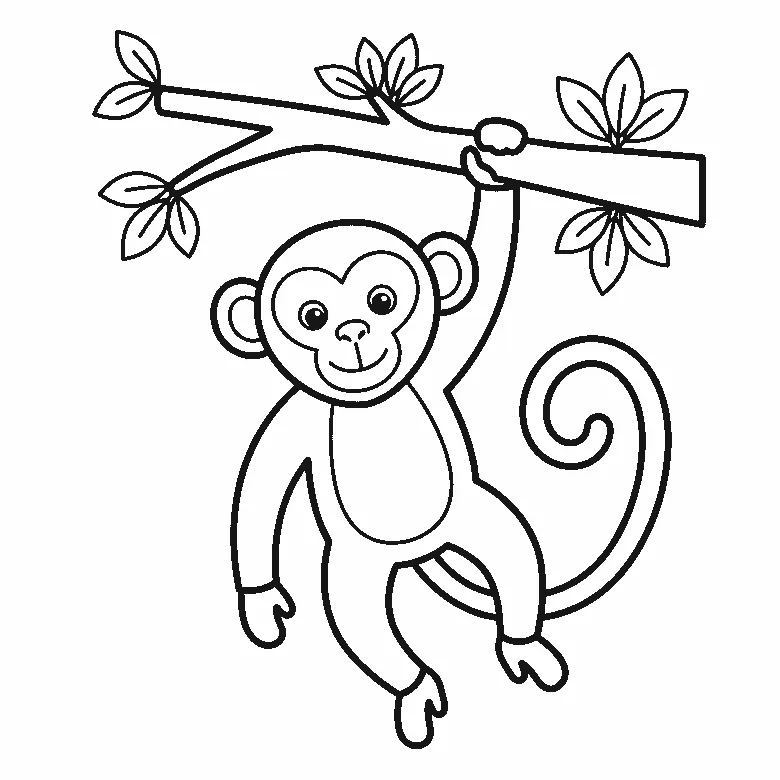
Monkey colouring page
A monkey swinging one-handed from a leafy branch with its tail curled into a spiral, free to print on A4.
Colouring outline drawn by us.
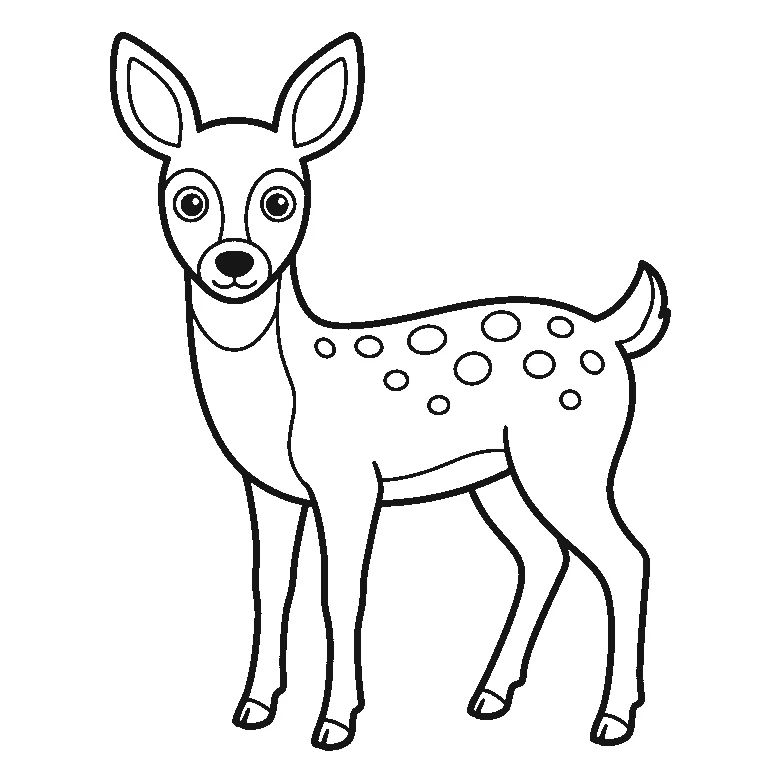
Deer colouring page
A young spotted fawn in profile, head turned forward, with rows of oval spots along the flank to fill one by one.
Colouring outline drawn by us.
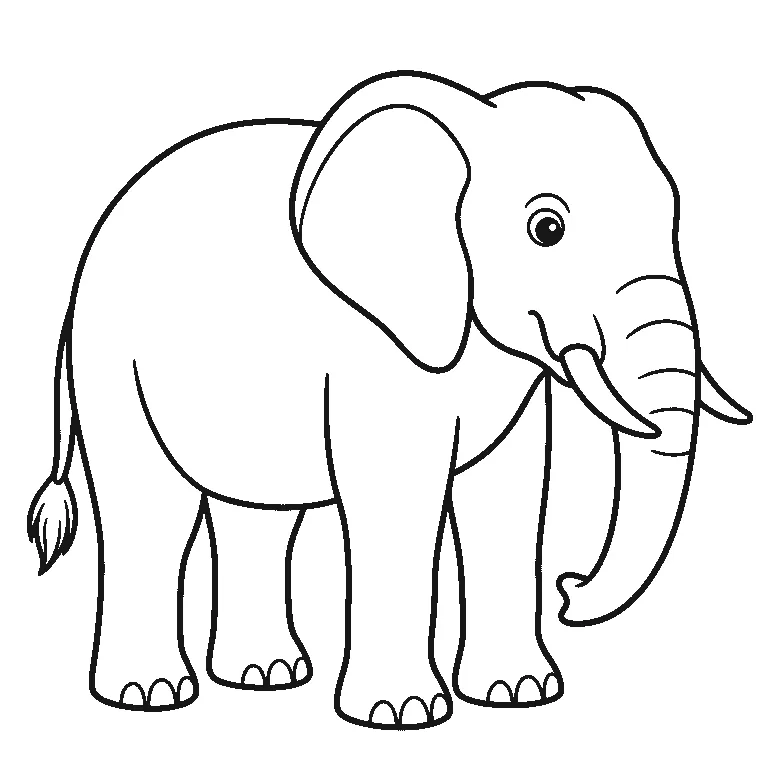
Elephant colouring page
An elephant in profile with a wide ear, two short tusks and a curling trunk, drawn in broad areas that fill fast.
Colouring outline drawn by us.
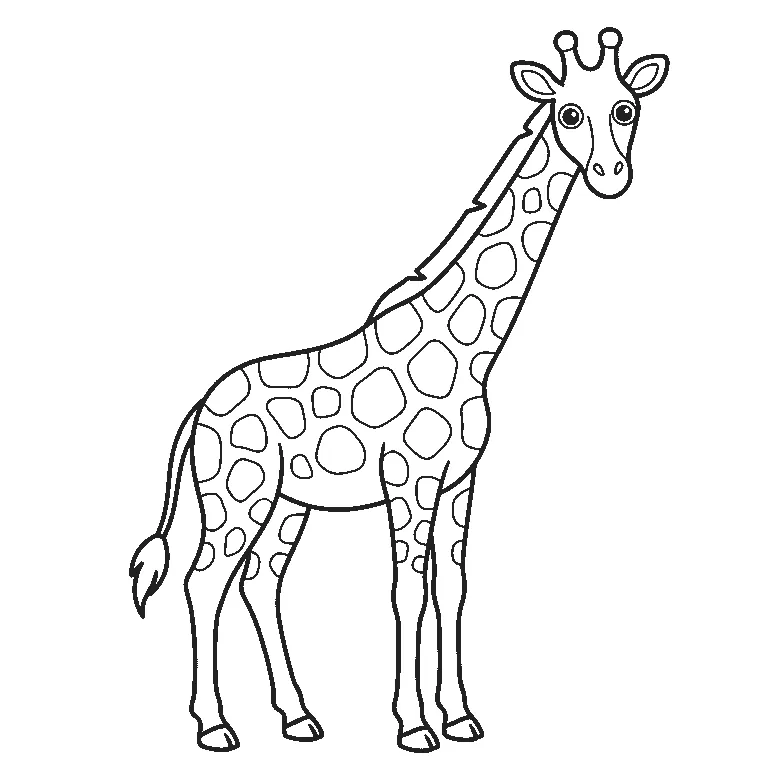
Giraffe colouring page
A tall giraffe in profile, patched from cheek to hoof, with dozens of small rounded shapes to colour one at a time.
Colouring outline drawn by us.
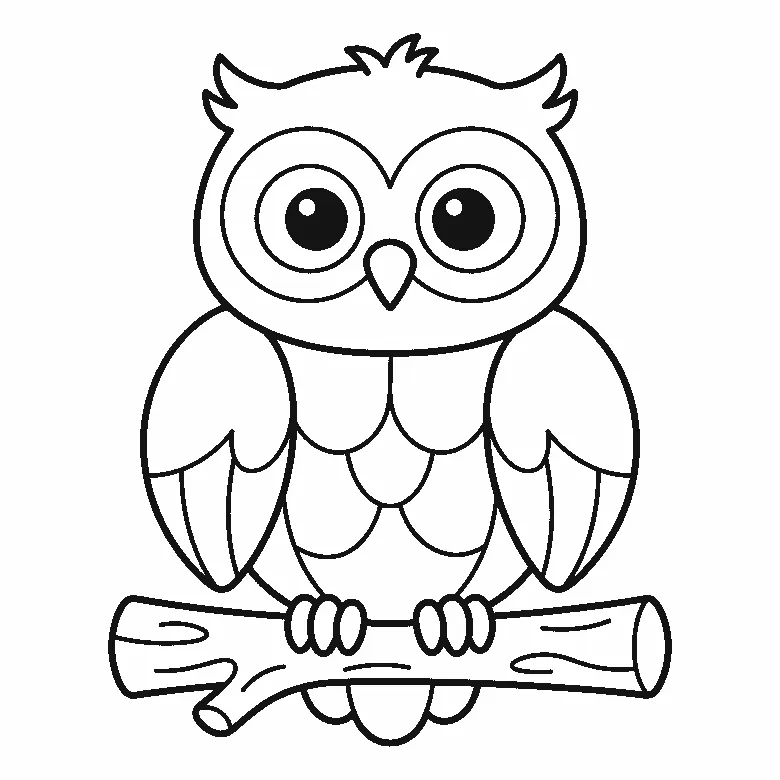
Owl colouring page
A front-facing owl on a thick branch, with two big round eyes and rows of wing feathers to fill in.
Colouring outline drawn by us.
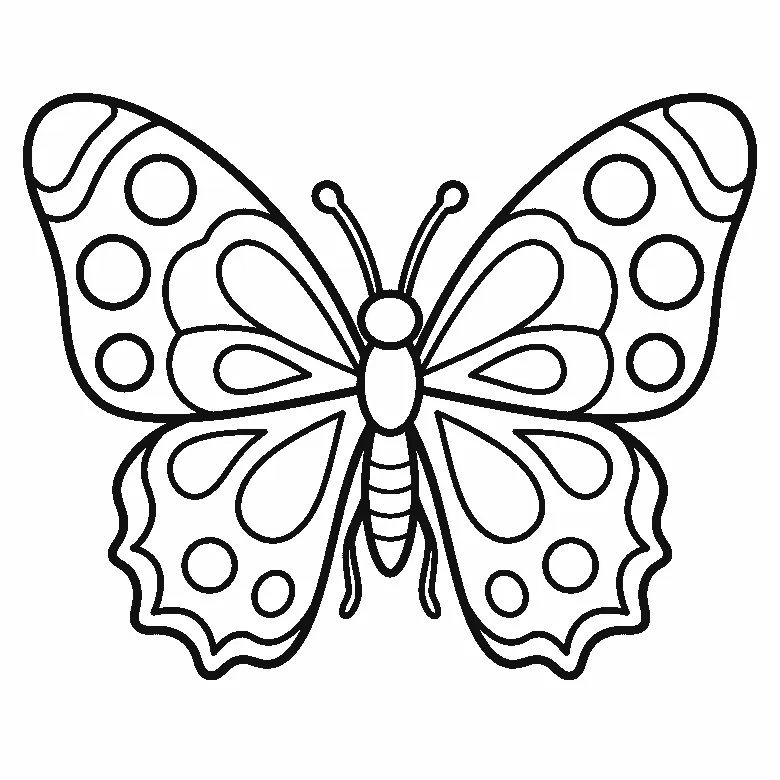
Butterfly colouring page
Wide open wings patterned in circles and teardrops, symmetrical enough to colour one half at a time.
Colouring outline drawn by us.
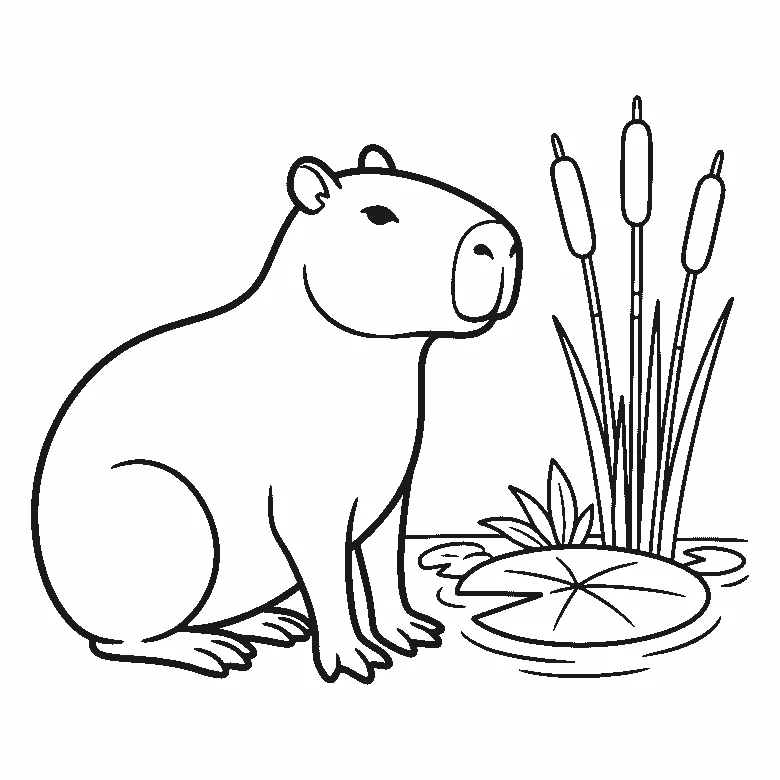
Capybara colouring page
A capybara sitting at the water's edge beside a lily pad and three bulrushes, in plain black outlines.
Colouring outline drawn by us.
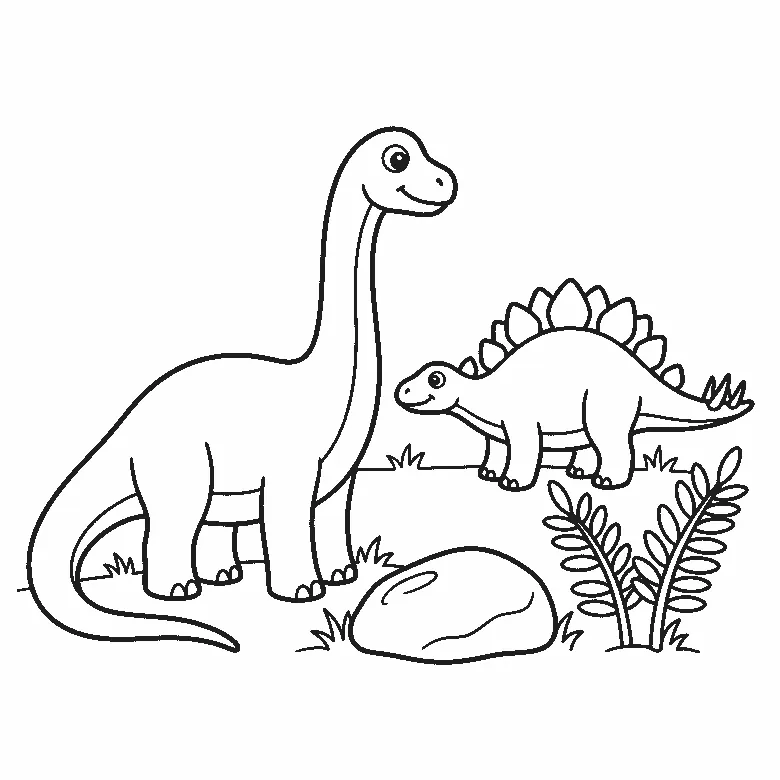
Dinosaur colouring page
Two dinosaurs, a boulder, a fern and tufts of grass in black outline, ready to print on A4 paper.
Colouring outline drawn by us.
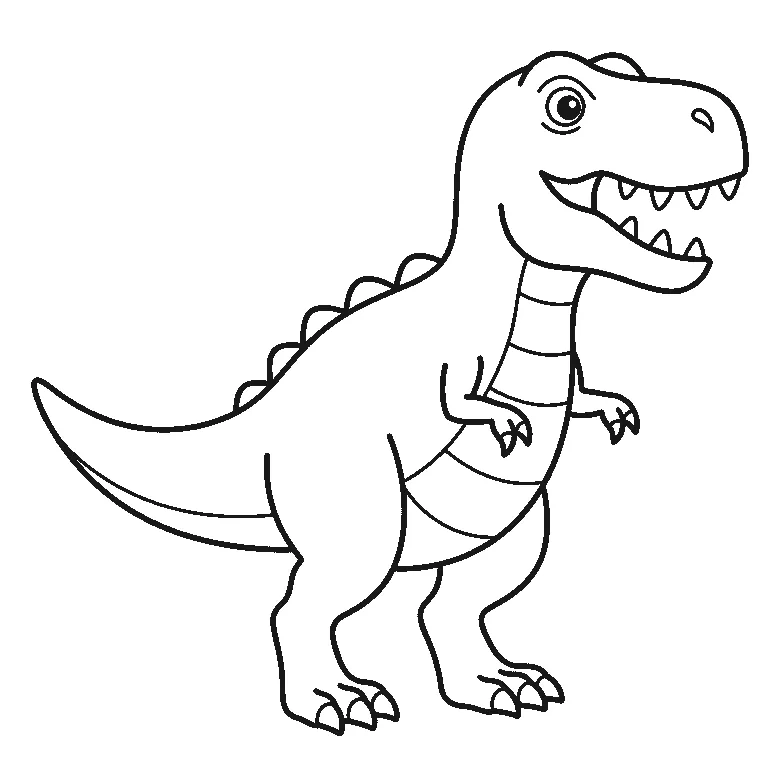
T. rex colouring page
A T. rex in profile with an open mouth, pointed teeth, small arms and a long tail, on plain white.
Colouring outline drawn by us.
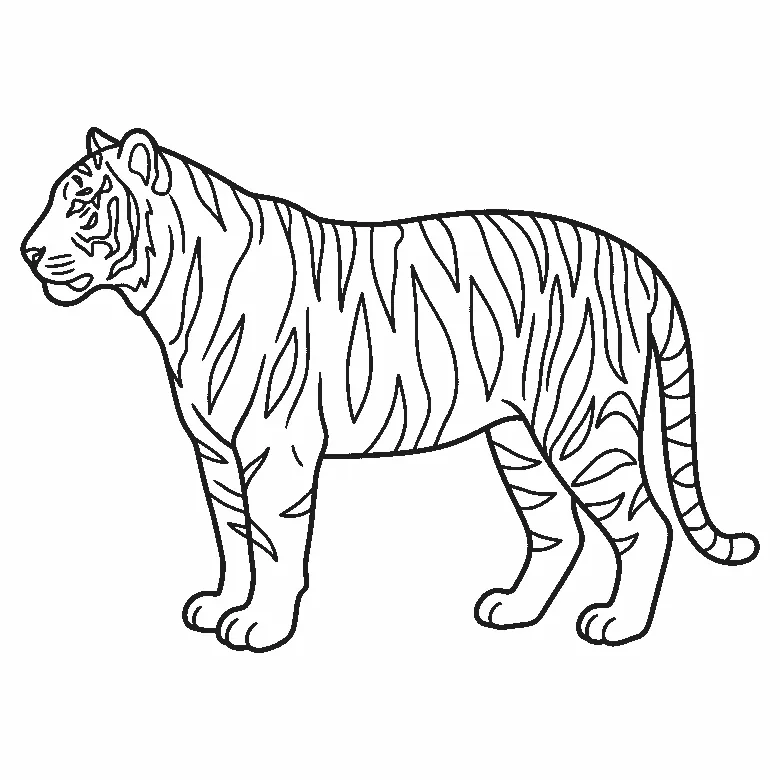
Tiger colouring page
One tiger standing in profile with every stripe drawn as a closed shape you can colour inside.
Colouring outline drawn by us.
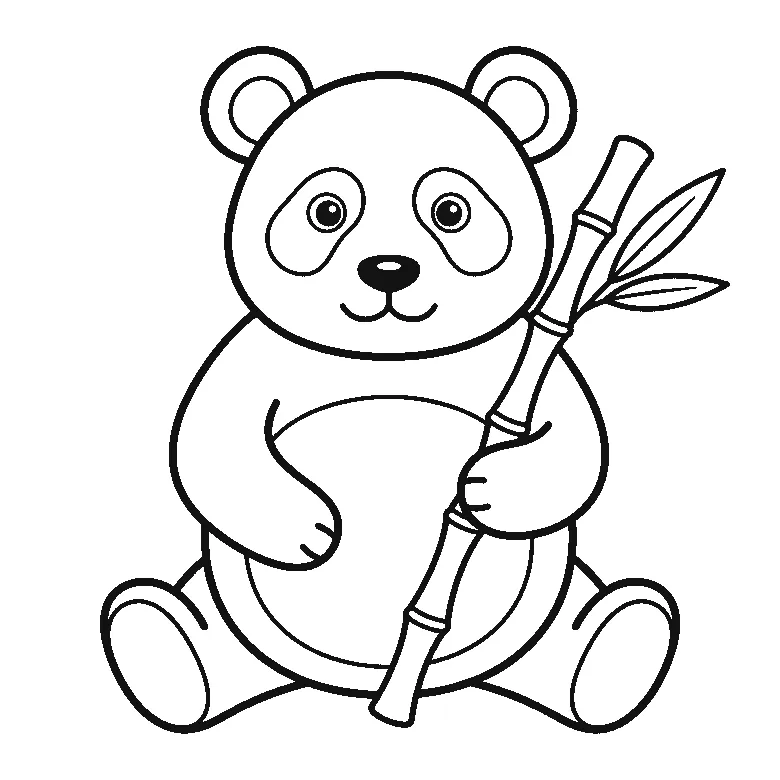
Panda colouring page
A giant panda sitting upright with a bamboo stalk, drawn as a small set of large closed shapes.
Colouring outline drawn by us.


