
PDF · A4 · 12 KB · Free, no sign-up. For home and classroom use.
Giraffe colouring page
A tall giraffe in profile, patched from cheek to hoof, with dozens of small rounded shapes to colour one at a time.
The giraffe stands in profile with its head swung around to face forward, so both eyes are visible above the long muzzle. Two ossicones, the short knobs on top of the skull, rise from between them. The neck runs down as a long tapered column to the body, and rounded patches cover nearly the whole animal, from the cheek to the legs. The lines are black on white with nothing behind them, so the height of the neck is the first thing your eye follows down the page.
Almost the entire drawing is patchwork, so the work arrives one small shape at a time and breaks cleanly wherever you set it down; you can stop after any single patch and pick it up later with no visible seam. The gaps between patches form a connected web running the length of the animal, and it is worth deciding early whether that web stays white or takes a pale colour, because leaving it is much easier than reclaiming it. Begin at the head and work downward so your hand keeps moving onto clean paper.
Press hard on a patch near the ankle and two things happen at once: the wax or ink pushes out past the line, and the narrow channel beside it fills in, joining two patches into a single blob. A light touch with several passes holds those small shapes apart far better than one heavy pass does. On the big patches along the barrel of the body there is room to bear down, so this drawing ends up asking for two different pressures in two different places.
Coloured pencil is the natural fit for a patterned sheet, since a sharp point sits comfortably inside a shape the size of a fingernail. Gel pen is the other good answer: it lays down a solid opaque patch without repeat passes, and a metallic or white gel pen worked over a dried patch adds a layer no pencil can. Broad markers struggle at this scale, and crayons bridge the narrow channels almost immediately, though a peeled crayon on its side gives a fast rough fill when the pattern is not the point.
A giraffe's patches belong to that animal alone; the arrangement differs from one giraffe to the next, so there is no correct layout to match and no wrong one to avoid. The ossicones are bone covered in skin and hair, not antlers, and they stay in place for life. The neck is long enough that a running giraffe swings it for balance. Shading the patches deeper along the back and paler towards the feet follows what the coat often does, fading out below the knee.
Print at actual size. Fit-to-page does real damage to this drawing, because scaling down closes the channels between the patches and the pattern collapses into lace. Plain paper takes pencil and gel pen without trouble. If the plan is to work slowly across several sittings, heavier stock stands up to folding and handling better than printer paper does. Two copies side by side make a good pairing: one patched in the colours a giraffe actually wears, one in whatever you feel like instead.
Because the shape is tall and narrow, the finished giraffe cuts out into a strip that suits a door frame, the side of a fridge, or the margin of a bulletin board where a wide picture would not fit. Left uncut, it makes a plain folder cover with room beside the neck for a label. Rolled rather than folded, it travels without a crease across the face. Mounted on dark card, the white channels between the patches read as a clean net holding the colour.
This is a pattern sheet from the first line to the last. The animals section holds an elephant sheet and a fawn sheet as well, and on this page the giraffe carries its pattern from jaw to hoof with almost no plain ground left anywhere. Choose it when you want something to work at rather than something to finish quickly, and when you like the idea of a page where the same small colour decision comes back dozens of times over.
Before you print
- Decide before the first stroke whether the channels between the patches stay white, because leaving them is easier than recovering them.
- Keep the pencil sharp for the small patches on the legs, where a blunt point bridges two shapes into one.
- Work downward from the head so your hand always rests on paper you have not coloured yet.
- The two ossicones are tiny, and a single light pass keeps them readable against the head behind them.
- Shade the patches deeper along the back and lighter towards the hooves for a coat that fades down the legs.
Published Updated 694 words
More in this section
Owl colouring page
A front-facing owl on a thick branch, with two big round eyes and rows of wing feathers to fill in.
Colouring outline drawn by us.
Butterfly colouring page
Wide open wings patterned in circles and teardrops, symmetrical enough to colour one half at a time.
Colouring outline drawn by us.
Capybara colouring page
A capybara sitting at the water's edge beside a lily pad and three bulrushes, in plain black outlines.
Colouring outline drawn by us.
Dinosaur colouring page
Two dinosaurs, a boulder, a fern and tufts of grass in black outline, ready to print on A4 paper.
Colouring outline drawn by us.
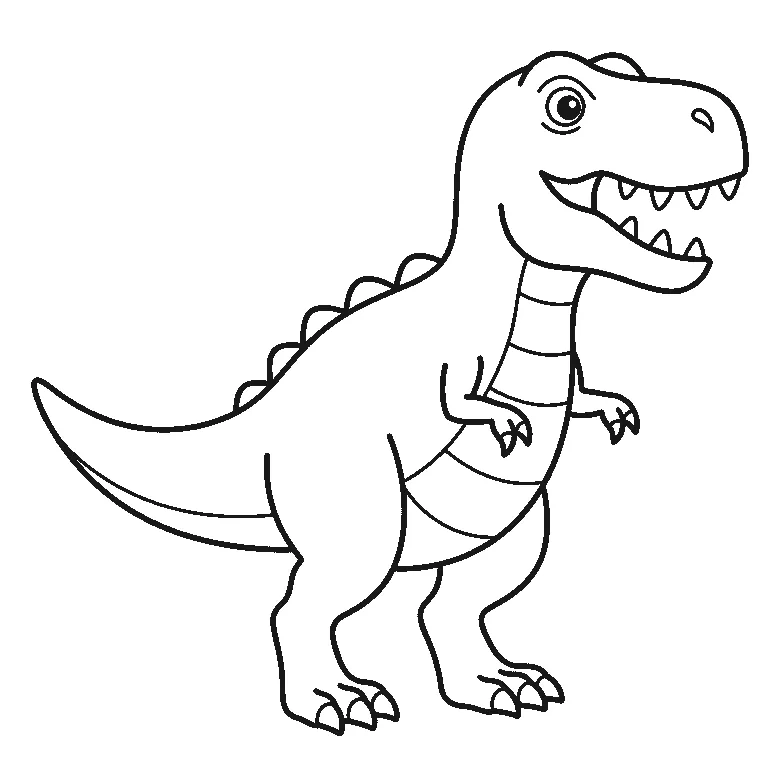
T. rex colouring page
A T. rex in profile with an open mouth, pointed teeth, small arms and a long tail, on plain white.
Colouring outline drawn by us.
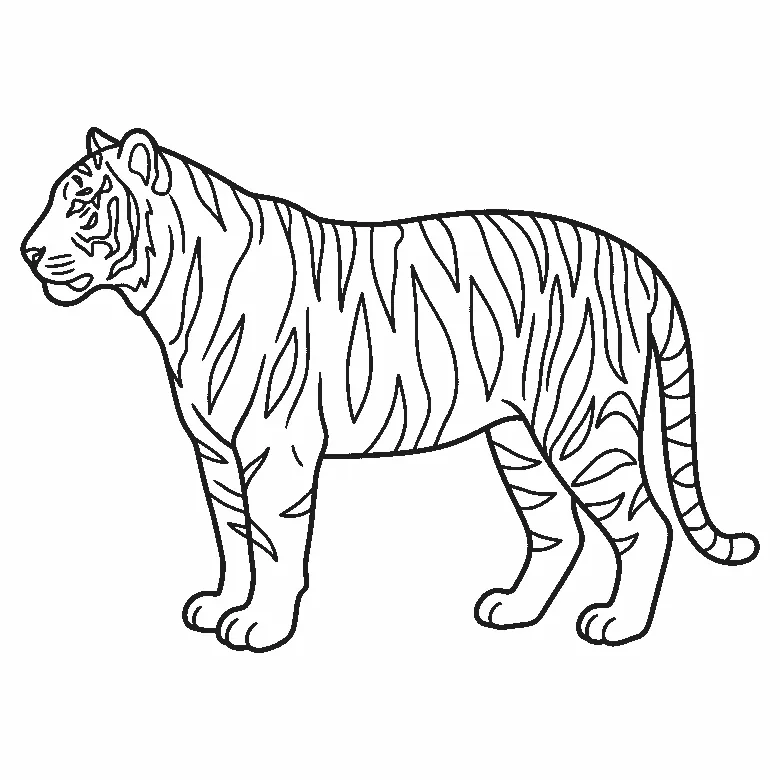
Tiger colouring page
One tiger standing in profile with every stripe drawn as a closed shape you can colour inside.
Colouring outline drawn by us.
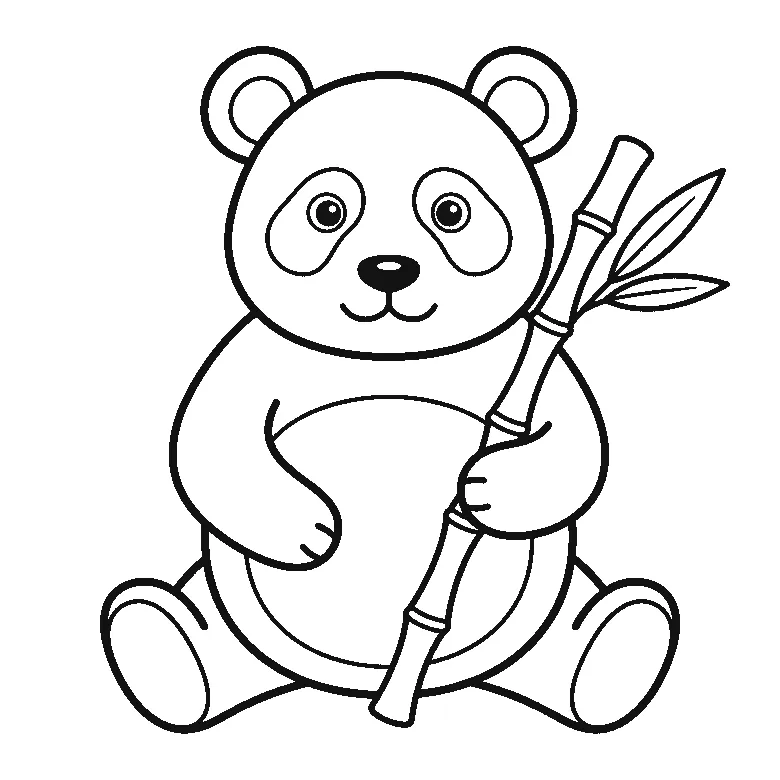
Panda colouring page
A giant panda sitting upright with a bamboo stalk, drawn as a small set of large closed shapes.
Colouring outline drawn by us.
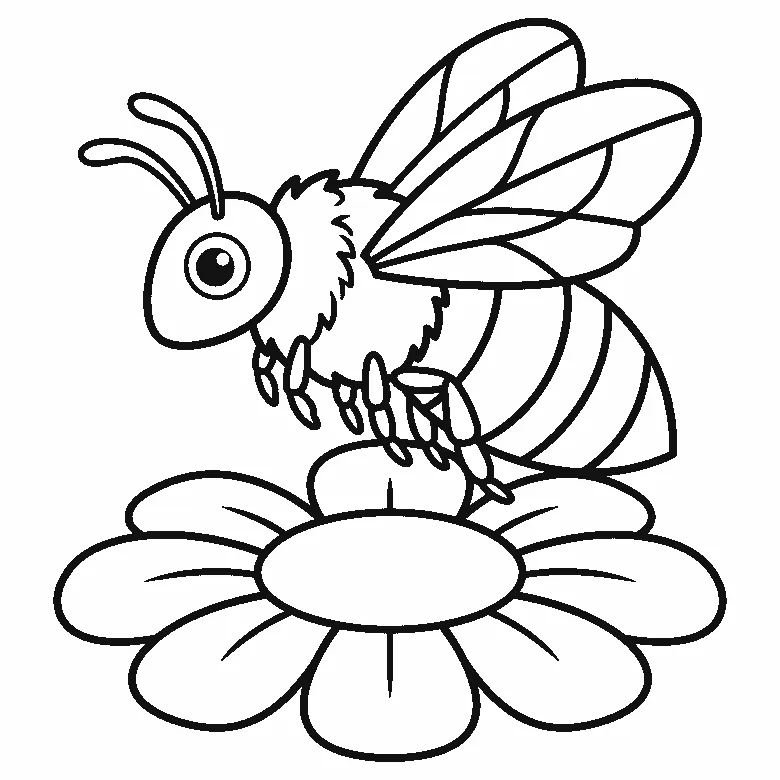
Bee colouring page
One bee on a wide flower, its body already divided into four stripe panels to fill.
Colouring outline drawn by us.
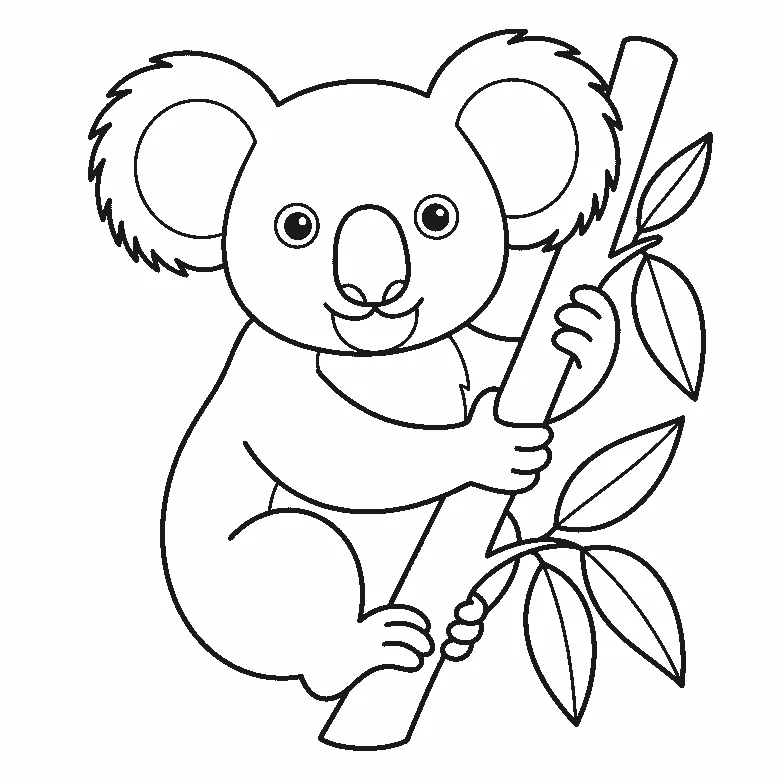
Koala colouring page
A koala hugging a eucalyptus branch, facing forward, with two very large fringed ears.
Colouring outline drawn by us.
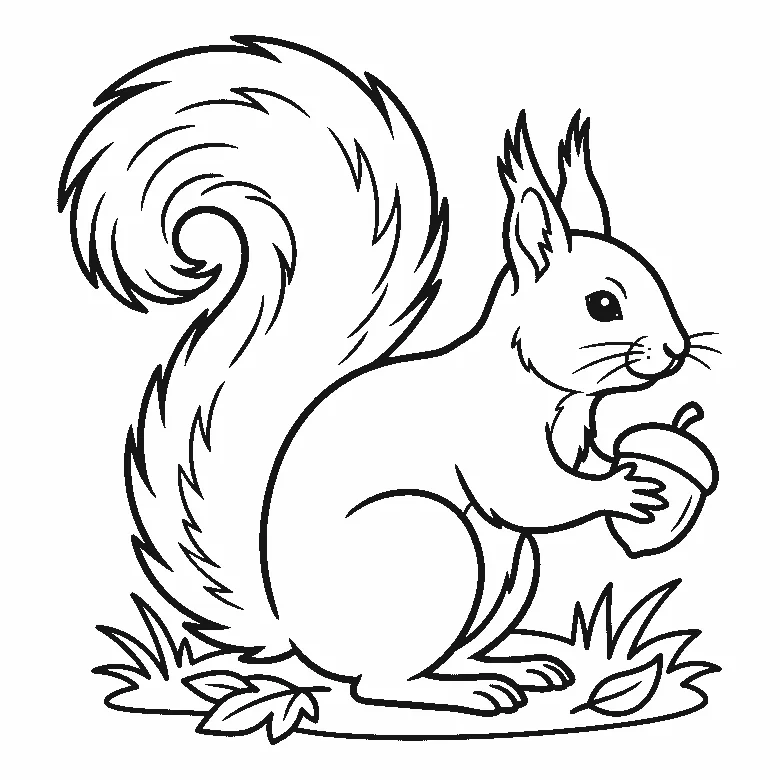
Squirrel colouring page
A squirrel in profile holding an acorn, with a very large curled tail drawn as separate strands.
Colouring outline drawn by us.
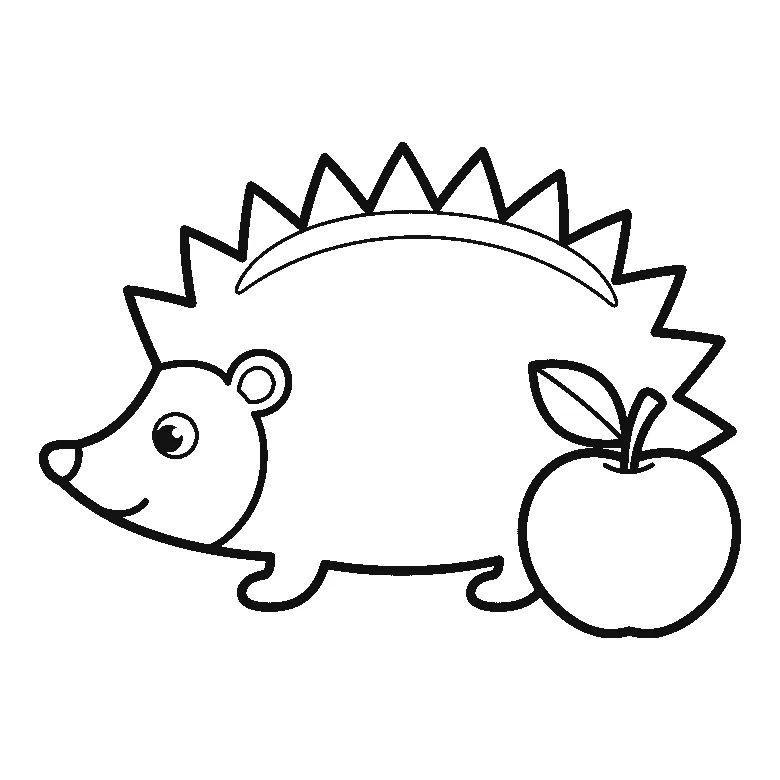
Hedgehog colouring page
A hedgehog in profile beside an apple, its whole back drawn as one row of big triangular spikes.
Colouring outline drawn by us.
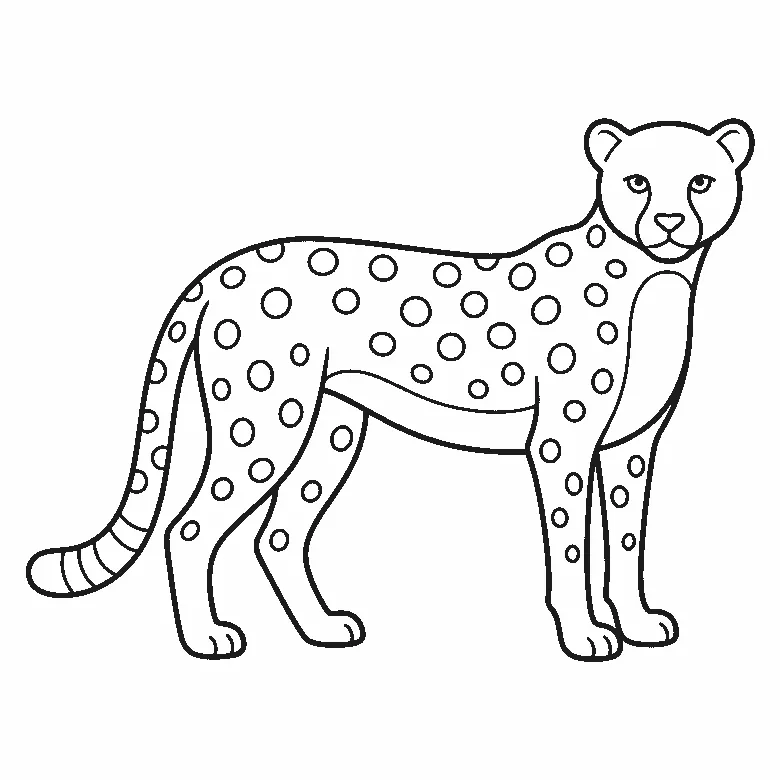
Cheetah colouring page
A cheetah in profile with its head turned to you, covered in solid round spots and a banded tail tip.
Colouring outline drawn by us.


