Nature
Flowers, a tied bouquet, rainbows, hearts and a rocket in a field of stars.
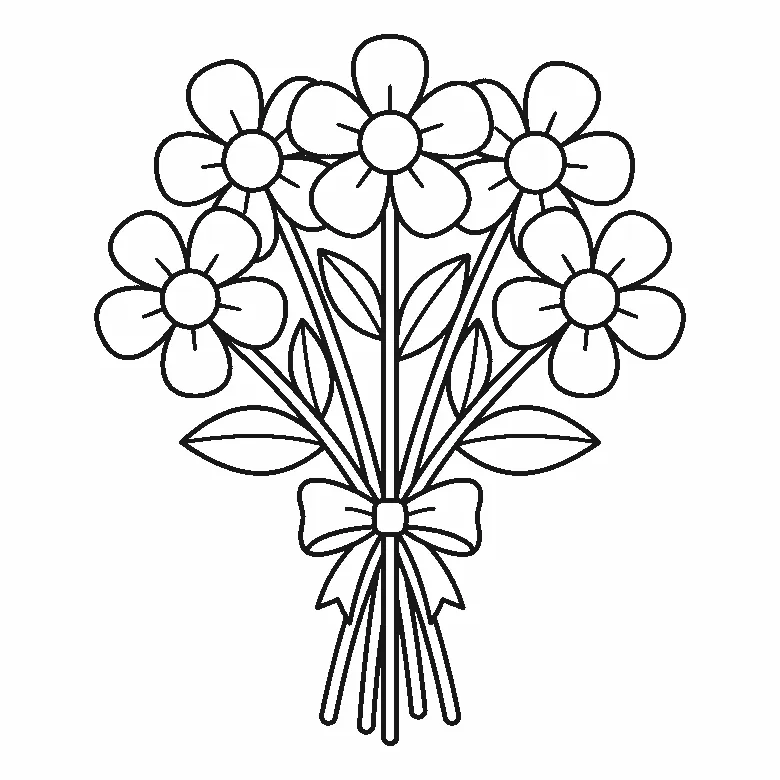
Flower colouring page
A tied bouquet of five round-petalled flowers, drawn as big open shapes on one printable A4 sheet.
Colouring outline drawn by us.
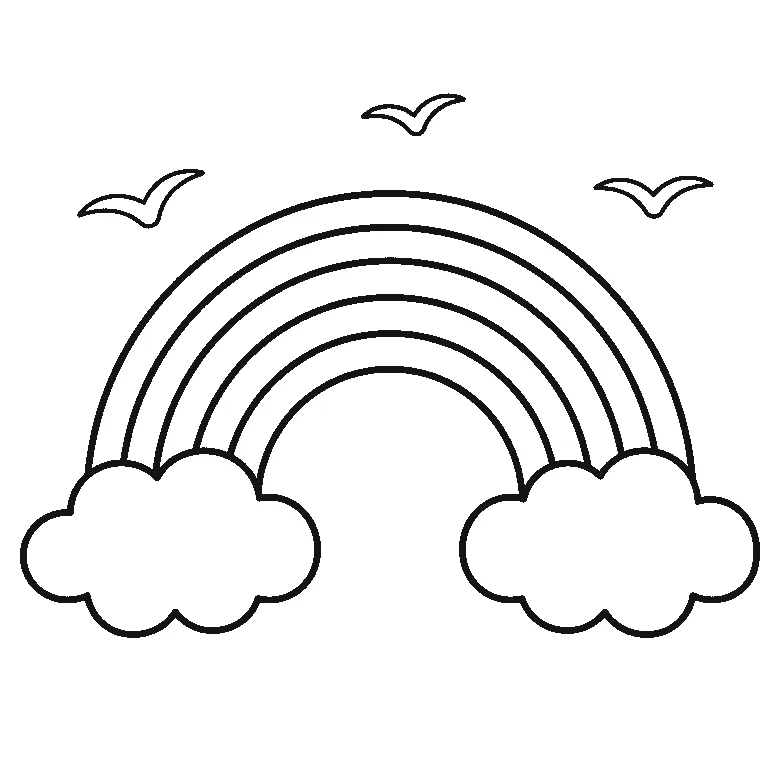
Rainbow colouring page
Six separate bands, a cloud at each end and three birds overhead, all in open outline on one A4 page.
Colouring outline drawn by us.

Space colouring page
A rocket climbing past stars, a crescent moon and a ringed planet, drawn as clean outlines on A4 size.
Colouring outline drawn by us.
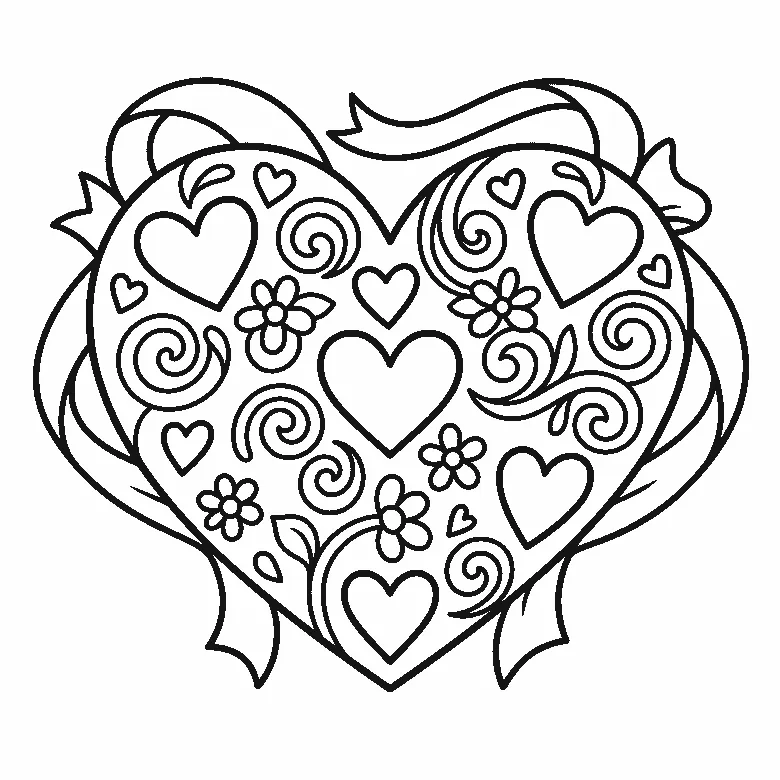
Heart colouring page
One big heart packed with small hearts, spirals and flowers, wrapped in a ribbon, free to print on A4 paper.
Colouring outline drawn by us.
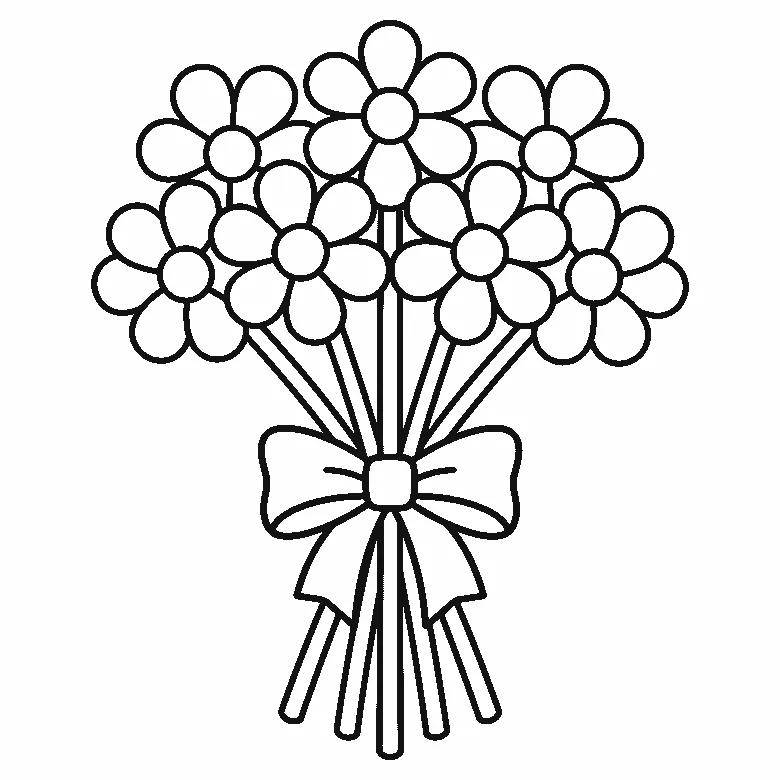
Bouquet colouring page
Seven round flowers with wide petals, their stems bundled and tied with a broad ribbon bow.
Colouring outline drawn by us.


What the sheets in this section share is quiet rather than subject: a flower, a bouquet, a rainbow, a rocket among stars on the space sheet, and a heart. None of them asks for a steady hand or a long stretch of time. Each drawing is built from a small number of large shapes with a clear black outline around them, so the work of colouring is mostly filling rather than tracking a fussy edge. If you arrived without a particular sheet in mind, any of them will print in a minute and give you something to do with a box of crayons and a free afternoon.
They differ most in how much white space they leave. The flower carries the tightest line work, with petals meeting near the centre and leaf edges that come close together down at the stem. The rainbow is the opposite: long bands running side by side, each one a wide lane to fill in a single direction. The heart is one dominant shape with open room around it. The space sheet spreads out, since a rocket occupies the middle and stars scatter across the rest of the page as small separate marks. The bouquet stacks seven flower heads at the top of the page and runs their stems down to a ribbon, which puts almost all of its detail in one half of the sheet.
Pick by how much time you have. A rainbow can be finished quickly if you sweep along each band and stop there, or stretched much longer if you blend within every stripe. The star field stretches out over a long sitting, not because it is difficult but because there are many small shapes and each one is a decision. The flower rewards patience near the centre, where the petals crowd, and the bouquet asks for the same patience seven times over. The heart is the one to reach for when someone wants a finished page in a hurry, or when two people are colouring together and one of them is very young.
Medium matters differently across this section. Wide open areas take marker well, since a marker lays flat colour down fast, though it soaks into thin paper and can print through to whatever is underneath. Coloured pencils suit the flower, the bouquet and the small stars, because a pencil point reaches into a narrow corner that a marker tip would flood. Crayon is honest about texture and will skip a little over the long rainbow bands, leaving a grain in the colour rather than an even flat lane. Watercolour pencil works if you keep the water sparing, since A4 paper buckles once it gets wet.
Realistic colour is available here and so is ignoring it. A rainbow has an order to its bands, red on the outer curve and violet on the inner, and following that order gives a familiar result. Petals are commonly warm and leaves are commonly green. Space is mostly dark, though a sheet coloured mostly dark uses a great deal of crayon or ink. None of that is binding. A blue flower, a rainbow worked in several shades of one colour, a pale sky behind a rocket: the outlines do not know what they are supposed to be.
The subjects themselves hold a few things worth noticing while you fill them. A flower's petals often repeat around the centre in a regular ring, so whatever you do to one petal you can echo on the others. A rainbow's bands always run in the same order, which is why the sequence feels right when you get it right. Stars look like points of light because they are so far away, and a drawn star with pointed arms is a convention rather than a picture of one. The heart shape is a symbol people draw, not a copy of the organ it is named for.
They all print the same way. Use plain A4 paper, choose actual size rather than fit-to-page so the margins stay where we put them, and print in black and white. Thicker card is worth it if markers are coming out, because it keeps colour from reaching the back of the sheet. Printing two copies of the same drawing is the simplest way to let two people work side by side without either one waiting for a turn. None of these sheets needs a colour printer, and none needs a high-quality print setting.
When a sheet is done it can go on a window, where the rainbow and the star field both read well with light behind them. A heart cut out and glued to folded paper becomes a card without much effort. A flower taped to the front of a school folder covers a lot of plain plastic, and the bouquet trims into a single tall silhouette that suits the front of a folded sheet. These sheets keep their shapes large and their edges calm from the outline in, which is the whole reason they are grouped together.
Published Updated 5 sheets837 words