
PDF · US Letter · 13 KB · Free, no sign-up. For home and classroom use.
Capybara coloring page
A capybara sitting at the water's edge beside a lily pad and three cattails, in plain black outlines.
This sheet is a small scene rather than a single animal. The capybara sits in profile, so only one eye shows, and its blunt squared-off muzzle points to the side. The body is drawn as one broad rounded mass with short legs tucked underneath. To one side lies a lily pad, a flat disc with a wedge cut from its edge, and behind the animal three cattails rise on tall straight stems, each topped by a dense sausage-shaped head. A single line marks the water's edge along the bottom.
The body is one broad uninterrupted area running most of the width of the sheet, which is both the opportunity and the trap. Filled flatly in one tone it goes lifeless, and every stray stroke shows. The fix is to work in one consistent direction, following the curve of the back from the shoulder down toward the rear, and to leave a pale band along the belly line where light would fall. Two related browns, the lighter one laid down everywhere and the darker one added only along the top and under the chin, will do more than six unrelated colors.
The cattails are the opposite problem. Their stems are little more than the width of two lines, and pressing hard there will bleed color past the outline into the white background before you notice. Sharpened colored pencil, held closer to upright than usual, is the right tool. The heads are dense and dark in real life, so they take a heavy hand happily; scribbling over them in a deep brown and then adding short vertical strokes on top gives them a bristly look. Save the stems for last, when your hand has already settled.
The lily pad and the water line handle the bottom of the page. A pad colored in a single strong green anchors the composition and makes the animal's brown read warmer by contrast. Below the water line there is nothing but open paper, and that space is yours to decide about: leaving it white keeps the drawing airy, while filling it with horizontal strokes of pale blue turns the sheet into a pond. Broken strokes with gaps of white left showing suggest moving water better than a solid fill ever will.
A capybara is a large rodent, heavy in the body and short in the leg, and it is thoroughly at home in water. Its eyes, ears and nostrils sit high on the head so it can stay almost fully submerged and still see and breathe, which is exactly the arrangement the profile in this drawing shows. Its coat is coarse and bristly rather than soft, its feet are slightly webbed, and it spends much of the day grazing on grasses and water plants near riverbanks just like the one suggested here.
Real coats run through reddish brown, warm gray-brown and a dusty tan, usually a little darker along the back and paler underneath. Any of those will look right, and the darker-on-top approach is simply one way to lay them down. Ignoring it is equally fine. The broad flank is a good surface for a color that no rodent has ever been, and because the surrounding shapes are green plants and blue water, even a bright pink animal still sits in a scene that reads clearly. The eye is small enough that a dot of dark is all it needs.
Choose actual size in the print dialog rather than fit-to-page, so the cattail stems keep their width and stay easy to follow. Ordinary letter paper suits pencil and crayon. Markers will bleed through it, and here that matters more than usual, since bleed in the stems will erase them; heavier card stock solves it. Printing two copies lets one person take the animal and another take the plants and water, which is an easy way to share a single drawing without either person waiting.
Because this sheet has a horizon line and a foreground, a finished copy works well as the cover of a school folder or a notebook, taped down flat. It can also be trimmed to the water line and mounted on blue paper so the pond continues past the edge. Taken on its own terms, this sheet asks for less precision than patience, though it wants some of both: there is one enormous shape to fill evenly and three very thin ones to protect while you do it.
Before you print
- Fill the body in one stroke direction following the curve of the back, not in circles.
- Leave a pale band along the belly and press harder only across the top of the back.
- Color the cattail stems last, with a sharp point and a light hand.
- Break your strokes below the water line rather than filling it solid.
- Give the single visible eye one small dark dot and stop there.
Published Updated 736 words
More in this section
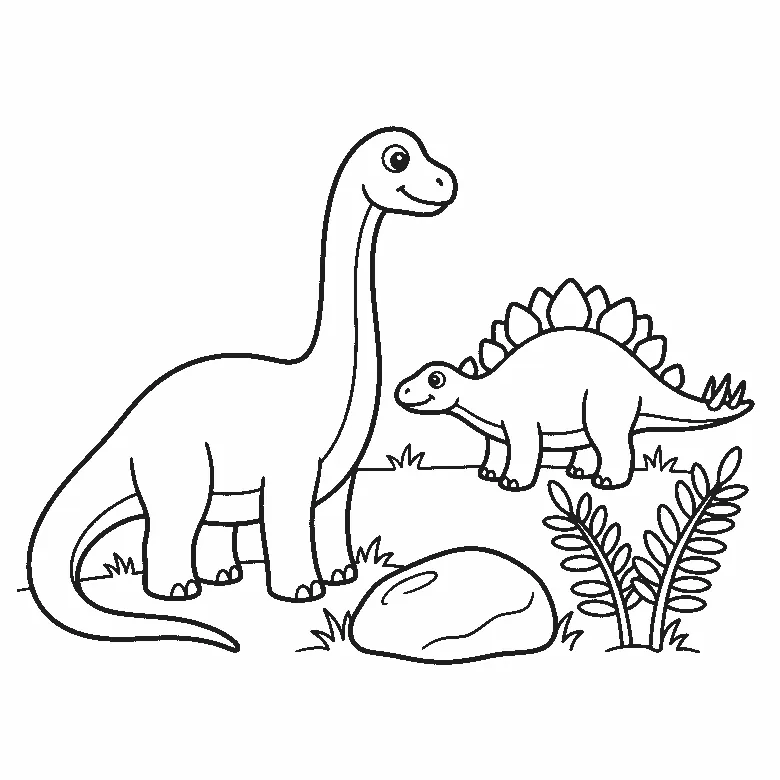
Dinosaur coloring page
Two dinosaurs, a boulder, a fern and tufts of grass in black outline, ready to print on letter paper.
Coloring outline drawn by us.
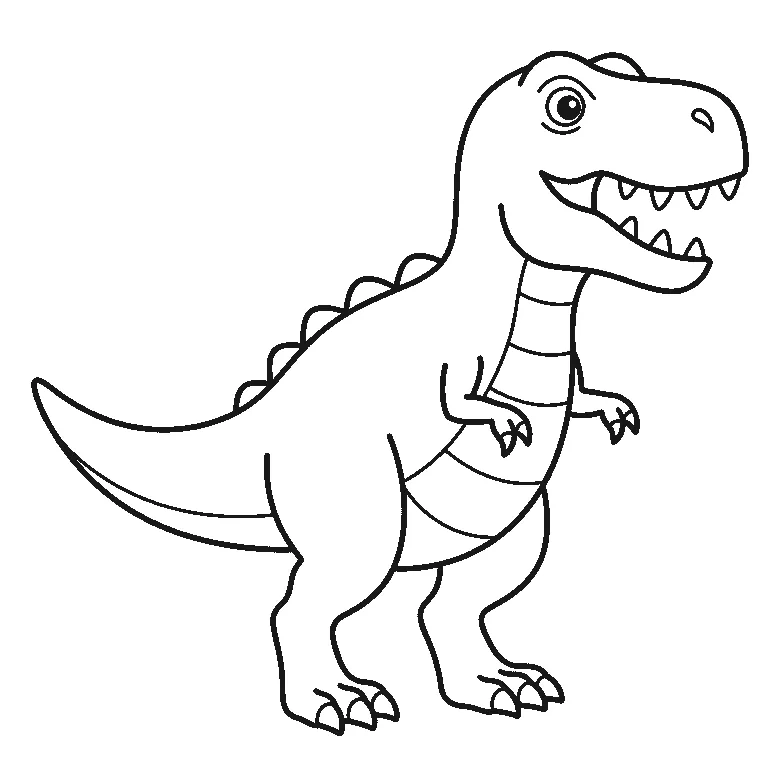
T. rex coloring page
A T. rex in profile with an open mouth, pointed teeth, small arms and a long tail, on plain white.
Coloring outline drawn by us.
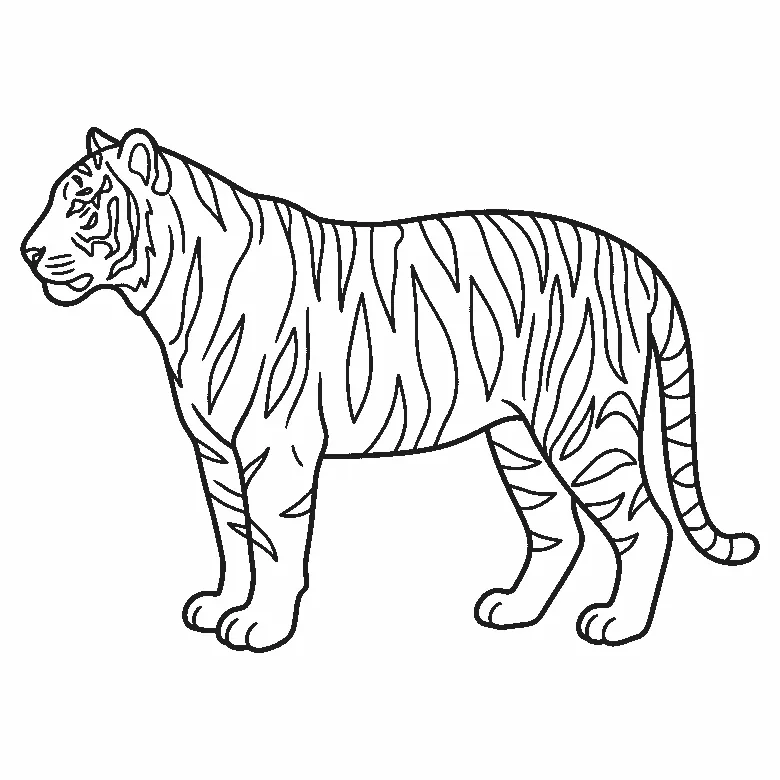
Tiger coloring page
One tiger standing in profile with every stripe drawn as a closed shape you can color inside.
Coloring outline drawn by us.
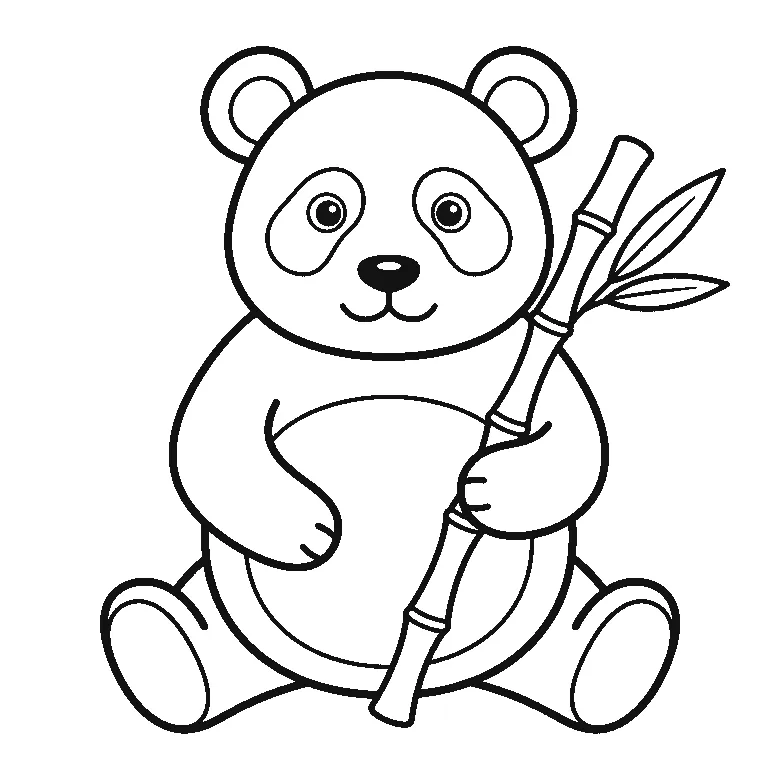
Panda coloring page
A giant panda sitting upright with a bamboo stalk, drawn as a small set of large closed shapes.
Coloring outline drawn by us.
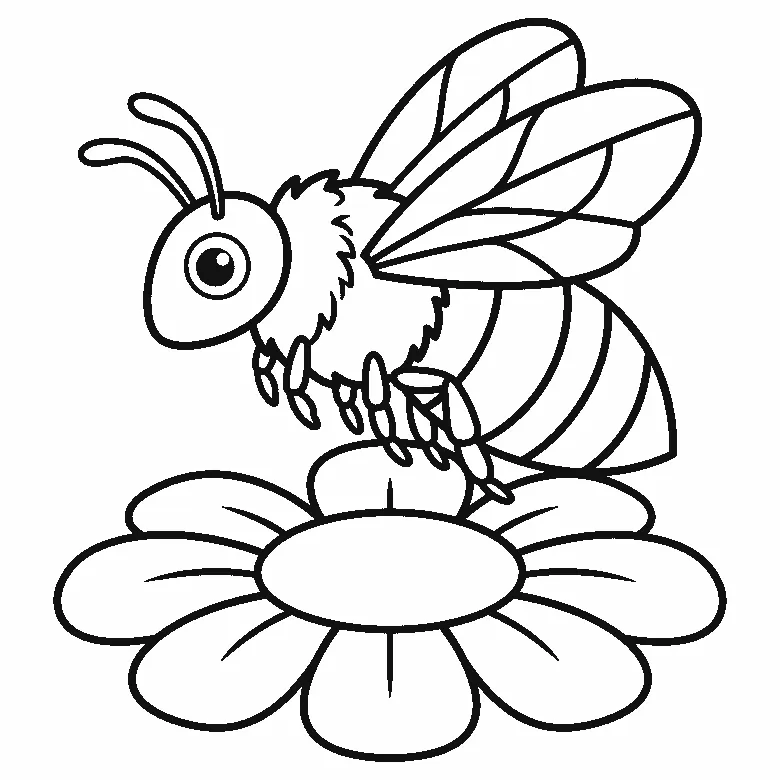
Bee coloring page
One bee on a wide flower, its body already divided into four stripe panels to fill.
Coloring outline drawn by us.
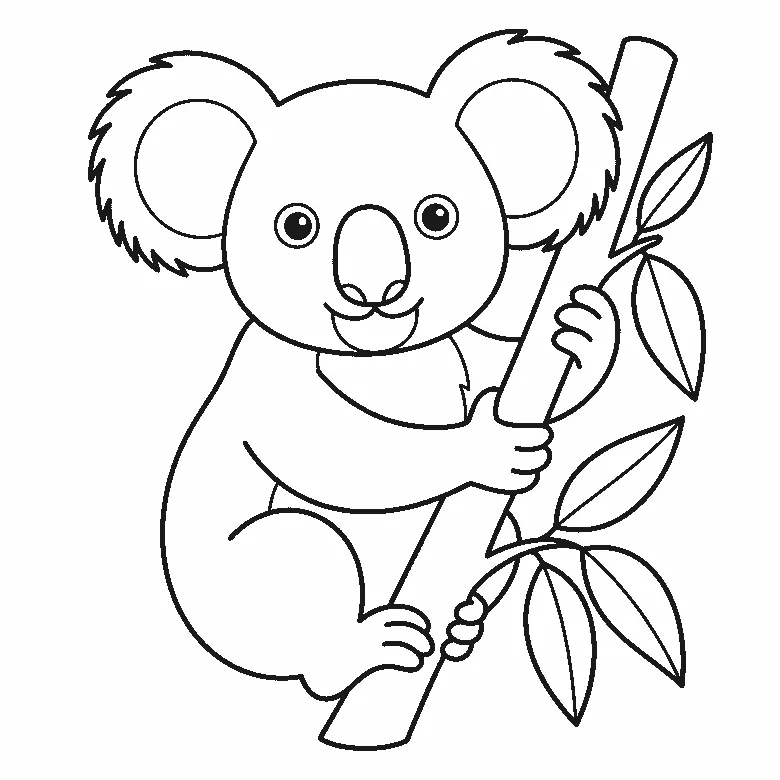
Koala coloring page
A koala hugging a eucalyptus branch, facing forward, with two very large fringed ears.
Coloring outline drawn by us.
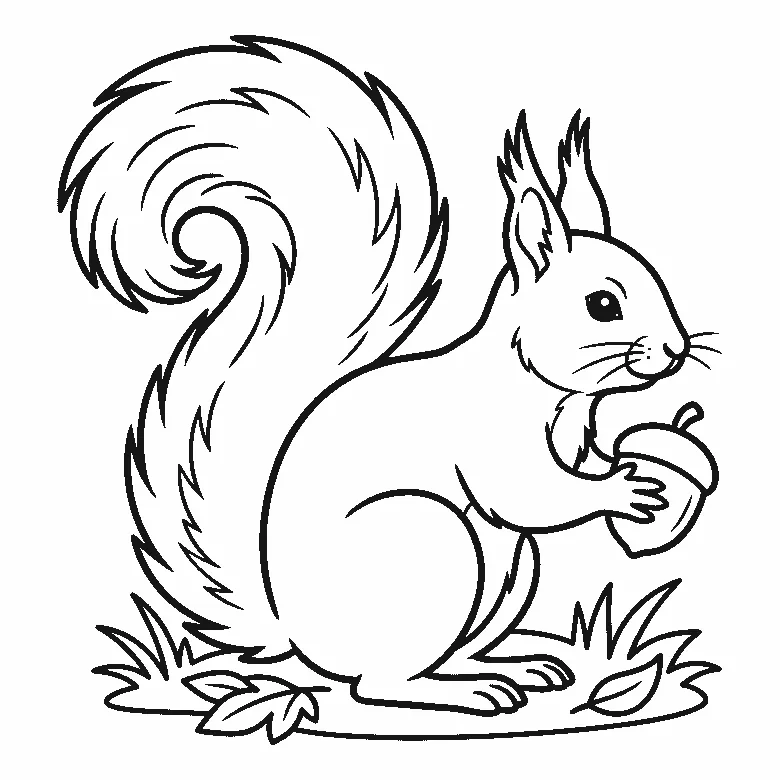
Squirrel coloring page
A squirrel in profile holding an acorn, with a very large curled tail drawn as separate strands.
Coloring outline drawn by us.
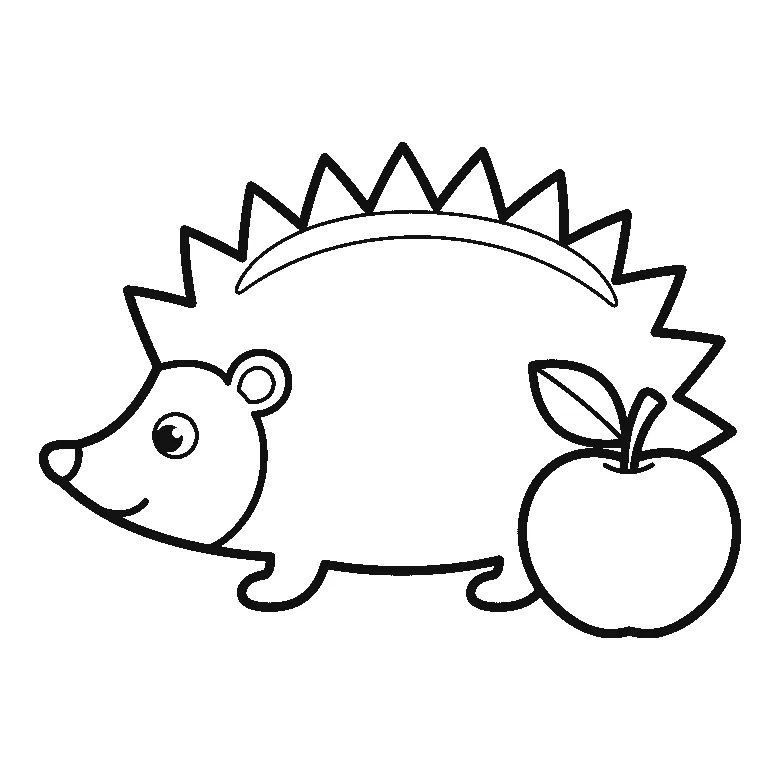
Hedgehog coloring page
A hedgehog in profile beside an apple, its whole back drawn as one row of big triangular spikes.
Coloring outline drawn by us.
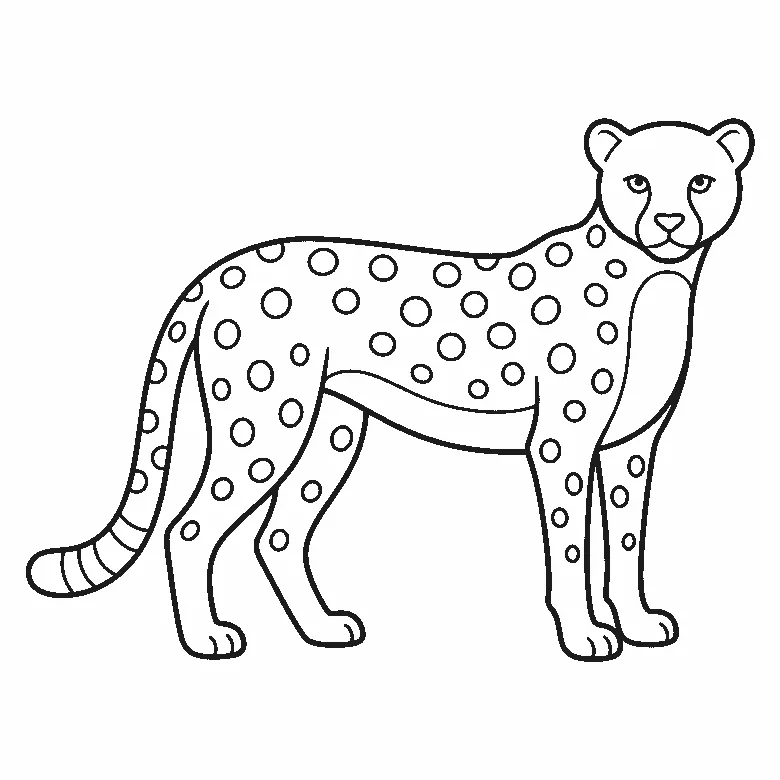
Cheetah coloring page
A cheetah in profile with its head turned to you, covered in solid round spots and a banded tail tip.
Coloring outline drawn by us.
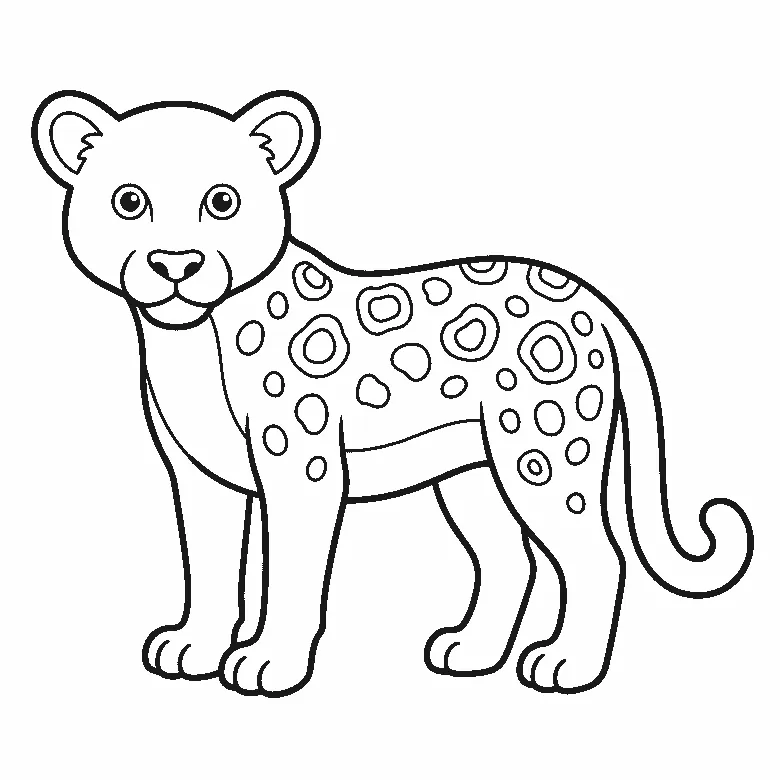
Leopard coloring page
A leopard with its head turned to you, its coat drawn as open rosette rings of different sizes.
Coloring outline drawn by us.
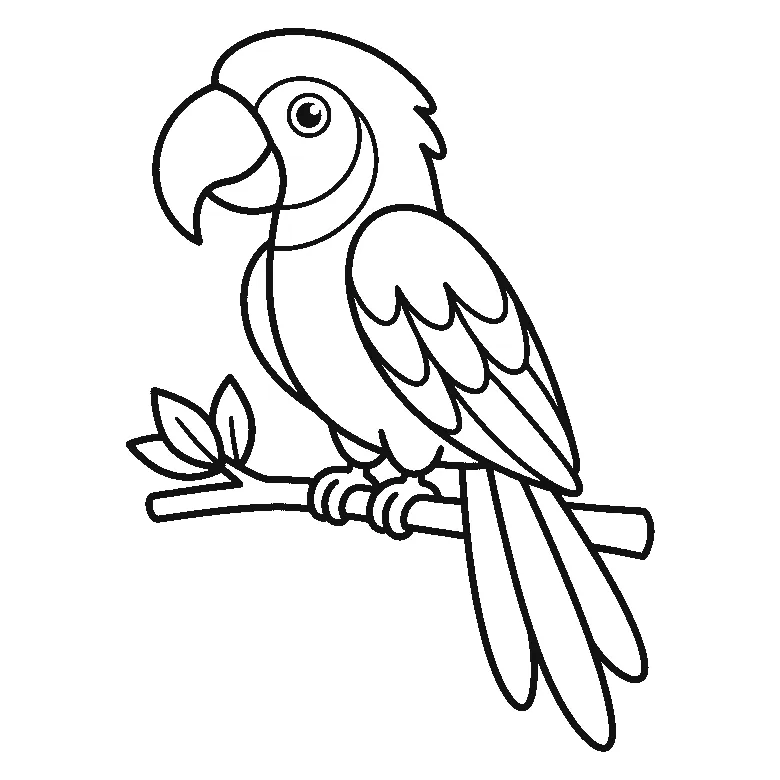
Parrot coloring page
A parrot on a branch with a big hooked beak, a folded wing of broad feathers and three long tail feathers.
Coloring outline drawn by us.
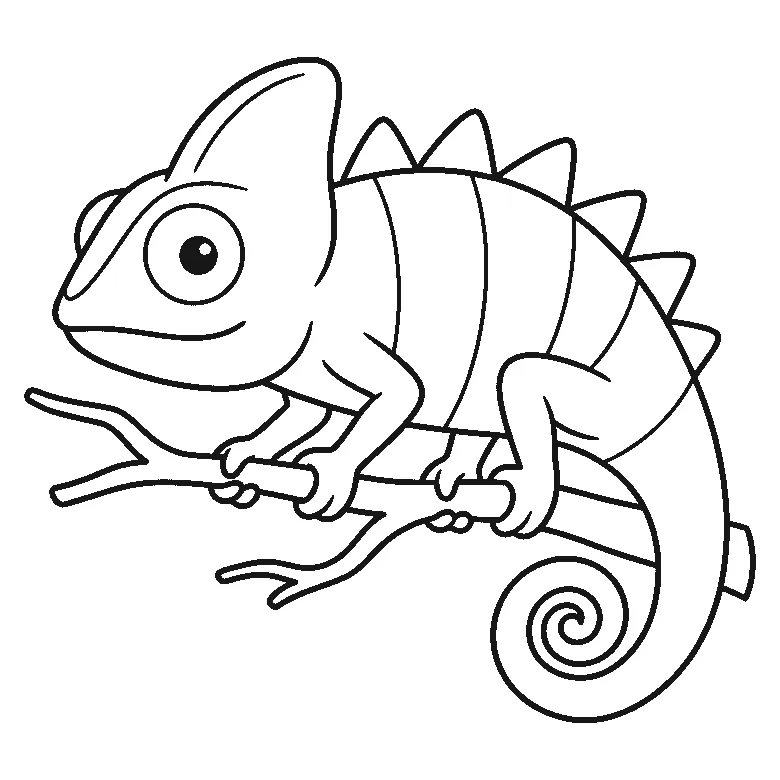
Chameleon coloring page
A chameleon on a branch with a spiral tail, a spiked spine and a body already banded for you.
Coloring outline drawn by us.


