Animals
Free printable animal coloring pages — one animal a sheet, thick clean outlines, ready for the printer.
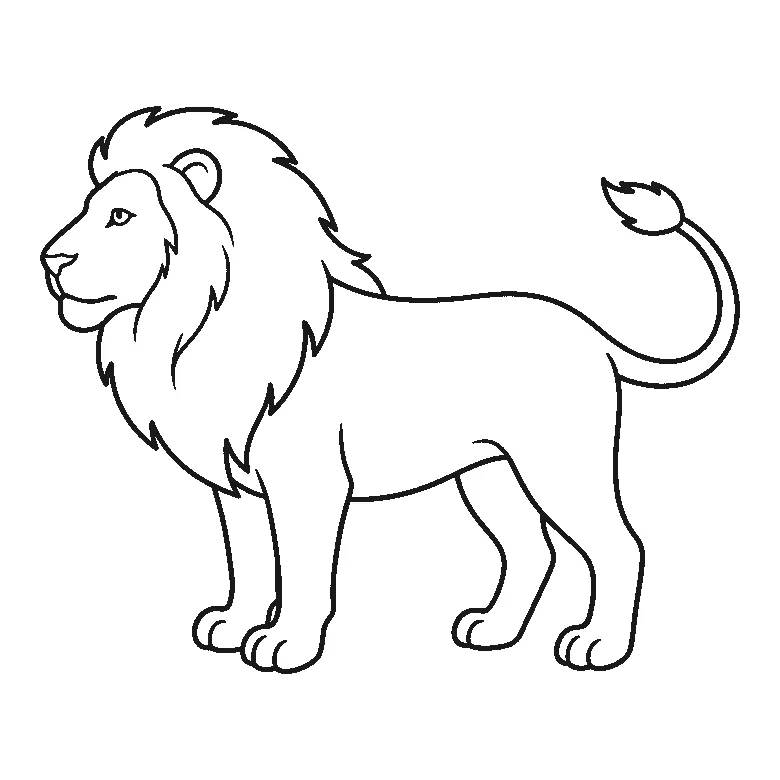
Zoo animal coloring pages
The animals that live wild somewhere else — the big cats, an elephant, a giraffe, a panda, a koala and a penguin on its block of ice, each one a sheet of its own.
Coloring outline drawn by us.
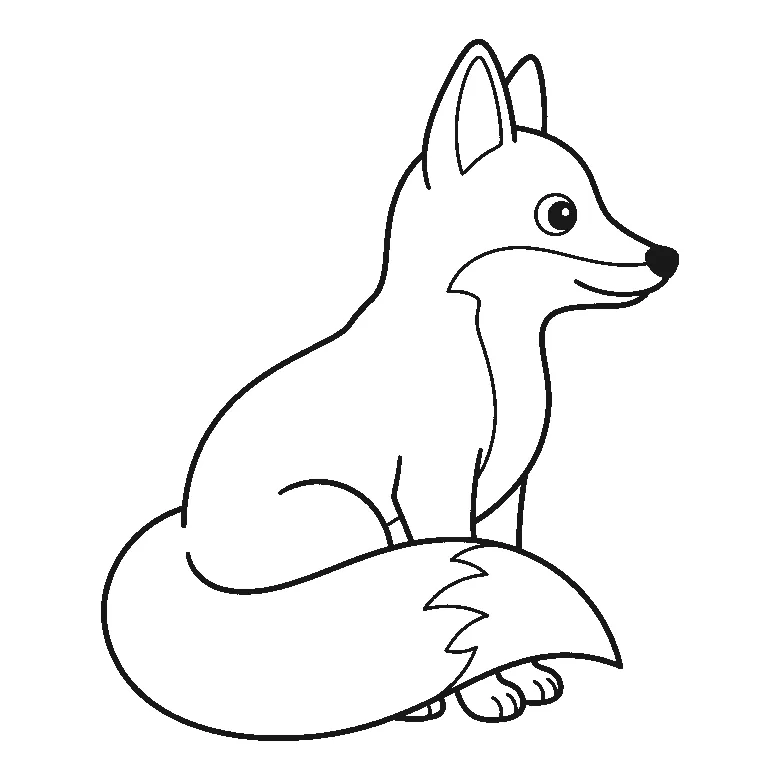
Woodland animal coloring pages
A fox, a wolf, a bear, a fawn, an owl, a squirrel, a hedgehog and a songbird — the animals of the woods and the field edge, one to a sheet.
Coloring outline drawn by us.
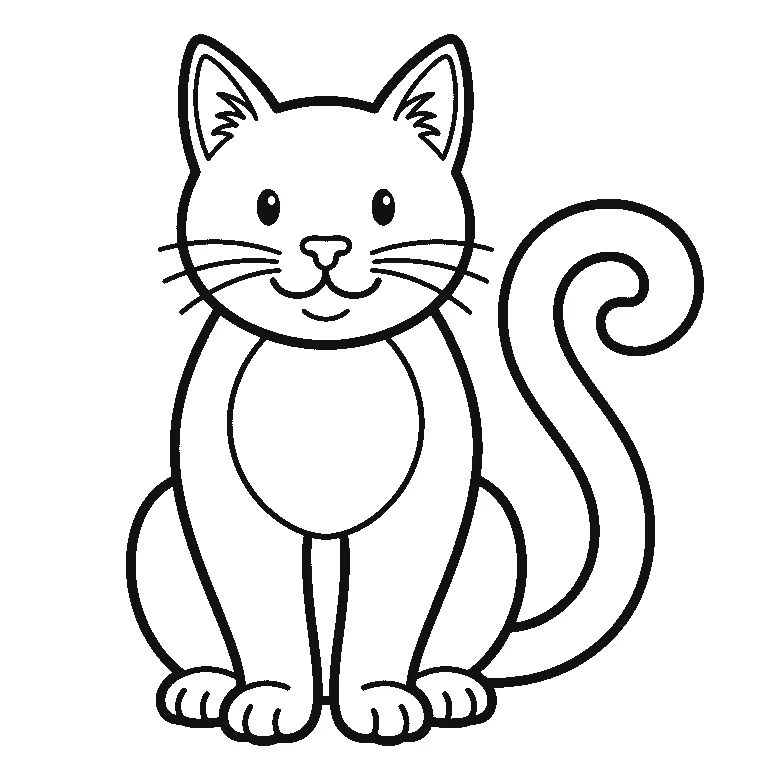
Cat coloring page
An upright, forward-facing cat with tufted ears and a curled tail, in thick black outlines on one letter-size sheet.
Coloring outline drawn by us.
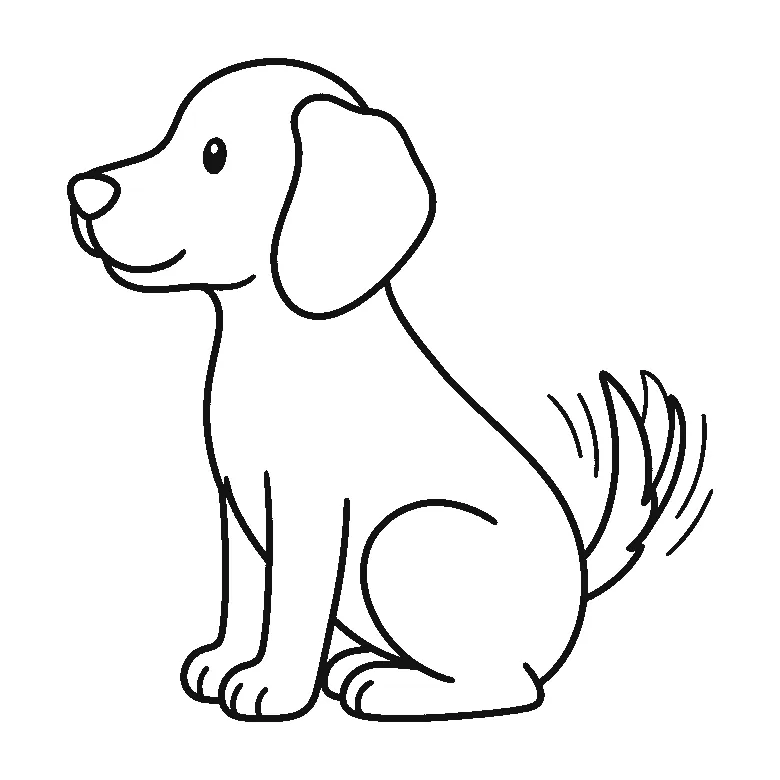
Dog coloring page
A dog in profile with one floppy ear and a feathered tail, drawn in open black outlines and ready to print at actual size.
Coloring outline drawn by us.
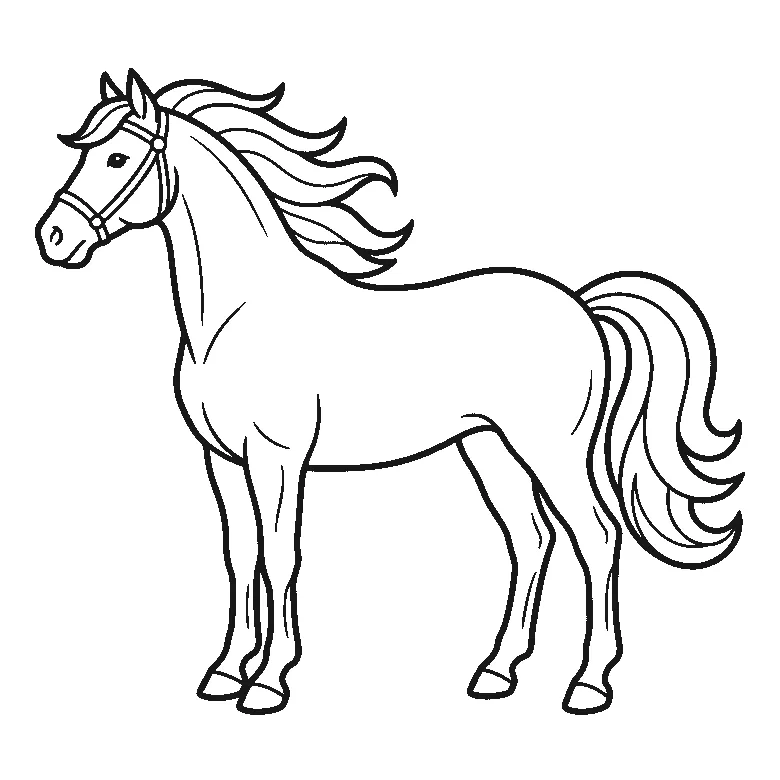
Horse coloring page
A horse standing in profile in its bridle, with a long streaming mane and full tail, on one printable letter-size sheet.
Coloring outline drawn by us.
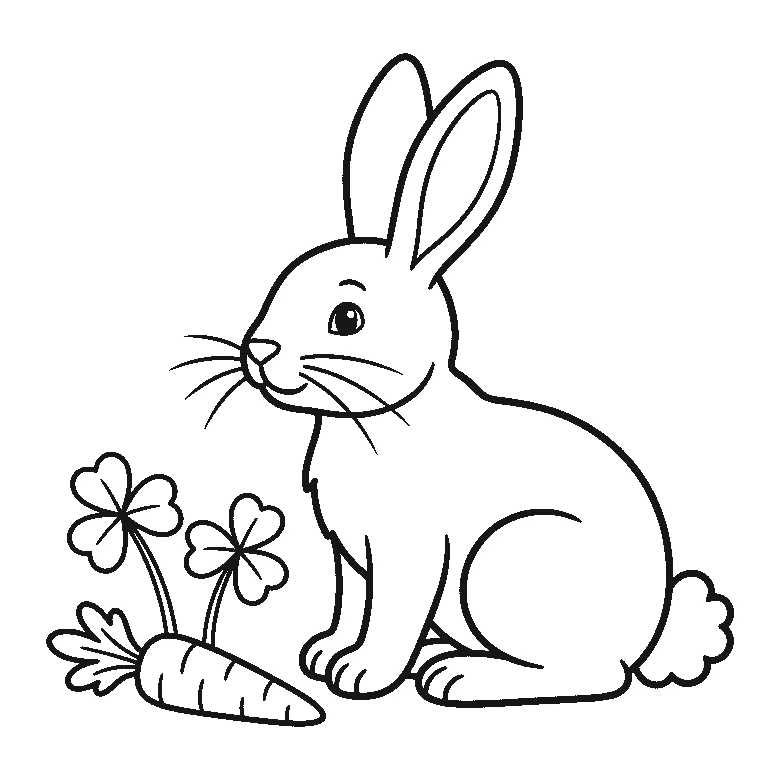
Rabbit coloring page
A sitting rabbit with tall ears, whiskers and a fluffy tail, plus a carrot and two clover flowers.
Coloring outline drawn by us.
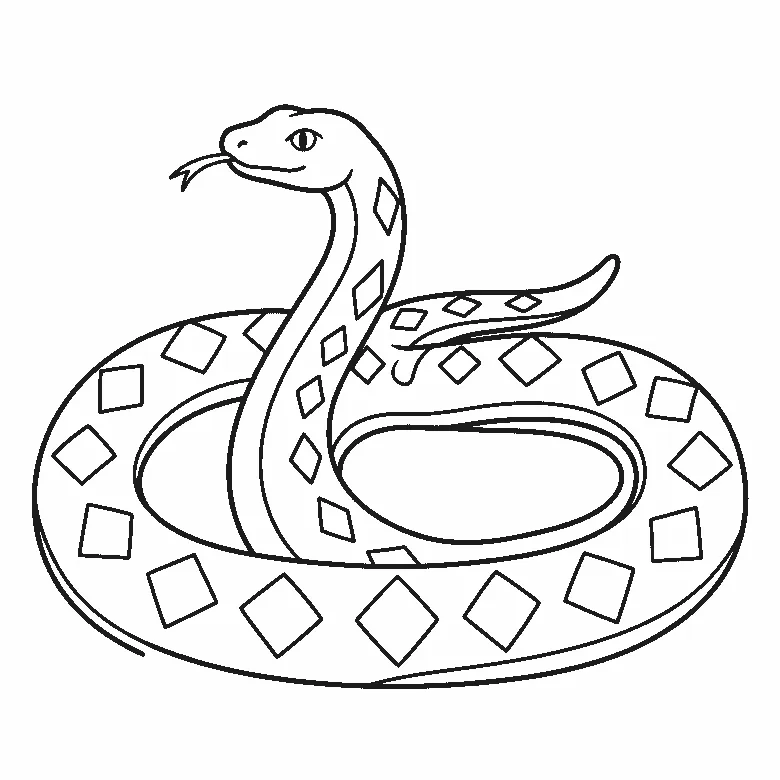
Snake coloring page
A coiled snake with a raised head, forked tongue, and a row of big diamonds down its back, free to print on US Letter.
Coloring outline drawn by us.
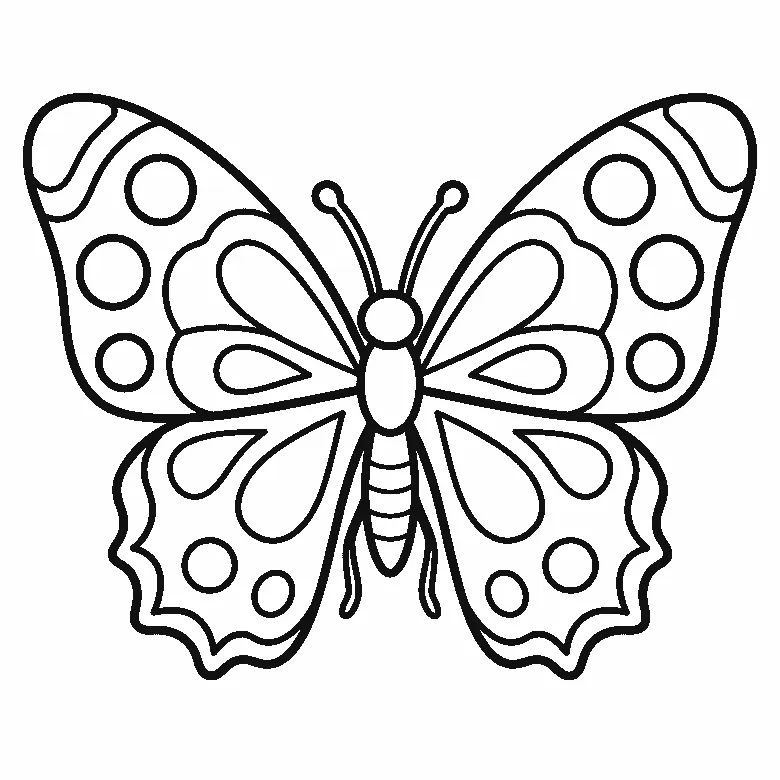
Butterfly coloring page
Wide open wings patterned in circles and teardrops, symmetrical enough to color one half at a time.
Coloring outline drawn by us.
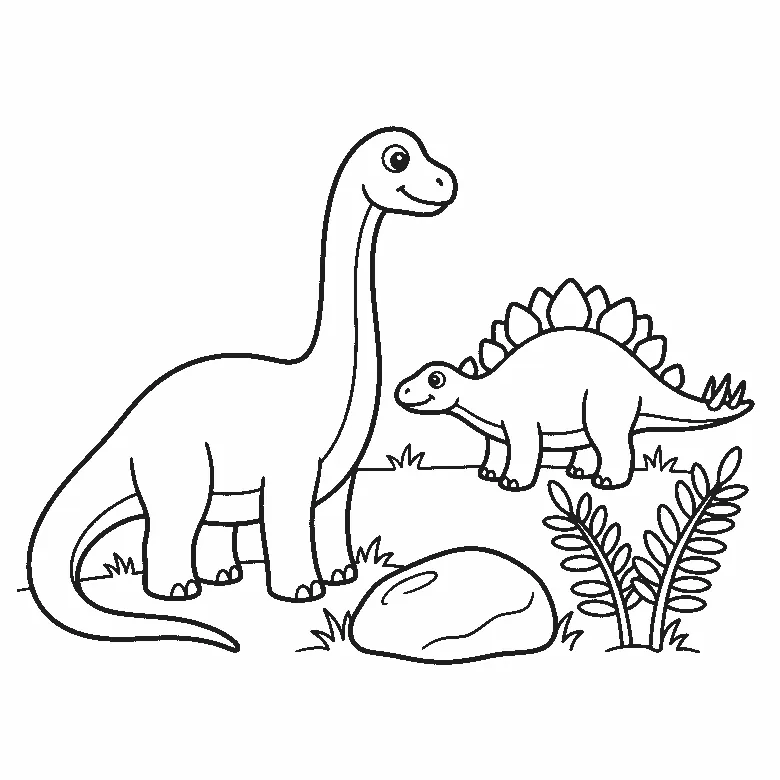
Dinosaur coloring page
Two dinosaurs, a boulder, a fern and tufts of grass in black outline, ready to print on letter paper.
Coloring outline drawn by us.
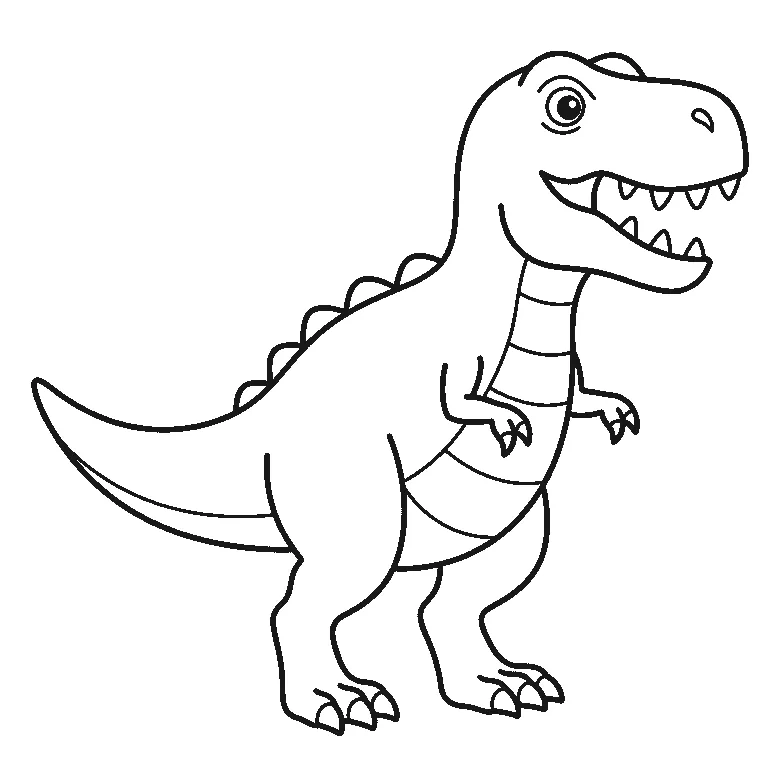
T. rex coloring page
A T. rex in profile with an open mouth, pointed teeth, small arms and a long tail, on plain white.
Coloring outline drawn by us.
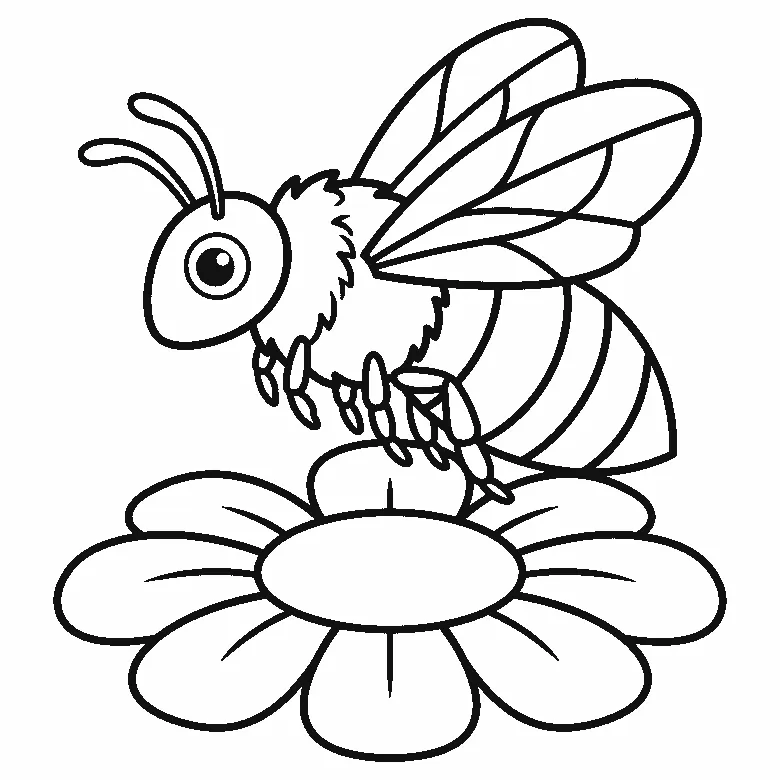
Bee coloring page
One bee on a wide flower, its body already divided into four stripe panels to fill.
Coloring outline drawn by us.
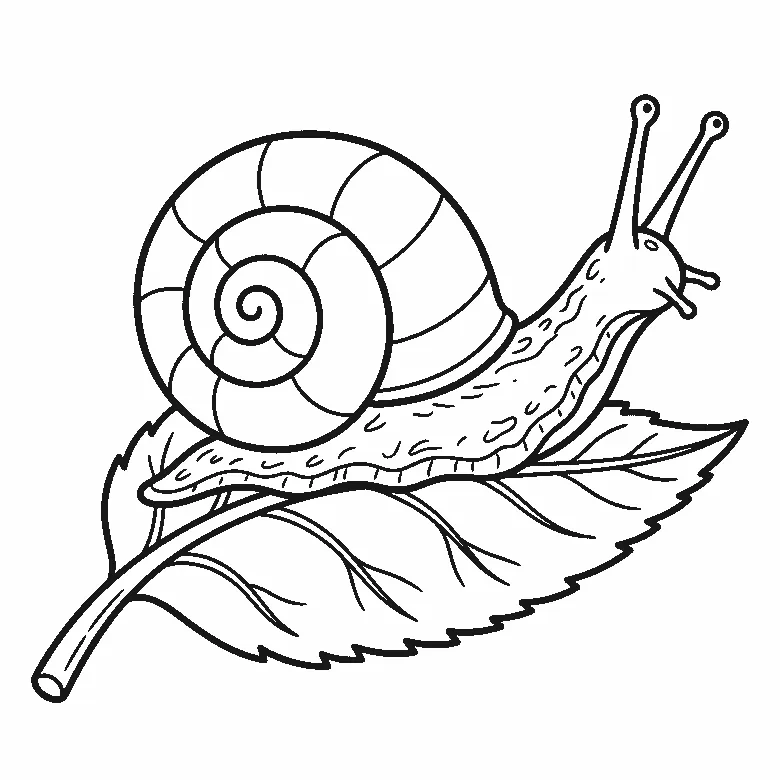
Snail coloring page
A snail crossing a big toothed leaf, its shell a wide spiral of broad bands to fill one by one.
Coloring outline drawn by us.
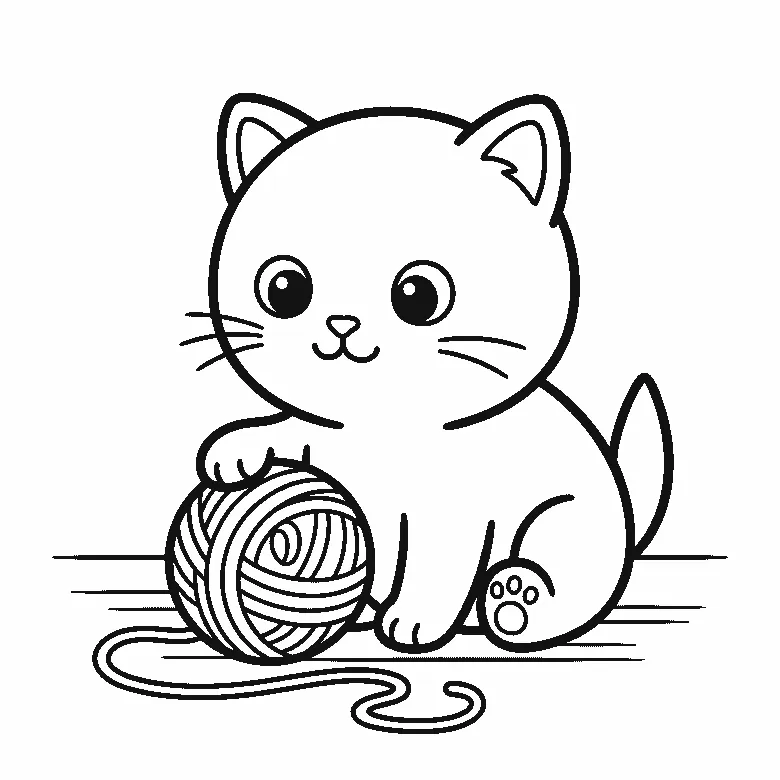
Kitten coloring page
A round-headed kitten sitting with one paw on a ball of yarn, the loose thread trailing away across the floor, free as a US Letter PDF.
Coloring outline drawn by us.


Every animal in this section has a sheet to itself: cat, kitten, dog, horse, bear, bird, fox, lion, penguin, rabbit, snake, wolf, monkey, deer, elephant, giraffe, owl, butterfly, capybara, dinosaur, T. rex, tiger, panda, bee, koala, squirrel, hedgehog, cheetah, leopard, parrot, chameleon and snail. Nothing here is a scene with six creatures crowded together. One animal, drawn large enough to fill a sheet of letter paper, with a thick black outline and open white space inside it. Every animal has a page of its own, and that page is where the PDF and a larger preview are waiting, so you can see the drawing before you spend paper on it.
The animals fall into rough families once you look at the previews side by side, and the family tells you what the coloring will feel like. The furred faces — cat, kitten, dog, fox, wolf, bear, rabbit, lion, deer, monkey, koala, squirrel — are built from broad curved panels with a few interior lines for the muzzle, the ears and the chest. The patterned ones — giraffe, snake, butterfly, tiger, cheetah, leopard, bee, snail — hand you a set of small enclosed shapes to fill one by one, which is slower work and a different kind of pleasure. Then there are the heavyweights, elephant and the two dinosaurs, which are mostly one enormous body wall with very little dividing it.
The patterned group is worth pulling apart, because three of them are big cats and they are not the same problem. The tiger's stripes are drawn as closed leaf shapes rather than as strokes, so every stripe can be filled. The cheetah's spots are solid round circles, spaced apart. The leopard's markings are rosettes, which are rings with something inside them, so each one is two decisions rather than one. Printed together they are the clearest way to see what separates three cats that share a silhouette.
If you are choosing for a small hand, the useful question is how many separate regions the drawing has. Elephant, bear, capybara, penguin, hedgehog and panda are drawn as a few large fields with generous outlines, and almost nothing inside them is narrow enough to slip out of. Giraffe, butterfly, leopard and chameleon are built from collections of little compartments, and staying inside a patch or a wing cell asks for slower movement. Cat, dog, horse, rabbit and parrot carry a handful of interior lines across a body that still reads as open space, and the kitten sits between the two ends: a large open head and body, with four paw-pad shapes small enough to need a sharp point. Pick from the ends of that range deliberately rather than by favorite animal alone, and the sheet will match the person coloring it.
Medium matters differently across this section. On the open-bodied animals, crayon is excellent, because a wide waxy stroke covers a big field fast and the skipping texture reads as hide or fur rather than as a mistake. On the patterned animals, crayon is frustrating and a sharpened colored pencil is the better tool, since it reaches into a corner a crayon tip rounds off. Markers give the flattest, boldest fill of all and suit the dinosaurs and the lion, and if their ink shows through the back of the page, slide a spare sheet underneath or print those on card stock. Gel pens are for last touches, not for whole bodies.
Realistic color is available for every animal here and required for none. A red fox, a gray wolf, a brown bear, tan and cream on the giraffe, black and white on the penguin: all of that will look right and is a fine way to spend an afternoon. But a purple elephant is also a purple elephant, and nothing on the page argues with it. A useful middle path is to keep one thing honest and invent the rest, such as a naturally colored owl on a sky of impossible green. Whoever holds the pencil decides, and the decision can change halfway through.
There is something to notice in almost every drawing while you fill it. The butterfly's two wings are mirror images, so a color you place on the left has an obvious partner on the right. The capybara is a rodent, which is easier to believe once you find its front teeth in the outline. An owl's face is a broad flat disc with the eyes set forward, unlike the side-set eyes on the deer and the horse. A snake has no legs to break up its length, so its body is one continuous ribbon of pattern from head to tail. The snail's shell spirals outward from the small curl at its center, which is the oldest part of it.
Printing is the same across the whole section and worth getting right once. Load plain letter paper, choose actual size rather than fit-to-page so the outlines keep their weight, and print in black and white to save color ink you are about to add by hand anyway. Heavier card stock is the upgrade that matters most if markers are involved. Two copies of the same animal is the quiet trick of this section: two people color the same fox at the same table and end up with two completely different foxes, which is more interesting than it sounds.
A finished animal sheet does not have to stay a sheet. Cut the animal out along its outer line, glue it to a folded piece of card stock, and it becomes a birthday card with no store involved. Taped in a window, the thinner fills glow and the thick outline holds the shape together. Pinned in a row, several of them read as a set even though they were drawn one at a time, because every sheet in this section keeps the same line weight and the same amount of white around the subject.
Published Updated 32 sheets984 words