
PDF · US Letter · 15 KB · Free, no sign-up. For home and classroom use.
Chameleon coloring page
A chameleon on a branch with a spiral tail, a spiked spine and a body already banded for you.
A chameleon grips a bare branch in profile facing left. One very large round eye with a filled pupil dominates the head, set in a raised turret, and a tall curved crest rises behind it. A row of pointed triangles runs down the spine from the back of the head toward the tail. The body between them is divided by lines into wide simple bands, four gripping feet hold the branch, and the tail curls down and round into a wide flat spiral at the end. The branch itself forks at the left, and there is nothing else in the frame.
The bands across the body are what make this sheet quick to bring to a finished state. They are broad, they run the whole depth of the animal, and they are already separated, so a rainbow across the body takes one pass per band and looks deliberate rather than random. Working front to back keeps the sequence honest; jumping around it is where a repeat gets lost.
The spiral tail is the single most interesting shape on the page. It is one continuous lane that narrows as it turns inward, and it can be colored in one long stroke that keeps changing pressure, or band by band in the same rhythm as the body. The second option takes longer and ties the tail to the animal; the first is faster and makes the tail a shape of its own. The very center of the spiral is the smallest area on the sheet and is worth a sharp point.
The eye is drawn as a turret rather than as a socket, with the pupil sitting in a small opening in the middle of a cone. That is worth respecting: coloring the turret as part of the head loses the whole idea. Give the ring around the pupil its own tone, a step darker or lighter than the head, and the eye stands off the face the way the drawing intends.
The spine triangles are the last of the three patterned features and the smallest. They are closed and well separated, so filling them all one strong color gives the animal a clear top edge, which matters because the back is otherwise the emptiest line on the page. Alternating two colors along the row works too and echoes whatever the body bands are doing.
On a chameleon, an invented color scheme is arguably the accurate one. A chameleon's color changes, so green, brown, blue, pink and yellow are all defensible on the same drawing, and the banded body is built to carry more than one of them at once. If a realistic look is wanted, a green body with paler bands and a darker crest is the version that reads most easily.
The plain fact behind all of this is worth knowing while you fill it. A chameleon changes color mainly by rearranging crystals in a layer of its skin, which changes what light it reflects, and it does so in response to temperature and to other chameleons as much as to what it is sitting on — it is not a matter of matching the background like a paint chart. The feet in the drawing show the other feature: the toes are fused into two opposed bundles, which is what lets the animal clamp a branch rather than perch on it.
Print at actual size on plain letter paper. The center of the tail spiral and the ring around the eye are the two places a smaller print closes up. Regular copier paper is fine for pencils; markers suit these flat bands well but will bleed, so use card stock or slip a scrap sheet underneath. Cut around the outline and the animal comes away with the branch, and the spiral tail makes the silhouette instantly recognizable even before it is colored.
Before you print
- Color the body bands front to back so a repeating sequence does not lose its place.
- Give the eye turret its own tone, a step off the head, so the eye stands out from the face.
- Follow the tail spiral inward in one stroke, easing pressure as it narrows, and keep a sharp point for the center.
- Fill the spine triangles in one strong color; the back is otherwise the emptiest line on the sheet.
- Markers suit the flat bands, but print on card stock or the ink will come through.
Published Updated 642 words
More in this section
Snail coloring page
A snail crossing a big toothed leaf, its shell a wide spiral of broad bands to fill one by one.
Coloring outline drawn by us.
Kitten coloring page
A round-headed kitten sitting with one paw on a ball of yarn, the loose thread trailing away across the floor, free as a US Letter PDF.
Coloring outline drawn by us.
Cat coloring page
An upright, forward-facing cat with tufted ears and a curled tail, in thick black outlines on one letter-size sheet.
Coloring outline drawn by us.
Dog coloring page
A dog in profile with one floppy ear and a feathered tail, drawn in open black outlines and ready to print at actual size.
Coloring outline drawn by us.
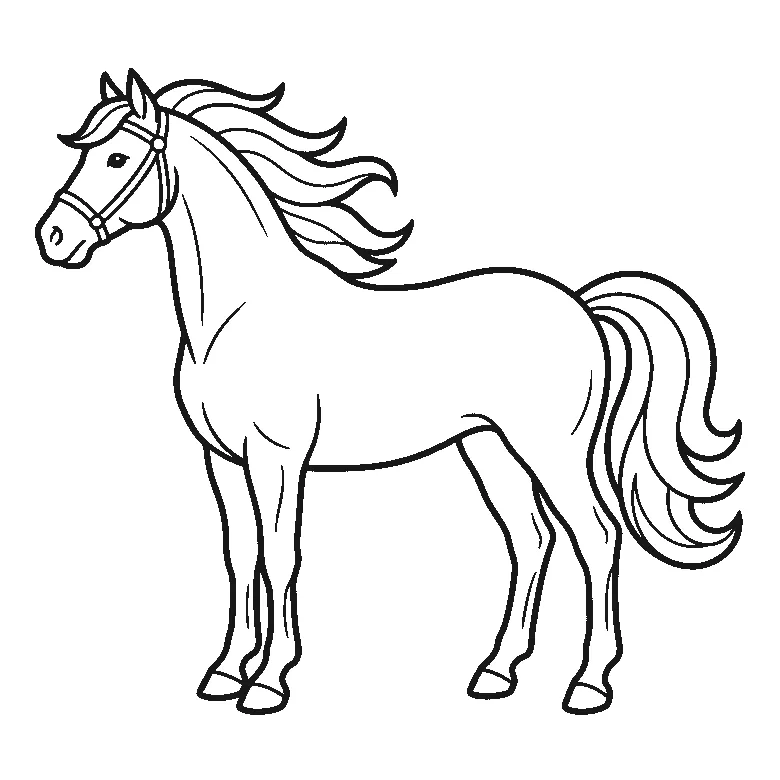
Horse coloring page
A horse standing in profile in its bridle, with a long streaming mane and full tail, on one printable letter-size sheet.
Coloring outline drawn by us.
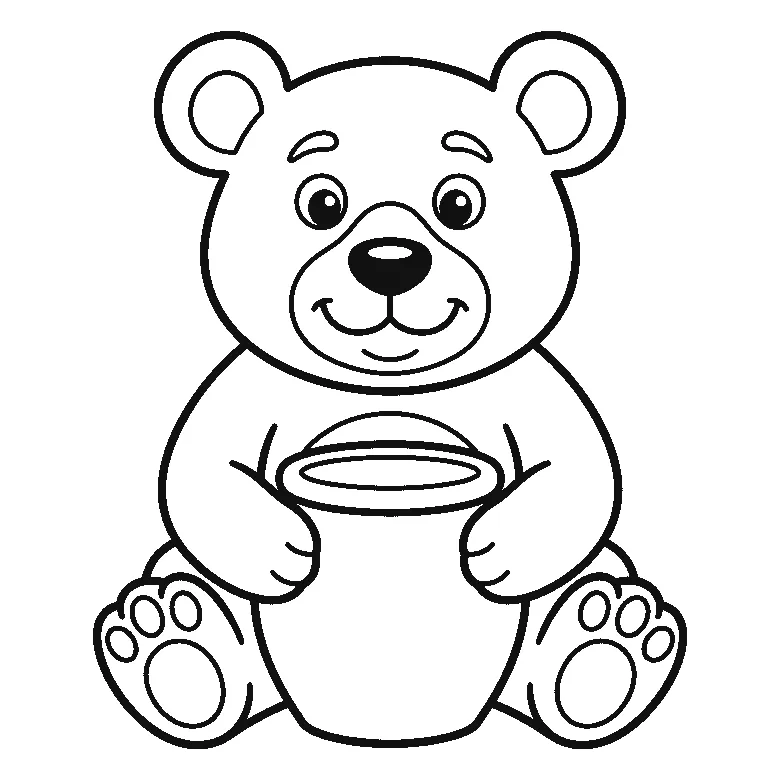
Bear coloring page
A round bear sitting with a honey pot in its paws, drawn in thick black outlines and free to print at letter size.
Coloring outline drawn by us.
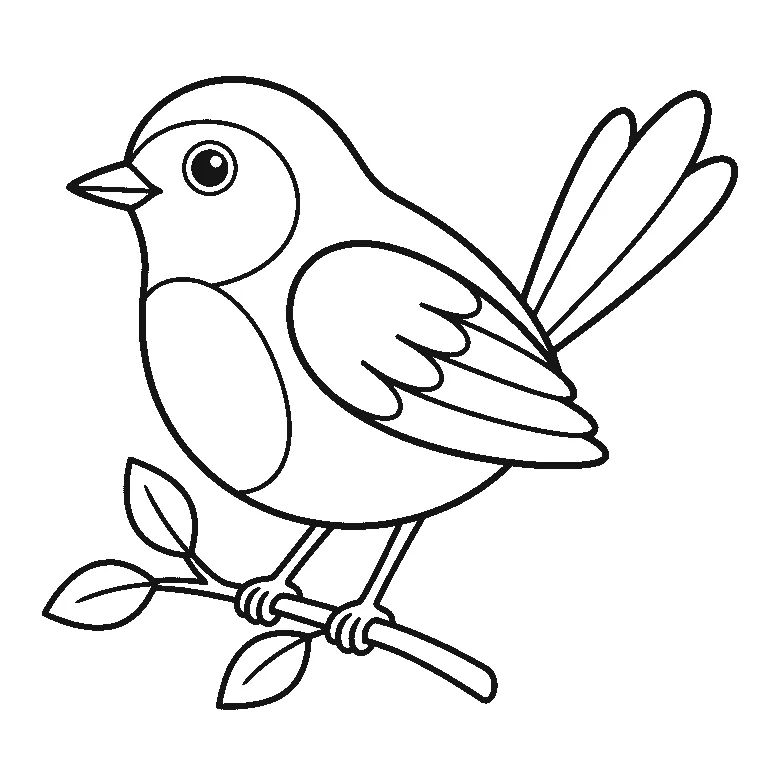
Bird coloring page
Free letter-size printable: a plump songbird perched on a leafy twig, with a long layered tail worth taking slowly.
Coloring outline drawn by us.
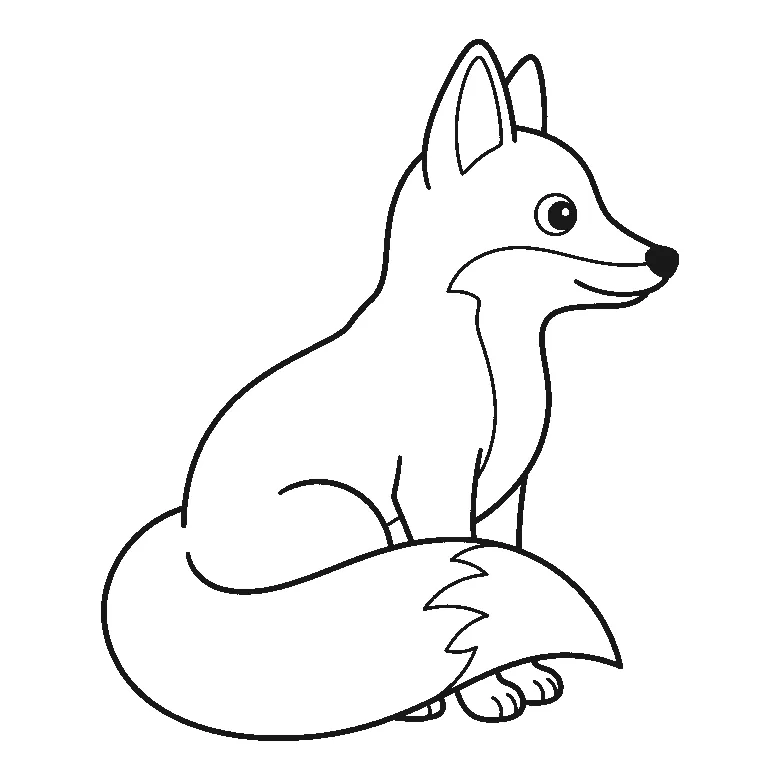
Fox coloring page
A sitting fox in profile with a huge bushy tail curled around in front, free to print at letter size.
Coloring outline drawn by us.
Lion coloring page
One lion in profile with a full ruffled mane, ready to print on plain letter paper and color.
Coloring outline drawn by us.
Penguin coloring page
A penguin standing on a block of ice, drawn in a few big shapes that fill fast with any medium.
Coloring outline drawn by us.
Rabbit coloring page
A sitting rabbit with tall ears, whiskers and a fluffy tail, plus a carrot and two clover flowers.
Coloring outline drawn by us.
Snake coloring page
A coiled snake with a raised head, forked tongue, and a row of big diamonds down its back, free to print on US Letter.
Coloring outline drawn by us.


