Vehicles
Cars, a tractor, a train, a boat, an excavator and an airplane in level flight, drawn from the side with every panel left plain.
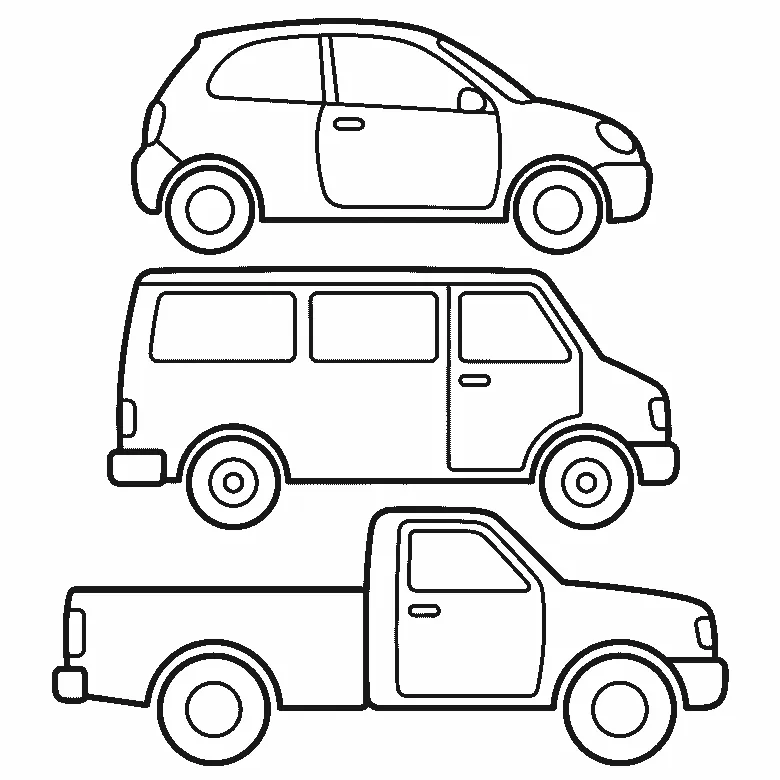
Car coloring page
Three vehicles stacked down the page, hatchback, van and pickup, with every panel left blank to fill.
Coloring outline drawn by us.
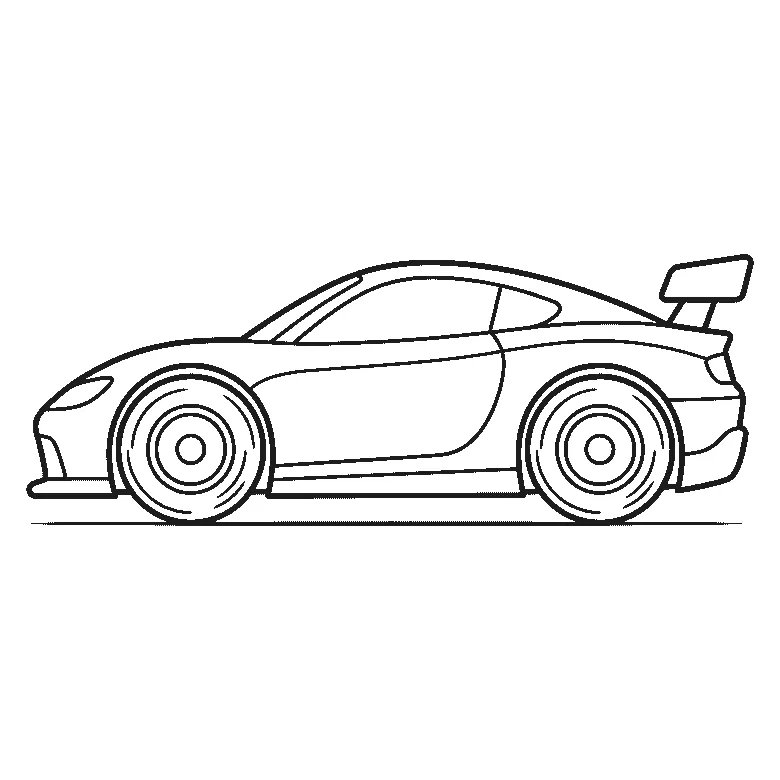
Race car coloring page
A race car seen from the side, with a bare body panel, a rear spoiler and spoked wheels, ready for any paint scheme you invent.
Coloring outline drawn by us.
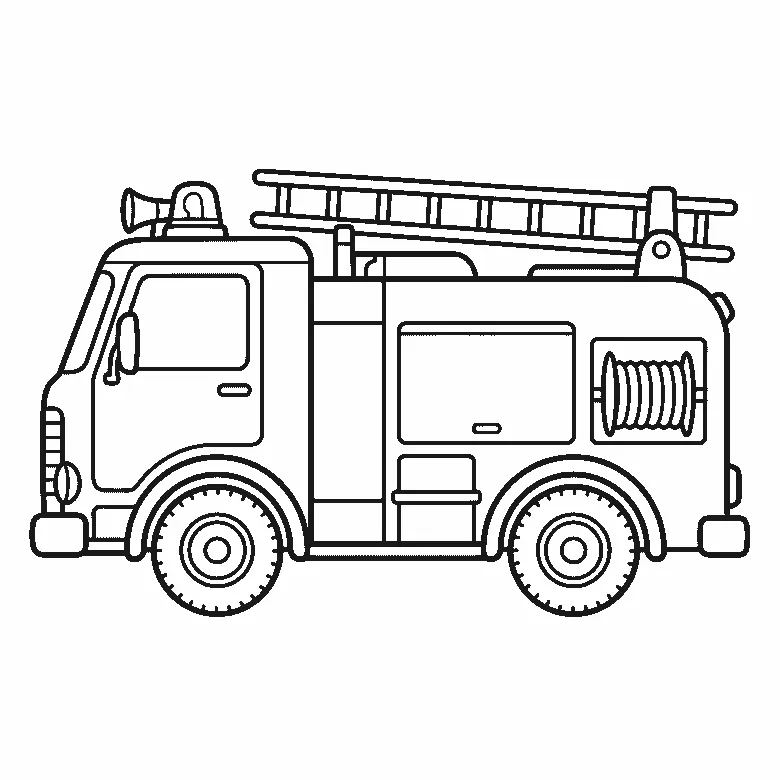
Fire truck coloring page
A side view of a fire truck with its ladder, beacon, horn, hose reel and treaded wheels drawn in clean outline.
Coloring outline drawn by us.
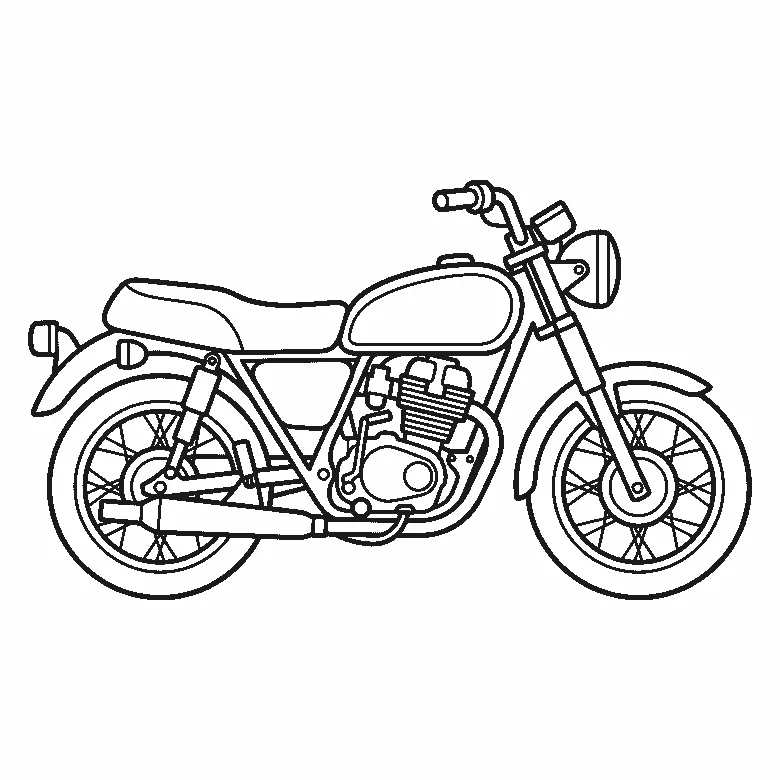
Motorcycle coloring page
A motorcycle in side view with spoked wheels, an engine, a headlamp and completely plain bodywork.
Coloring outline drawn by us.
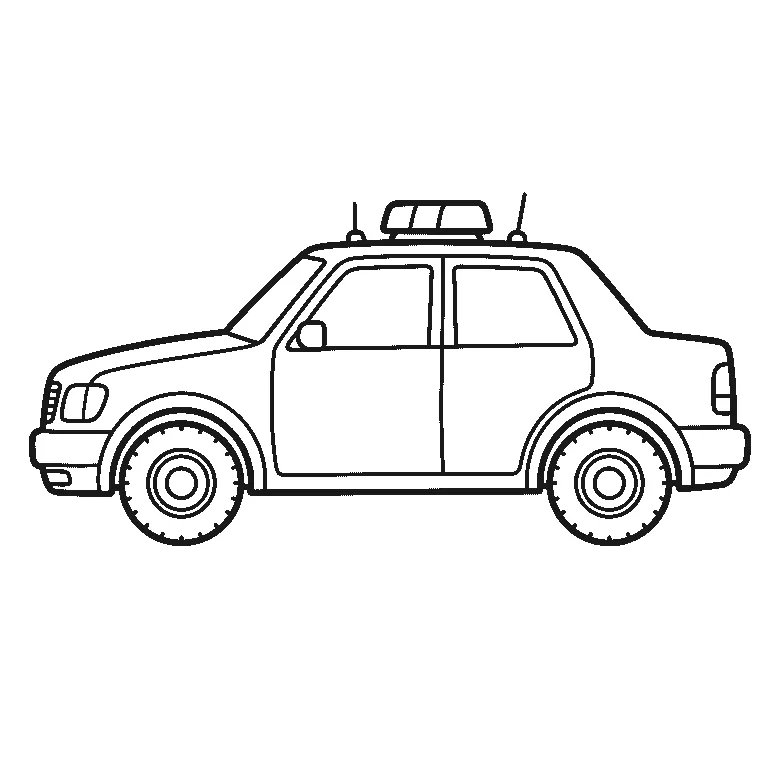
Police car coloring page
A patrol car in side view with a roof light bar, two antennas and completely plain door panels.
Coloring outline drawn by us.
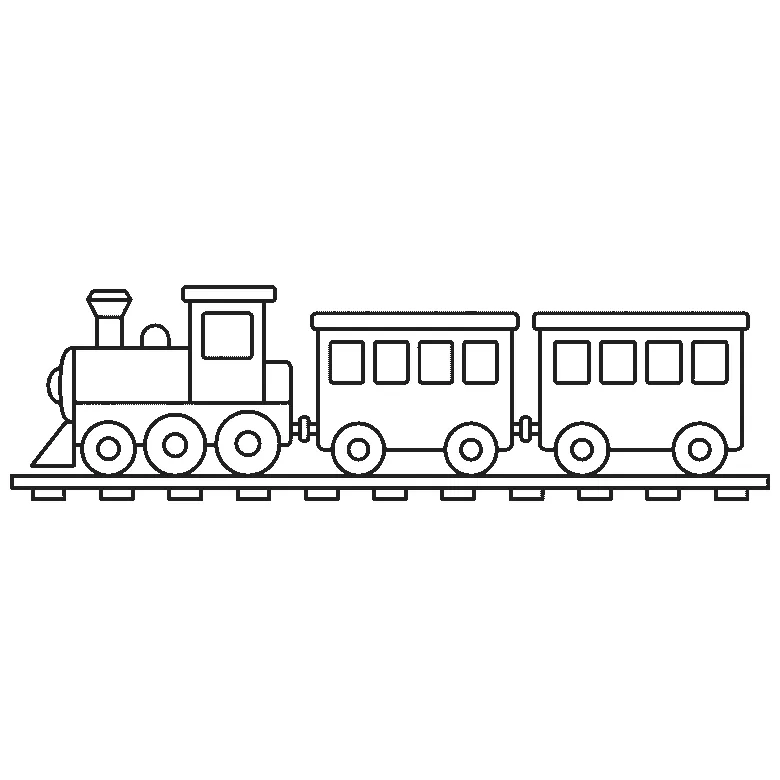
Train coloring page
A locomotive and two carriages on a straight track, drawn as simple boxes with big square windows.
Coloring outline drawn by us.
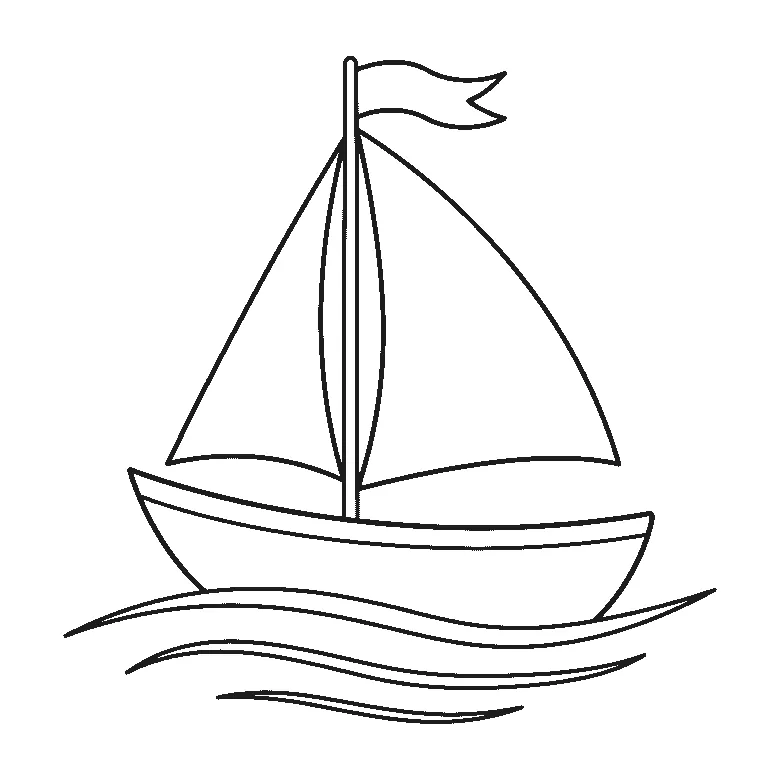
Boat coloring page
A sailing boat with two blank triangular sails and three curved water lines, drawn large and simple.
Coloring outline drawn by us.
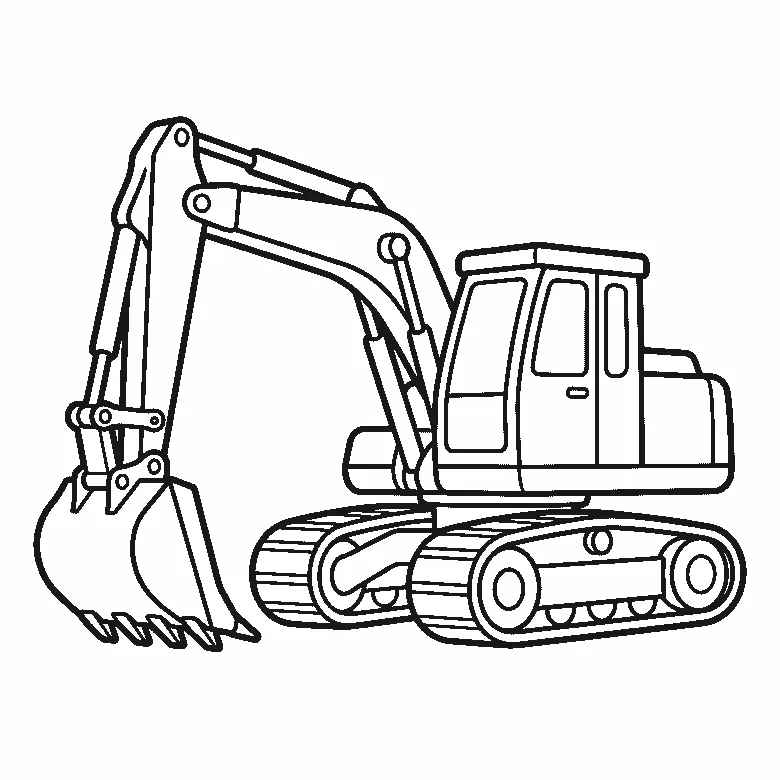
Excavator coloring page
A tracked excavator with a jointed arm and a toothed bucket, drawn from a three-quarter angle.
Coloring outline drawn by us.
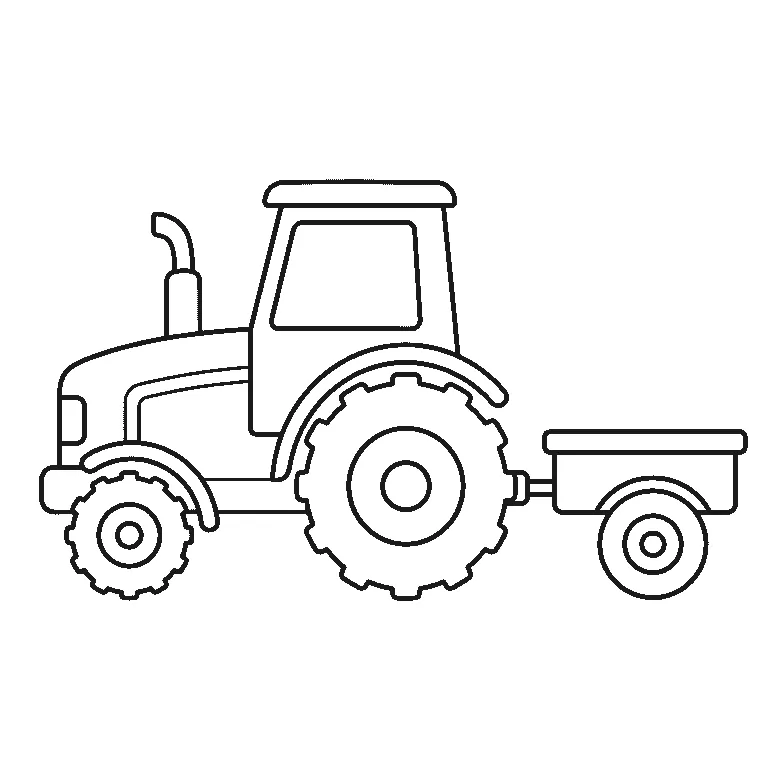
Tractor coloring page
A tractor with one huge lugged rear wheel and a small front one, pulling a two-wheeled trailer.
Coloring outline drawn by us.
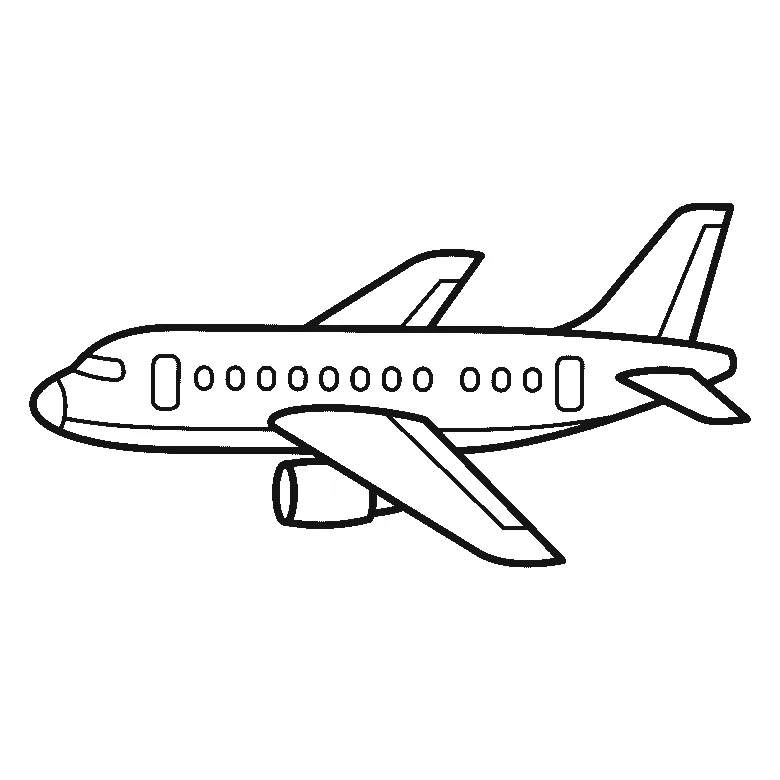
Airplane coloring page
A passenger airplane in level flight seen from the side, with a row of cabin windows, two wings and a tall swept fin, free as a US Letter PDF.
Coloring outline drawn by us.


This section holds a car, a race car, a fire truck, a motorcycle, a police car, a train, a boat, an excavator, a tractor and an airplane. They are drawn from the side, wheels flat on an implied ground line, with no perspective shortening anything. The excavator is an exception, standing at a three-quarter angle so that both its side and a little of its front are visible, and so is the airplane, in the air and tilted a few degrees nose-up with nothing beneath it at all. That side view is a deliberate choice. It keeps every panel readable as a closed shape, so a door is a door, a window is a window, and a wheel is a circle inside a circle rather than a squashed oval.
The car sheet is the plain one, and plain here is the point. It is a family-shaped car in profile with the body divided into a few large panels, windows left as open glass, and two wheels with simple hubs. Nothing on it is fussy. Someone who has never colored a vehicle before can fill the whole body in one color and stop there, and the sheet still looks finished. Someone who wants more can treat each panel as its own value and shade the lower half a little darker, the way the side of a car sits in its own shadow.
The race car takes the same profile idea and lowers it. The body is long and close to the ground, the front comes to a point, and there is a wing shape at the back with a strip of open space inside it. The wheels are wider than the car sheet's, and the outlines leave you room to decide whether they are smooth or ridged. Several small, closed areas sit along the nose and the wing, and a sharpened pencil reaches into a shape that size more easily than a broad tip does.
The fire truck is a tall shape carrying a lot of line work: a boxy cab, a long body broken into compartment doors, a ladder along the top and wheels under a high chassis. The police car is its opposite — a plain sedan whose door panels are completely empty, which is exactly where the markings would go on a real one, so that blank space is an invitation rather than an omission. Its light bar is divided into segments and sits alone on the roof against white paper, which makes it quick to color to good effect.
The motorcycle, the tractor and the excavator are the three machines where the mechanism is drawn rather than hidden. The motorcycle has spoked wheels and a finned engine block; the tractor has one very large lugged rear wheel and one small front one, pulling a plain trailer; the excavator has a jointed arm with hydraulic rams alongside it and a bucket with five teeth. All three reward being colored part by part, because the parts are separately outlined, and all three take a very long time if you decide to fill every spoke, lug and track link individually.
The train and the boat are the two that bring their own ground with them. The train runs on a straight track drawn the full width of the sheet, with crossties beneath the rails, and it leaves a great deal of white paper above and below itself. The boat sits on three long curved water lines that cannot be filled, only colored around. Both are wide, shallow drawings, and adding something of your own behind either vehicle changes the page a great deal. The airplane is the opposite case and belongs beside them for that reason: it brings no ground with it whatever, so the white around it is not space left over but the sky it is flying in, and anything added there is a decision about weather rather than about scenery.
If you are picking one, pick by patience rather than by which vehicle you like most. The car, the boat and the airplane are the shortest sits. The race car, the police car and the train are the middle ones. The fire truck, the motorcycle, the tractor and the excavator ask for the longest stretch, mostly because of ladders, spokes, lugs and track links. A good order for someone working through several is to start with a broad one and leave a fiddly one until the hand has warmed up.
Medium shows plainly on these sheets, because they are so panel-heavy and the panels sit right against one another. Colored pencil is the safest across all of them: it layers, so a flat first pass can be darkened later at the lower edges, and it will not creep past a thin outline. Markers are fast and give the flat, poster-like look that suits a race car, but they bleed on thin paper and will feather across a ladder rung or a wheel spoke. Crayon skips on the long body of the truck unless you work in one direction rather than scrubbing. Gel pen is best saved for small accents: a hub, a mirror, the strip inside the wing.
Real vehicles suggest obvious colors, and you can take them or leave them. Fire trucks are commonly red, race cars are often bright because they are meant to be seen at speed, excavators are usually yellow, and everyday cars come in almost anything. None of these drawings carries a badge, a license plate or any lettering, so nothing on the page has to be consistent with anything. They all print the same way: plain letter paper, actual size rather than fit-to-page, and thicker card stock if markers are the plan.
Published Updated 10 sheets951 words