
PDF · US Letter · 17 KB · Free, no sign-up. For home and classroom use.
Koala coloring page
A koala hugging a eucalyptus branch, facing forward, with two very large fringed ears.
A koala clings to a thick branch that runs down the right side of the page, facing the viewer with both arms wrapped around it and both feet gripping lower down. Two round eyes with filled pupils sit either side of a large rounded nose that is filled dark, and a small smile is drawn below it. The two ears are the biggest features on the head: each is a wide round shape with a fringe of short strokes all the way round its outer edge. Long pointed leaves grow off the branch in sprays, above the head and below the hands.
The ears and the nose are what make this drawing read as a koala rather than as a small bear, so they are worth doing first and doing deliberately. Each ear has two parts, the fringed outer edge and the smooth inner disc, and coloring them differently is what gives the head depth. The nose is a single large closed shape and is already the darkest area on the page; if you fill it solid, everything else can stay pale and the face still reads from across a room.
The body is one broad open field with a curved line marking off the haunch, and it is the easiest large area on the sheet. Crayon covers it fast and its grain passes for thick fur. The arms and the fingers gripping the branch are the small work: each hand is drawn with separate fingers, and they are narrow enough that a sharpened pencil is a better tool there than anything broad.
The branch is a long straight lane running the height of the page, broken by two knots where the leaves come off. It is the one shape here that benefits from being colored in a single direction, along its length rather than across, because a stroke that follows the wood reads as wood. Leaving it pale and putting the strongest green on the leaves is the arrangement that keeps the animal the most visible thing on the sheet.
The leaves are long, pointed and each carries a center line, which divides every one of them into two halves. That gives you an easy way to make a spray of leaves look alive: color one half of each leaf slightly darker than the other, keeping the darker half on the same side throughout. It takes no more time than filling them flat and the sprays stop looking like cut-outs.
Gray with a paler chest and a dark nose is the reading that matches the animal, and it will look right. It is also a page that takes a completely unrealistic scheme well, because the shapes are large and simple: a blue koala on a purple branch holds together as a drawing in a way a more detailed animal would not. The ears are the one place worth keeping a lighter tone whatever else happens, since a dark ear swallows the fringe that took the drawing its trouble.
Two plain facts about the animal are visible here. A koala is not a bear but a marsupial, which is a different branch of the mammal family altogether, and the drawing gives it the round face and forward-set eyes that go with that. Its diet is almost entirely eucalyptus leaves, which is why the branch is a eucalyptus branch and why the leaves are drawn long and narrow with a single strong midrib rather than as generic round foliage.
Print at actual size on plain letter paper. The fringe around the ears and the fingers on the branch are what a smaller scale loses first. Card stock is worth loading if markers are going on the body, since it is a broad area and the ink will show through thin paper. Cut around the outer edge and the koala comes away holding the branch, with the leaf sprays attached; cutting inside the arms instead frees the animal on its own.
Before you print
- Color the fringed outer ear and the smooth inner ear differently; that contrast is what gives the head depth.
- Fill the nose solid and dark first, then everything else can stay pale and the face still reads.
- Stroke the branch along its length rather than across it, so it reads as wood.
- Shade one half of each leaf a little darker, always on the same side, and the sprays stop looking flat.
- Keep the ears light whatever scheme you choose, or the fringe disappears into them.
Published Updated 659 words
More in this section
Squirrel coloring page
A squirrel in profile holding an acorn, with a very large curled tail drawn as separate strands.
Coloring outline drawn by us.
Hedgehog coloring page
A hedgehog in profile beside an apple, its whole back drawn as one row of big triangular spikes.
Coloring outline drawn by us.
Cheetah coloring page
A cheetah in profile with its head turned to you, covered in solid round spots and a banded tail tip.
Coloring outline drawn by us.
Leopard coloring page
A leopard with its head turned to you, its coat drawn as open rosette rings of different sizes.
Coloring outline drawn by us.
Parrot coloring page
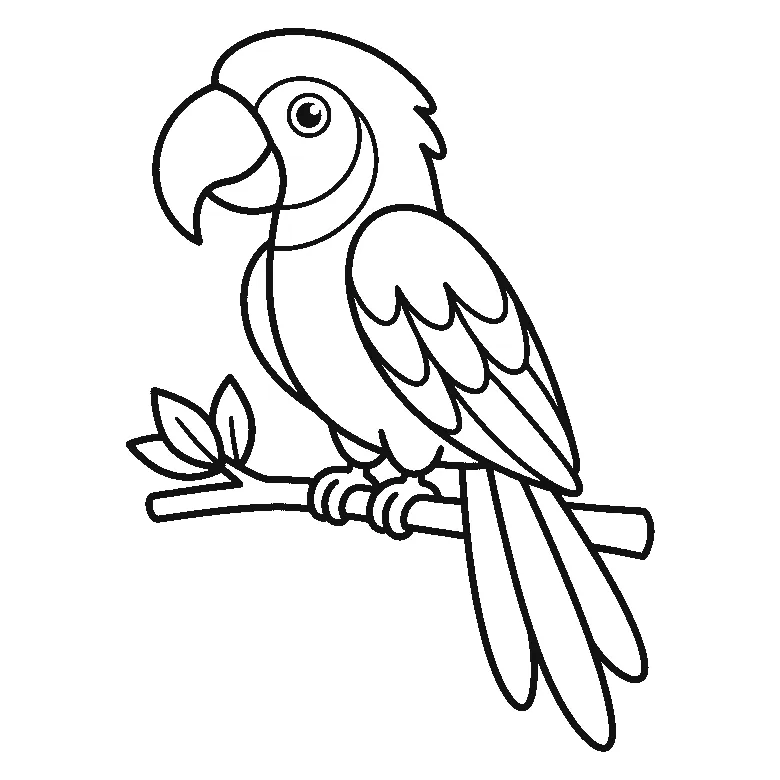
A parrot on a branch with a big hooked beak, a folded wing of broad feathers and three long tail feathers.
Coloring outline drawn by us.
Chameleon coloring page
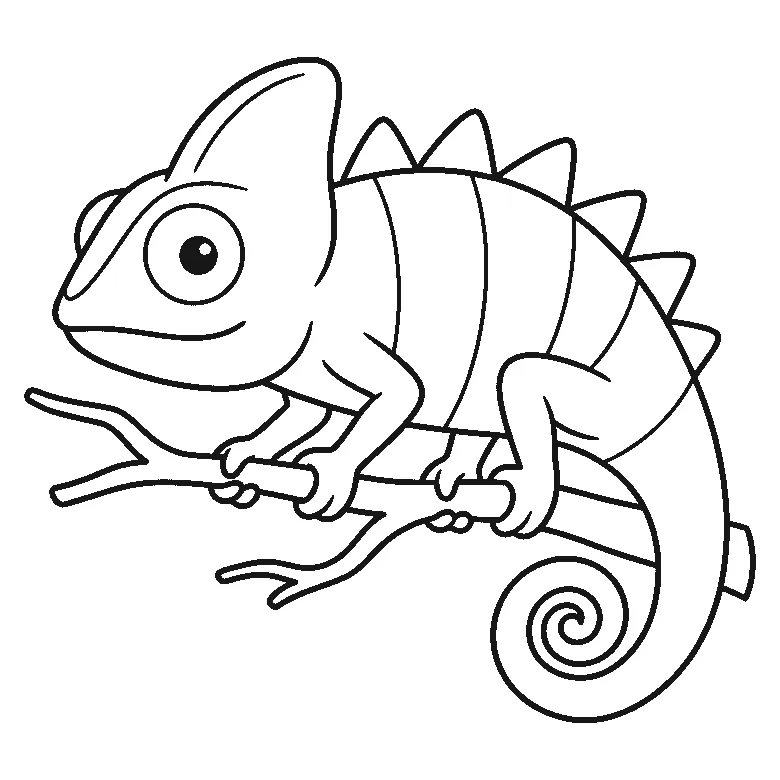
A chameleon on a branch with a spiral tail, a spiked spine and a body already banded for you.
Coloring outline drawn by us.
Snail coloring page
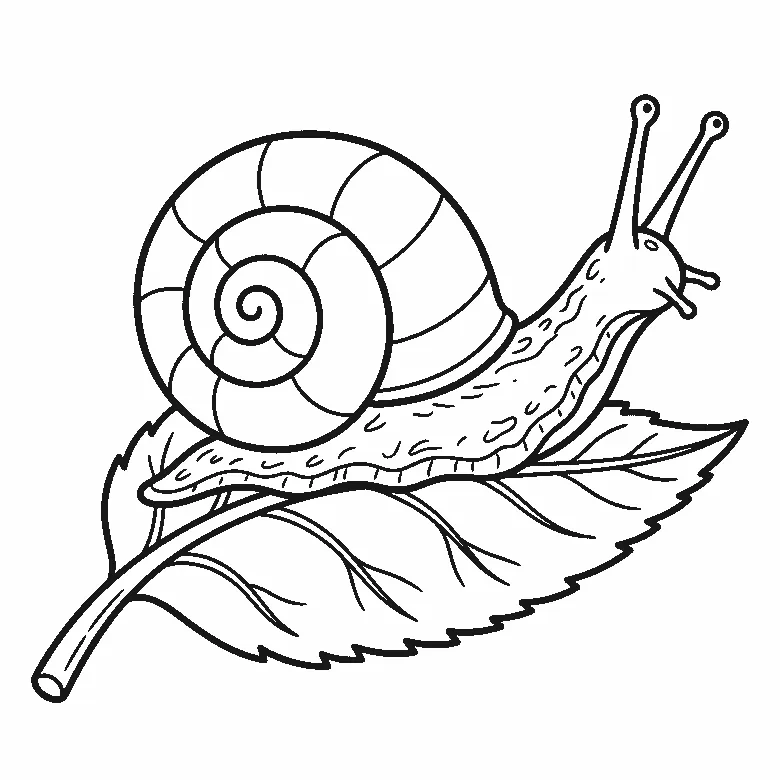
A snail crossing a big toothed leaf, its shell a wide spiral of broad bands to fill one by one.
Coloring outline drawn by us.
Kitten coloring page
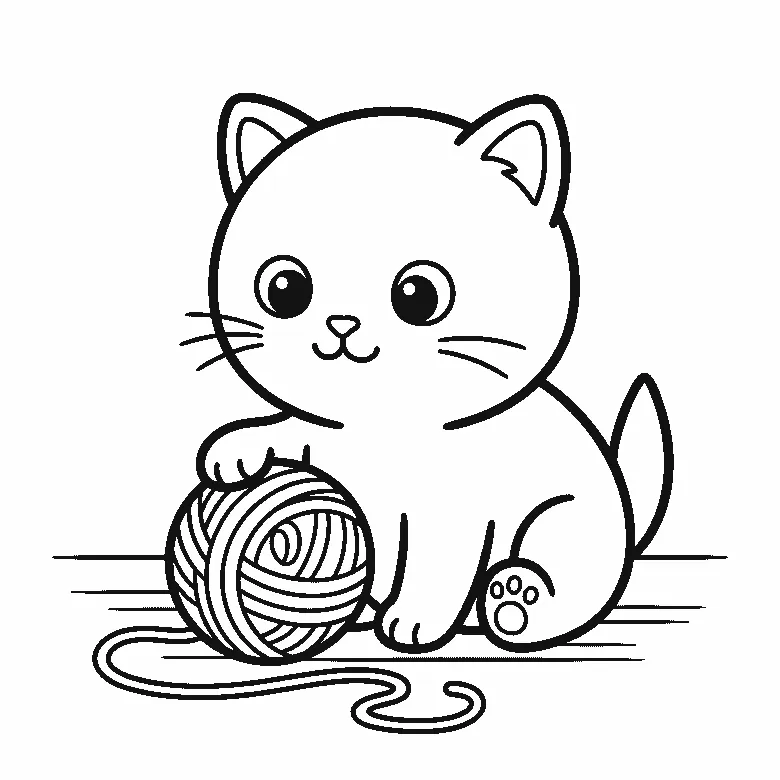
A round-headed kitten sitting with one paw on a ball of yarn, the loose thread trailing away across the floor, free as a US Letter PDF.
Coloring outline drawn by us.
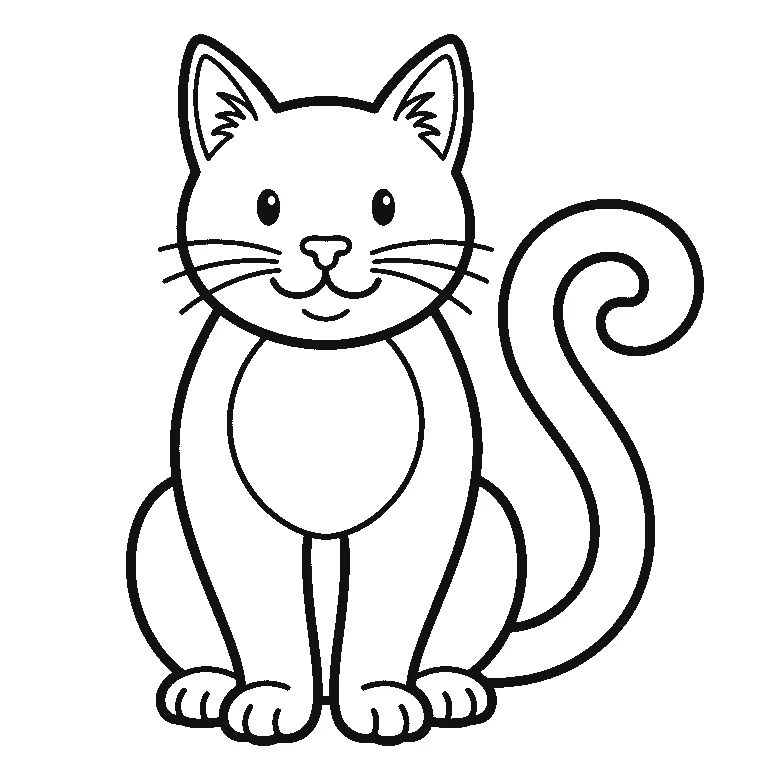
Cat coloring page
An upright, forward-facing cat with tufted ears and a curled tail, in thick black outlines on one letter-size sheet.
Coloring outline drawn by us.
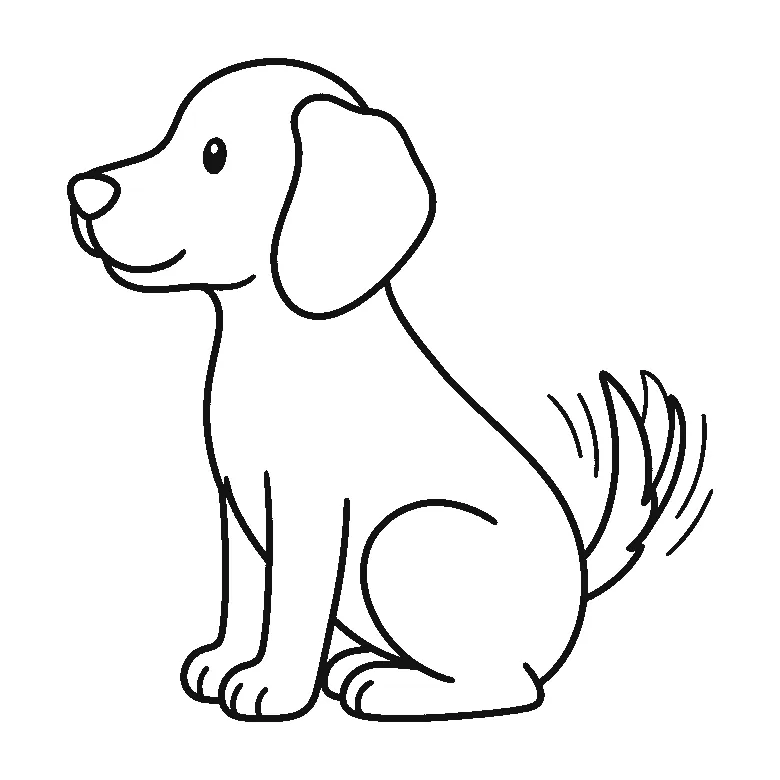
Dog coloring page
A dog in profile with one floppy ear and a feathered tail, drawn in open black outlines and ready to print at actual size.
Coloring outline drawn by us.
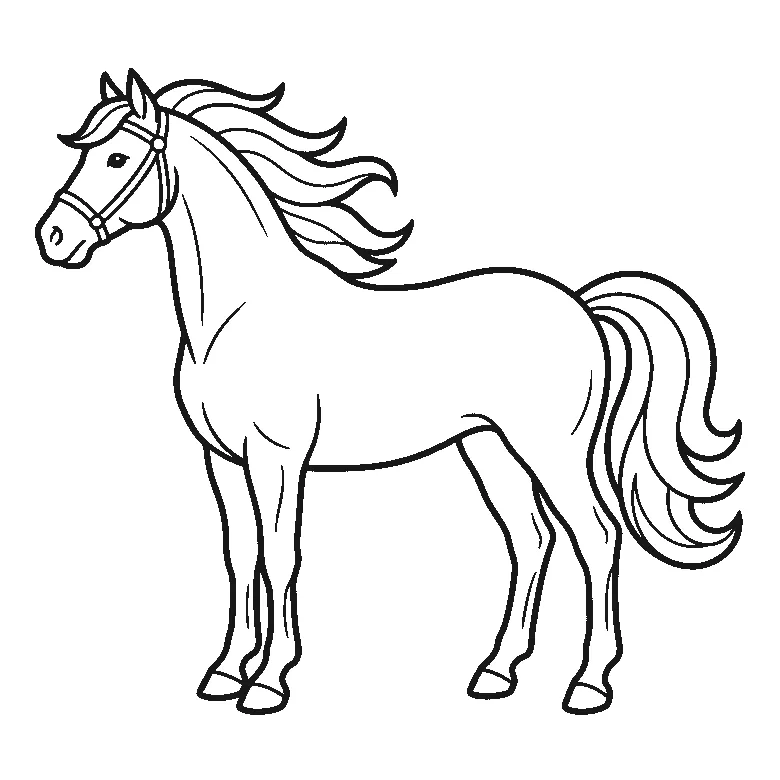
Horse coloring page
A horse standing in profile in its bridle, with a long streaming mane and full tail, on one printable letter-size sheet.
Coloring outline drawn by us.
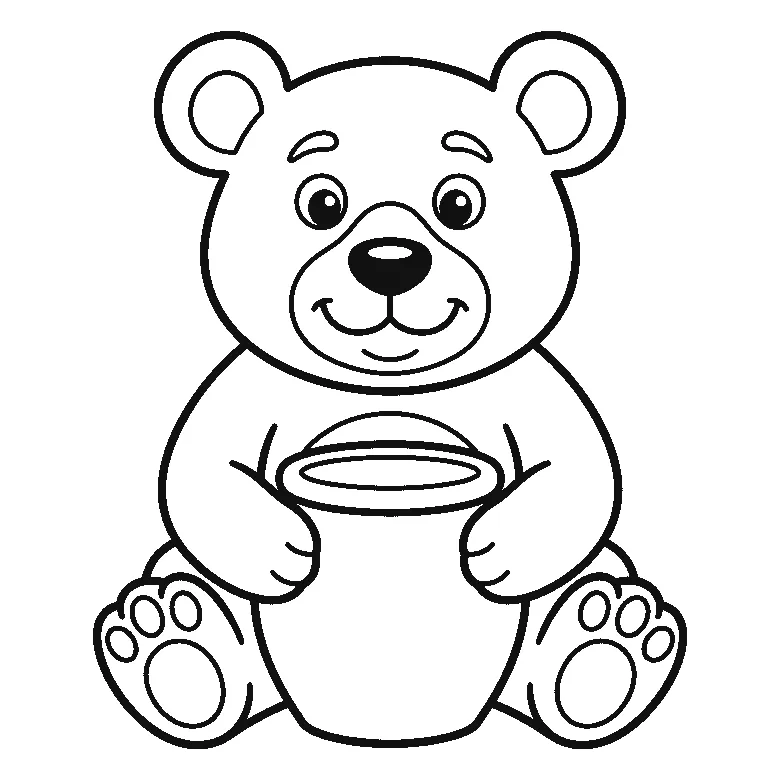
Bear coloring page
A round bear sitting with a honey pot in its paws, drawn in thick black outlines and free to print at letter size.
Coloring outline drawn by us.


