Places
A farmyard, a forest path, a river valley, a big top, a house behind a picket fence and a jungle clearing — the sheets with several things happening at once.
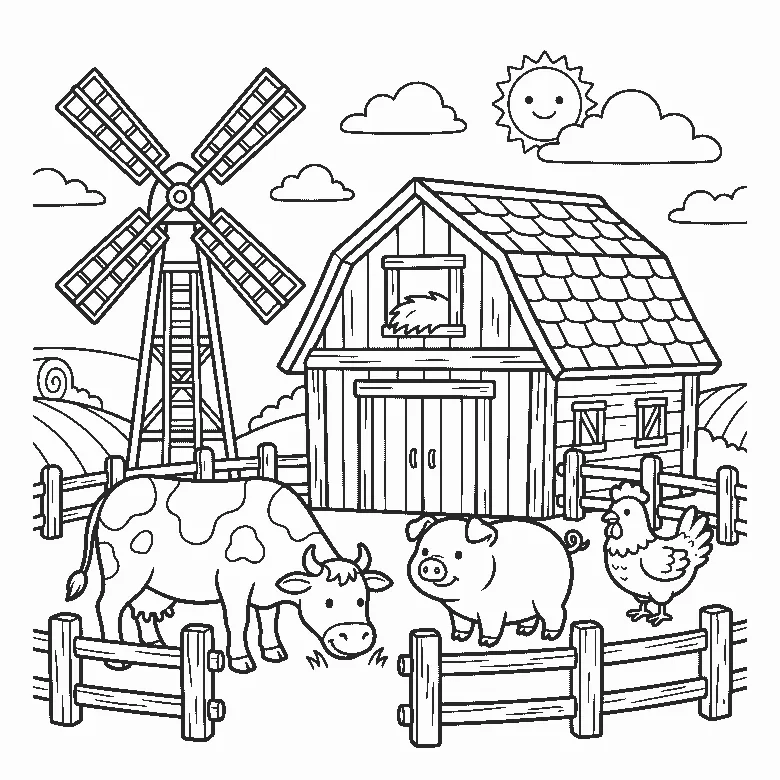
Farm coloring page
A barn, a windmill, three animals and a smiling sun in one full-page farmyard scene.
Coloring outline drawn by us.
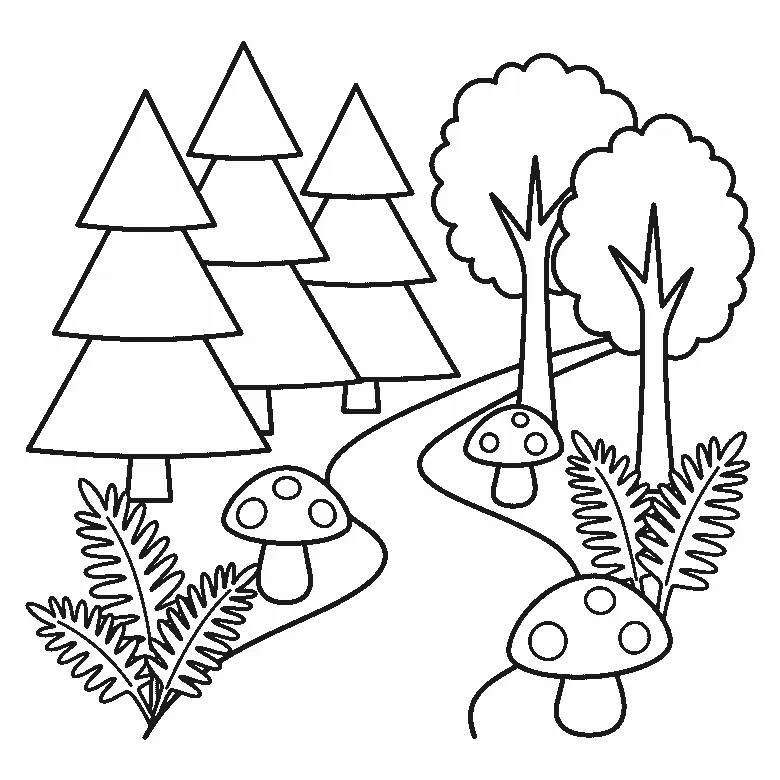
Forest coloring page
Three firs, two round-crowned trees, a winding path, three spotted mushrooms and two ferns.
Coloring outline drawn by us.
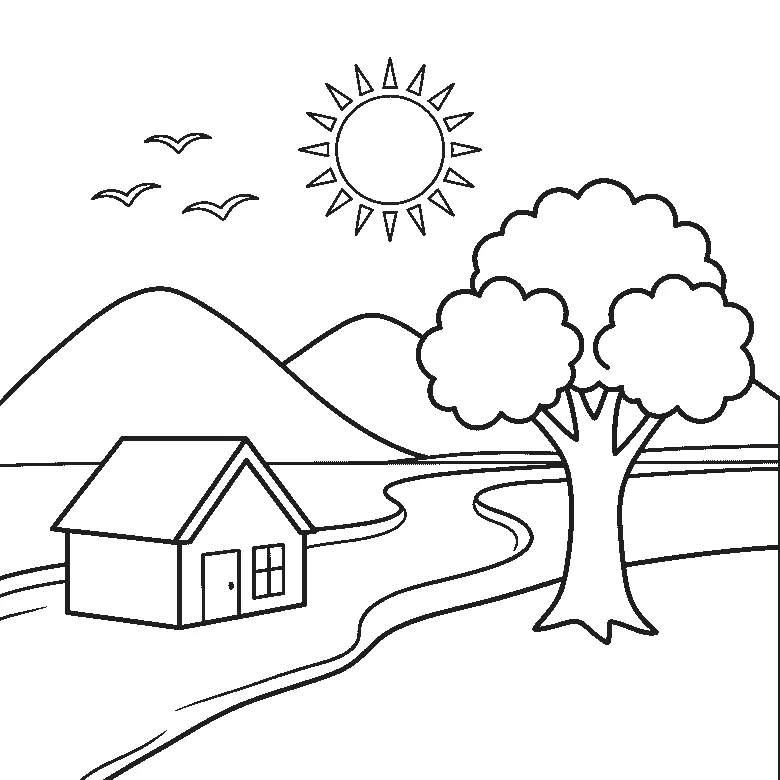
Landscape coloring page
Hills, a winding river, a broad tree, a small house and a plain faceless sun in one open scene.
Coloring outline drawn by us.
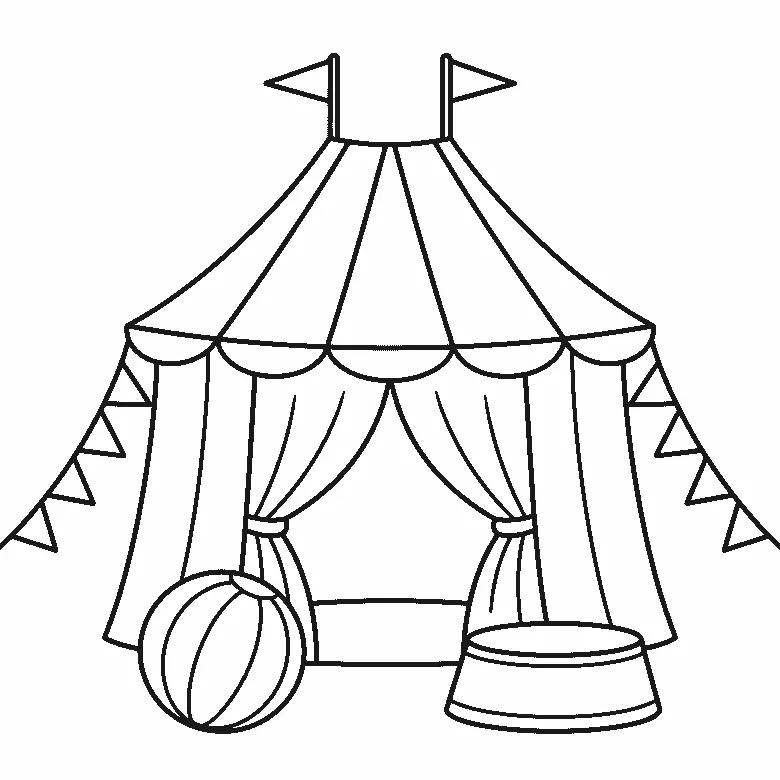
Circus coloring page
A big top tent with a six-panel roof, curtains tied back, bunting, a striped ball and a podium.
Coloring outline drawn by us.
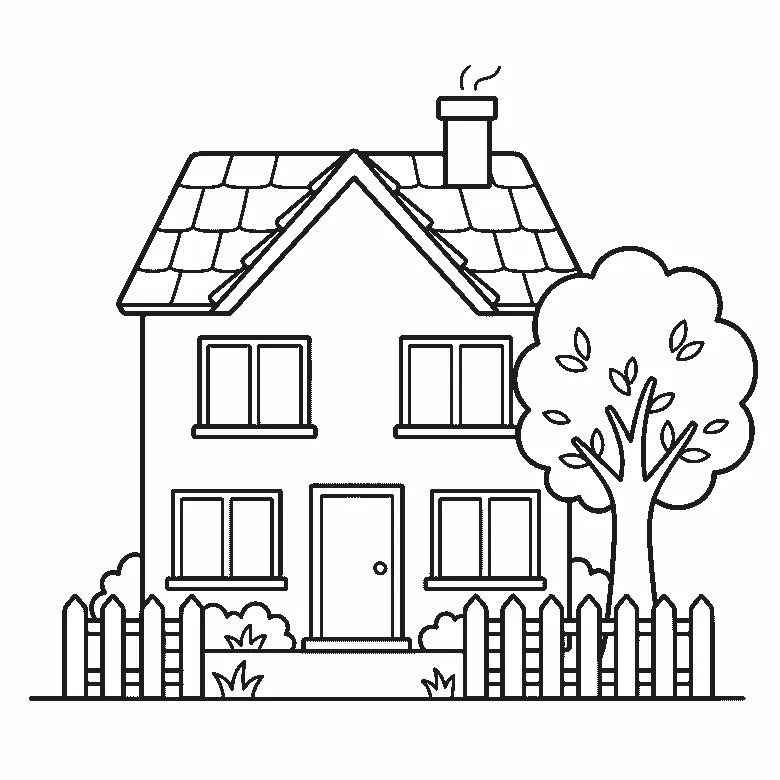
House coloring page
A two-story house seen straight on, with a tiled roof, a smoking chimney, a picket fence and a tree at the side, free as a US Letter PDF.
Coloring outline drawn by us.
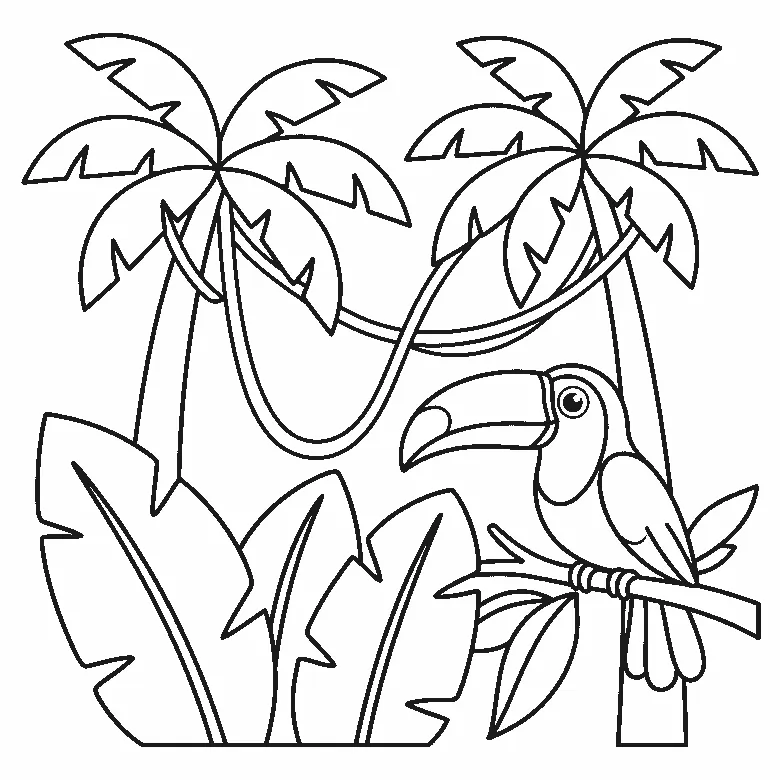
Jungle coloring page
Two palm trees, a looping vine, a bank of big notched leaves and a toucan on a branch, free as a US Letter PDF.
Coloring outline drawn by us.


This section holds a farm, a forest, a landscape, a circus, a house and a jungle. What they share is not a subject but a shape of drawing. Every other page on this site takes one thing and draws it large; these take several things and arrange them in a setting, so each sheet is a small scene with a foreground, a background and something going on between them. That is a difference you can see in a preview before you print anything, and it is the whole reason they are grouped rather than scattered through the other sections.
A scene changes how you approach a page. On a single-subject sheet you can start anywhere. On these sheets it is worth working back to front — sky first, then the middle distance, then whatever stands in front — because every stroke then lands on paper that is still empty and no color has to be steered around something already finished. It is the one piece of method that applies to every sheet here equally.
The farm is the crowded one. A barn with a shingled roof and a hayloft, a windmill with latticed sails, rail fences front and back, a cow, a pig and a hen in the yard, rolling fields, clouds and a smiling sun. It holds more separate shapes than anything else here, and it is the sheet where a decision to simplify — one color across the roof rather than shingle by shingle — saves the most time without costing anything a reader would notice.
The forest is the quiet one. Three fir trees drawn as stacked triangles, two round-crowned trees with forked trunks, a path winding up between them, three spotted mushrooms and two ferns. There is no sky and no horizon line at all, so the drawing sits directly on white paper, which means the path is the only thing joining the left half of the page to the right. Color it even faintly and the scene gains a direction.
The landscape is the open one. Two rounded hills, a river winding into the distance, a broad tree, a small house, three birds drawn as bare curves and a plain empty sun. There are perhaps eight areas on the whole sheet and every one of them is large, which makes it quick to finish and well suited to a crayon and a short sitting. It is also the sheet where distance is drawn into the outline: the river narrows as it goes back and the hills are smaller than the tree in front of them.
The circus is the patterned one. A big top tent with a six-panel roof, two flags at the peak, a scalloped valance, curtains tied back at the entrance, a striped ball and a round podium in front, and bunting running out to each side. Almost every shape on it repeats, so an alternating color scheme does a great deal of work on this page — and it is worth counting first, since six roof panels close cleanly with two alternating colors and five valance scallops do not.
The house is the ordered one. A two-story front drawn flat on with four paned windows and a door, a pitched roof of overlapping scalloped tiles, a chimney with two curls of smoke, a picket fence running the full width, bushes along the wall and a tree at the right whose branches are drawn inside a bumpy canopy. Everything about it is a rectangle or a repeat, which makes it the sheet where a scheme decided in advance pays for itself, and the sheet where an alternating pattern started without counting first runs out at one end.
The jungle is the layered one. Two palms with notched fronds across the top, a vine looping between their trunks and hanging down, a bank of big banana leaves overlapping along the bottom, and a toucan on a branch at the right with a beak that takes up more than half of it. Nothing in it sits on a ground line; every shape stands directly on white paper, and the leaves hide parts of one another, so the order things are colored in matters more here than it does on a sheet where nothing overlaps.
Because these are scenes, the color decisions are about relationships rather than about single objects. A far hill paler than a near bank reads as distance. A path in any color at all separates two groups of trees. A roof in a different color from the walls under it is what makes a small box read as a house. None of that requires a plan on paper; it requires only doing the background before the foreground and keeping the back of each sheet lighter than the front.
They all print the same way: plain letter paper, actual size rather than fit-to-page, and thicker card stock if markers are the plan, because the sky, field and leaf areas on these sheets are broad and sit right against one another. None of them cuts apart usefully — they are pictures rather than sets of objects — so they suit a wall, a folder cover or a refrigerator door whole.
If you are working through the section, a useful order is landscape, forest, jungle, circus, house, farm. That runs from the fewest shapes to the most, which means each sheet asks a little more of the hand than the one before it, and by the time the farm's roof shingles and windmill lattice arrive there is already a way of handling repeated small shapes that came from the circus bunting and the picket fence.
Published Updated 6 sheets940 words