
PDF · US Letter · 15 KB · Free, no sign-up. For home and classroom use.
Leopard coloring page
A leopard with its head turned to you, its coat drawn as open rosette rings of different sizes.
A leopard stands facing right with its head turned toward the viewer. Two round eyes with filled pupils sit in a broad rounded head, the ears carry an inner line each, the nose is small and the mouth is a shallow curve. The coat is the reason to print this one: the markings are not spots but rosettes, drawn as open rounded rings with a smaller shape inside, scattered irregularly over the back and the flanks and made in clearly different sizes rather than repeated at one scale. A long line marks off a paler belly the length of the body, the four legs are thick, and the tail curls upward at the tip.
A rosette is two shapes, not one: the ring and the space inside it. That doubles the number of decisions this drawing asks for and is what makes it a longer sitting than a plain spotted animal. It also gives the sheet its best trick — filling the ring dark and leaving the inside a shade of the coat color makes the marking read exactly as a real rosette does, and it costs nothing but the order you do them in.
Work the rosettes before the coat around them. Doing it that way means the broad fur color can be laid up to their outer edges, and any overlap lands on a ring that is already dark. Done the other way, a wide stroke of coat color crosses forty rings and each one has to be recovered. This is the single decision that determines how long the sheet takes.
The rings vary in size across the body, and following that variation is what stops the coat looking like wallpaper. The largest rosettes sit over the shoulder and the hip, the smallest run down the legs, and there are a few very small ones near the face. Keeping the same two-color rule at every size, rather than simplifying the small ones, is what holds it together.
Colored pencil is the tool this drawing wants. The rings are narrow and a crayon tip cannot follow one without closing it up, while a fine-tipped marker can outline a ring cleanly but will flood the space inside. A pencil does both jobs, and pressing harder on the ring than on the fill is an easier way to get contrast than switching colors forty times.
Golden tan with dark rosettes and a cream belly is the reading the outline was drawn for. It is also a page where a single strong invented color works, because the rosettes give the coat all the interest it needs and the base color is only holding them: a blue leopard with black rosettes still reads as a leopard. The head is the part to keep light in any scheme, since the eyes and the nose are the only dark marks up there and they need paper around them.
The plain fact worth carrying away is the one the drawing makes visible. A leopard's marking is a rosette — a broken ring, usually with a darker patch inside it — while a cheetah's is a solid round spot and a jaguar's rosette normally has a small spot at its center. The three cats are close enough in outline that the marking is the reliable way to tell which is which, and it is the reason this sheet and the cheetah sheet are drawn with different coats rather than the same one twice.
Print at actual size on plain letter paper. The rosettes are drawn with thin lines and a smaller print closes them into blobs, which turns a leopard into a spotted cat. Heavier card stock is worth using with markers. Cut out along the outer edge and the animal comes away in one piece, including the curled tail tip, which is the one place the cut doubles back on itself.
Before you print
- Fill the rosette rings first and the coat afterward; the reverse means recovering forty rings.
- Make the ring darker than the space inside it and the marking reads as a real rosette.
- Keep the same two-color rule on the small rosettes down the legs as on the big ones over the shoulder.
- Use a colored pencil, not a crayon: a crayon tip closes a ring, a marker floods it.
- Leave the head light so the two eyes and the nose stay the darkest marks up there.
Published Updated 645 words
More in this section
Parrot coloring page
A parrot on a branch with a big hooked beak, a folded wing of broad feathers and three long tail feathers.
Coloring outline drawn by us.
Chameleon coloring page
A chameleon on a branch with a spiral tail, a spiked spine and a body already banded for you.
Coloring outline drawn by us.
Snail coloring page
A snail crossing a big toothed leaf, its shell a wide spiral of broad bands to fill one by one.
Coloring outline drawn by us.
Kitten coloring page
A round-headed kitten sitting with one paw on a ball of yarn, the loose thread trailing away across the floor, free as a US Letter PDF.
Coloring outline drawn by us.
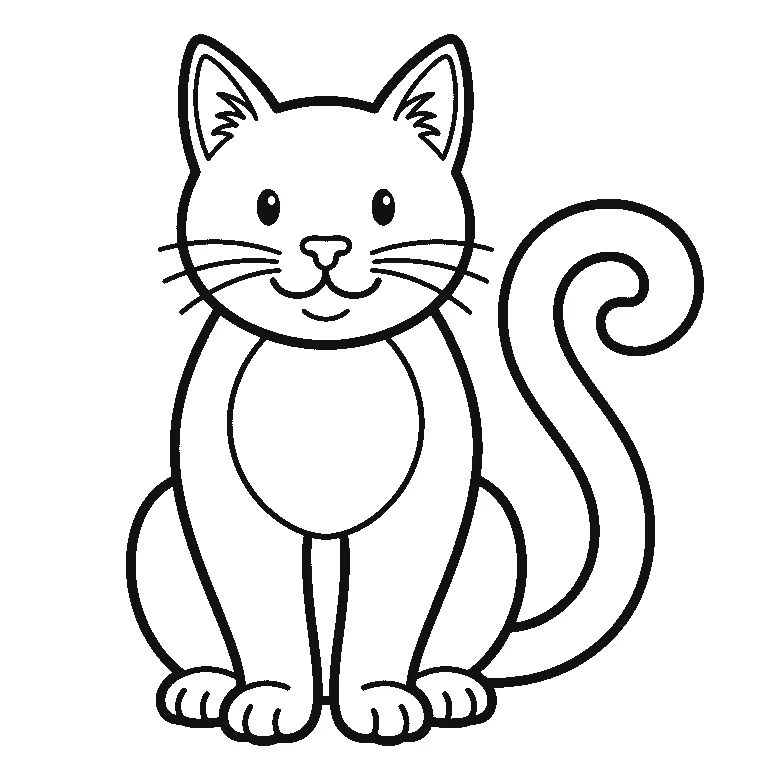
Cat coloring page
An upright, forward-facing cat with tufted ears and a curled tail, in thick black outlines on one letter-size sheet.
Coloring outline drawn by us.
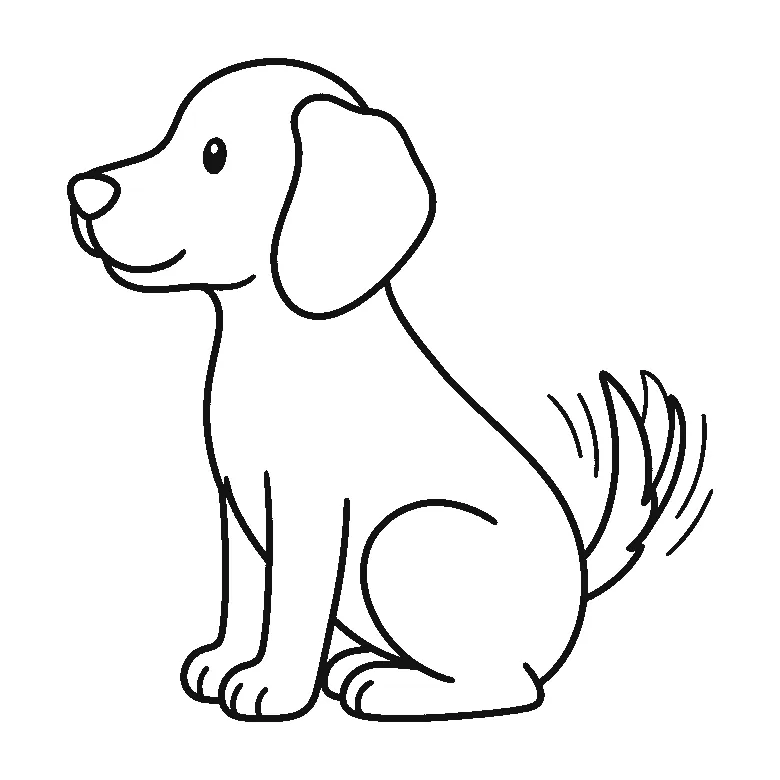
Dog coloring page
A dog in profile with one floppy ear and a feathered tail, drawn in open black outlines and ready to print at actual size.
Coloring outline drawn by us.
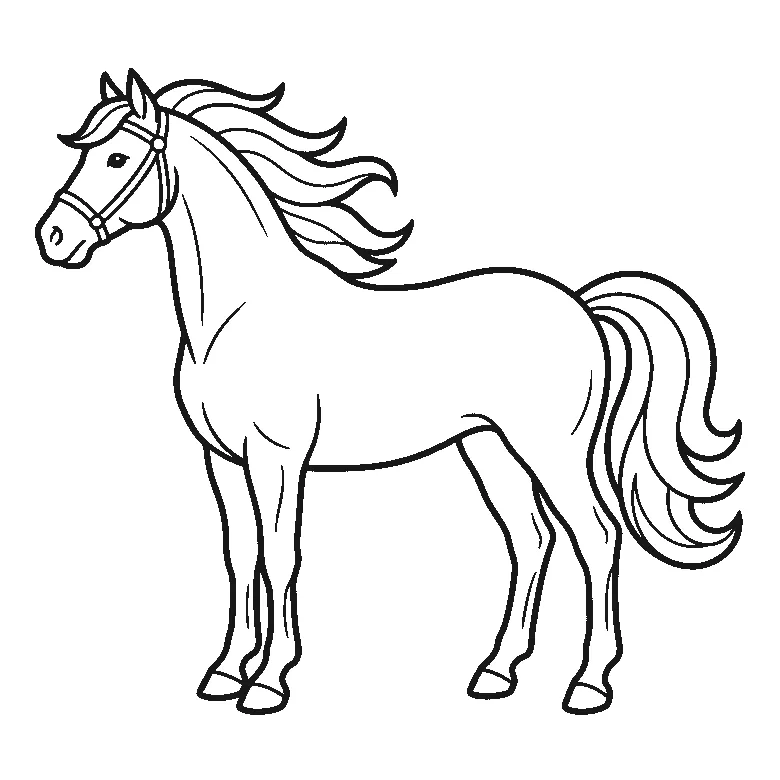
Horse coloring page
A horse standing in profile in its bridle, with a long streaming mane and full tail, on one printable letter-size sheet.
Coloring outline drawn by us.
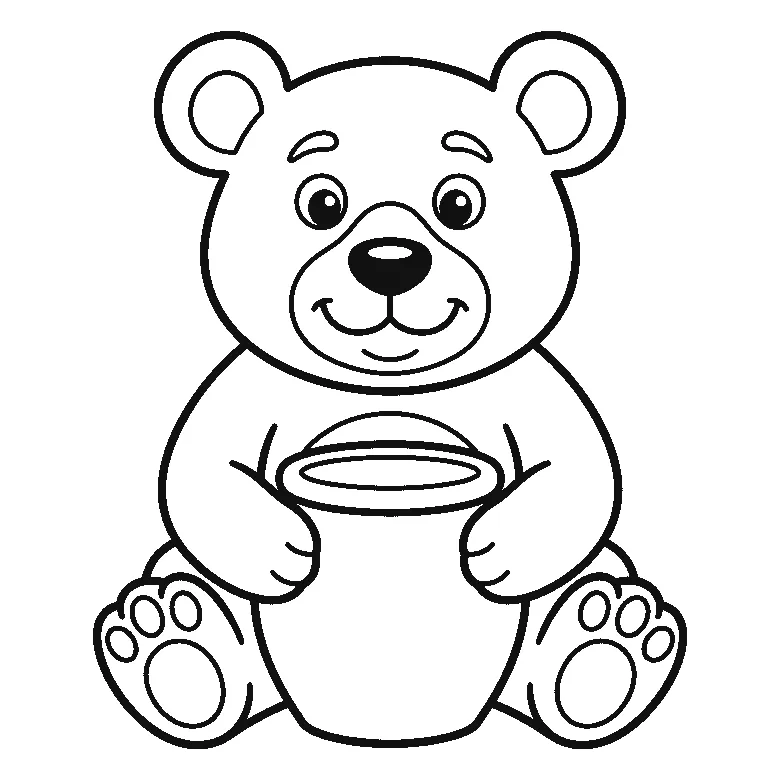
Bear coloring page
A round bear sitting with a honey pot in its paws, drawn in thick black outlines and free to print at letter size.
Coloring outline drawn by us.
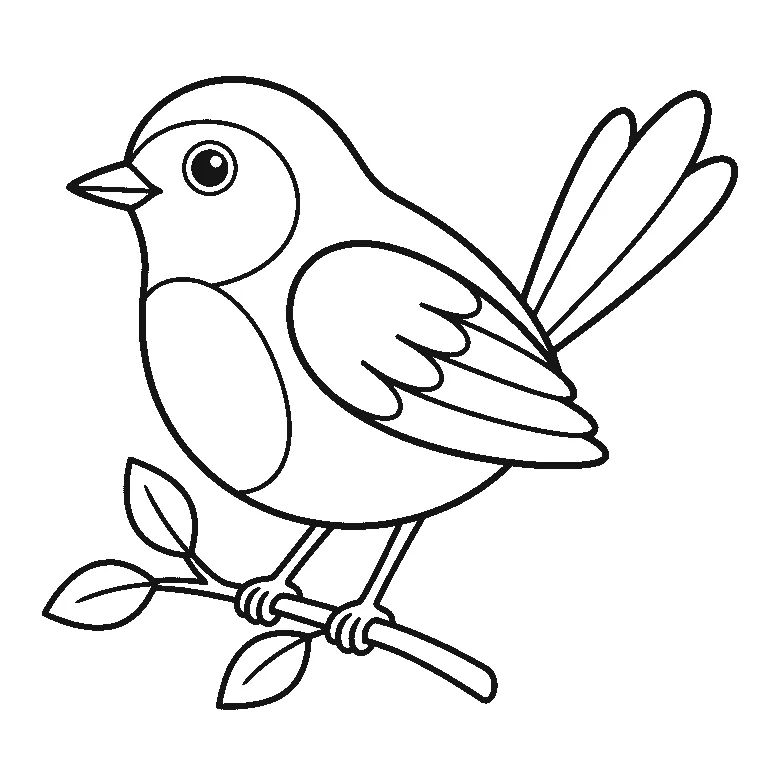
Bird coloring page
Free letter-size printable: a plump songbird perched on a leafy twig, with a long layered tail worth taking slowly.
Coloring outline drawn by us.
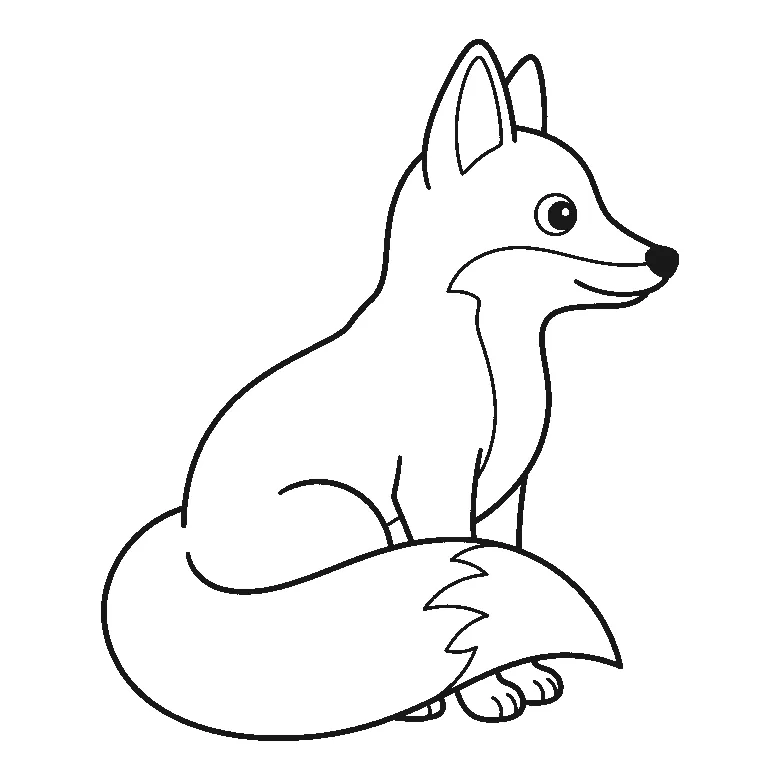
Fox coloring page
A sitting fox in profile with a huge bushy tail curled around in front, free to print at letter size.
Coloring outline drawn by us.
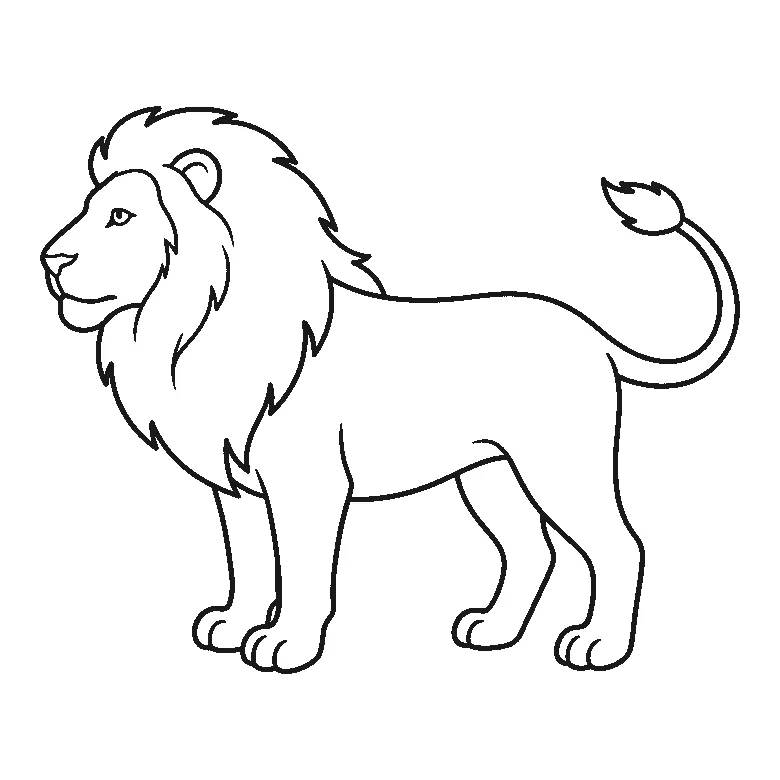
Lion coloring page
One lion in profile with a full ruffled mane, ready to print on plain letter paper and color.
Coloring outline drawn by us.
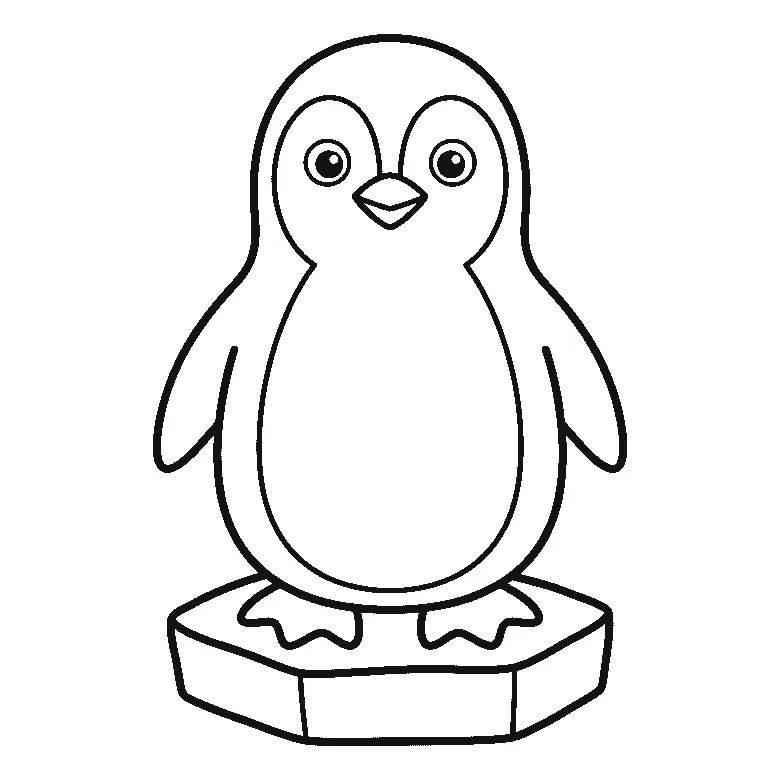
Penguin coloring page
A penguin standing on a block of ice, drawn in a few big shapes that fill fast with any medium.
Coloring outline drawn by us.


