
PDF · A4 · 16 KB · Free, no sign-up. For home and classroom use.
Panda colouring page
A giant panda sitting upright with a bamboo stalk, drawn as a small set of large closed shapes.
A giant panda sits upright facing the viewer, holding a bamboo stalk that runs diagonally across the drawing from the bottom left to the top right. Two round eyes with filled pupils sit inside their own separately outlined patches. The nose is filled black, the mouth is a small curve below it, and two ears are drawn as rings on top of the head. A large belly panel is outlined as its own closed shape across the front, two hind feet stick out at the bottom with pads marked on them, and one front paw grips the bamboo. The stalk is divided by rings into segments and carries two long pointed leaves near the top.
This is a drawing made of a few large shapes rather than many small ones, which makes it a quick sheet to bring to a finished state. The body, the belly panel and the head are three broad fields; the ears, the eye patches, the feet and the leaves are the small work, and there is not much of it. A young hand can fill this page without crossing an outline more than once or twice.
The eye patches are the part worth doing first and doing carefully, because they are what makes the animal recognisable. Each patch is its own closed shape with the eye sitting inside it, so a dark patch and a light eye can coexist without any blending. If the patches go down before the head around them, a wide stroke on the head can run up to their edges without spoiling anything.
Crayon is a good match for the body and the belly, where the areas are wide and a waxy grain reads as fur. Markers are the fastest way to a solid black on the ears, the patches and the limbs, and they will bleed on thin paper, so a spare sheet underneath is worth the second before you start. Coloured pencil is the right tool for the bamboo, where the segments are narrow and the leaves have a centre line running down them.
The black-and-white reading is the obvious one and the drawing is built for it: the shapes that are dark on a real panda are exactly the shapes that are separately outlined here, so following them gives a convincing animal with no judgment required. It also leaves the largest areas white, which means the finished page is mostly paper. If that feels thin, colouring the bamboo boldly is the fastest way to give the sheet weight without touching the animal.
The bamboo is the most interesting shape on the page to colour. Its segments are divided by rings, so alternating two greens along the stalk gives it length, and pressing harder just below each ring makes the joint read as a joint rather than a line. The two leaves are long, pointed and each carries a centre vein, which splits them into two halves that can be slightly different tones.
Two plain things about the animal show up in the outline. A giant panda eats mostly bamboo, which is why the drawing puts a stalk in its hand rather than anything else, and it grips that stalk with a wrist bone enlarged into a sixth digit that works like a thumb. The ears are drawn as full rings rather than solid shapes because a panda's ears are round and stand clear of the head, unlike the pointed ears set flat against the skull that most bears have.
Print at actual size on plain A4 paper. There is nothing on this sheet fine enough to be lost at a smaller scale except the leaf veins, but the eye patches are the reason to keep the page large: they are the shapes a reader looks at first. Markers need heavier card or a scrap sheet underneath. Cut out along the outer edge, the panda comes away holding the bamboo, because the stalk crosses the body rather than standing free of it.
Before you print
- Do the eye patches before the head, so a wide stroke can run right up to their edges.
- Alternate two greens between the bamboo rings to give the stalk some length.
- Press harder just under each bamboo ring and the joint reads as a joint, not a line.
- Put a scrap sheet underneath if you are using markers on the black areas; there are four of them.
- If the finished page feels too white, colour the bamboo boldly rather than tinting the panda.
Published Updated 663 words
More in this section
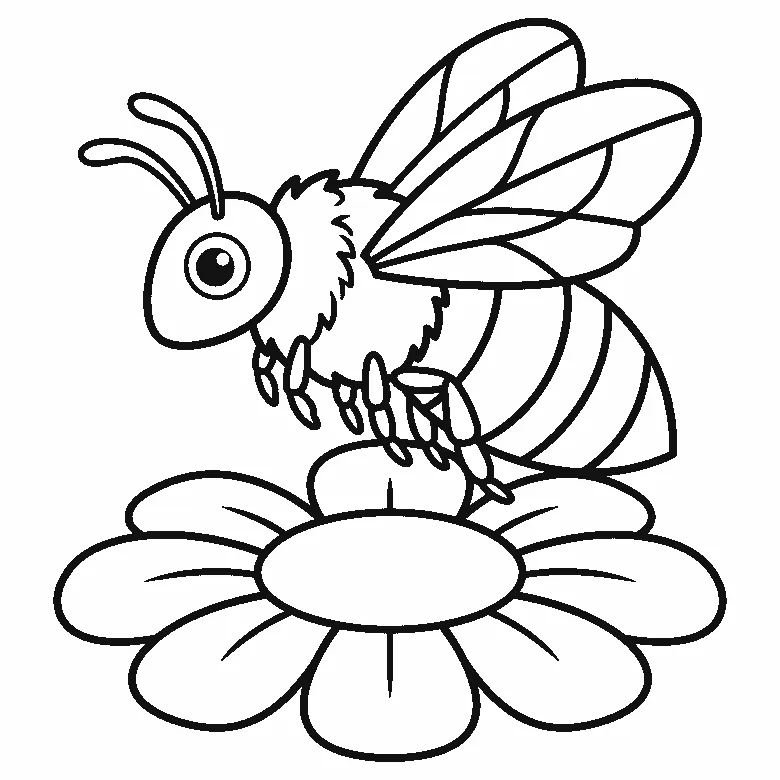
Bee colouring page
One bee on a wide flower, its body already divided into four stripe panels to fill.
Colouring outline drawn by us.
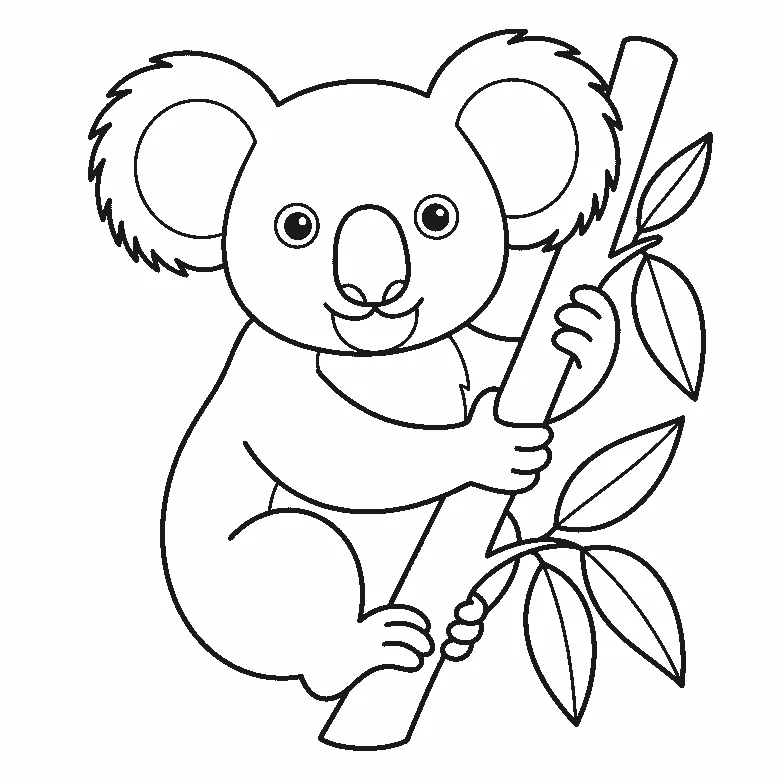
Koala colouring page
A koala hugging a eucalyptus branch, facing forward, with two very large fringed ears.
Colouring outline drawn by us.
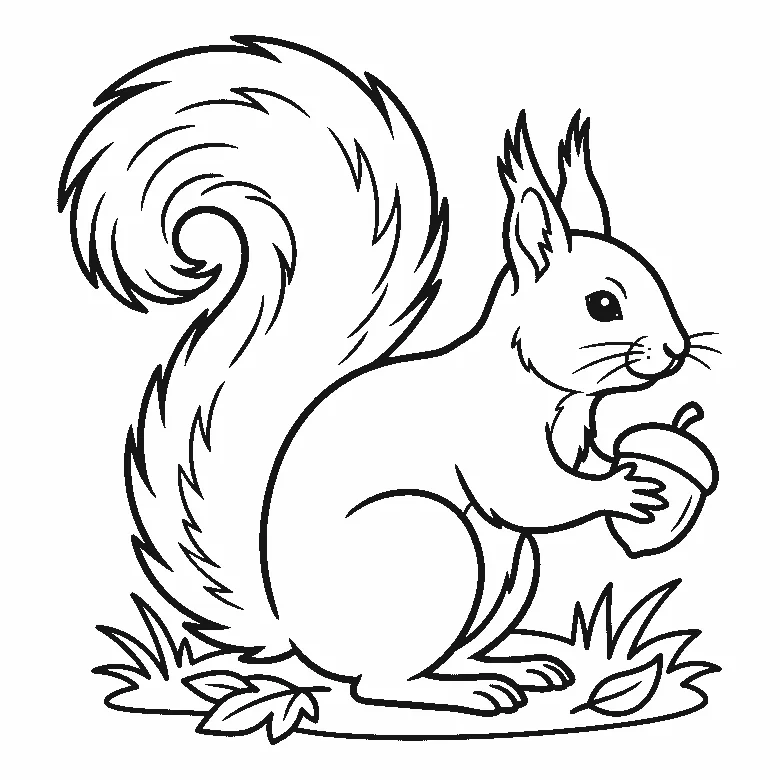
Squirrel colouring page
A squirrel in profile holding an acorn, with a very large curled tail drawn as separate strands.
Colouring outline drawn by us.
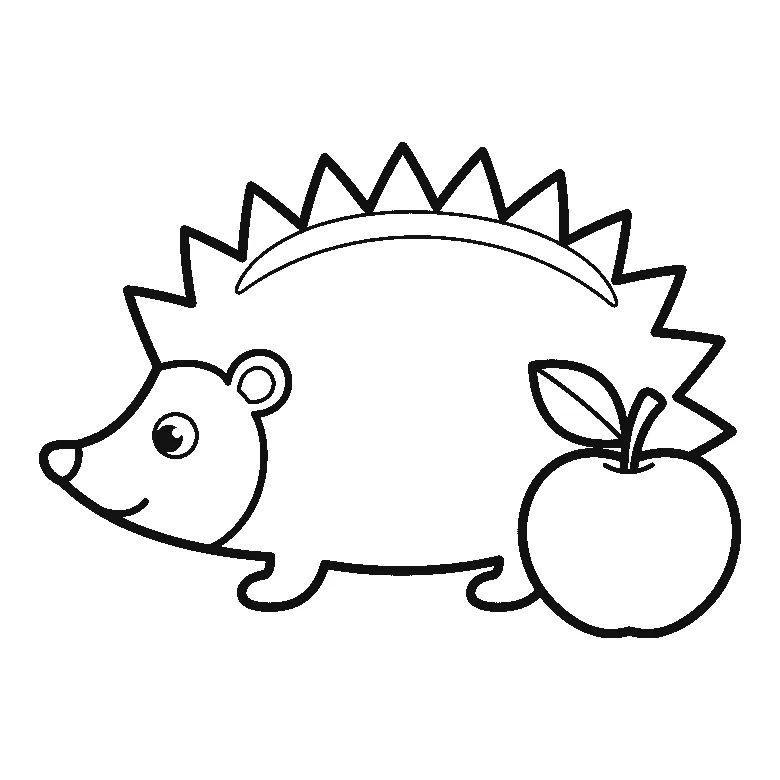
Hedgehog colouring page
A hedgehog in profile beside an apple, its whole back drawn as one row of big triangular spikes.
Colouring outline drawn by us.
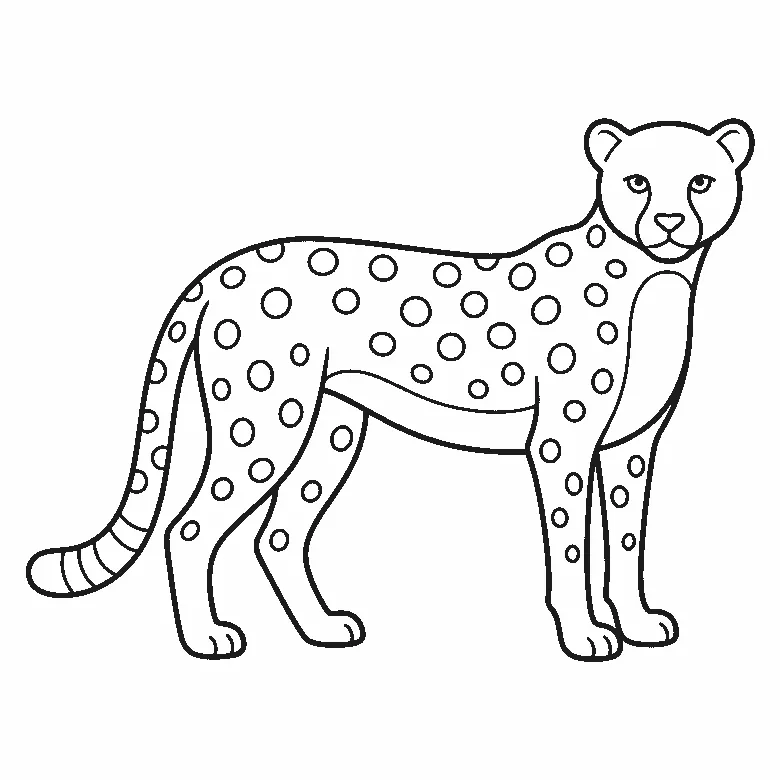
Cheetah colouring page
A cheetah in profile with its head turned to you, covered in solid round spots and a banded tail tip.
Colouring outline drawn by us.
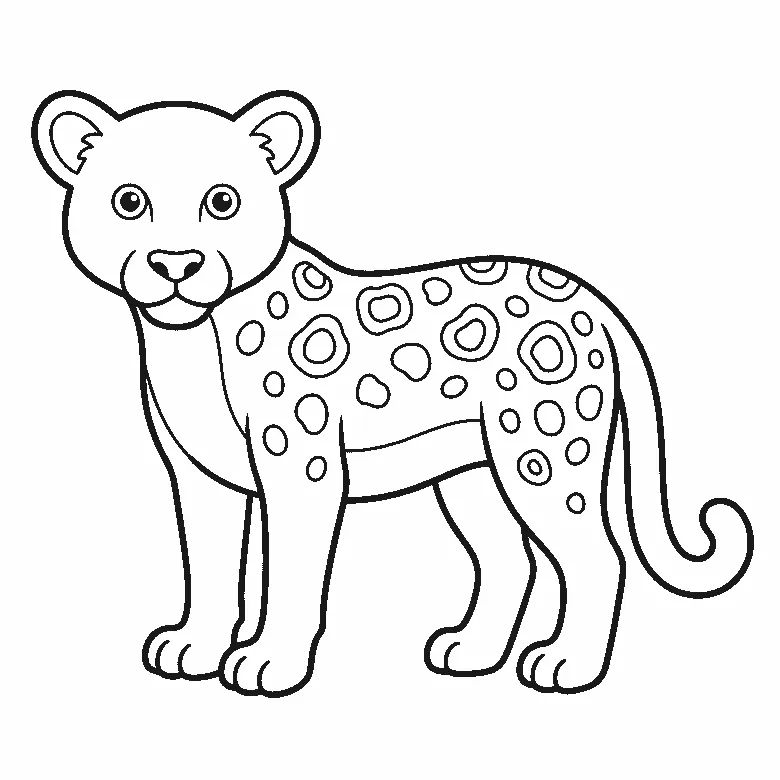
Leopard colouring page
A leopard with its head turned to you, its coat drawn as open rosette rings of different sizes.
Colouring outline drawn by us.
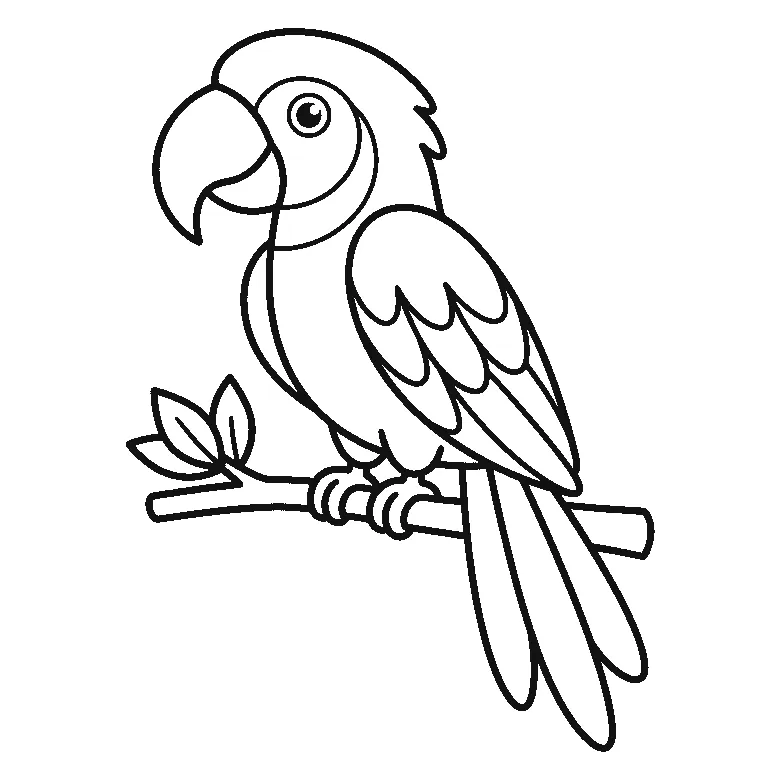
Parrot colouring page
A parrot on a branch with a big hooked beak, a folded wing of broad feathers and three long tail feathers.
Colouring outline drawn by us.
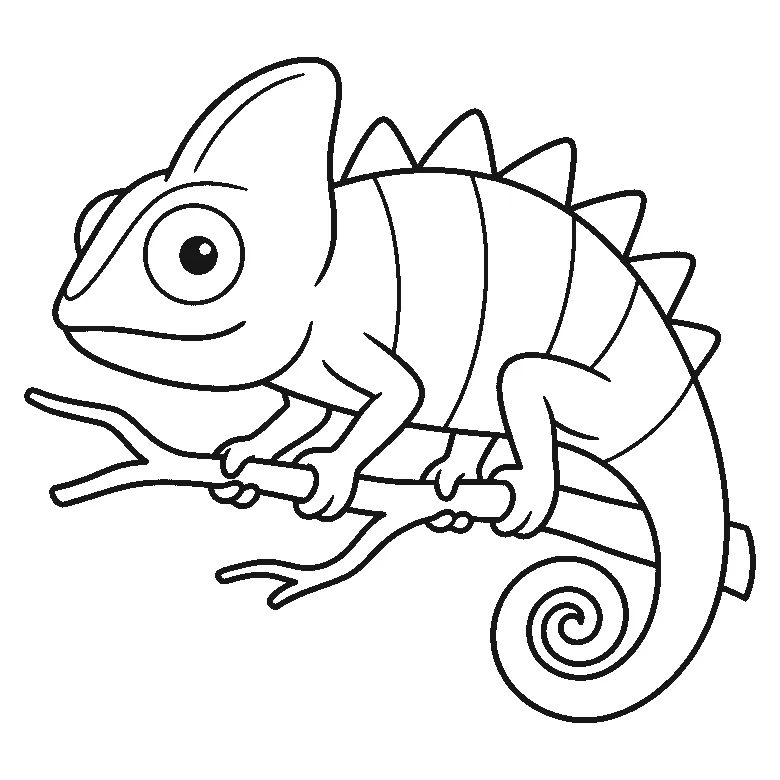
Chameleon colouring page
A chameleon on a branch with a spiral tail, a spiked spine and a body already banded for you.
Colouring outline drawn by us.
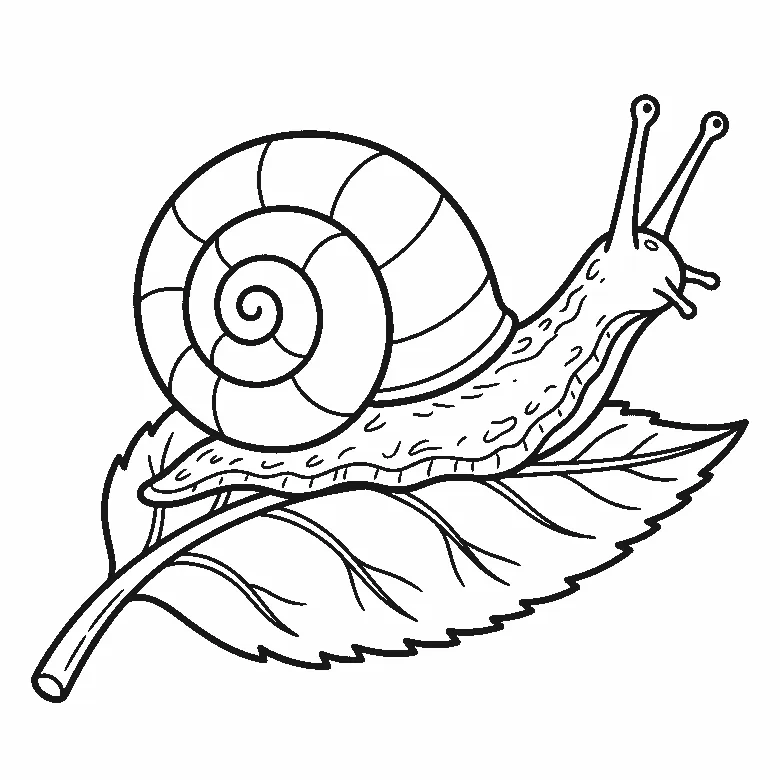
Snail colouring page
A snail crossing a big toothed leaf, its shell a wide spiral of broad bands to fill one by one.
Colouring outline drawn by us.
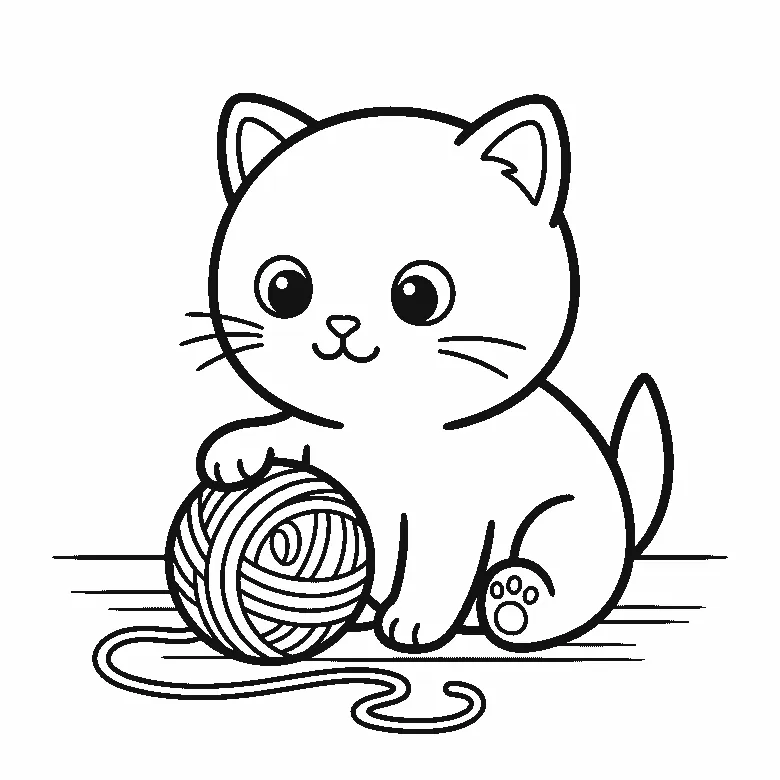
Kitten colouring page
A round-headed kitten sitting with one paw on a ball of wool, the loose thread trailing away across the floor, free as an A4 PDF.
Colouring outline drawn by us.
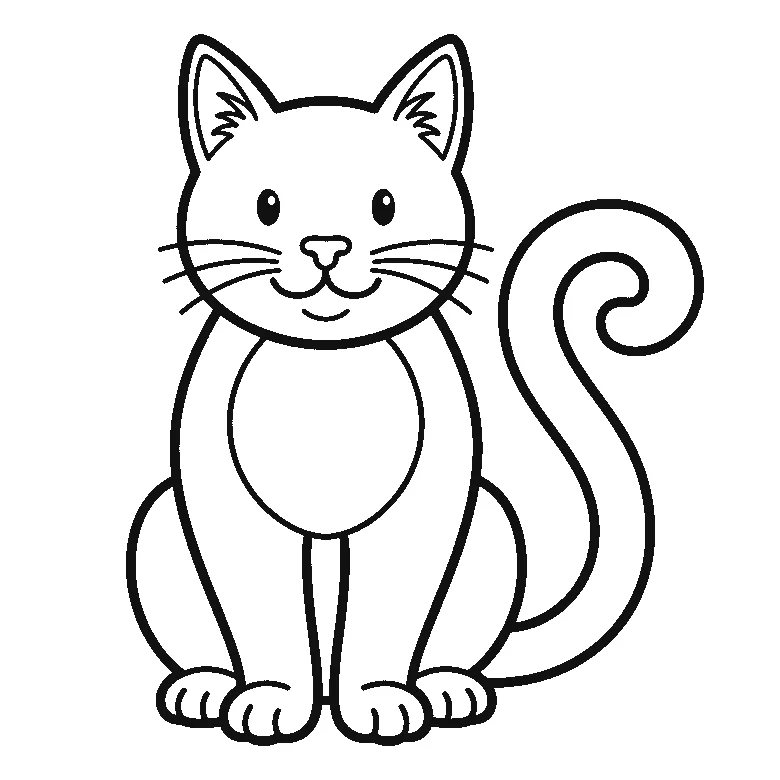
Cat colouring page
An upright, forward-facing cat with tufted ears and a curled tail, in thick black outlines on one A4-size sheet.
Colouring outline drawn by us.
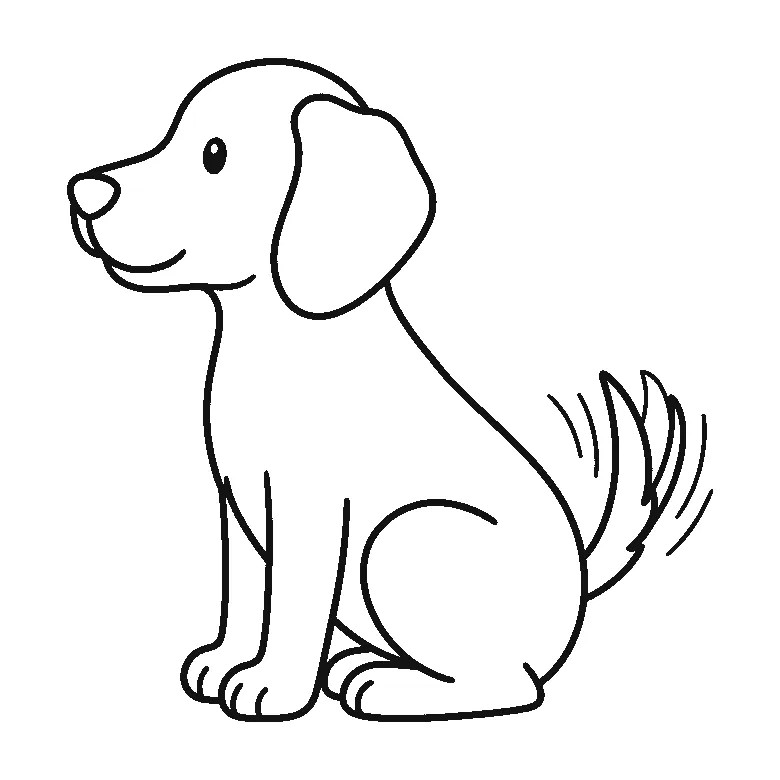
Dog colouring page
A dog in profile with one floppy ear and a feathered tail, drawn in open black outlines and ready to print at actual size.
Colouring outline drawn by us.


