Zoo animal coloring pages
The animals that live wild somewhere else — the big cats, an elephant, a giraffe, a panda, a koala and a penguin on its block of ice, each one a sheet of its own.
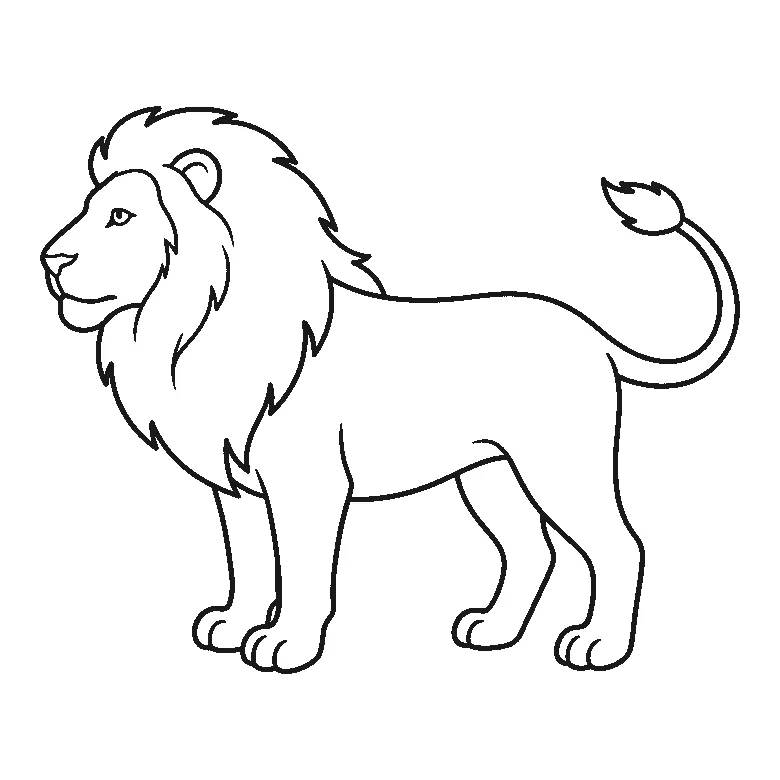
Lion coloring page
One lion in profile with a full ruffled mane, ready to print on plain letter paper and color.
Coloring outline drawn by us.
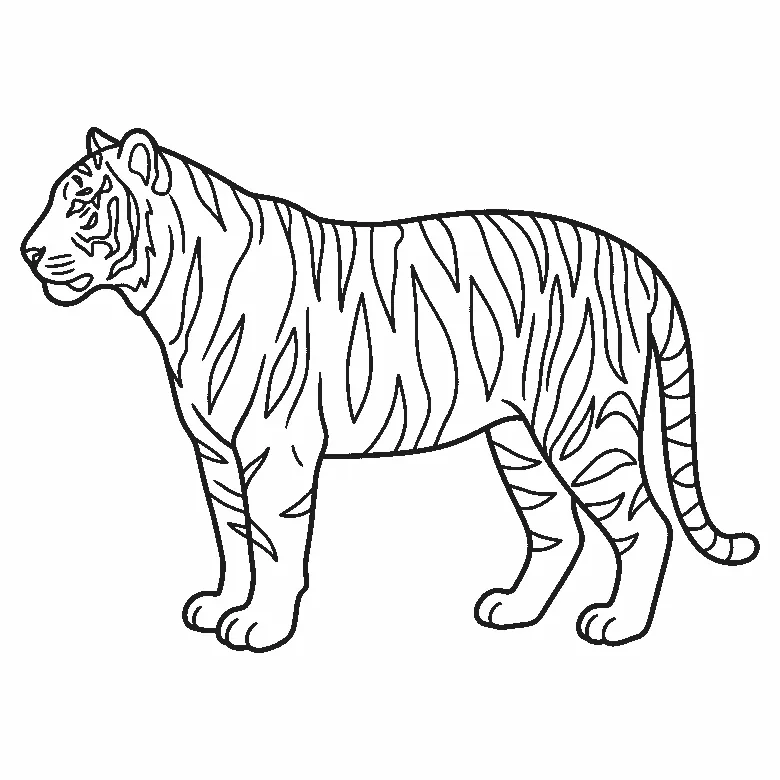
Tiger coloring page
One tiger standing in profile with every stripe drawn as a closed shape you can color inside.
Coloring outline drawn by us.
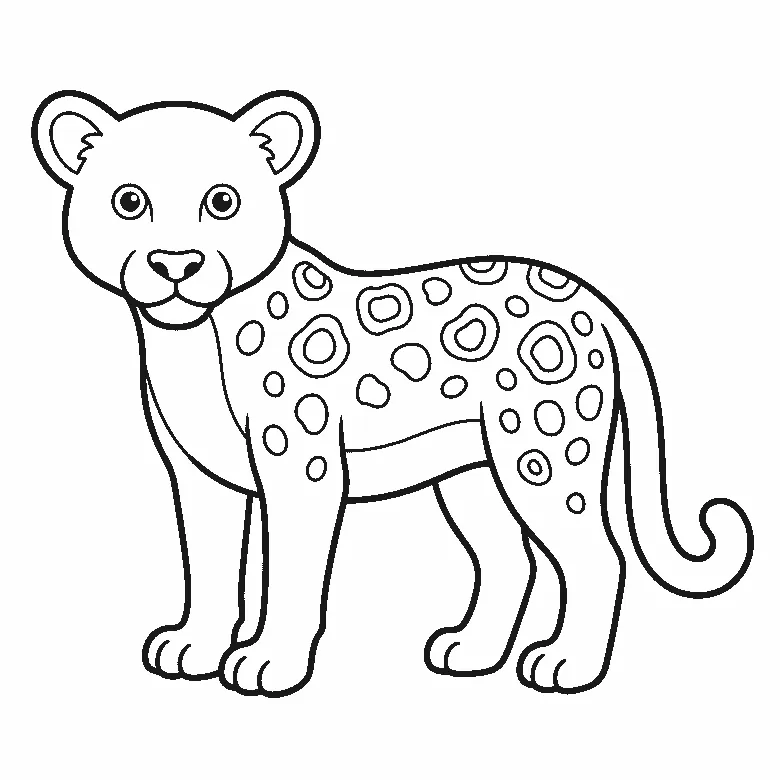
Leopard coloring page
A leopard with its head turned to you, its coat drawn as open rosette rings of different sizes.
Coloring outline drawn by us.
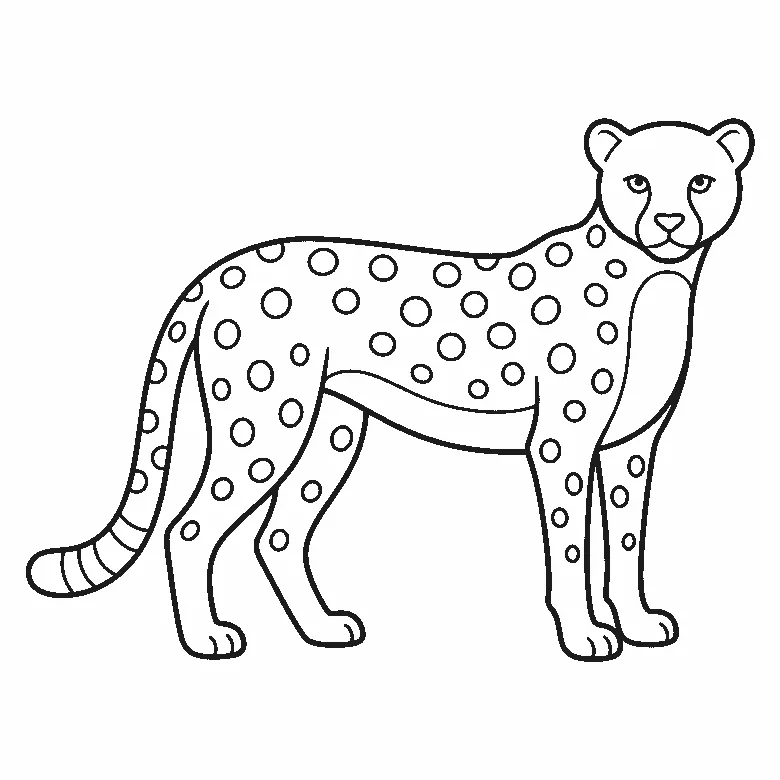
Cheetah coloring page
A cheetah in profile with its head turned to you, covered in solid round spots and a banded tail tip.
Coloring outline drawn by us.
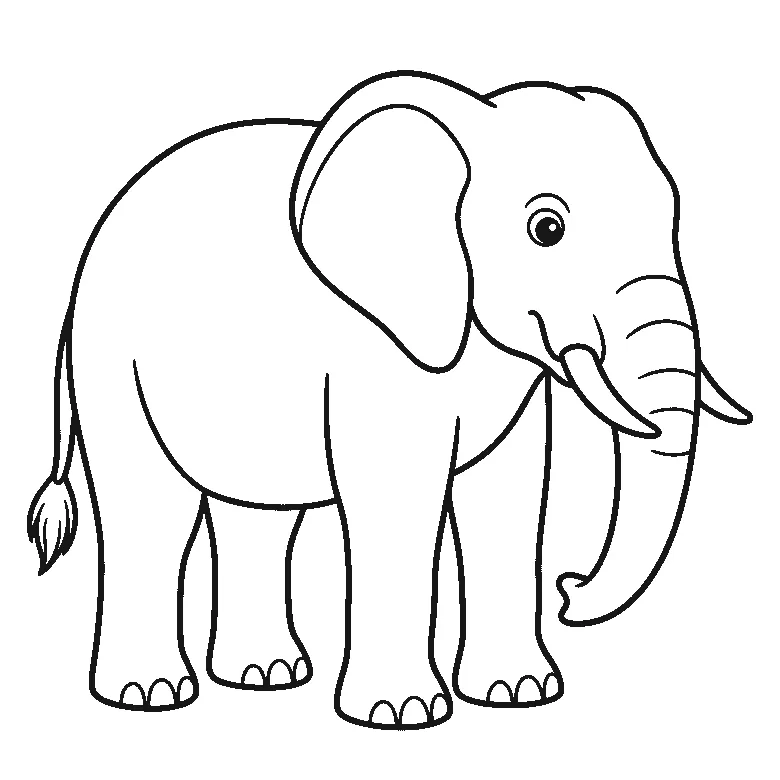
Elephant coloring page
An elephant in profile with a wide ear, two short tusks and a curling trunk, drawn in broad areas that fill fast.
Coloring outline drawn by us.
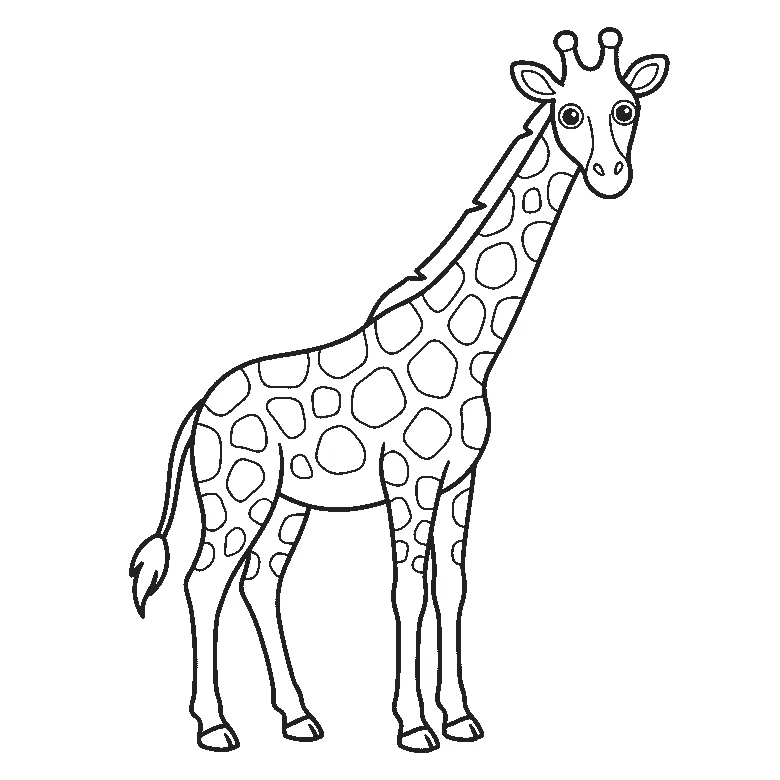
Giraffe coloring page
A tall giraffe in profile, patched from cheek to hoof, with dozens of small rounded shapes to color one at a time.
Coloring outline drawn by us.
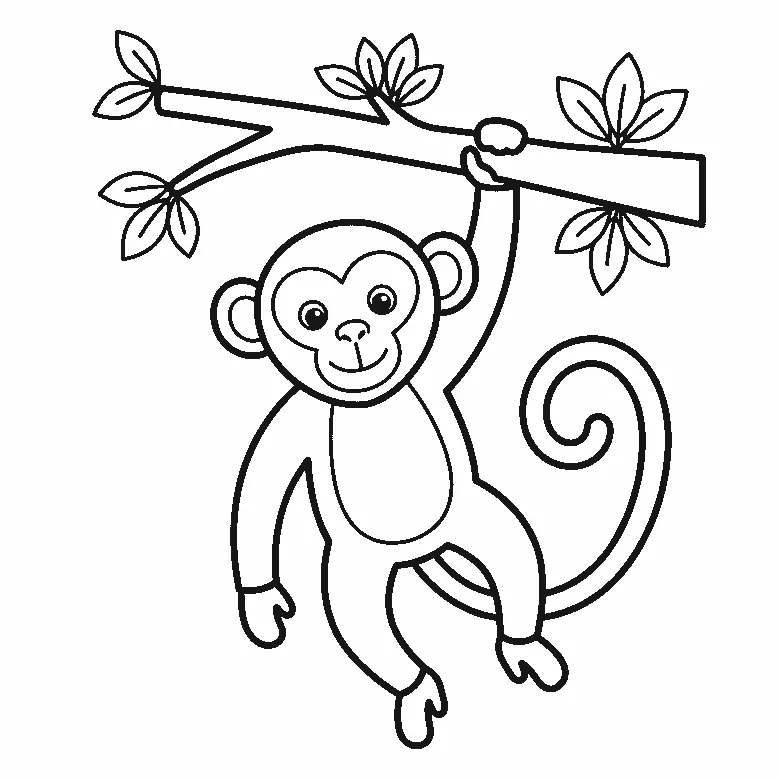
Monkey coloring page
A monkey swinging one-handed from a leafy branch with its tail curled into a spiral, free to print on US Letter.
Coloring outline drawn by us.
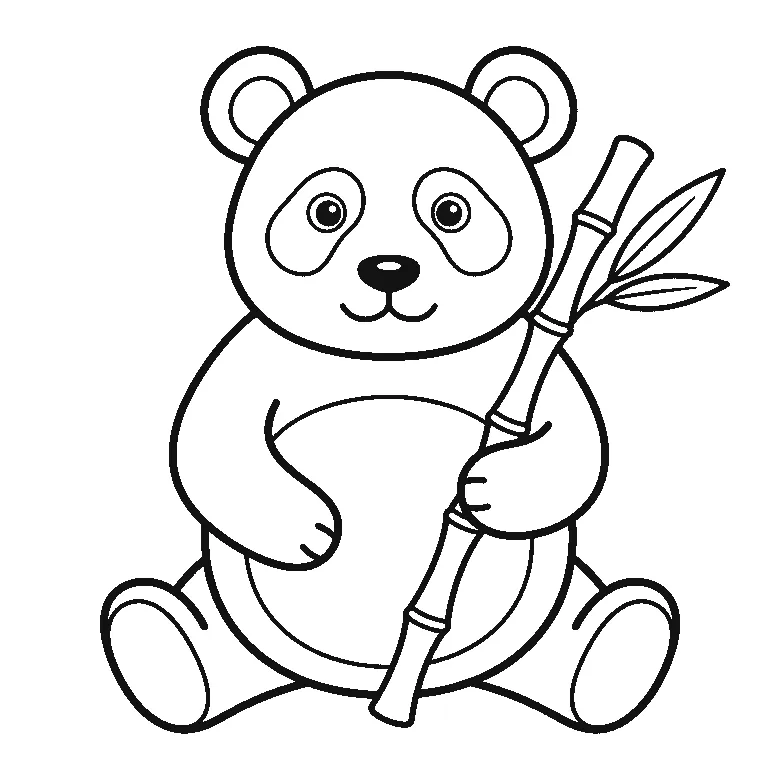
Panda coloring page
A giant panda sitting upright with a bamboo stalk, drawn as a small set of large closed shapes.
Coloring outline drawn by us.
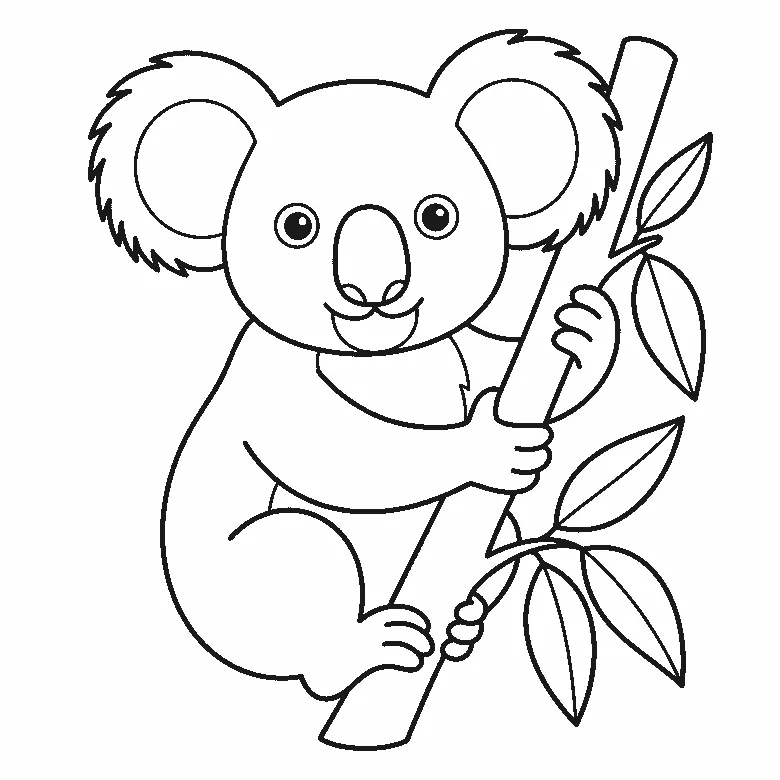
Koala coloring page
A koala hugging a eucalyptus branch, facing forward, with two very large fringed ears.
Coloring outline drawn by us.
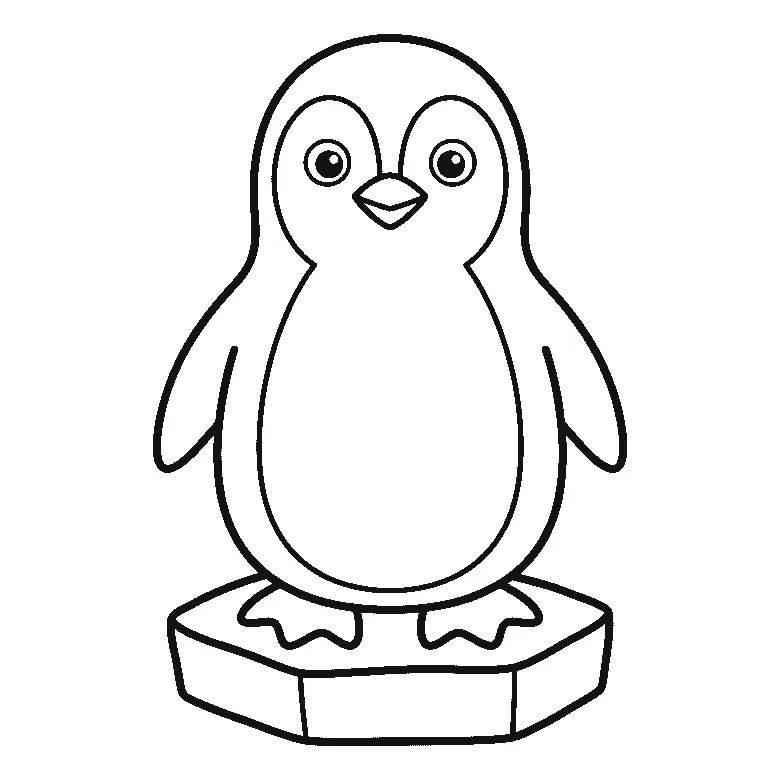
Penguin coloring page
A penguin standing on a block of ice, drawn in a few big shapes that fill fast with any medium.
Coloring outline drawn by us.
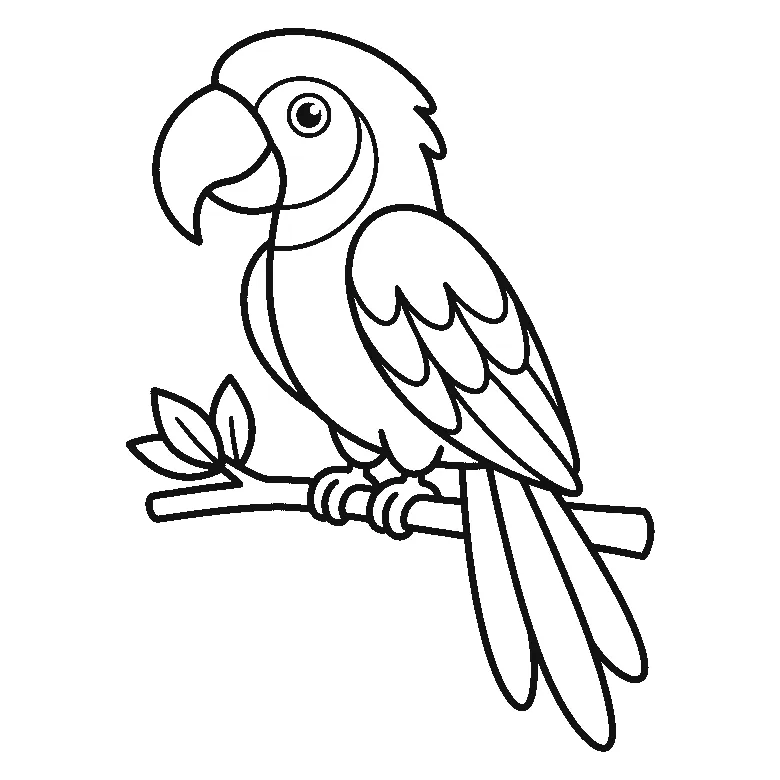
Parrot coloring page
A parrot on a branch with a big hooked beak, a folded wing of broad feathers and three long tail feathers.
Coloring outline drawn by us.
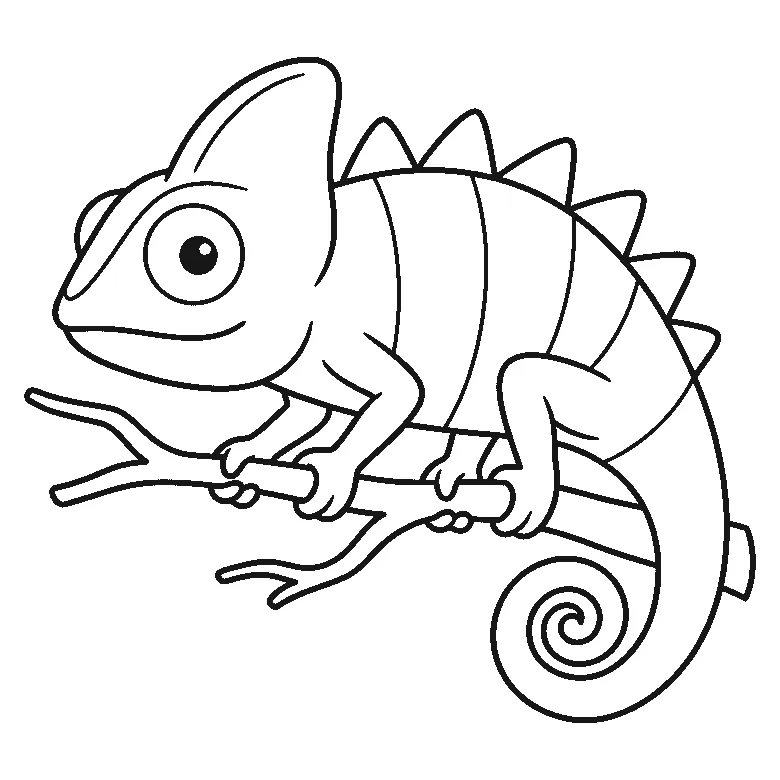
Chameleon coloring page
A chameleon on a branch with a spiral tail, a spiked spine and a body already banded for you.
Coloring outline drawn by us.
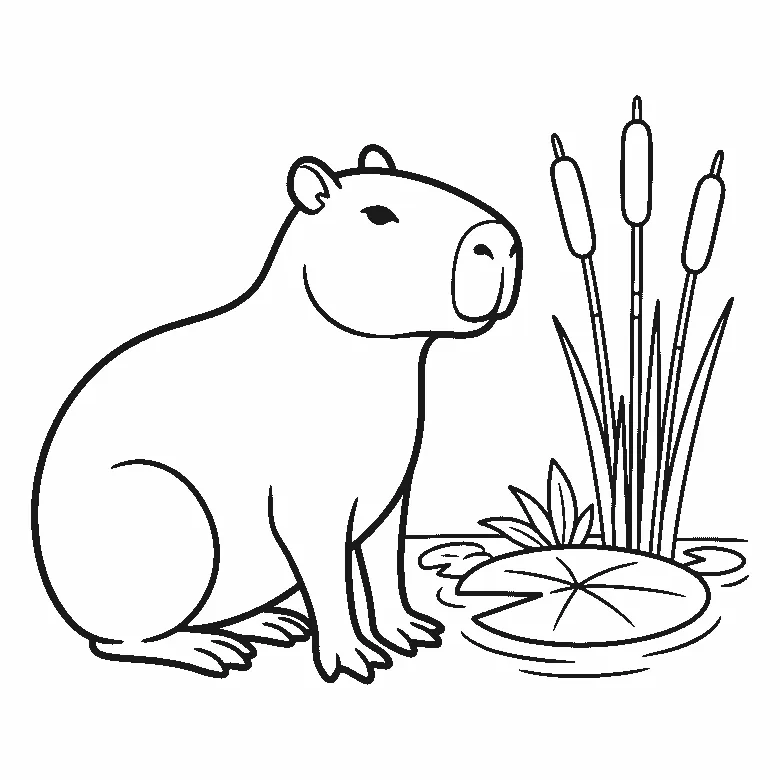
Capybara coloring page
A capybara sitting at the water's edge beside a lily pad and three cattails, in plain black outlines.
Coloring outline drawn by us.


This is the part of the animal section that lives somewhere else. Every drawing here is of an animal a reader in the United States or the United Kingdom would go to a zoo to see rather than meet in a field or a wood: lion, tiger, leopard, cheetah, elephant, giraffe, monkey, panda, koala, penguin, parrot, chameleon and capybara. That is the whole rule for what is on this page, and it is worth stating plainly, because it puts some obvious candidates on the other side of the line. A wolf and a bear are in most zoos too, and they also live wild in the woods of North America, so they sit with the woodland sheets instead.
The group divides the moment you set the previews side by side, and the division is about pattern. The tiger, the cheetah, the leopard and the giraffe carry a coat drawn as separate closed shapes — stripes as leaf shapes, solid round spots, open rosette rings, patches running from cheek to hoof — so on those sheets almost all of the work is small and repeated. The elephant, the panda and the koala are the opposite: a few very large fields, broken up by a wide ear, a bamboo stalk or two fringed ears, with almost nothing inside them narrow enough to slip out of.
The big cats are worth printing together, because they share a silhouette and share nothing else about the coloring. The tiger's stripes are drawn as closed shapes, so every stripe can be filled and the paper between them left alone. The cheetah's spots are solid circles spaced well apart, which makes it a page of the same small decision taken again and again. The leopard's markings are rosettes, which are rings with something inside them, so each marking is two decisions rather than one and the sheet takes noticeably longer than the cheetah does.
The lion stands apart from the other cats here, because its coat carries no pattern at all. It is a profile with a full ruffled mane, and the mane is the page: long curved bands running out from the face with generous room between them, which suits a crayon held on its side or a marker worked in one direction. A mane also takes more than one color without looking wrong, since a real one is darker at its outer edge than at the root, so a second pass around the outside is the cheapest way to give the sheet some depth.
The monkey, the parrot and the chameleon all arrive on a branch, and that is worth noticing before the first stroke. On each of those sheets the branch and its leaves are a second subject with outlines of their own, so a decision has to be made about whether the foliage competes with the animal or sits behind it. Keeping the leaves to one pale green and putting the strong color into the monkey's coiled tail, the parrot's three long tail feathers or the chameleon's banded body is the simplest way to keep the animal in front of its perch.
The penguin and the capybara both bring water with them. The penguin stands on a block of ice, built from a few big shapes that fill fast with any medium, and the ice is the one area on the sheet that reads best left mostly white — the paper is already the right color for it. The capybara sits at the water's edge beside a lily pad and three cattails, and it is worth knowing while you fill it that a capybara is a rodent, the largest one there is, which is easier to believe once you have found its front teeth in the outline.
Realistic color is available on every sheet here and required on none of them. Tan and cream on the giraffe, black and white on the penguin and the panda, gray on the elephant: all of that will look right and none of it is asked for. The animals on this page are the ones a reader is least likely to have seen up close, which cuts both ways — it is a reason to look one up before choosing a pencil, and it is a reason to ignore the question and decide that a chameleon can be whatever color it likes, which happens to be nearer the truth than it sounds.
Printing is the same across the whole page: plain letter paper, actual size rather than fit-to-page so the outlines keep the weight they were drawn at, and heavier card stock if markers are going onto the sheet. The patterned drawings are where a marker tip causes trouble, because it covers two spots or two stripes at once; a colored pencil kept sharp is the safer tool on the tiger, the cheetah, the leopard and the giraffe. The elephant, the panda and the penguin are the ones to reach for when a crayon is what is already on the table.
The other animal sheets — the ones from the woods and the field edge, the pets, the small crawling things and the dinosaurs — are on the Animals page, one tap back up from here.
Published Updated 13 sheets869 words