
PDF · US Letter · 12 KB · Free, no sign-up. For home and classroom use.
Elephant coloring page
An elephant in profile with a wide ear, two short tusks and a curling trunk, drawn in broad areas that fill fast.
One elephant fills this page, standing in profile with a single round eye visible and the far side of the face hidden by the turn of the body. The ear is the widest shape on the sheet, a broad panel set behind the eye. Two short tusks come forward beneath it, and the trunk drops between them and curls at the end. A tufted tail hangs at the back. Black outlines, white paper, no ground line and no background, so the animal stands in open space.
The body and the ear are the two big empty regions, and they behave differently. The body is one long unbroken field, which means streaky pencil work shows across all of it; keep the strokes running the same way, corner to corner, instead of scrubbing back and forth. The ear is a separate closed shape and can take a second tone, and giving it a value slightly apart from the body is what makes the head read as a head. The trunk is a narrow ribbon and wants short strokes that follow its curve.
Marker suits the body, because a wide flat area is exactly where markers beat pencils: no grain, no gaps, one even field in a few passes. The cost is bleed, so put a scrap sheet underneath before you start. Crayon over a large area tends to skip where the paper texture rises, which leaves a mottled hide surface instead of one flat unbroken tone. Watercolor pencil offers a third route: color the body dry, pull a damp brush across it once, and the strokes melt into a single wash.
Gray is the obvious answer for the hide, with the tusks left white or near-white and the eye ringed dark. A warmer gray, made by laying brown underneath and gray over it, reads more like skin than a flat pencil gray does. None of that binds you. The ear alone can carry a pattern while the rest stays plain, or the whole animal can go down in one strong color with only the tusks left as bare paper. The outlines hold the shape whatever happens inside them.
An elephant's trunk is a nose and a hand at once: it breathes through it, drinks through it and picks things up with it, which is why the curling end on this sheet is the most mobile-looking part of the drawing. The wide ear is thin, and elephants fan them. Tusks are teeth rather than horns, set in the jaw instead of growing from the skull the way antlers do. The tail finishes in a coarse tuft of hair, drawn here as a small burst of short lines.
Choose actual size in the print dialog. The elephant is drawn to fill most of a letter sheet, and fit-to-page pulls a white margin in on all sides and shrinks the curl at the end of the trunk. Plain copy paper handles pencil and crayon without complaint. Card stock earns its place for marker, both because it will not buckle when the ink wets it and because a large filled body on thin paper wrinkles. A second copy is useful here, since the ear invites experiments with pattern.
Cut around the outline and the elephant becomes a silhouette you can mount on colored card stock, which puts a border around the animal without drawing one. Glued flat to the front of a folder, the wide body takes a name written across it in pen once the color has dried. Taped to a wall at eye level, the profile still reads from across the room because the shapes are large. If the sheet is going in the mail, color lightly, since thick wax layers can offset onto whatever presses against them.
This sheet is built from a small number of separate regions, and each of them is large: the body, the ear, the head and trunk, the tusks and the tail tuft. Filling any one of them is a single decision that covers a wide stretch of paper at once. That makes it a good sheet for anyone who wants to finish in one sitting, and a good sheet for testing an unfamiliar medium, because you get a wide sample of what your pens or pencils do across an area big enough to judge honestly.
Before you print
- Fill the ear a shade apart from the body so the head separates cleanly from the shoulder.
- Follow the curl of the trunk with your strokes rather than crossing it, and the ribbon reads as round.
- Leave the tusks as bare paper or close to it, since white is what makes them read as tusks against a filled body.
- Slide a scrap sheet under the page before putting marker on the body, because that much ink passes through copy paper.
- Save the tail tuft for a fine point and let a few strokes run just past the outline for a hairy edge.
Published Updated 718 words
More in this section
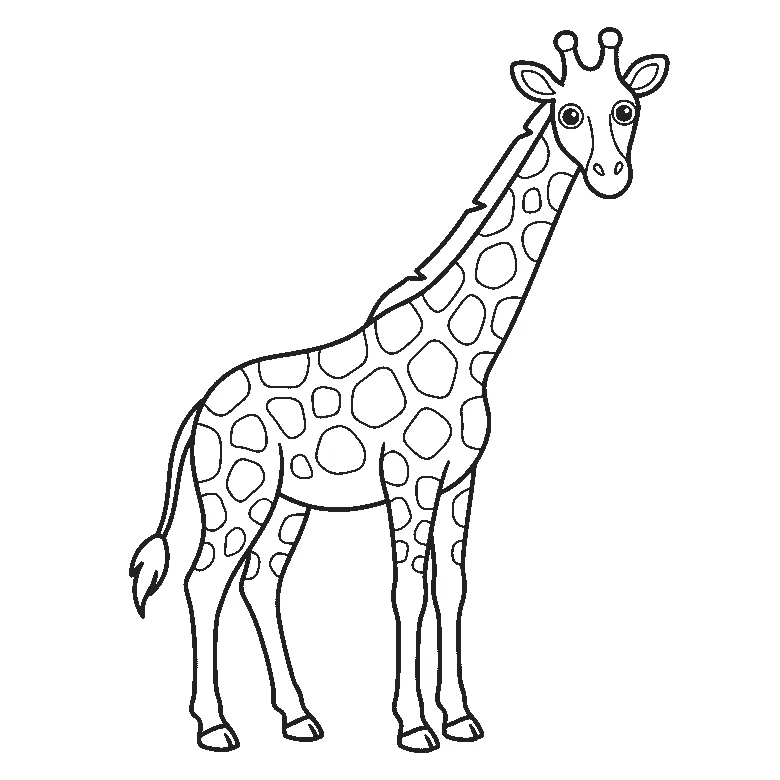
Giraffe coloring page
A tall giraffe in profile, patched from cheek to hoof, with dozens of small rounded shapes to color one at a time.
Coloring outline drawn by us.
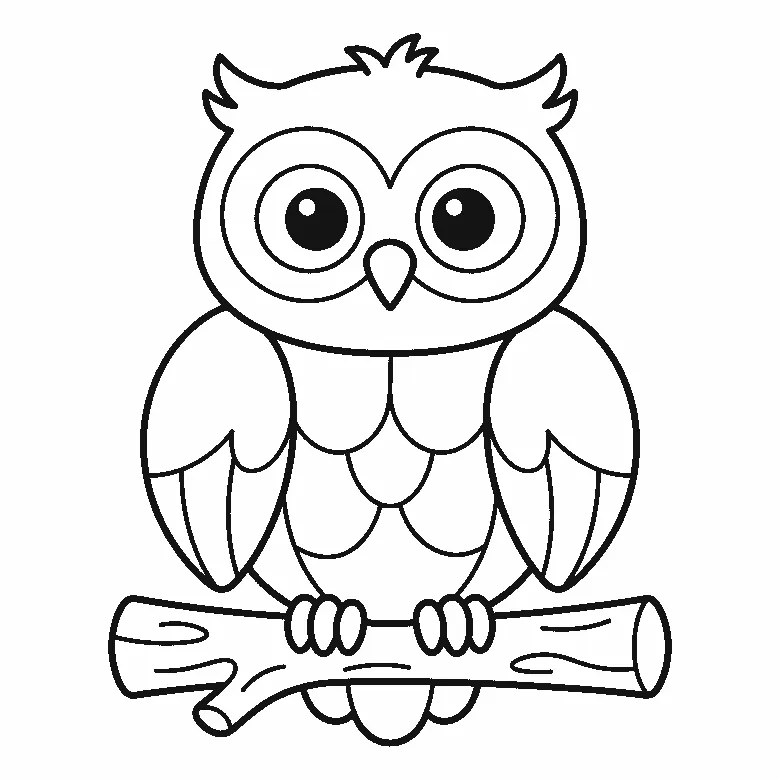
Owl coloring page
A front-facing owl on a thick branch, with two big round eyes and rows of wing feathers to fill in.
Coloring outline drawn by us.
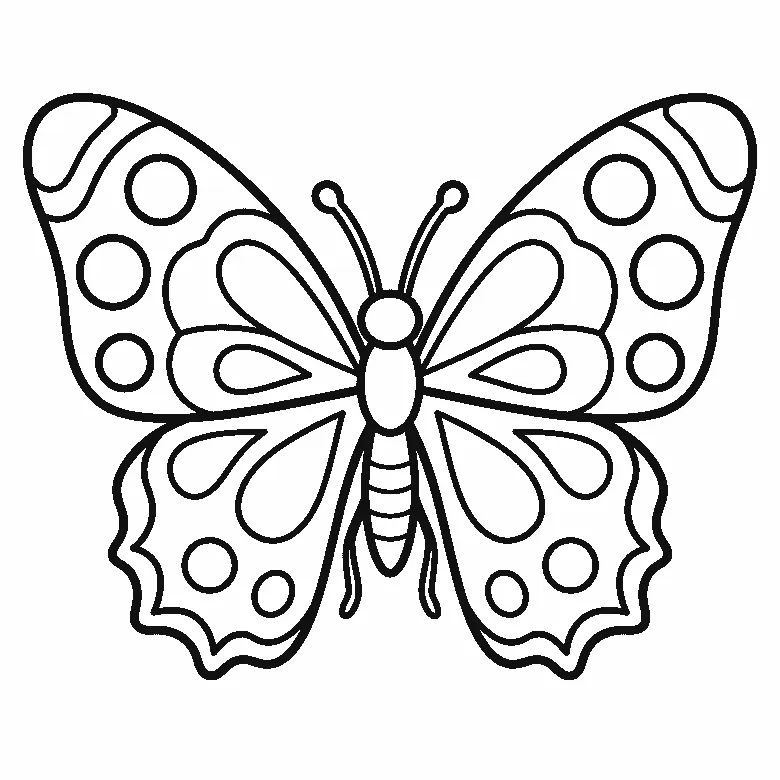
Butterfly coloring page
Wide open wings patterned in circles and teardrops, symmetrical enough to color one half at a time.
Coloring outline drawn by us.
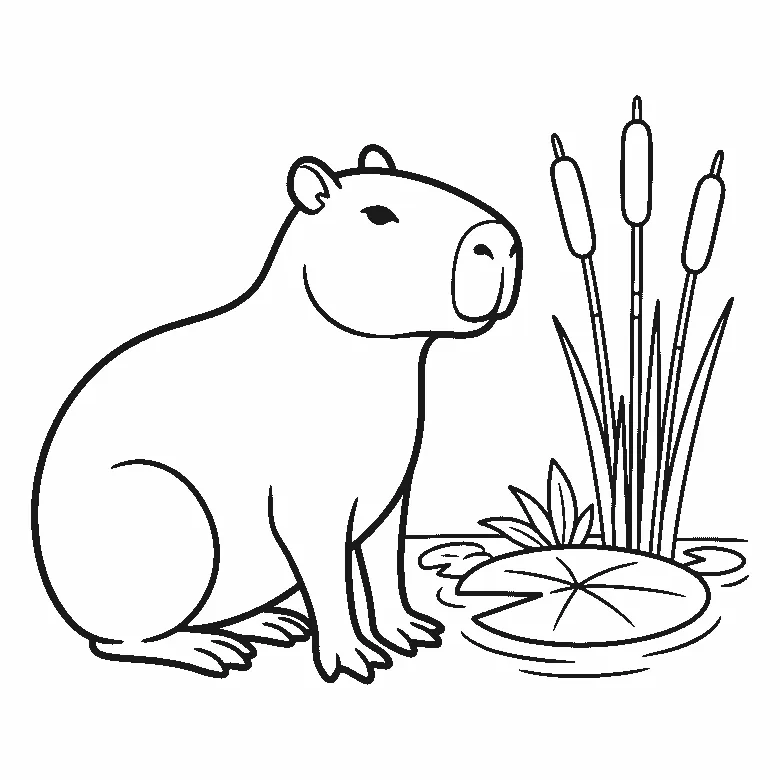
Capybara coloring page
A capybara sitting at the water's edge beside a lily pad and three cattails, in plain black outlines.
Coloring outline drawn by us.
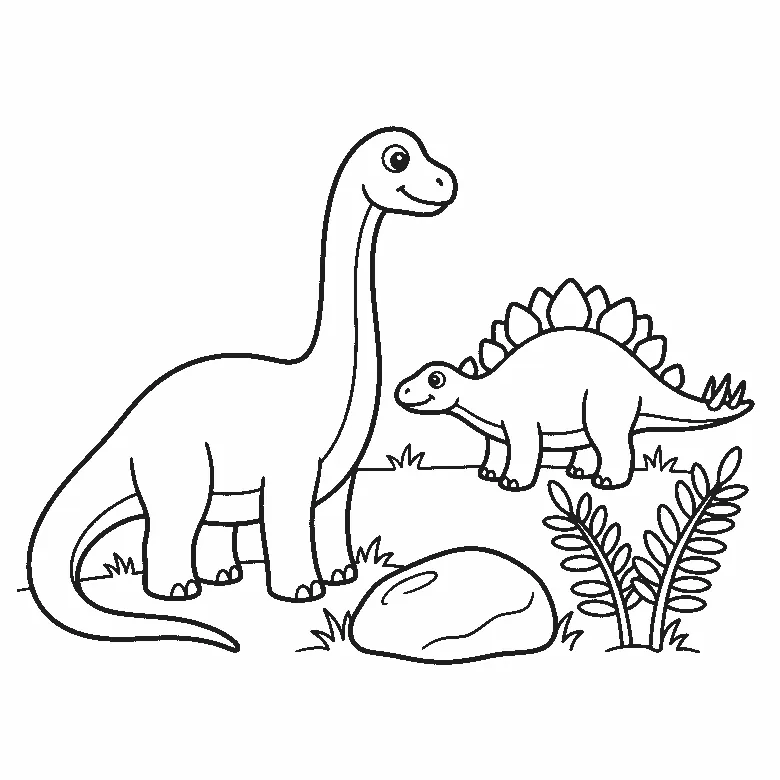
Dinosaur coloring page
Two dinosaurs, a boulder, a fern and tufts of grass in black outline, ready to print on letter paper.
Coloring outline drawn by us.
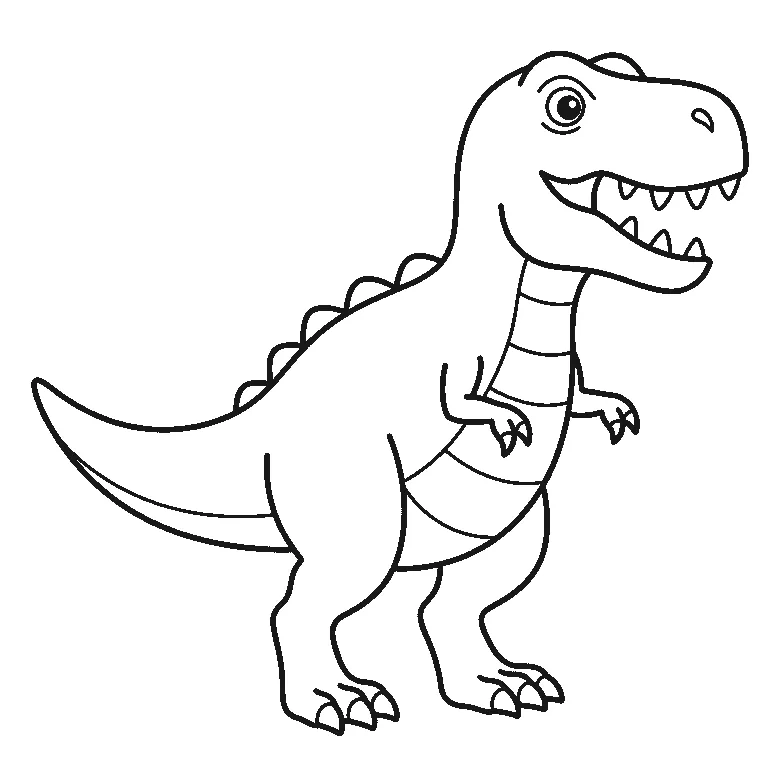
T. rex coloring page
A T. rex in profile with an open mouth, pointed teeth, small arms and a long tail, on plain white.
Coloring outline drawn by us.
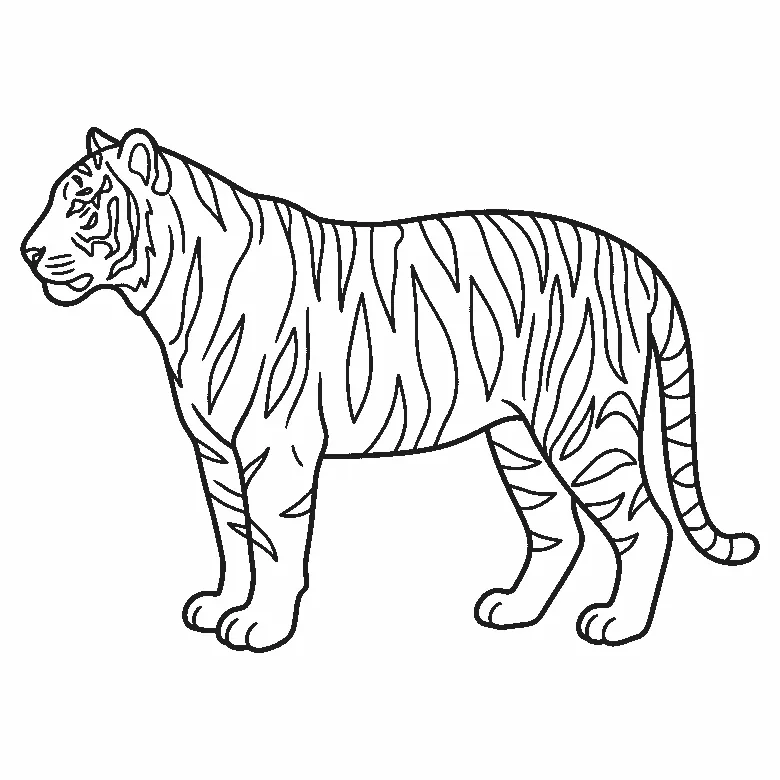
Tiger coloring page
One tiger standing in profile with every stripe drawn as a closed shape you can color inside.
Coloring outline drawn by us.
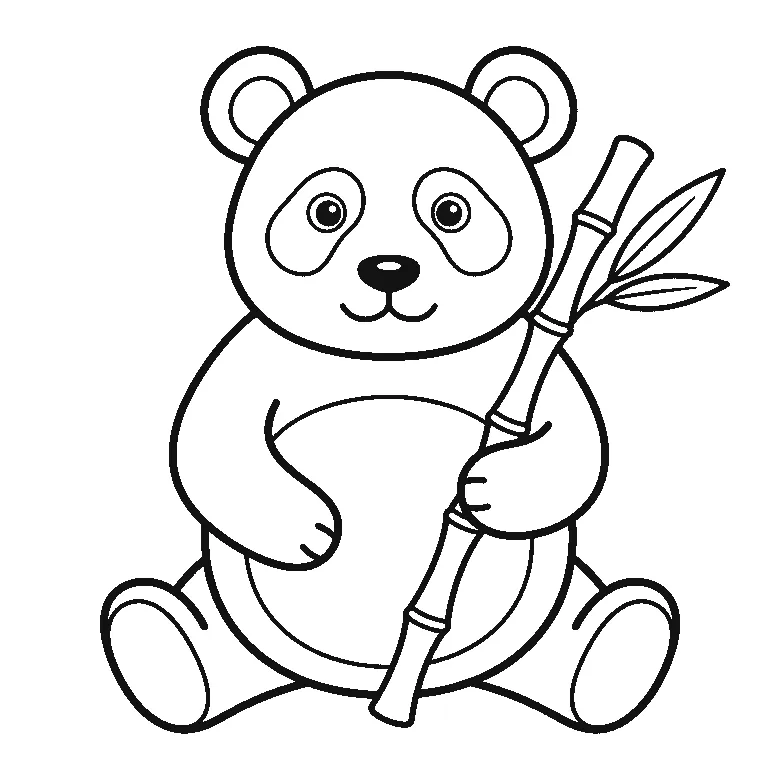
Panda coloring page
A giant panda sitting upright with a bamboo stalk, drawn as a small set of large closed shapes.
Coloring outline drawn by us.
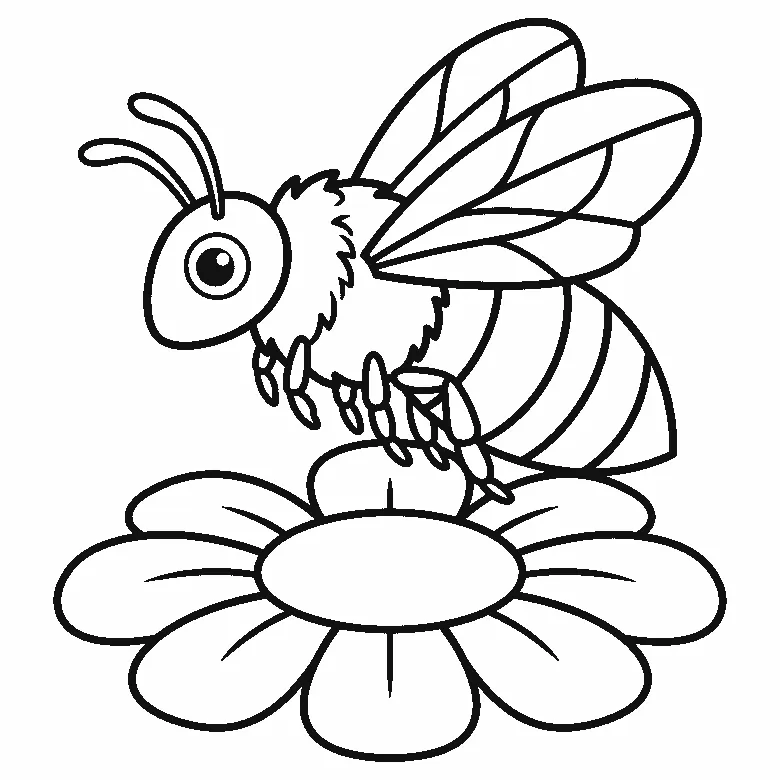
Bee coloring page
One bee on a wide flower, its body already divided into four stripe panels to fill.
Coloring outline drawn by us.
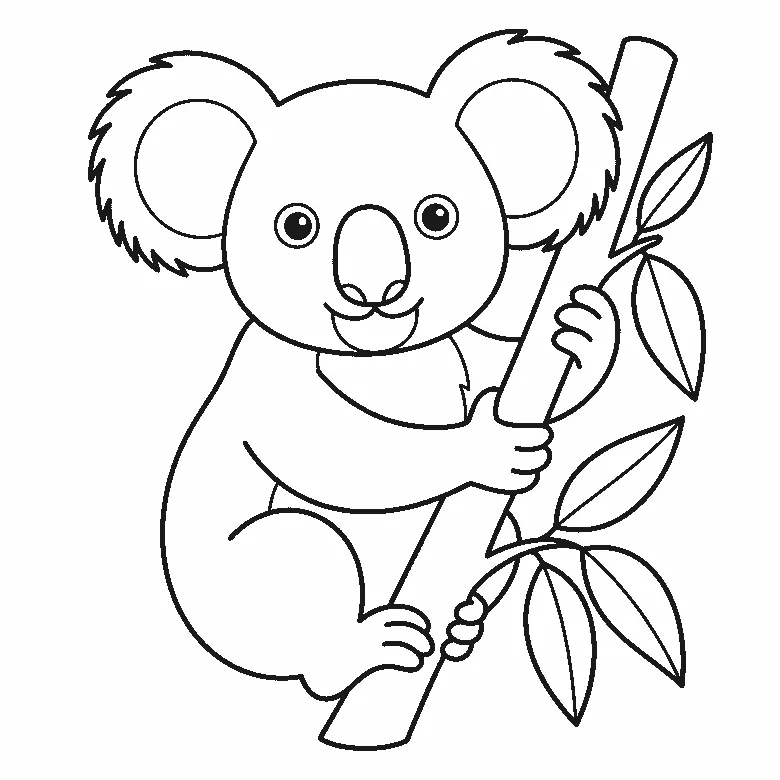
Koala coloring page
A koala hugging a eucalyptus branch, facing forward, with two very large fringed ears.
Coloring outline drawn by us.
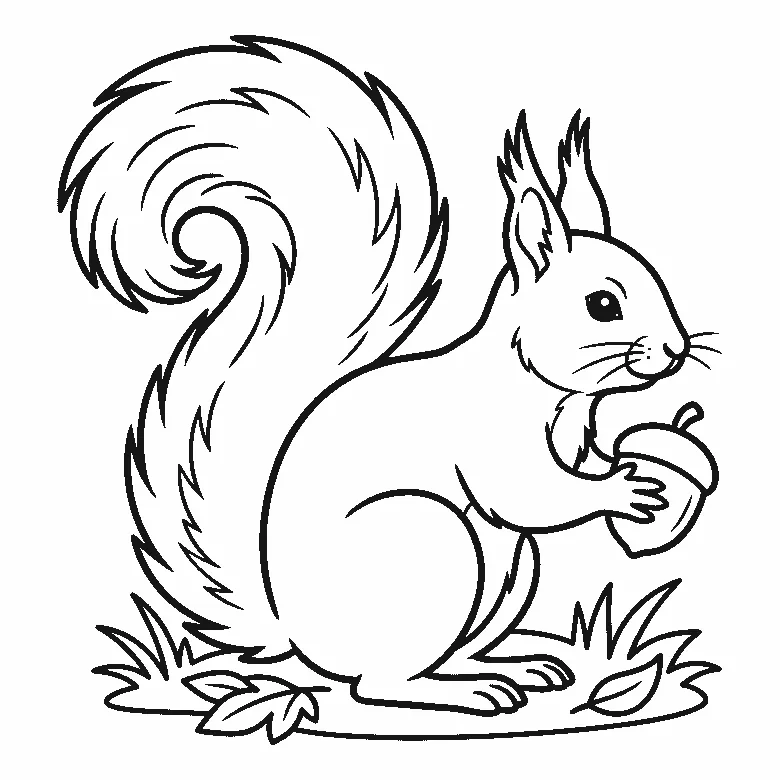
Squirrel coloring page
A squirrel in profile holding an acorn, with a very large curled tail drawn as separate strands.
Coloring outline drawn by us.
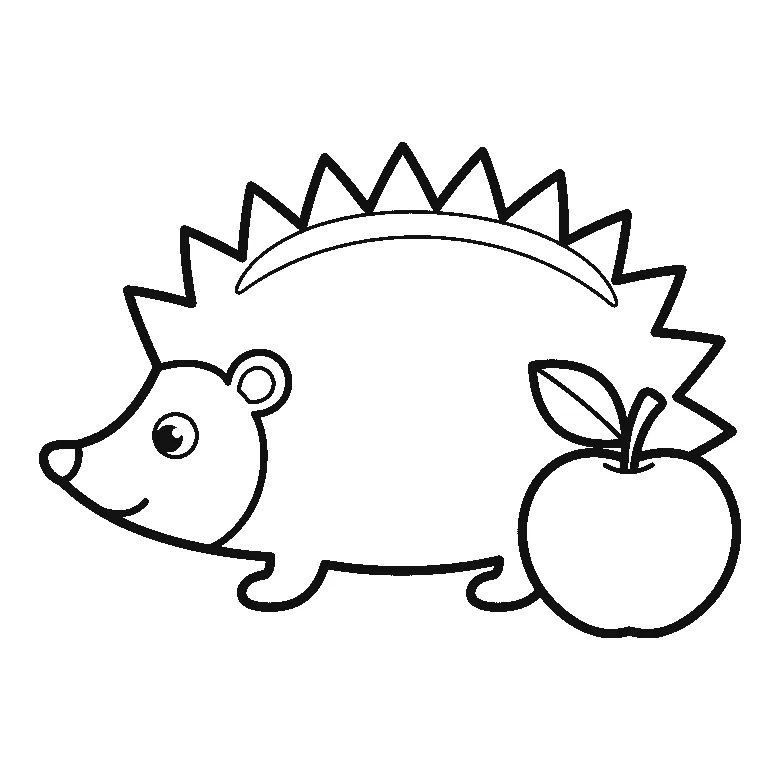
Hedgehog coloring page
A hedgehog in profile beside an apple, its whole back drawn as one row of big triangular spikes.
Coloring outline drawn by us.


