
PDF · US Letter · 13 KB · Free, no sign-up. For home and classroom use.
Kitten coloring page
A round-headed kitten sitting with one paw on a ball of yarn, the loose thread trailing away across the floor, free as a US Letter PDF.
A kitten sits facing forward on this sheet with a ball of yarn beside it, and the two shapes take up almost the whole page. The head is nearly a circle and it is drawn larger than the body, which is what makes the animal read as young rather than small. Two triangular ears sit on top, each with a second triangle drawn inside it. The face carries two big round eyes with filled pupils, a small rounded nose, a curved mouth and three whiskers sweeping out on each side. Behind the body a tail rises in one long curve, and three straight lines run across the paper to put the whole thing on a floor.
The ball of yarn is the part of the drawing with the most line work in it. It is not a plain circle: the outline is filled with long curved strands wound over one another, so the ball is really a stack of narrow crescent shapes that share edges. One of those strands leaves the ball at the bottom left and becomes a single thread that wanders off across the floor in two loose loops before it stops. That thread is the only line on the page that goes nowhere and does nothing, and it is worth keeping thin.
There are two ways to handle the wound strands and they give completely different results. Filling every crescent the same color turns the ball into one solid object with texture drawn on it, which is quick and reads correctly from across a room. Alternating two colors band by band turns it into a striped ball of wool and doubles the time. A third option is to color only the strands that curl around the small spiral at the front, leave the outer ones white, and let the eye read the difference as the near side catching light.
The kitten's front paw rests on top of the ball, and the outline of the paw crosses in front of two of the strands. That overlap is the one place on the sheet where the drawing tells you the order things sit in, so coloring the paw before the strands underneath it keeps the two separate. If the paw and the ball end up the same color the overlap disappears and the two shapes merge into one lump, which is a real choice rather than a mistake, but it is easier to make on purpose than to undo.
The visible hind paw carries a pad: three small toe ovals in a shallow arc above one much larger pad below them. Those four shapes are the smallest closed areas anywhere on the sheet and a broad tip will bridge two of them in a single stroke, so a sharpened pencil is worth reaching for. A cat's paw pads are usually darker than the fur around them, and taking that one detail seriously — a deeper tone in the four small shapes and a lighter one over the leg — does more for the drawing than any amount of work on the body.
The whiskers, three to a side, are drawn as long thin lines that start clear of the muzzle and taper to a point. Nothing about them is a closed shape, so there is nothing to fill; they are lines to color around, and the width of white left beside each one is what keeps them visible. Colored heavily right up to a whisker on both sides, the line thins out and starts to disappear at normal reading distance. Leaving a hair's width of paper along each side keeps all six of them.
A kitten's whiskers are not decoration: they are stiff hairs rooted deep in the skin, and they sit roughly as wide as the animal's body, which is why they look too long in a drawing until you measure them against the shoulders. The eyes on this sheet are drawn very large in proportion to the head, and that is faithful to a real kitten, whose eyes reach adult size long before the rest of the face does. Neither fact changes how the page is colored, but both explain why the outline looks the way it does.
Print at actual size on plain letter paper rather than fit-to-page, so the toe pads and the whiskers keep the width they were drawn at. Card stock is the better choice if markers are coming, because the ball of yarn puts a lot of ink into a small area and thin paper will show it on the back. Finished, the kitten cuts out cleanly along its outer line — the tail is a smooth curve with nothing fine hanging off it — and the ball of yarn cuts out separately, which gives two pieces that can be arranged with the thread drawn back in by hand.
Before you print
- Color the front paw before the yarn strands underneath it, and the overlap stays readable.
- Keep a sharpened pencil for the four paw-pad shapes; a broad tip bridges two of them at once.
- Leave a hair's width of white along both sides of every whisker so all six survive at reading distance.
- Alternate two colors band by band on the ball for a striped wool look, or use one color for a fast solid ball.
- Trace the trailing thread last with a fine point, after the floor lines are done, so it stays the thinnest line on the sheet.
Published Updated 807 words
More in this section
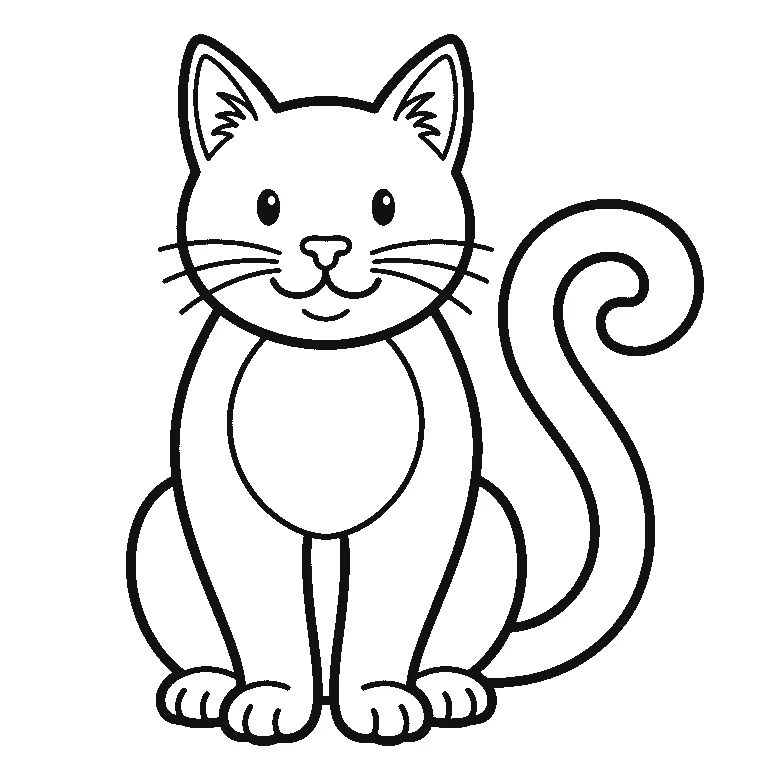
Cat coloring page
An upright, forward-facing cat with tufted ears and a curled tail, in thick black outlines on one letter-size sheet.
Coloring outline drawn by us.
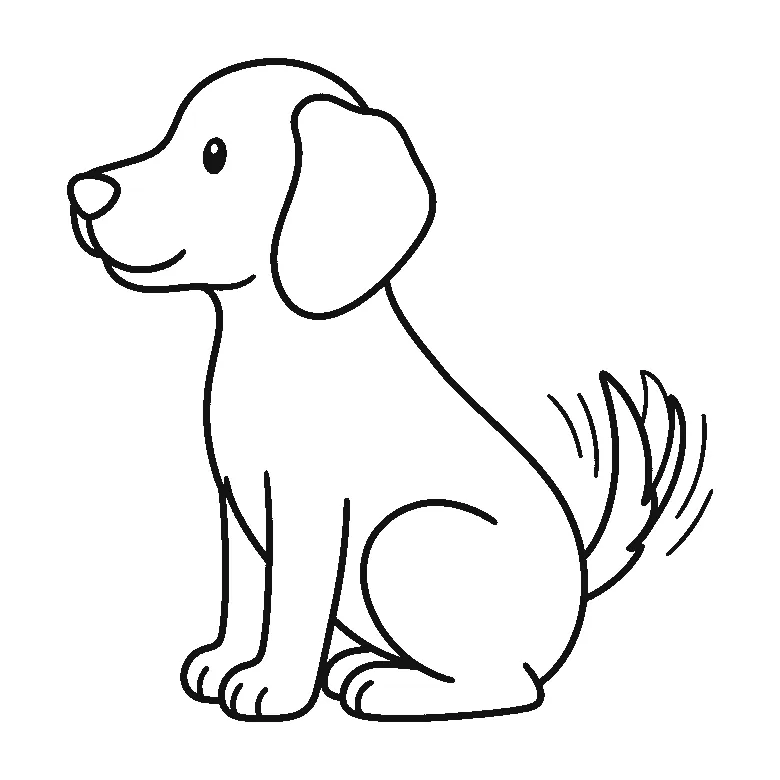
Dog coloring page
A dog in profile with one floppy ear and a feathered tail, drawn in open black outlines and ready to print at actual size.
Coloring outline drawn by us.
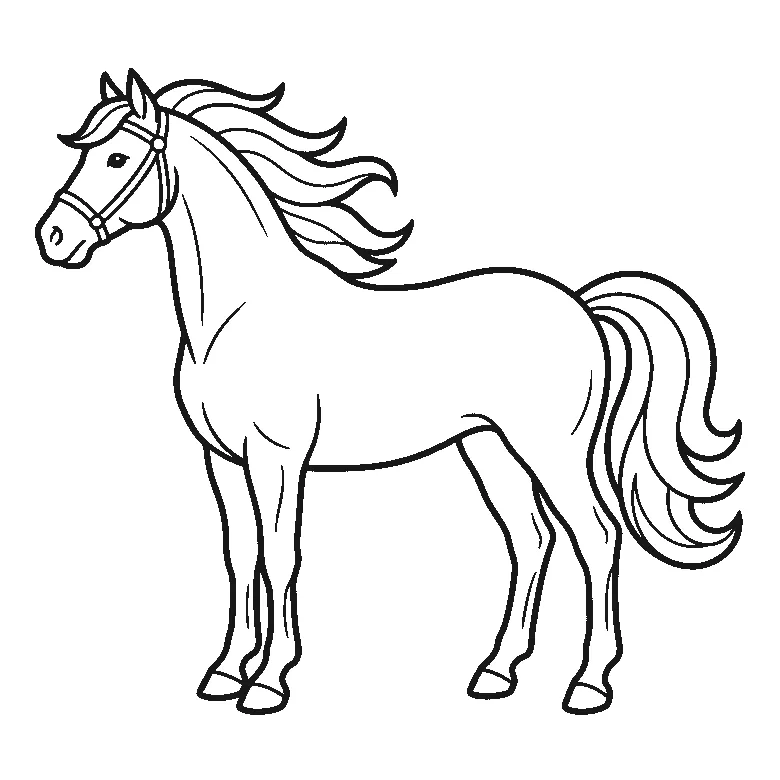
Horse coloring page
A horse standing in profile in its bridle, with a long streaming mane and full tail, on one printable letter-size sheet.
Coloring outline drawn by us.
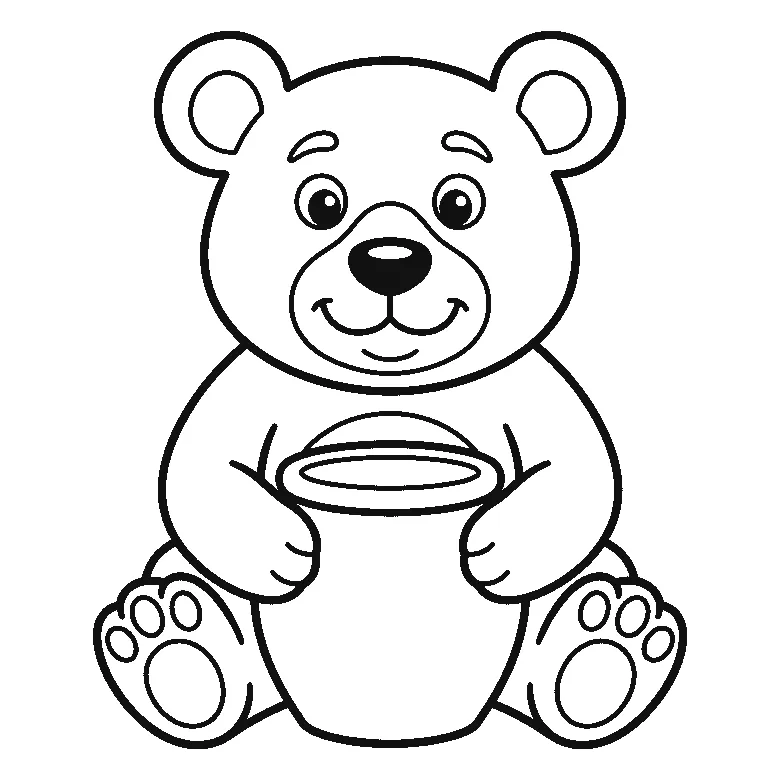
Bear coloring page
A round bear sitting with a honey pot in its paws, drawn in thick black outlines and free to print at letter size.
Coloring outline drawn by us.
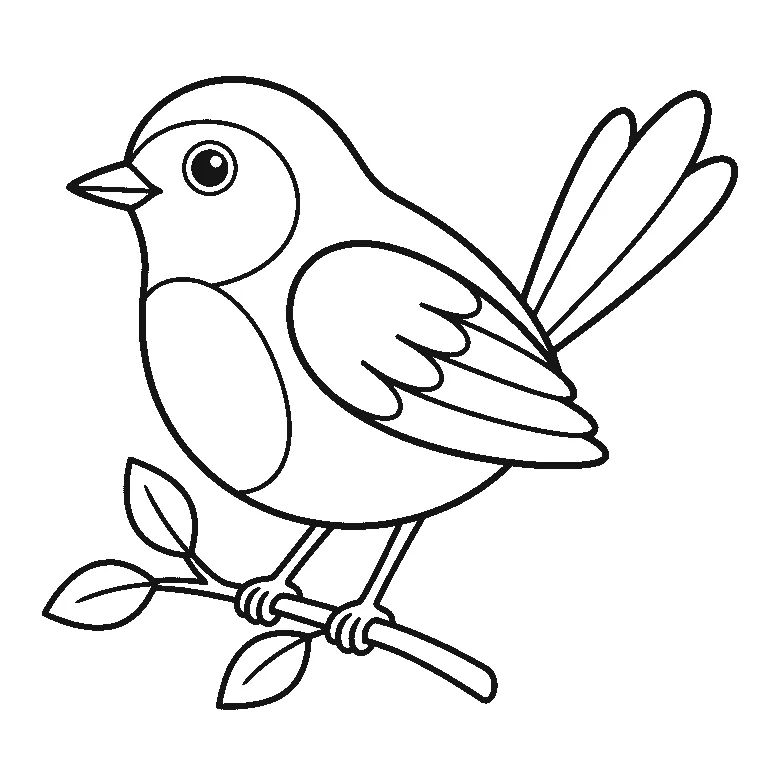
Bird coloring page
Free letter-size printable: a plump songbird perched on a leafy twig, with a long layered tail worth taking slowly.
Coloring outline drawn by us.
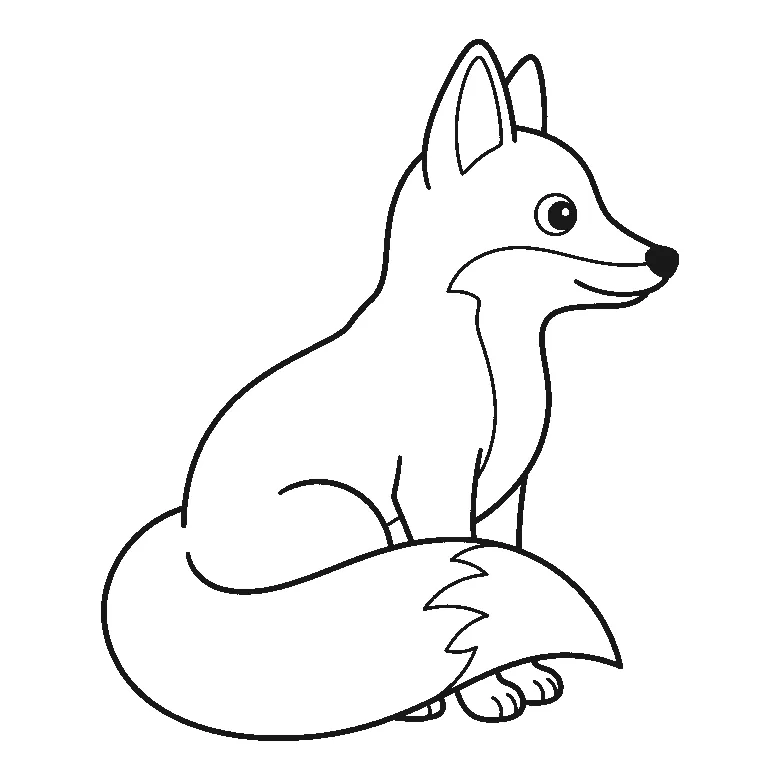
Fox coloring page
A sitting fox in profile with a huge bushy tail curled around in front, free to print at letter size.
Coloring outline drawn by us.
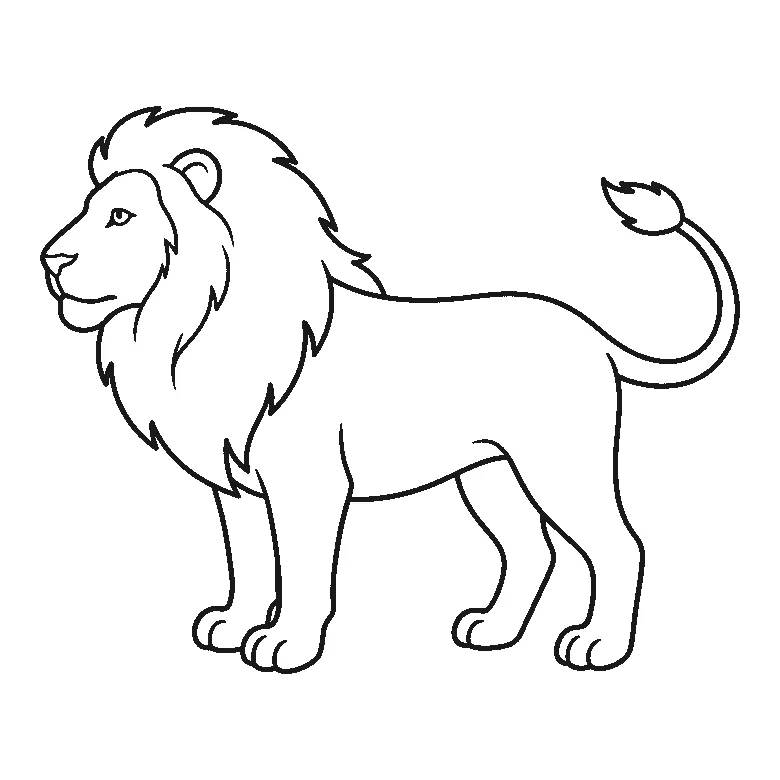
Lion coloring page
One lion in profile with a full ruffled mane, ready to print on plain letter paper and color.
Coloring outline drawn by us.
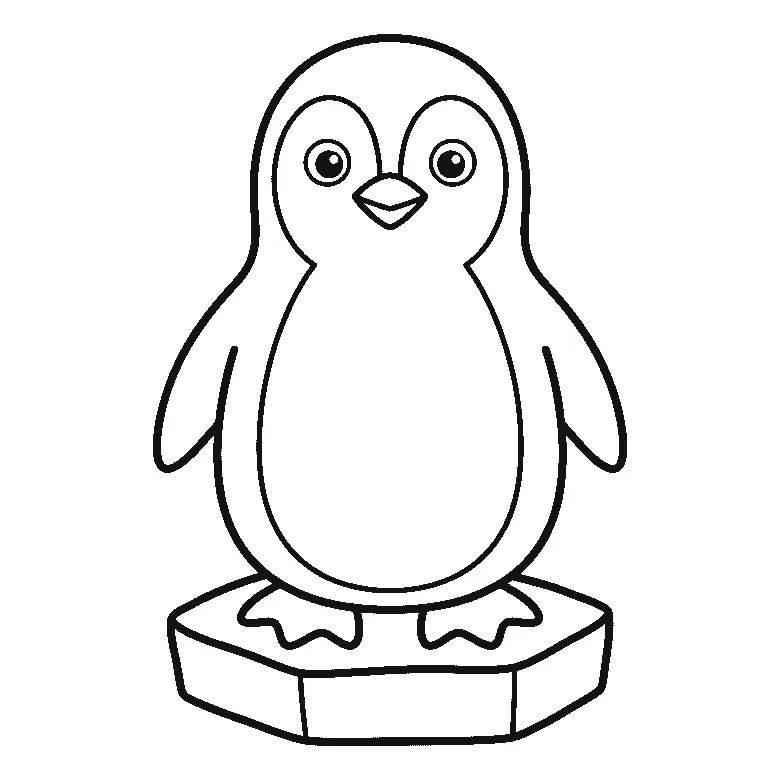
Penguin coloring page
A penguin standing on a block of ice, drawn in a few big shapes that fill fast with any medium.
Coloring outline drawn by us.
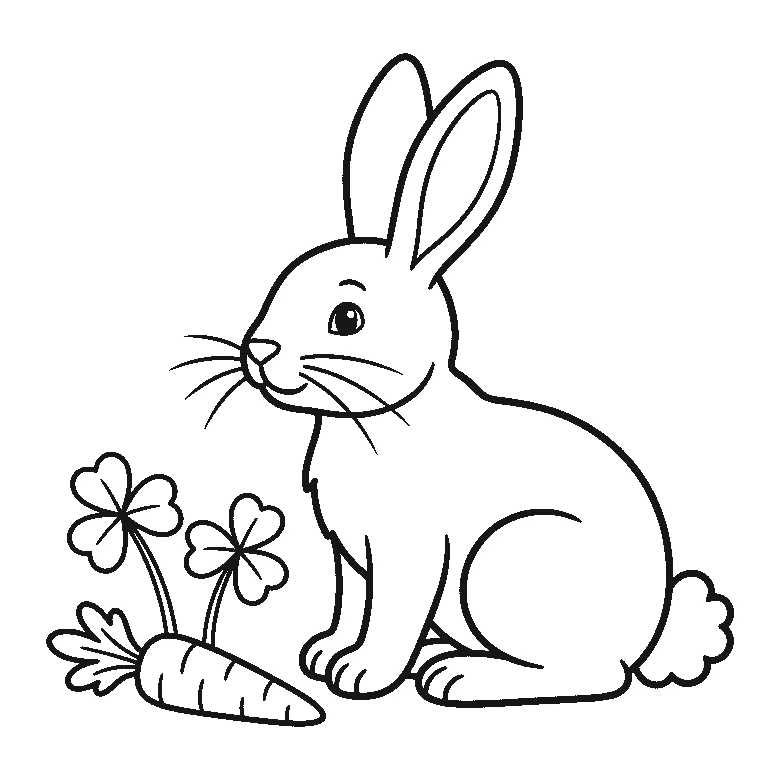
Rabbit coloring page
A sitting rabbit with tall ears, whiskers and a fluffy tail, plus a carrot and two clover flowers.
Coloring outline drawn by us.
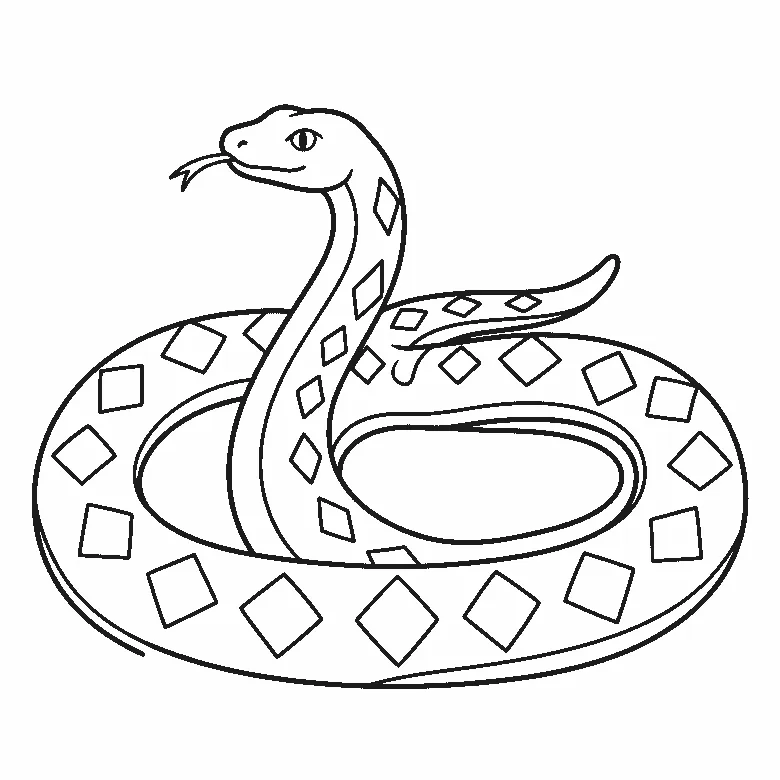
Snake coloring page
A coiled snake with a raised head, forked tongue, and a row of big diamonds down its back, free to print on US Letter.
Coloring outline drawn by us.
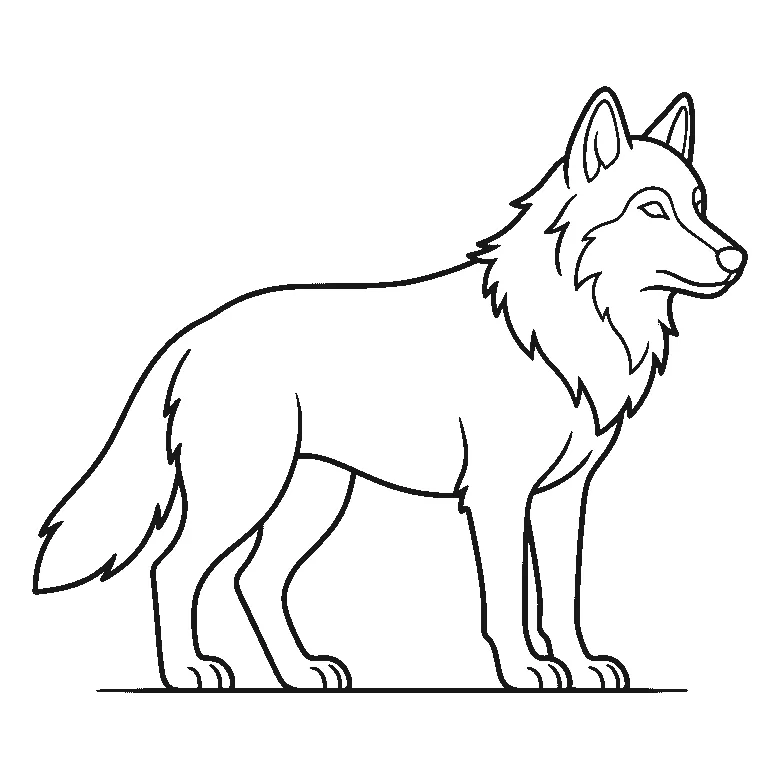
Wolf coloring page
A wolf in profile on a ground line, with a heavy neck ruff and a thick brush tail, printable free at US Letter size.
Coloring outline drawn by us.
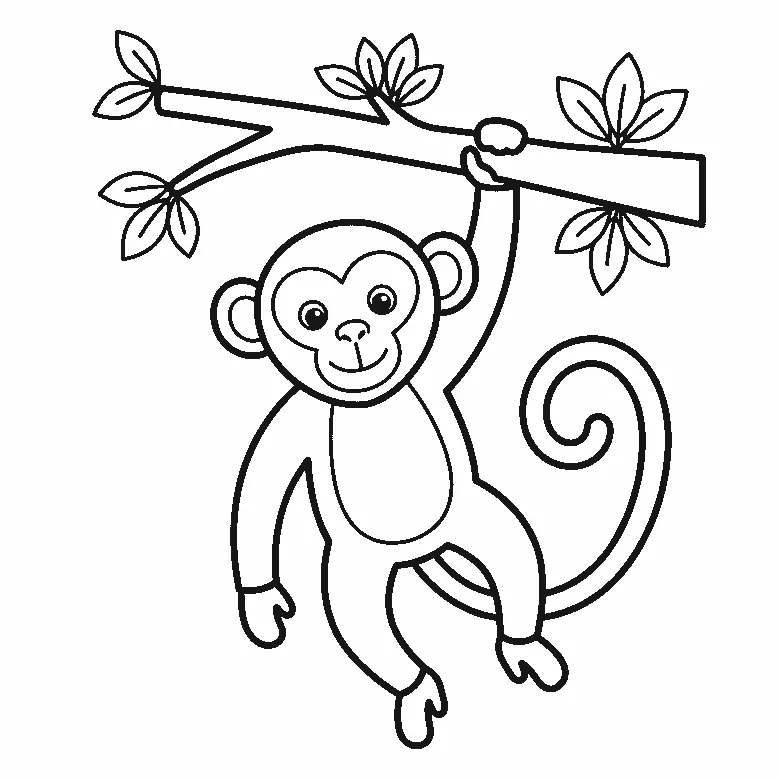
Monkey coloring page
A monkey swinging one-handed from a leafy branch with its tail curled into a spiral, free to print on US Letter.
Coloring outline drawn by us.


