
PDF · A4 · 17 KB · Free, no sign-up. For home and classroom use.
Snail colouring page
A snail crossing a big toothed leaf, its shell a wide spiral of broad bands to fill one by one.
A snail crawls along a large leaf, seen from the side and facing right. The shell is the biggest shape on the page: a wide spiral wound about two and a half turns, divided into broad bands that get narrower as they wind towards the small closed curl at the centre. The body stretches forward out of the shell with a texture of short marks along its back, and the head carries one small eye, two long upper tentacles each ending in a rounded knob, and two shorter ones below. The leaf beneath runs corner to corner, its edge finely toothed, with a strong midrib and side veins and a thick stalk at the bottom left.
The shell and the leaf are two completely different jobs on one sheet, which is what makes this page worth more than one sitting if you want it. The shell is a set of large curved bands that reward a plan; the leaf is one enormous area with veins running through it that can be filled in a minute. Doing the shell first and the leaf second means the fiddly half is done while the hand is fresh.
The bands of the shell wind inward and narrow as they go, so a colour sequence laid along them tightens towards the middle, which is exactly what makes a spiral look like a spiral. Two alternating colours is the simplest version. A graded set, palest on the outer band and deepest at the centre, is the version that gives the shell weight, and it is easy because each band is closed and can take its own pressure.
The body is textured with short marks along its back, and those marks are already drawn — they are not shapes to fill but lines to colour around or over. A light, even fill over the whole body lets them show through as texture; a heavy one buries them. This is one of the few places on any sheet where pressing lightly is the better technique rather than the lazier one.
The tentacles are the narrowest things here. Each of the two long ones ends in a small rounded knob, and the knobs are the natural place for a dot of a colour that appears nowhere else, which draws the eye to the head. The two short tentacles below are thinner still and can simply be left white, since the head reads without them being filled.
The leaf is where a strong flat green does the most work, and its midrib divides it into two halves that can differ. Colouring one half a shade deeper than the other, with the change happening along the midrib, makes a flat leaf look like it is turning away from you. The toothed edge is the one part of the leaf that asks for care, and it asks for it only because a broad tip rounds the teeth off into a smooth curve.
Two plain facts sit in this drawing. A snail's shell grows with the animal, spiralling outward from the small curl at the centre, which is why the innermost turn is the oldest part of it and the outer band the newest. And the long upper tentacles carry the eyes at their tips, which is what the two knobs in the drawing are — a snail can pull them in completely, which is why they are drawn extended here rather than folded.
Print at actual size on plain A4 paper. The teeth along the leaf edge and the small marks on the body are the details a smaller print flattens. Regular copier paper takes pencil and crayon fine; if markers are going onto the leaf, use card, because it is a very large area to fill in one colour. Cut around the outer edge and the snail and its leaf come away as one long diagonal shape, which suits a fridge door better than a frame.
Before you print
- Grade the shell bands from palest on the outside to deepest at the centre, and the spiral gains weight.
- Keep the fill on the body light so the short texture marks along its back still show through.
- Put a dot of an otherwise unused colour on the two tentacle knobs to draw the eye to the head.
- Colour one half of the leaf a shade deeper than the other, changing along the midrib.
- Use a fine tip along the toothed leaf edge; a broad one rounds the teeth into a smooth curve.
Published Updated 655 words
More in this section
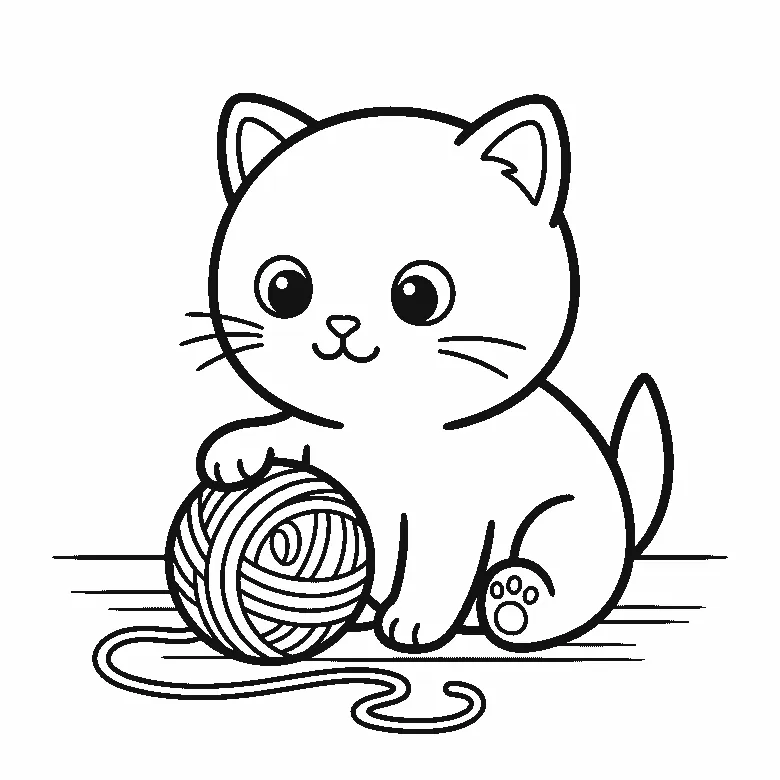
Kitten colouring page
A round-headed kitten sitting with one paw on a ball of wool, the loose thread trailing away across the floor, free as an A4 PDF.
Colouring outline drawn by us.
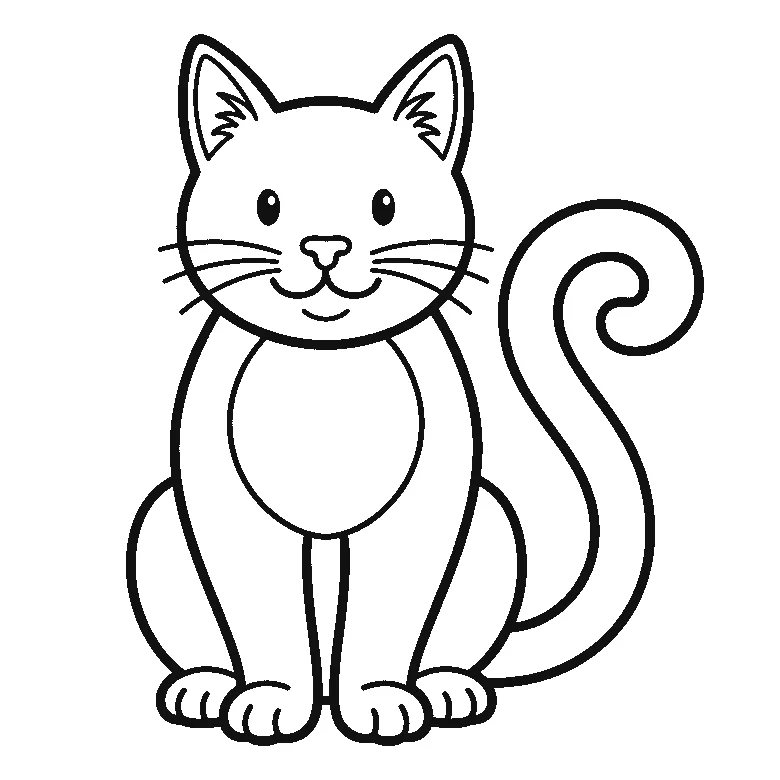
Cat colouring page
An upright, forward-facing cat with tufted ears and a curled tail, in thick black outlines on one A4-size sheet.
Colouring outline drawn by us.
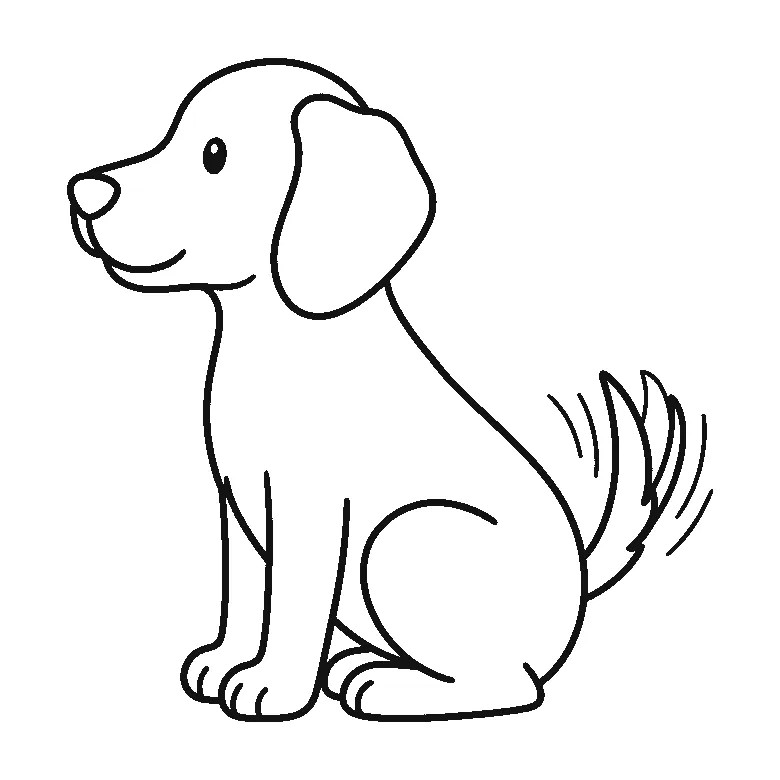
Dog colouring page
A dog in profile with one floppy ear and a feathered tail, drawn in open black outlines and ready to print at actual size.
Colouring outline drawn by us.
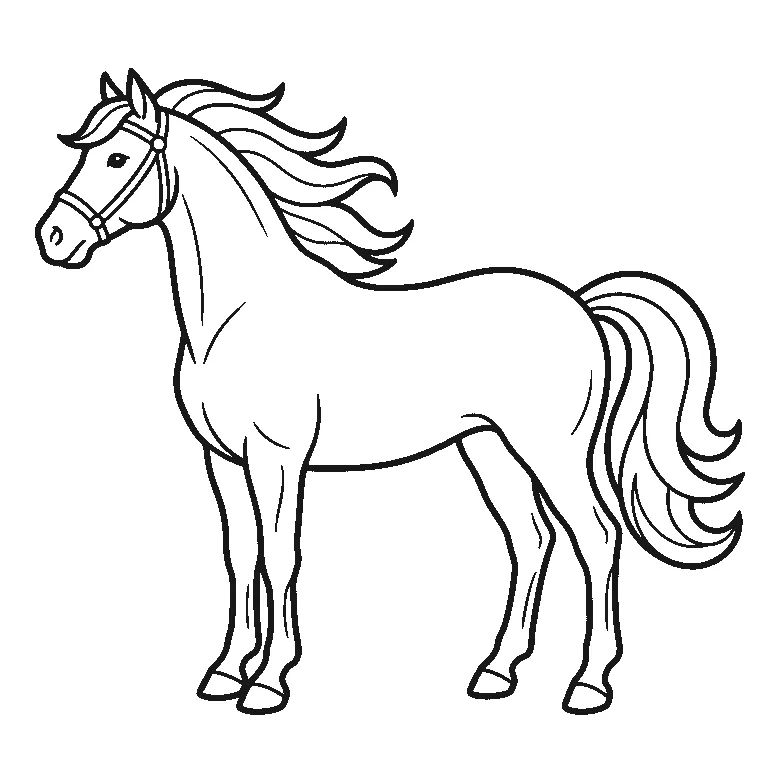
Horse colouring page
A horse standing in profile in its bridle, with a long streaming mane and full tail, on one printable A4-size sheet.
Colouring outline drawn by us.
Bear colouring page
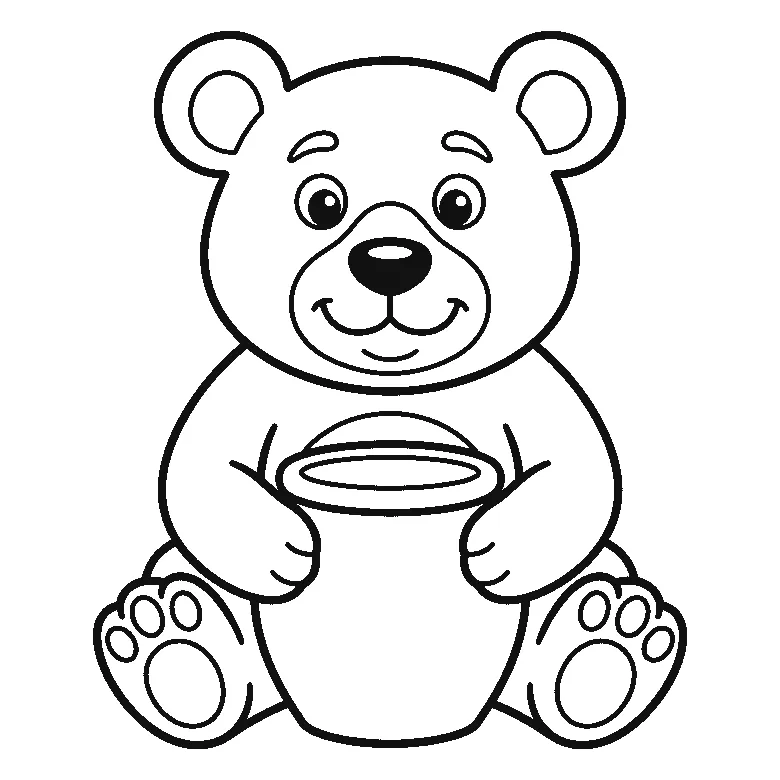
A round bear sitting with a honey pot in its paws, drawn in thick black outlines and free to print at A4 size.
Colouring outline drawn by us.
Bird colouring page
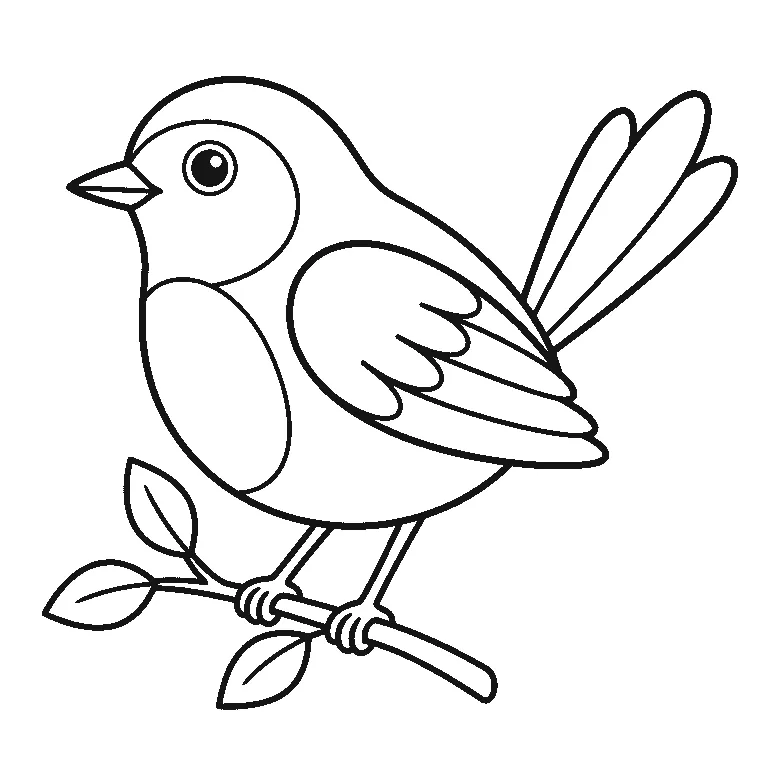
Free A4-size printable: a plump songbird perched on a leafy twig, with a long layered tail worth taking slowly.
Colouring outline drawn by us.
Fox colouring page
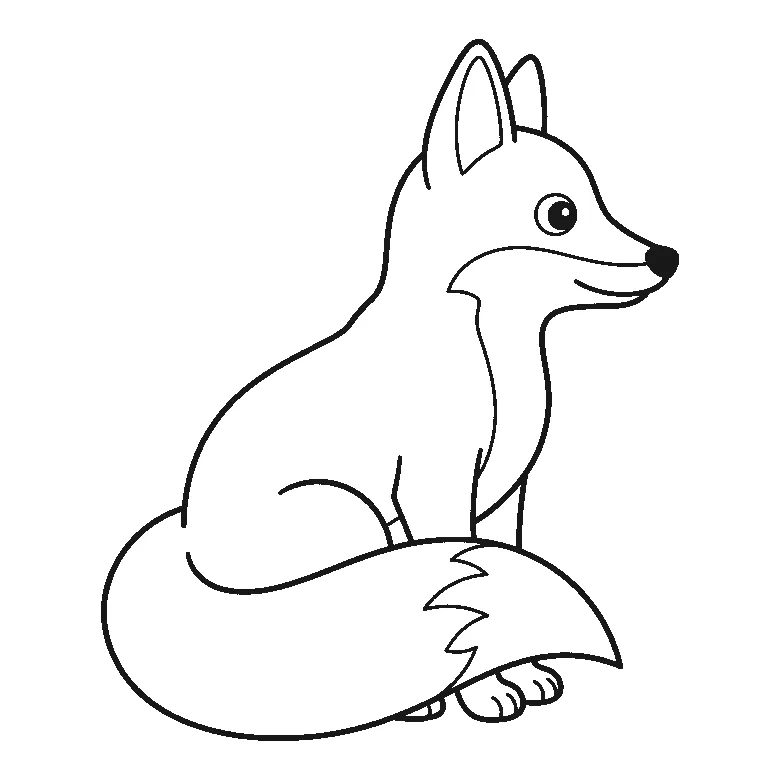
A sitting fox in profile with a huge bushy tail curled around in front, free to print at A4 size.
Colouring outline drawn by us.
Lion colouring page
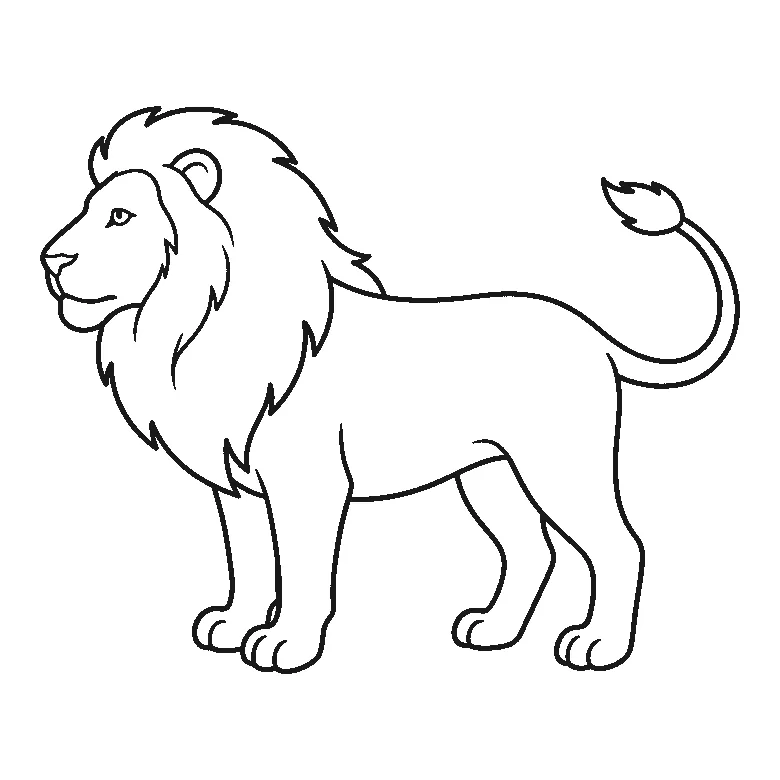
One lion in profile with a full ruffled mane, ready to print on plain A4 paper and colour.
Colouring outline drawn by us.
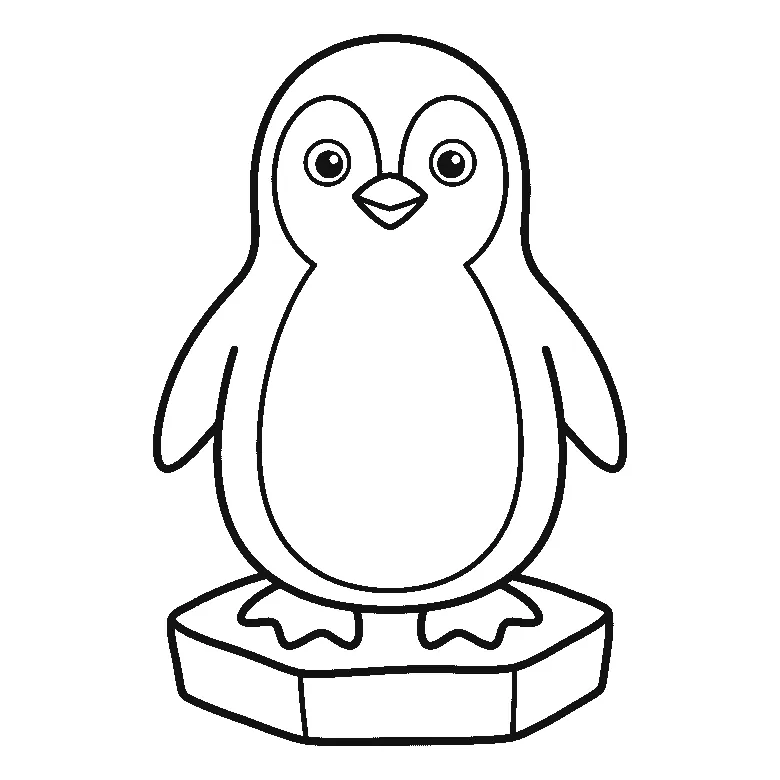
Penguin colouring page
A penguin standing on a block of ice, drawn in a few big shapes that fill fast with any medium.
Colouring outline drawn by us.
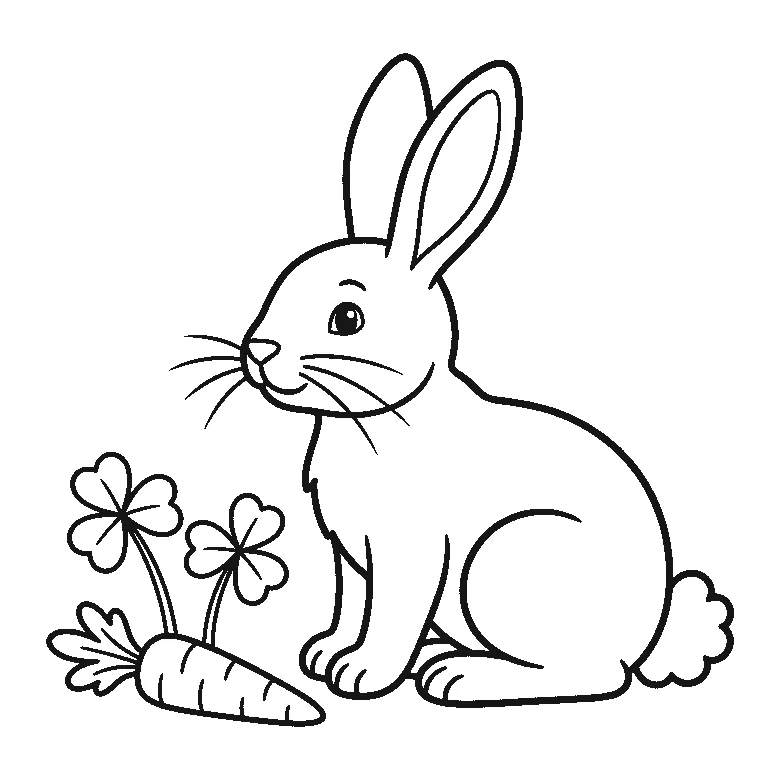
Rabbit colouring page
A sitting rabbit with tall ears, whiskers and a fluffy tail, plus a carrot and two clover flowers.
Colouring outline drawn by us.
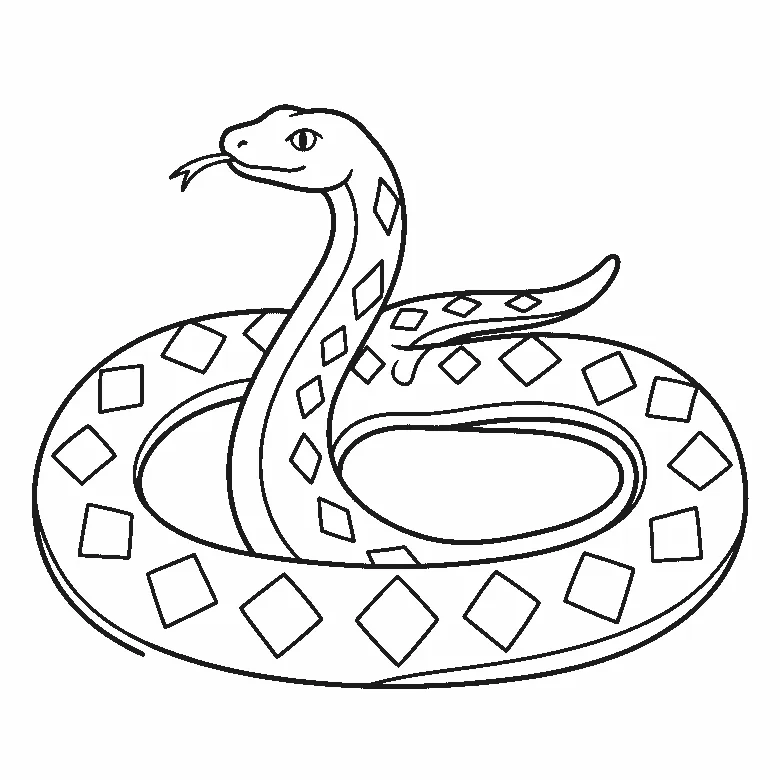
Snake colouring page
A coiled snake with a raised head, forked tongue, and a row of big diamonds down its back, free to print on A4.
Colouring outline drawn by us.
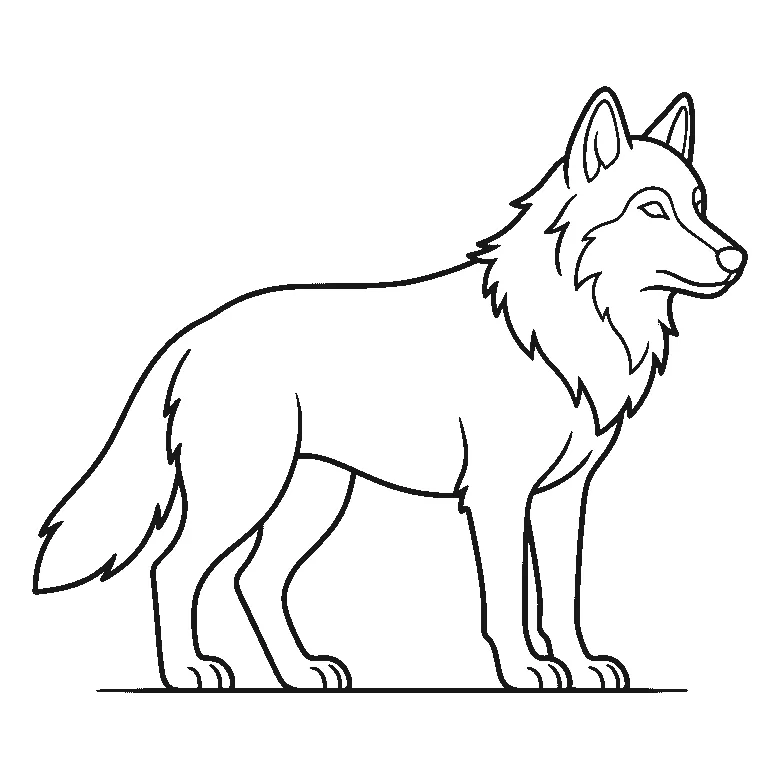
Wolf colouring page
A wolf in profile on a ground line, with a heavy neck ruff and a thick brush tail, printable free at A4.
Colouring outline drawn by us.


