
PDF · A4 · 10 KB · Free, no sign-up. For home and classroom use.
Dog colouring page
A dog in profile with one floppy ear and a feathered tail, drawn in open black outlines and ready to print at actual size.
This dog is drawn from the side, so you see one round eye, one long floppy ear hanging down past the jaw, and a soft rounded muzzle at the front of the head. It is sitting, with the hind leg folded under, and the tail sweeps out behind with feathered edges rather than a smooth line. Because the pose is a profile, the far side of the dog is not shown at all, which leaves one big unbroken flank running from the shoulder to the hip as the widest space on the sheet.
A floppy ear like this one folds forward from the top of the head and covers the ear opening, which is why the outline shows a long soft shape rather than a point. The feathering on the tail is longer hair that grows along the underside, and it hangs down when the tail is still and fans out when it swings. The muzzle is drawn short and blunt here rather than narrow and pointed, and the nose sits at the very front of it. Those features are what make the drawing read as a dog before any colour goes on.
Work from the back of the dog forward. The flank and the haunch take the most colour and are the easiest to keep even, so filling them first means your hand is warmed up by the time it reaches the head. Save the muzzle and the eye until last. The eye is a small circle inside a slightly larger one, and it survives a light touch far better than a firm one; bearing down there fills the whole shape with a solid block and the face loses its expression. The feathered tail edges reward slow, short strokes that follow the direction the hair points.
Coloured pencil handles this drawing best overall, because the tail edges and the ear have narrow tapering shapes that a broad tip cannot follow. Layering two pencils, a light one first and a darker one over the top only along the back and the crown of the head, gives the coat some depth without any blending. Watercolour pencil is worth trying on the flank: colour it dry, then touch it with a barely damp brush and let the pigment spread to the outline on its own. Wax crayon works too, though it will skate over the fine tail feathering rather than filling it.
Real dogs turn up in browns, black, white, red-gold, and combinations with a paler chest and paler feet, and any of those suits the outline as drawn. One base colour over the whole coat with a lighter version of it on the chest, the muzzle and the tail tip keeps the profile reading as one animal. There is also nothing stopping a blue dog with a striped tail. The sheet is a set of shapes, not an instruction, and the front tip of the muzzle is the part worth keeping darkest, because that deeper value anchors the profile at the front of the face.
Set the printer to actual size, use plain A4 paper, and check that the tail has not been clipped at the right edge before anyone starts colouring. Thin printer paper is fine for pencils and crayons and slightly risky for markers, which will show through on the back. If you want the outlines blacker, printing in greyscale rather than colour sometimes gives a denser line on a home printer. We built the PDF at A4 size specifically so nothing needs scaling.
The profile shape cuts out neatly, because the drawn edge runs as one loop with no narrow gaps to steer into; scissors follow one continuous edge from the ear around the back and down to the folded hind leg. A cut-out dog glued onto folded card stands up on a shelf. Left whole, the page pins to a corkboard or goes in a frame that takes A4 paper without trimming. Colouring one copy and keeping a second uncoloured to trace over on a light-filled window turns the outlines into a drawing exercise rather than a colouring one.
The feathering along the tail and the long folded ear pack a lot of outline into a small part of the page, so the edge work is where most of the time on this sheet goes. The animals section also holds a horse standing in profile, and its mane asks for the same kind of short stroke. The flank fills quickly once your hand settles into it, so the sheet can be finished at a fair pace if that is what you want from it. If you want somewhere to spend an hour on small strokes, the tail alone will take a while.
Before you print
- Colour the flank before the head so the largest area sets the tone for everything else.
- Keep the single visible eye light; a solid filled circle flattens the whole profile.
- Follow the tail feathering with short strokes pointing the way the hair falls.
- Give the front tip of the muzzle the darkest value on the page to anchor the profile.
- Check the swishing tail is not clipped at the paper's right edge before you print a second copy.
Published Updated 785 words
More in this section
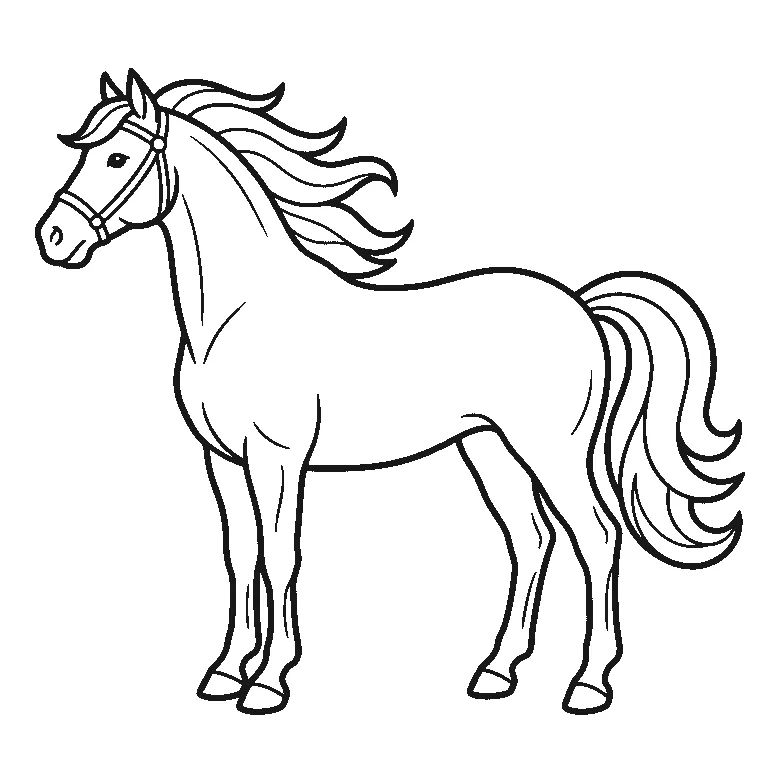
Horse colouring page
A horse standing in profile in its bridle, with a long streaming mane and full tail, on one printable A4-size sheet.
Colouring outline drawn by us.
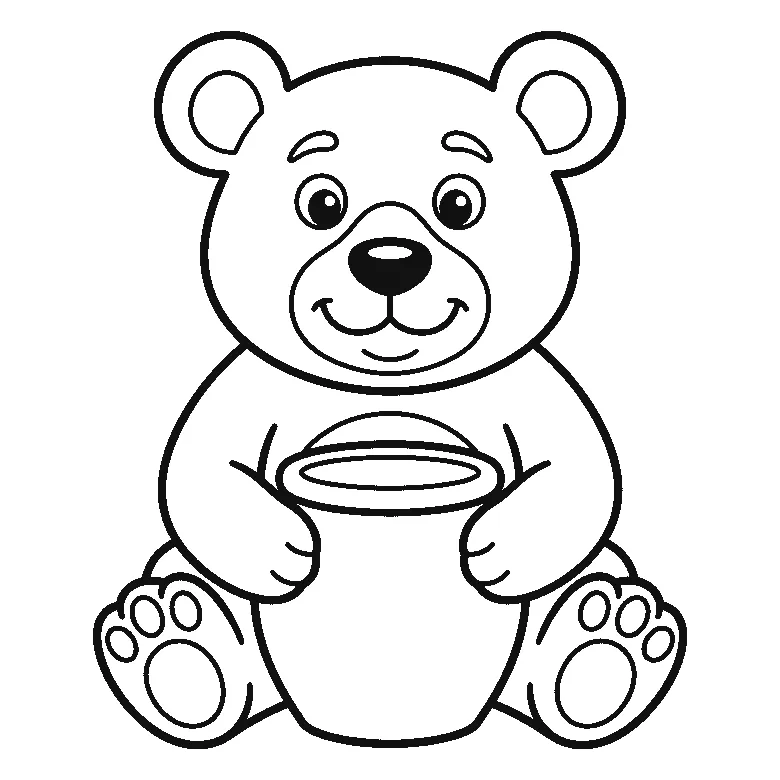
Bear colouring page
A round bear sitting with a honey pot in its paws, drawn in thick black outlines and free to print at A4 size.
Colouring outline drawn by us.
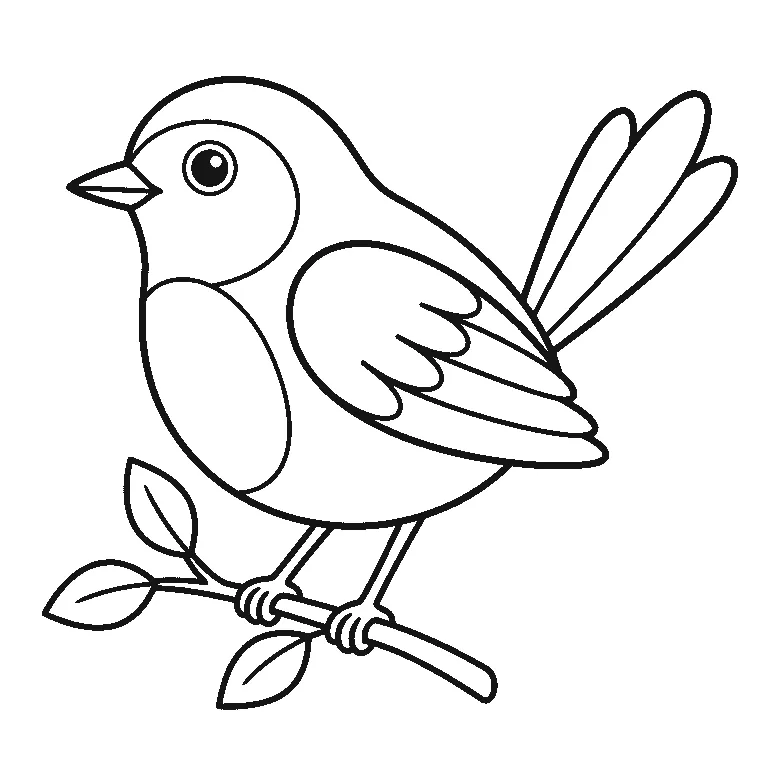
Bird colouring page
Free A4-size printable: a plump songbird perched on a leafy twig, with a long layered tail worth taking slowly.
Colouring outline drawn by us.
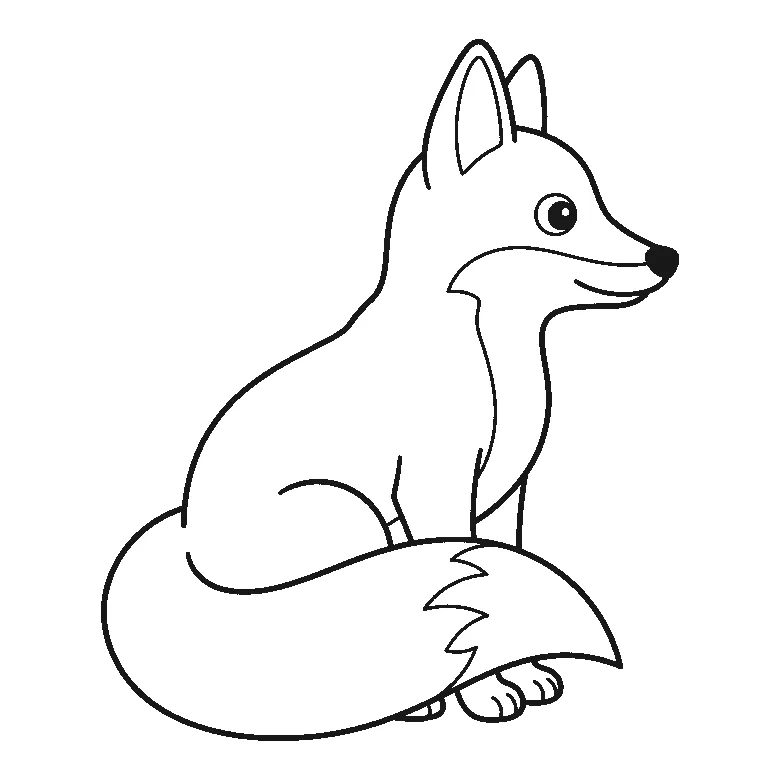
Fox colouring page
A sitting fox in profile with a huge bushy tail curled around in front, free to print at A4 size.
Colouring outline drawn by us.
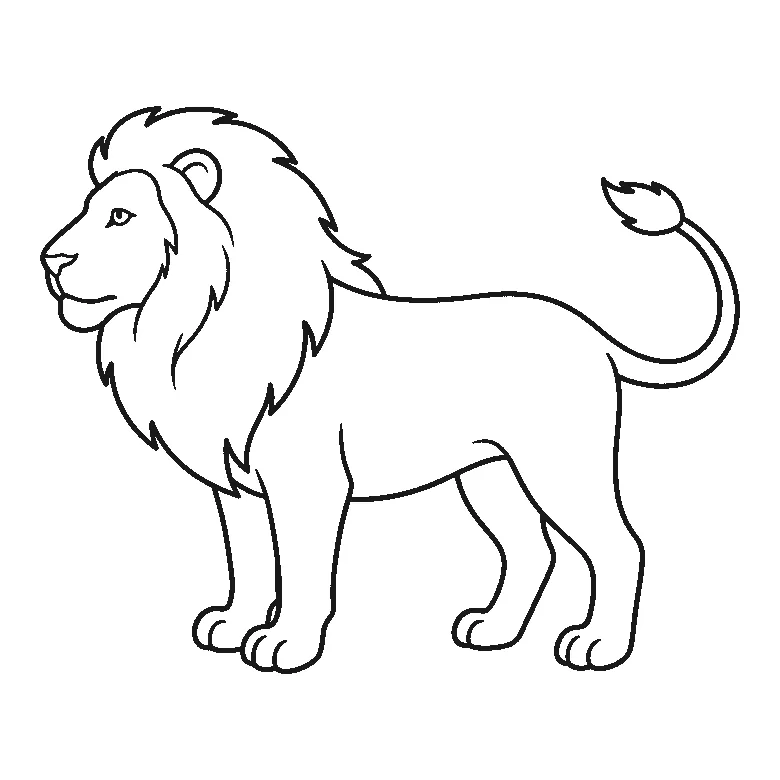
Lion colouring page
One lion in profile with a full ruffled mane, ready to print on plain A4 paper and colour.
Colouring outline drawn by us.
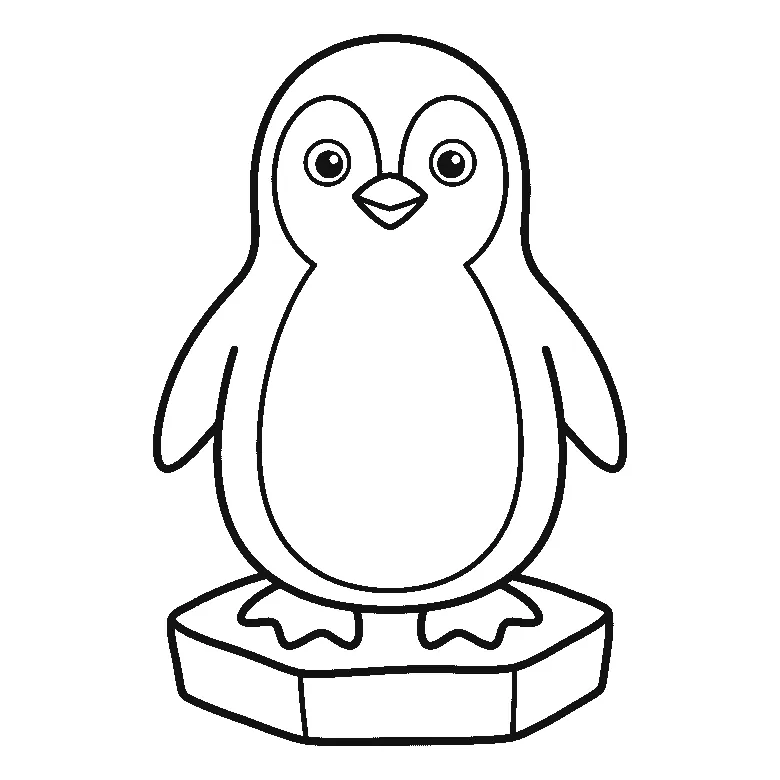
Penguin colouring page
A penguin standing on a block of ice, drawn in a few big shapes that fill fast with any medium.
Colouring outline drawn by us.
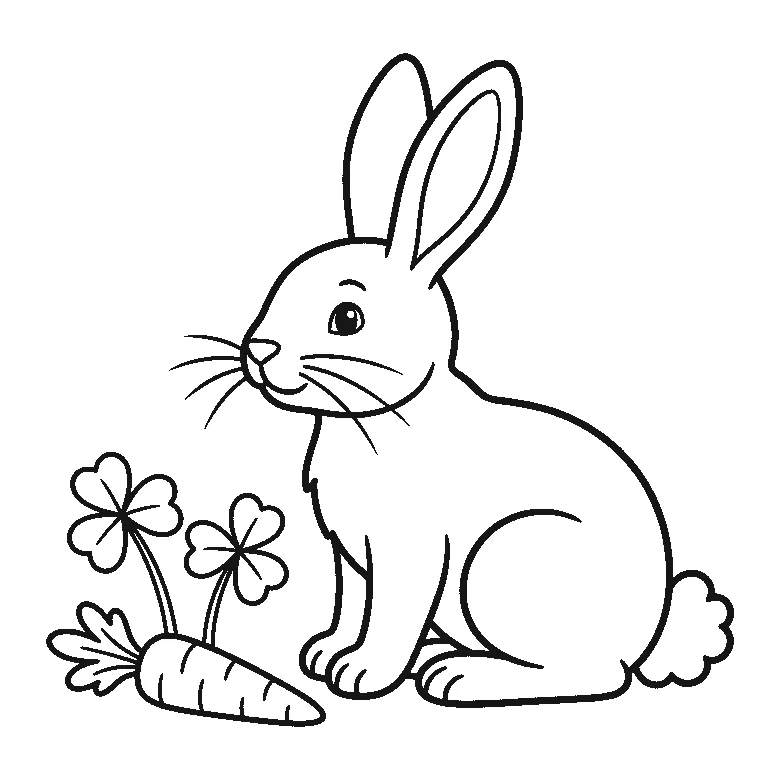
Rabbit colouring page
A sitting rabbit with tall ears, whiskers and a fluffy tail, plus a carrot and two clover flowers.
Colouring outline drawn by us.
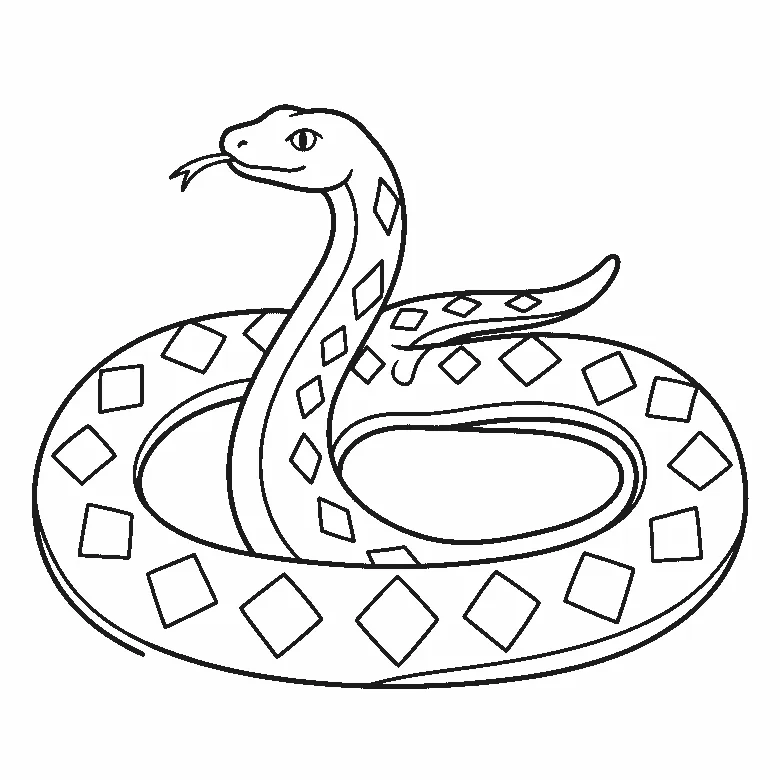
Snake colouring page
A coiled snake with a raised head, forked tongue, and a row of big diamonds down its back, free to print on A4.
Colouring outline drawn by us.
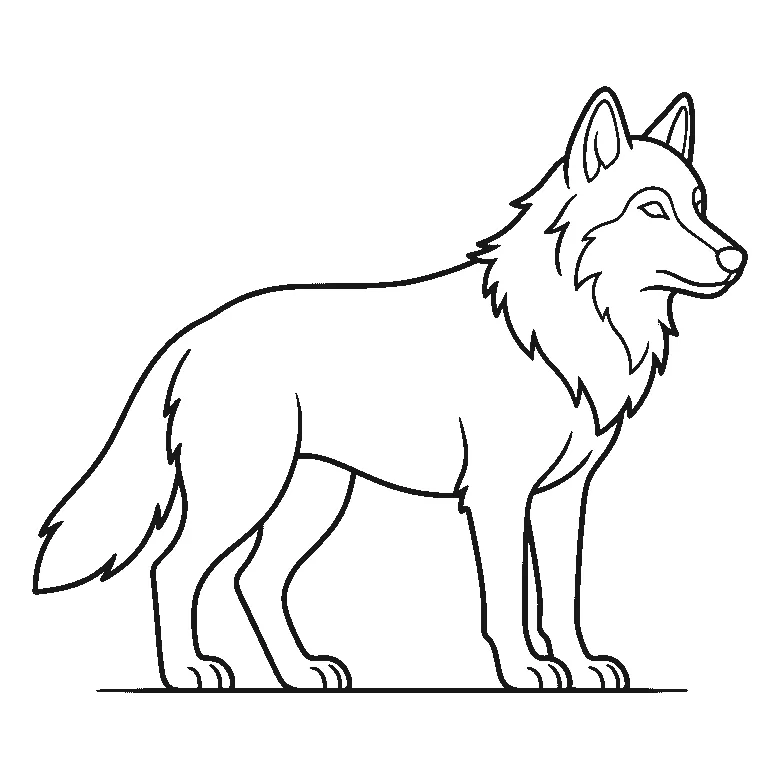
Wolf colouring page
A wolf in profile on a ground line, with a heavy neck ruff and a thick brush tail, printable free at A4.
Colouring outline drawn by us.
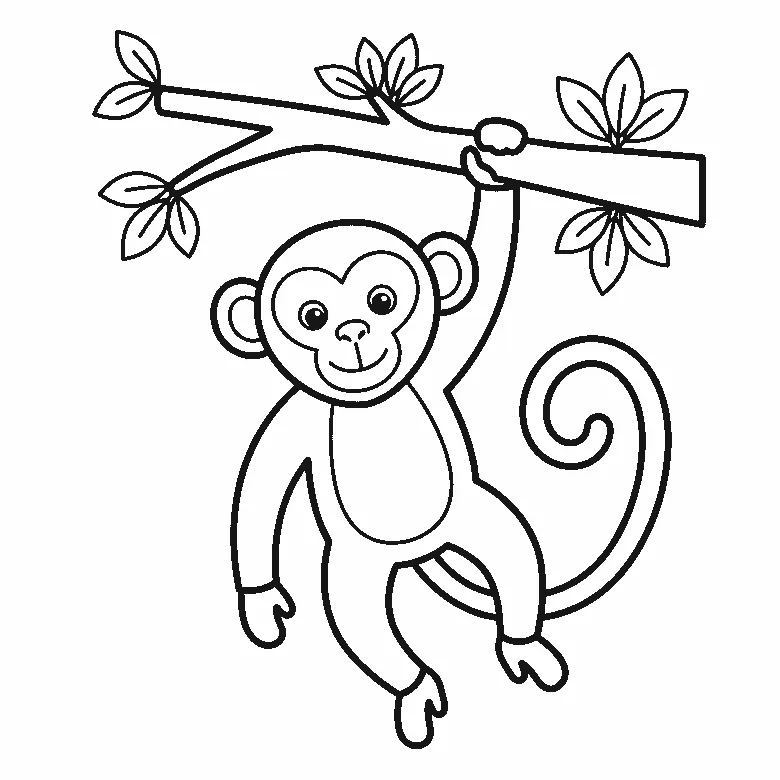
Monkey colouring page
A monkey swinging one-handed from a leafy branch with its tail curled into a spiral, free to print on A4.
Colouring outline drawn by us.
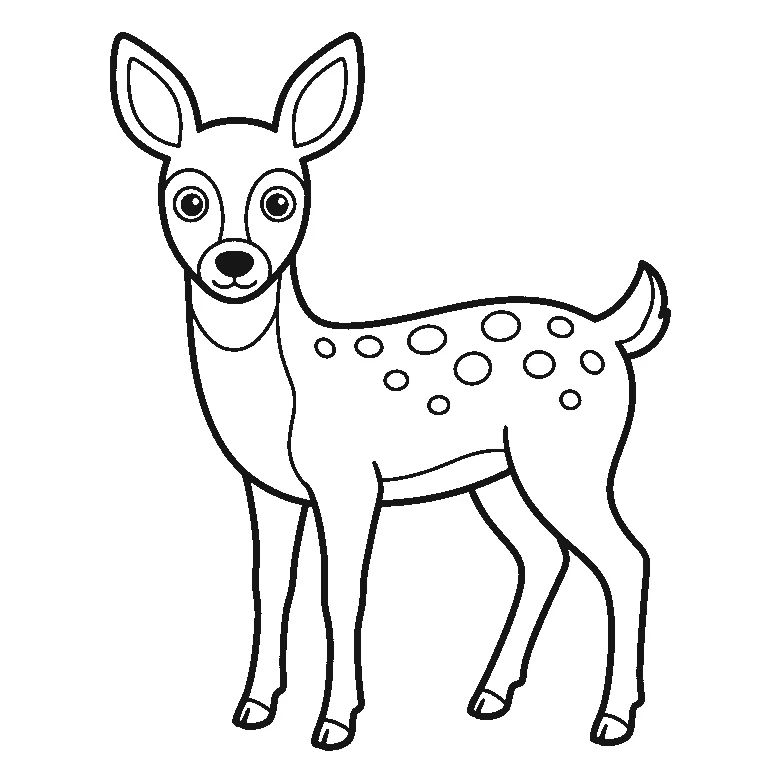
Deer colouring page
A young spotted fawn in profile, head turned forward, with rows of oval spots along the flank to fill one by one.
Colouring outline drawn by us.
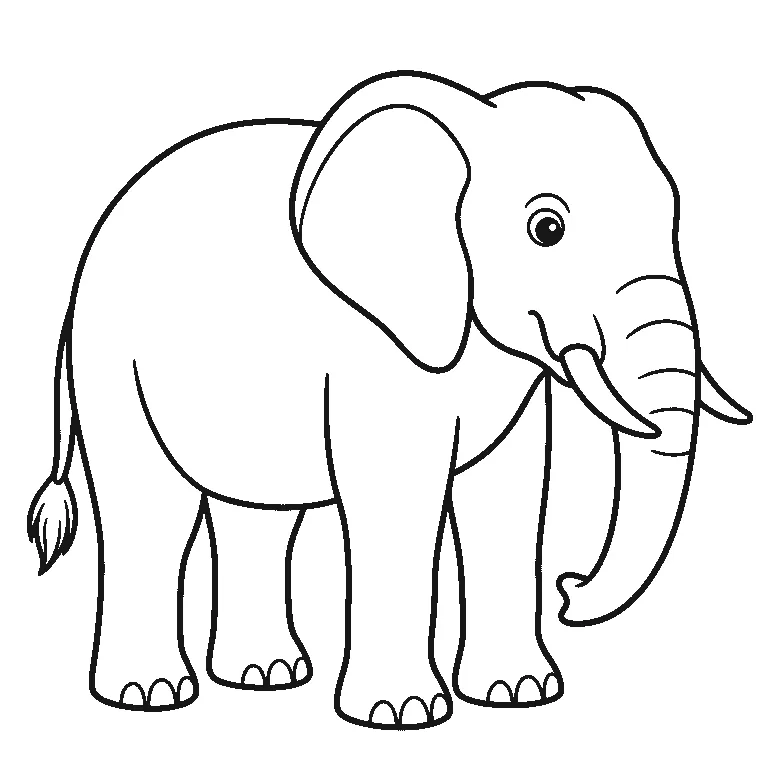
Elephant colouring page
An elephant in profile with a wide ear, two short tusks and a curling trunk, drawn in broad areas that fill fast.
Colouring outline drawn by us.


