
PDF · US Letter · 5 KB · Free, no sign-up. For home and classroom use.
Train coloring page
A locomotive and two carriages on a straight track, drawn as simple boxes with big square windows.
A train runs left to right across the middle of the page on a straight length of track. At the front is a locomotive with a tall smokestack, a rounded dome behind it, a boxy cab with one large square window, a cylindrical boiler and three wheels of different sizes. Behind it, coupled by a short link, comes a carriage with a flat roof, four square windows and two wheels, and behind that a second carriage drawn the same way. Underneath everything runs the track: two long rails with a row of short crossties beneath them, running the full width of the sheet.
This is a wide, shallow drawing with a great deal of white paper above and below it, which changes how the sheet is used. It leaves room for a sky, a landscape, or nothing at all, and any of the three is a real finish. Left plain, the train reads as a diagram; given even a single horizon line drawn in behind it, it reads as a scene.
The eight carriage windows are the repeated shape here, four on each car, and they are the fastest way to give the drawing a rhythm. Coloring all eight the same makes the two carriages match; coloring the two carriages differently while keeping their windows the same makes them read as one train rather than two vehicles. A pale color in the windows with the paper showing through keeps them looking like glass.
The locomotive is the busiest quarter of the page and holds the only shapes that are not rectangles: the round dome, the cylindrical boiler and the flared top of the smokestack. Those three are worth doing first, because they are what makes the front of the train read as a locomotive rather than as a third box, and they are small enough that a slip is more visible there than anywhere else.
The wheels are simple: circles with a smaller circle inside each. There are three on the locomotive at different sizes and two under each carriage at one size. Giving every wheel the same treatment is what makes the train look like a train, and because they sit low against the rail they can take a dark color without unbalancing the sheet.
The track is the longest single element and it is easy to overlook. The two rails are thin parallel lanes and the crossties beneath them are a long row of short rectangles, more than a dozen of them. Filling every tie is slow; laying one gray band across the whole row and leaving the rails white above it takes a moment and reads correctly, because on a real track the rail is the bright part.
One plain point sits in the shape of the locomotive. The dome behind the smokestack is a steam dome, and it is there to collect steam from the highest point of the boiler where the water is least likely to be carried along with it. That is why it is drawn as a bump on top of the cylinder rather than as part of the cab: on a real locomotive it is a separate vessel, and it is the feature that dates this drawing to the steam era rather than to anything modern.
Print at actual size on plain letter paper. The rails and the crossties are the details that a smaller print merges into a single band. There is nothing here that needs heavy paper unless markers are involved, and if they are, the two carriage bodies are the broad areas to watch. Cut out along the top of the train and above the rails and the whole thing comes away as one long strip, which suits the edge of a shelf better than a wall.
Before you print
- Color all eight carriage windows the same, even if the two carriages differ, and the train reads as one train.
- Do the smokestack, dome and boiler first; they are what make the front read as a locomotive.
- Give every wheel the same treatment and let them go dark; they sit low and will not unbalance the sheet.
- Lay one gray band across the crossties and leave the rails white above it rather than filling each tie.
- Draw a single horizon line behind the train if you want the sheet to read as a scene rather than a diagram.
Published Updated 628 words
More in this section
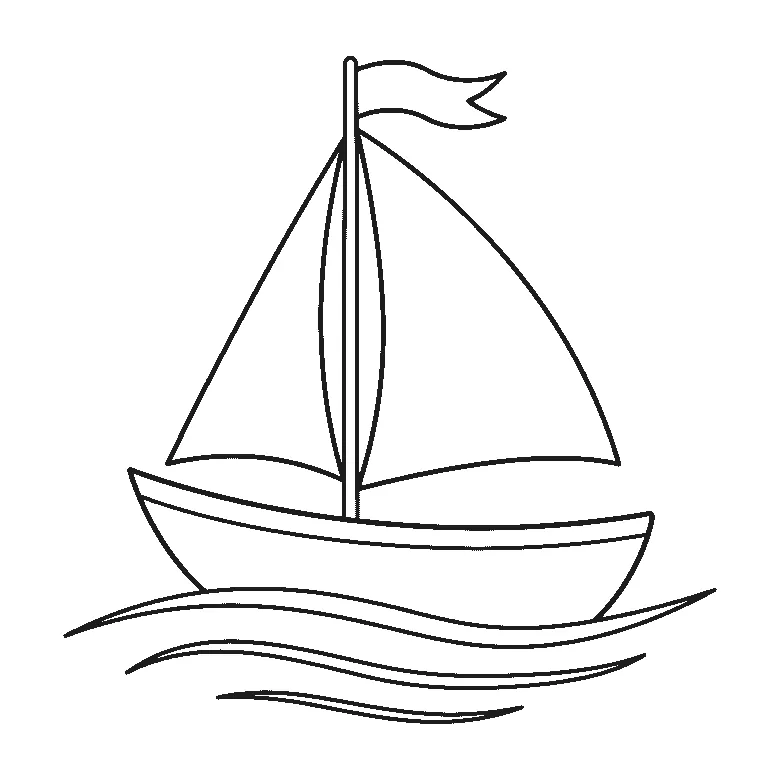
Boat coloring page
A sailing boat with two blank triangular sails and three curved water lines, drawn large and simple.
Coloring outline drawn by us.
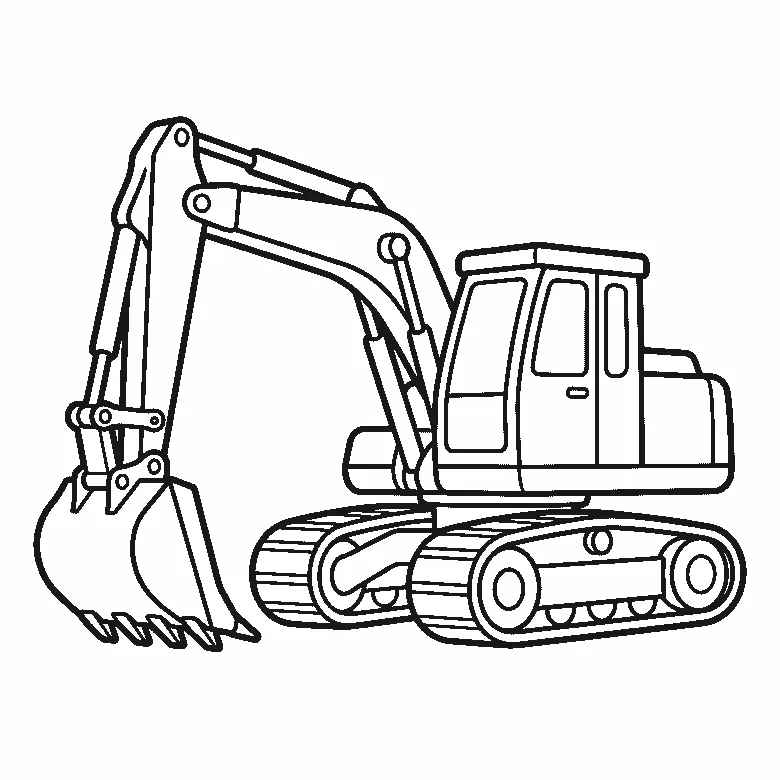
Excavator coloring page
A tracked excavator with a jointed arm and a toothed bucket, drawn from a three-quarter angle.
Coloring outline drawn by us.
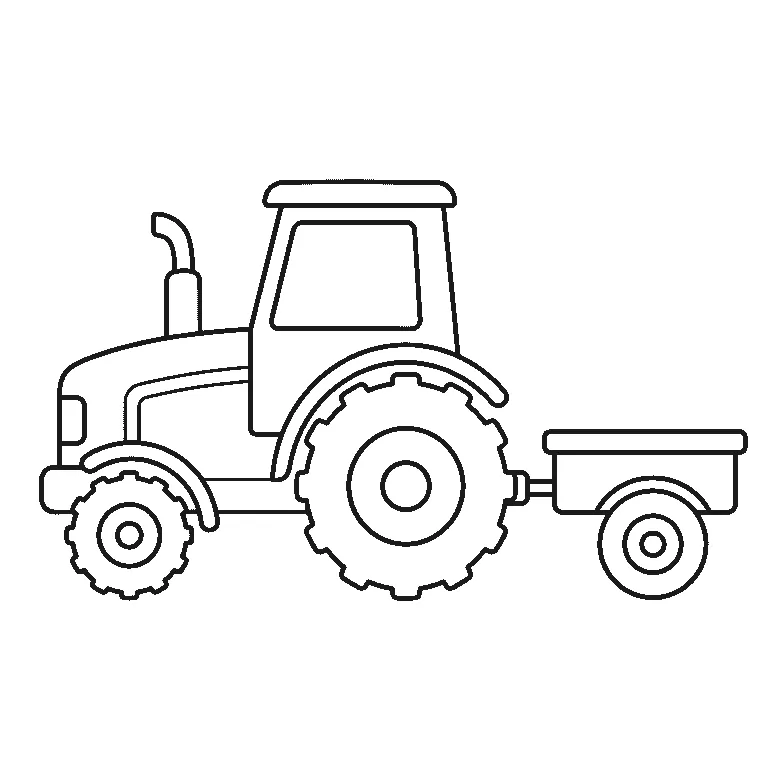
Tractor coloring page
A tractor with one huge lugged rear wheel and a small front one, pulling a two-wheeled trailer.
Coloring outline drawn by us.
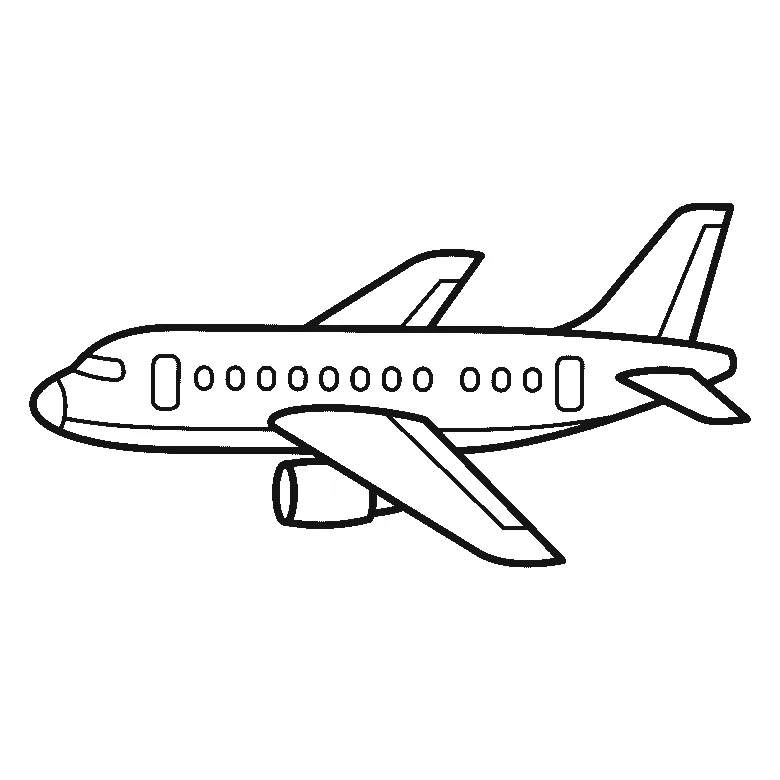
Airplane coloring page
A passenger airplane in level flight seen from the side, with a row of cabin windows, two wings and a tall swept fin, free as a US Letter PDF.
Coloring outline drawn by us.
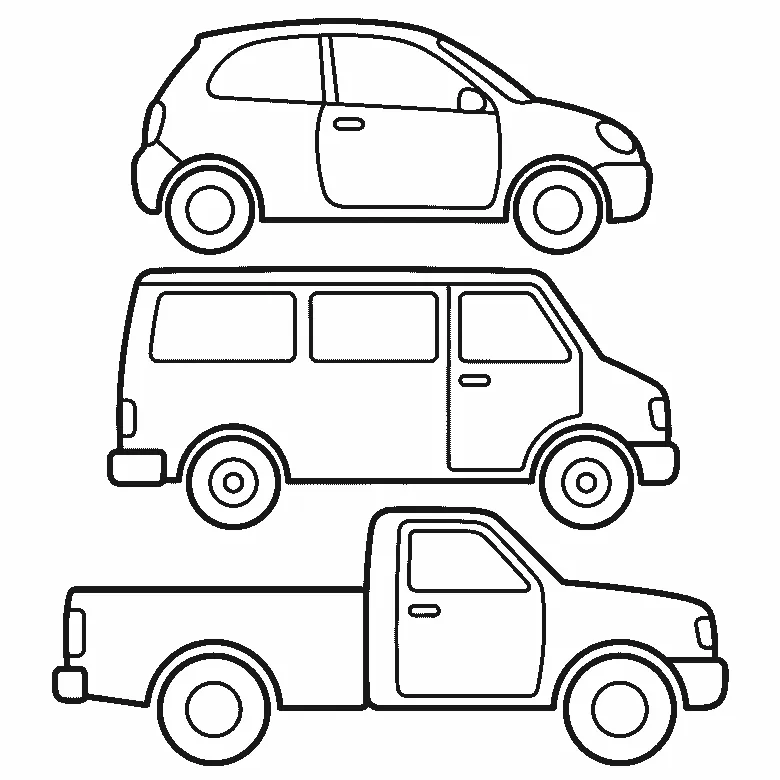
Car coloring page
Three vehicles stacked down the page, hatchback, van and pickup, with every panel left blank to fill.
Coloring outline drawn by us.
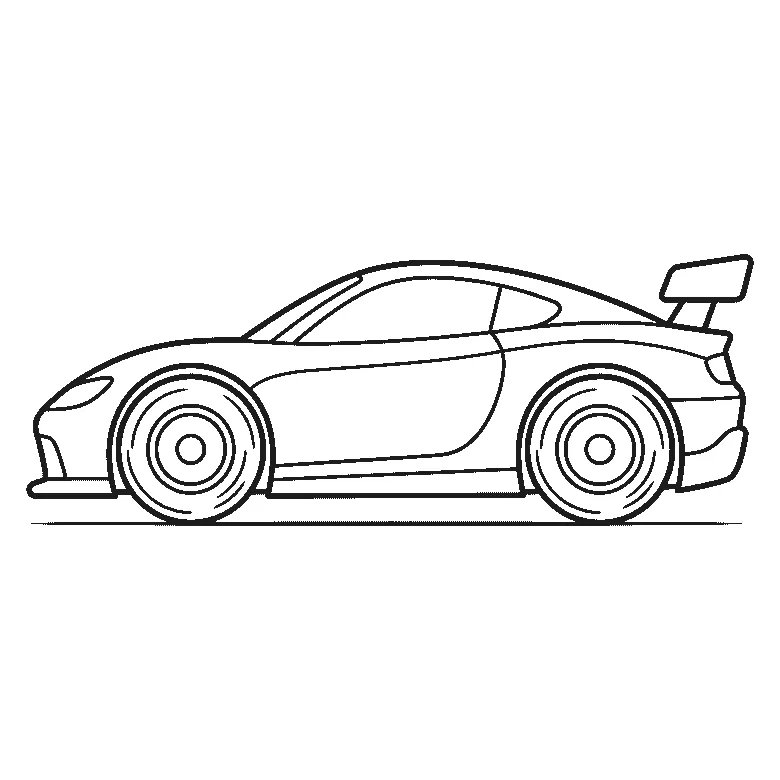
Race car coloring page
A race car seen from the side, with a bare body panel, a rear spoiler and spoked wheels, ready for any paint scheme you invent.
Coloring outline drawn by us.
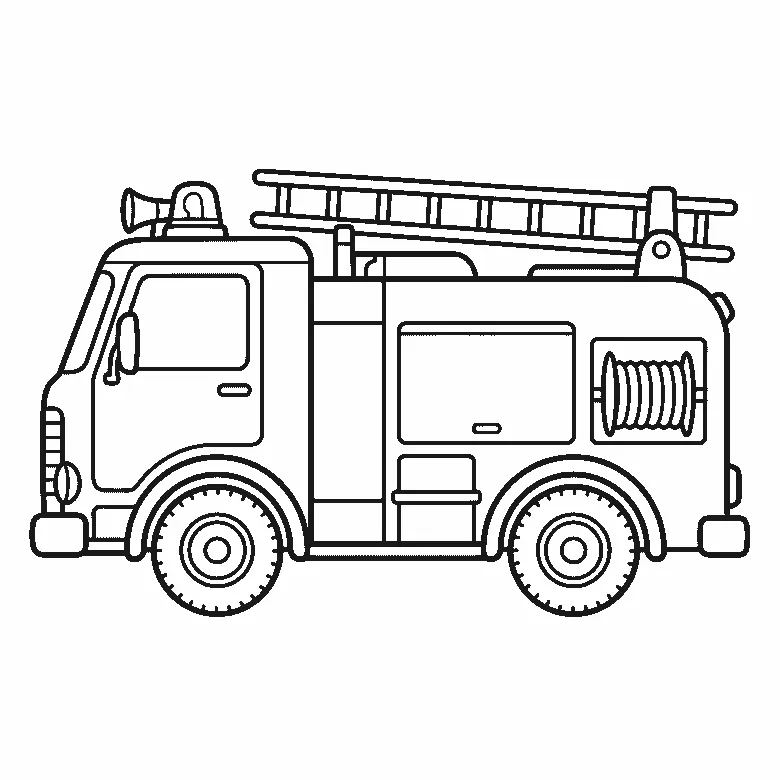
Fire truck coloring page
A side view of a fire truck with its ladder, beacon, horn, hose reel and treaded wheels drawn in clean outline.
Coloring outline drawn by us.
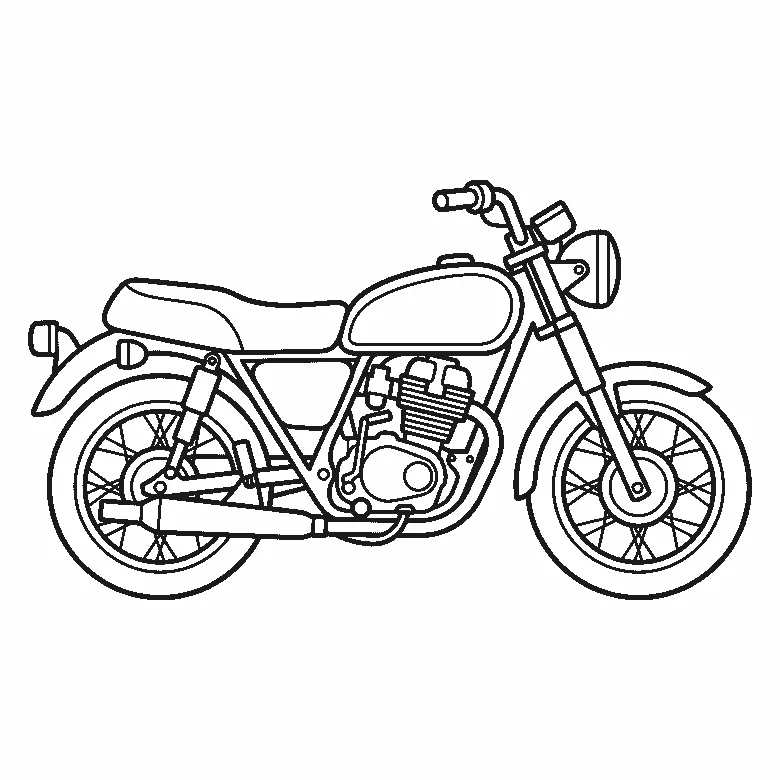
Motorcycle coloring page
A motorcycle in side view with spoked wheels, an engine, a headlamp and completely plain bodywork.
Coloring outline drawn by us.
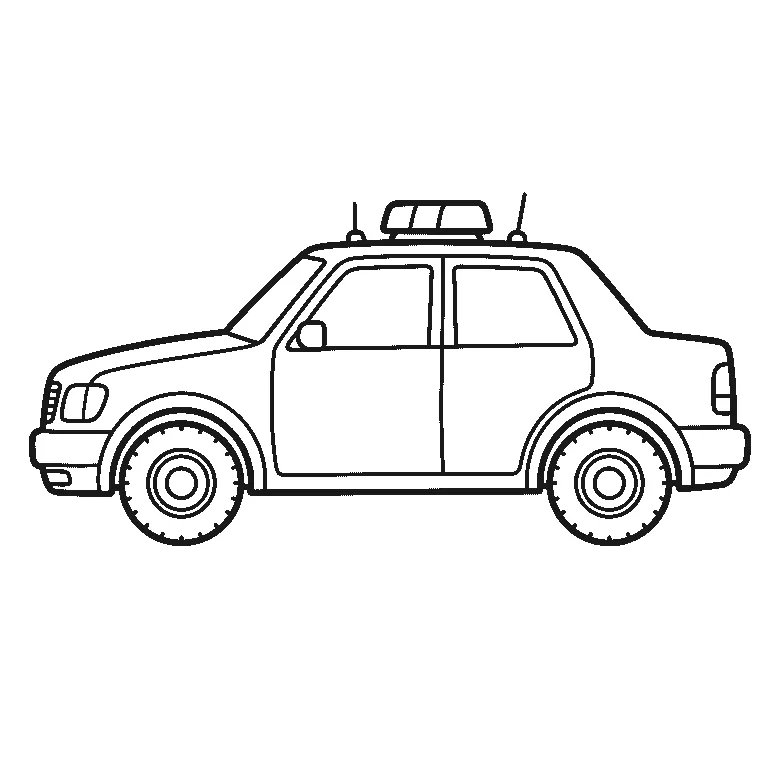
Police car coloring page
A patrol car in side view with a roof light bar, two antennas and completely plain door panels.
Coloring outline drawn by us.


