
PDF · A4 · 9 KB · Free, no sign-up. For home and classroom use.
Racing car colouring page
A racing car seen from the side, with a bare body panel, a rear spoiler and spoked wheels, ready for any paint scheme you invent.
The racing car on this sheet is drawn from the side, so the whole length of the machine is visible at once. The nose drops almost to the ground in a long wedge, the body runs back in a low line, and a rear spoiler stands above the tail on short posts. Two wide wheels sit under the arches, each one filled with straight spokes radiating from a small hub. The bodywork itself has been left completely plain. There are no numbers on it, no stripes, no panels of text, nothing but the outline of the shell waiting to be filled.
That empty body is the largest uninterrupted area on the page, and it is what makes the drawing worth printing. Whoever colours it decides what the car looks like, because no printed livery is arguing back. One flat tone across the whole shell already reads as a finished car. A band of a second colour along the lower edge reads as a two-tone paint job. Numbers, arrows, a checkerboard along the sill, a stripe running the length of the nose: all of that can be drawn straight onto the white with a pen, and nothing has to be erased first.
The wheels reward slowing down. Each spoke is a narrow strip between two black lines, and the gaps between them are narrower still. A sharpened coloured pencil held nearly upright will reach into those wedges. A blunt crayon tip skates over the lines and turns spoke and gap into one solid mass, which still looks fine from across a room but loses the spoked effect entirely. A reliable method is to fill only the spokes and leave the gaps white, so the pattern stays readable no matter how heavily the rest of the car is shaded.
A car built for a track looks the way it does because of moving air. The low nose lets air pass over the body without catching on anything, and the wing at the back presses down on the rear wheels so they hold the road harder through a corner. Wide tyres give a larger patch of rubber touching the ground. On this sheet the tyre is drawn as a plain band wrapped around the spokes, with no tread pattern cut into it, which is exactly how a smooth racing tyre looks in real life.
Medium changes the character of the finished car more than the colour does. Crayon lays down a waxy, slightly uneven film that suits the big body panel and skips over any texture in the paper. Coloured pencil can be layered, so a light pass followed by a heavier one along the bottom of the body gives the shell a rounded look. Marker gives the flattest, most poster-like result, and it can bleed through to whatever sits under the page, so slide a spare sheet underneath. A gel pen in white or silver is useful last, for a highlight along the top edge.
Real racing cars come in every colour anyone has ever mixed, which means there is no wrong answer here. Red, yellow and bright blue read as fast against the white paper the shapes are printed on. A dark green or a deep navy with the spoiler picked out in a light tone looks quieter and often more convincing. If realism is not the goal, a purple body with orange wheels works just as well, and so does leaving the shell white and colouring only the spoiler, the wheels and a single stripe. Nothing on this page depends on the car being plausible.
Print it on plain A4 paper at actual size rather than fit-to-page, so the wheel spokes keep their spacing and the thin posts under the spoiler do not close up. If markers are the plan, a heavier card is one way to keep colour off the next page. Printing two copies at once is worth doing when two people want to race each other to the finish, or when the first attempt at the livery does not come out the way it was pictured. The outlines are thick enough that a slightly faded print still gives clean edges to work to.
This car hands its whole flank over to be invented, from the tip of the nose back to the tail. Nothing is printed along the side but the wheel arches, the line of the sill and the seam under the spoiler, so no ladders, lamps or doors break the panel into compartments and the racing car asks only what should go there. A finished sheet mounts well on a folder cover, and the shape cuts out neatly along the top of the spoiler and around the wheel arches if the car is wanted on its own rather than on a rectangle of paper.
Before you print
- Fill the long body panel first, then add numbers or stripes on top once the base colour is down.
- Use a sharp pencil point for the spoke gaps; a broad crayon tip will close them up.
- Leave the narrow slots between spokes white so the wheel still reads as spoked.
- Slide a spare sheet under the page if you use markers on the large body area.
- Save a white or silver gel pen for last and run one line along the top edge of the nose.
Published Updated 799 words
More in this section
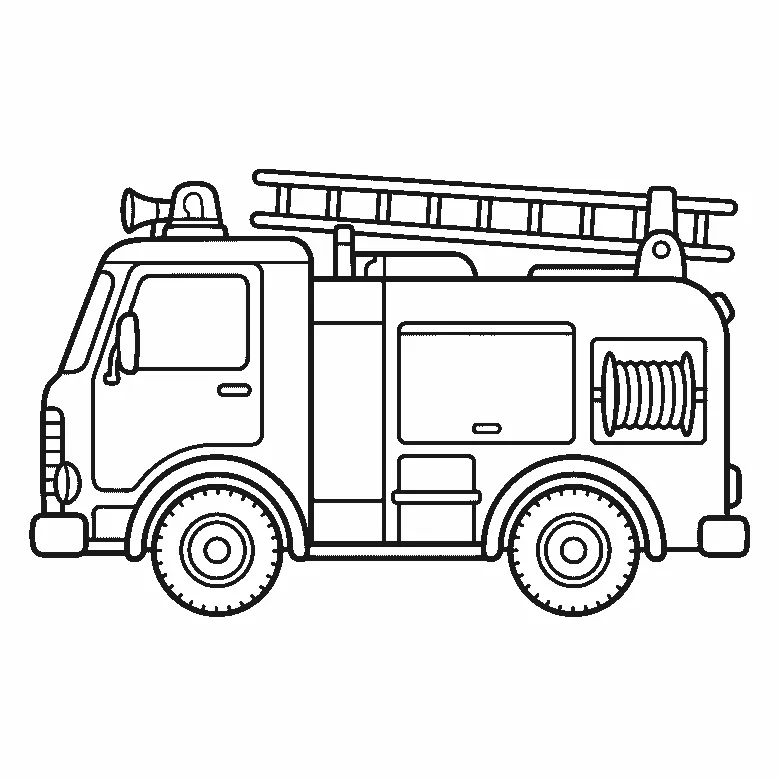
Fire engine colouring page
A side view of a fire engine with its ladder, beacon, horn, hose reel and treaded wheels drawn in clean outline.
Colouring outline drawn by us.
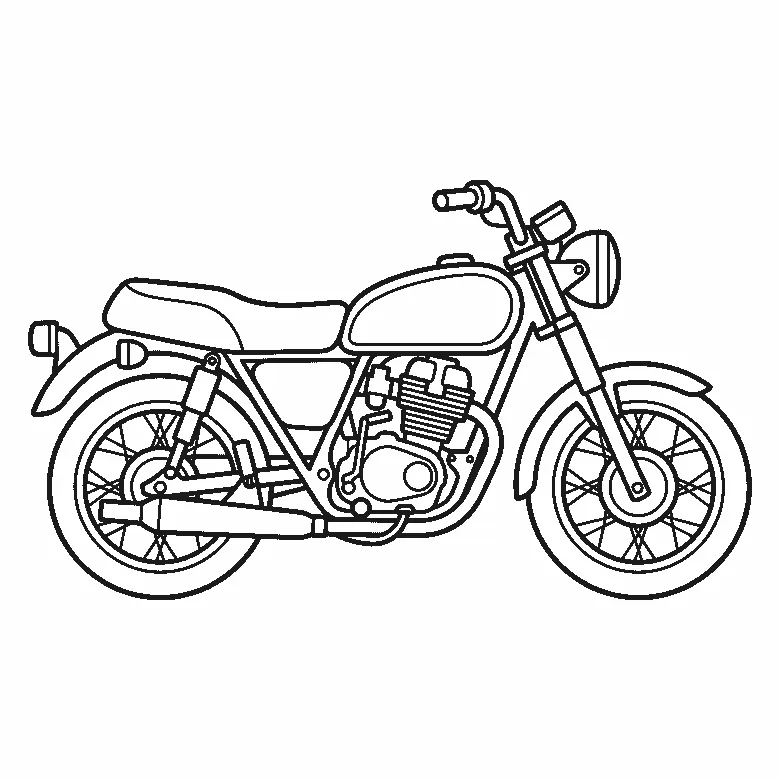
Motorbike colouring page
A motorbike in side view with spoked wheels, an engine, a headlamp and completely plain bodywork.
Colouring outline drawn by us.
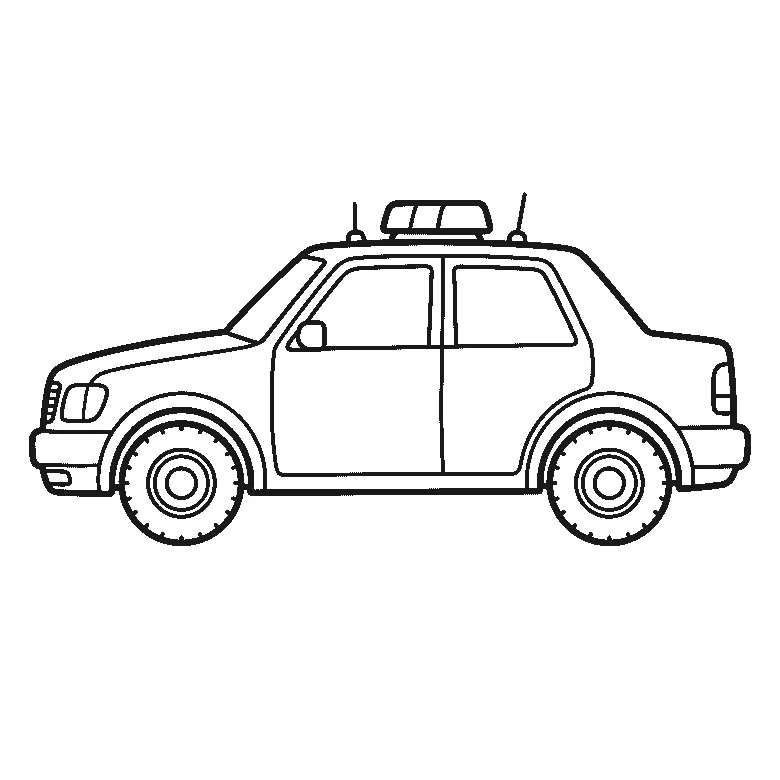
Police car colouring page
A patrol car in side view with a roof light bar, two aerials and completely plain door panels.
Colouring outline drawn by us.
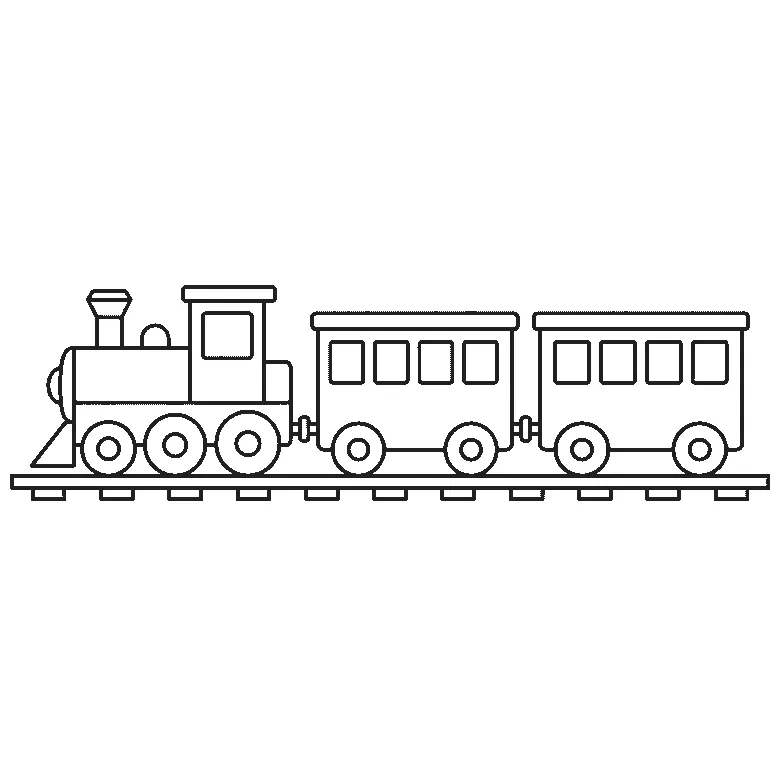
Train colouring page
A locomotive and two carriages on a straight track, drawn as simple boxes with big square windows.
Colouring outline drawn by us.
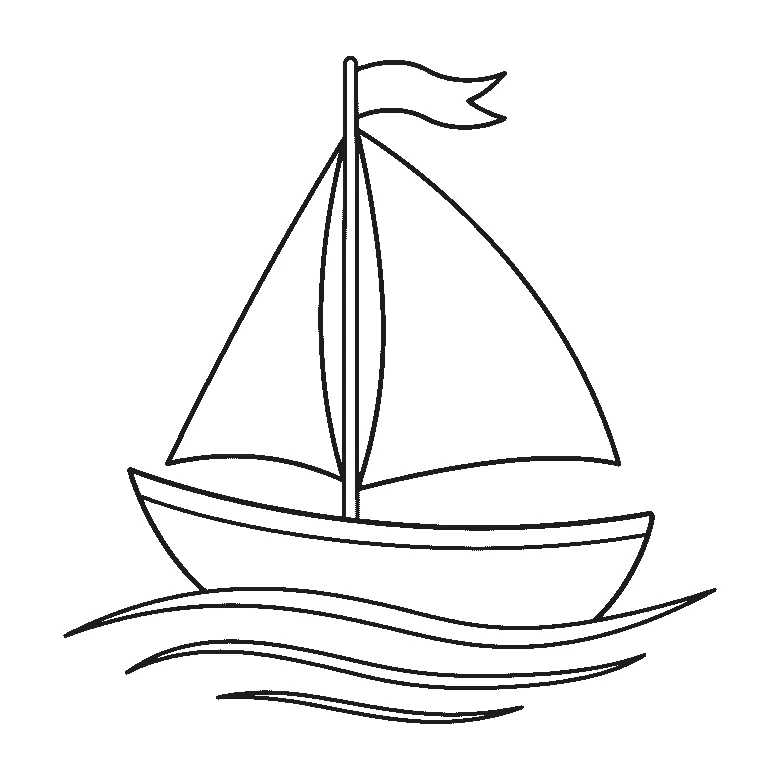
Boat colouring page
A sailing boat with two blank triangular sails and three curved water lines, drawn large and simple.
Colouring outline drawn by us.
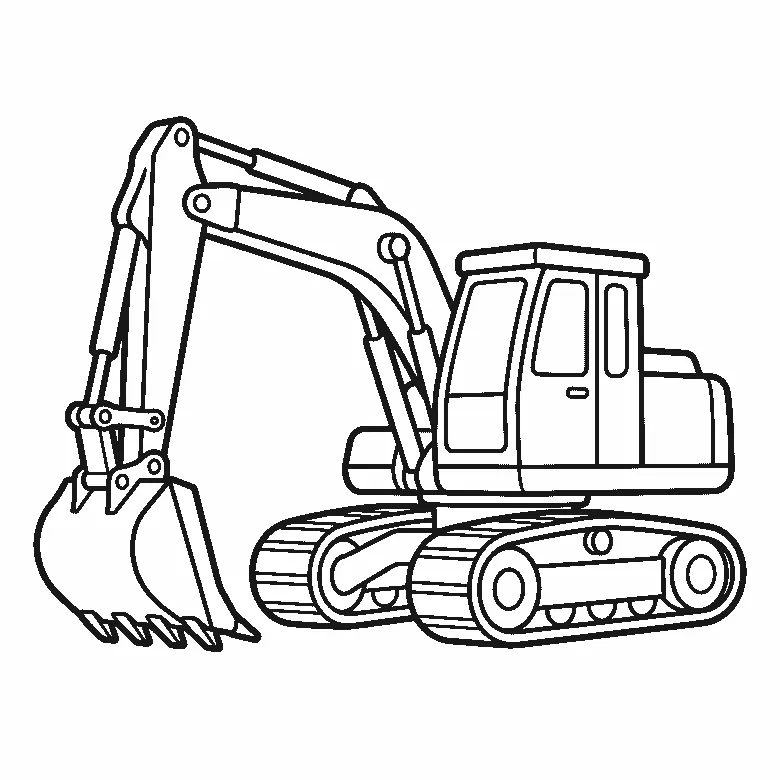
Digger colouring page
A tracked digger with a jointed arm and a toothed bucket, drawn from a three-quarter angle.
Colouring outline drawn by us.
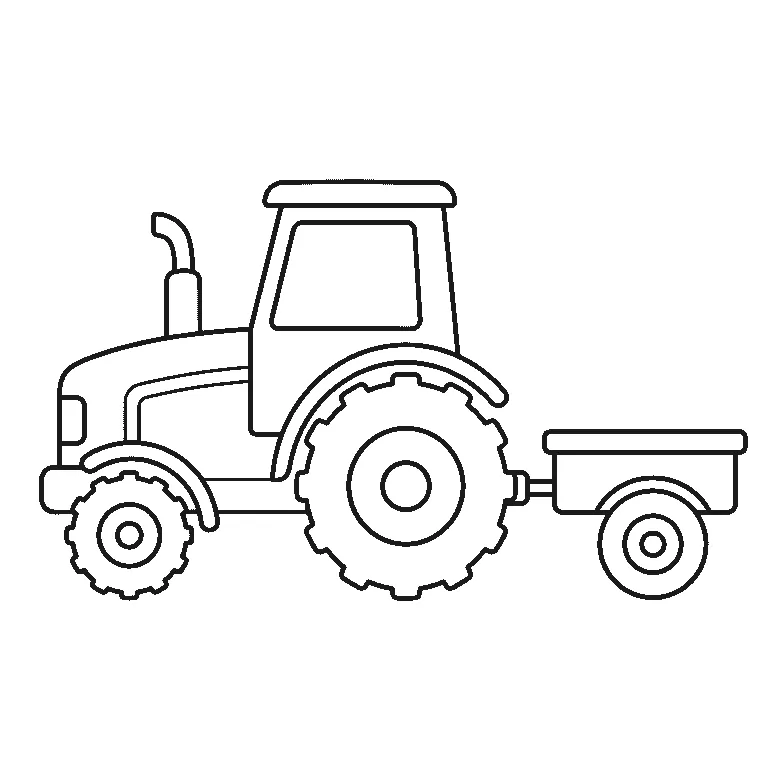
Tractor colouring page
A tractor with one huge lugged rear wheel and a small front one, pulling a two-wheeled trailer.
Colouring outline drawn by us.
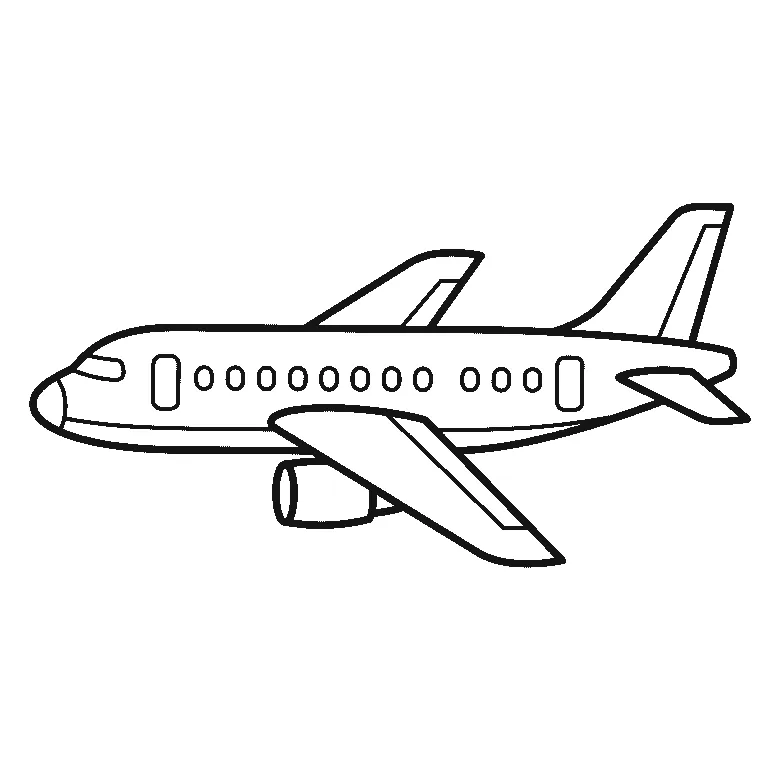
Aeroplane colouring page
A passenger aeroplane in level flight seen from the side, with a row of cabin windows, two wings and a tall swept fin, free as an A4 PDF.
Colouring outline drawn by us.
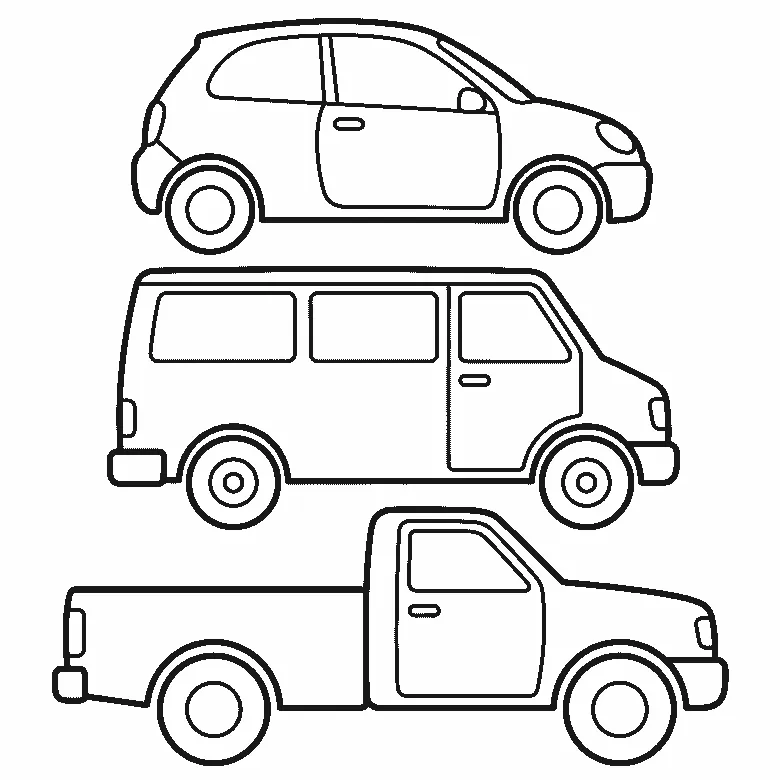
Car colouring page
Three vehicles stacked down the page, hatchback, van and pick-up, with every panel left blank to fill.
Colouring outline drawn by us.


