
PDF · A4 · 17 KB · Free, no sign-up. For home and classroom use.
Motorbike colouring page
A motorbike in side view with spoked wheels, an engine, a headlamp and completely plain bodywork.
A motorbike stands in side view facing right, drawn across the width of the page. Both wheels are large and spoked, with the spokes crossing each other inside a double rim. Between them sits an engine block with cooling fins drawn as a stack of lines, a fuel tank shaped as one smooth closed panel, a long saddle, handlebars with a grip at the end, a round headlamp, a small mirror on a stalk, front forks with a spring, a rear shock absorber and an exhaust pipe running back along the bottom. There are no badges, no numbers and no lettering anywhere on it.
The bodywork panels are the fast half of this drawing. The tank, the saddle and the two mudguards are large closed shapes with nothing inside them, and they can carry the whole colour scheme between them. The wheels are the slow half. Everything else — the engine, the forks, the exhaust — sits in between, made of medium-sized closed shapes that a pencil handles comfortably and a broad marker does not.
The spokes are the decision this sheet turns on. There are dozens of them, they cross, and the spaces between them are narrow triangles. Filling every space is a very long job. Leaving them all white and colouring only the rim and the hub is quick and looks correct, because a real spoked wheel is mostly air. A middle course — a light grey laid across the whole wheel with the rim and hub darker — reads as a wheel from a distance and takes a minute.
The engine's cooling fins are a stack of parallel lines close together, and they behave like the spokes: filling between them is fine work, and a single light tone over the whole block with a harder press along the bottom edge reads as metal without any of it. The exhaust pipe is one long lane running the length of the machine and is the easiest place on the sheet to put a bright colour, since nothing else is anywhere near it.
The tank is the largest single panel and it is the traditional place for whatever the boldest colour is going to be. Because it is completely plain, a stripe drawn along it, or a two-tone split with a hard edge down the middle, is entirely yours to invent. The saddle is the other broad panel and is the one place where a dark neutral is worth spending, since it separates the tank from the rear mudguard.
Any colour scheme works here because nothing on the machine is identified. There is no badge to be consistent with. The one thing worth keeping honest is the two wheels: if the front and the rear are treated differently the drawing loses its balance, since they are the same shape at the same size and the eye notices immediately.
A plain point about the drawing. The vertical stack of lines on the engine is a set of cooling fins, and their job is surface area — more metal in contact with the air means more heat carried away, which is why an air-cooled engine is drawn with a ribbed block rather than a smooth one. The coil above the rear wheel is a spring in the suspension, and the reason it is drawn separately from the frame is that it moves independently of it.
Print at actual size on plain A4 paper. The spokes and the engine fins are the two places a smaller print fills in for you, and they are also where the drawing put most of its work. If markers are the plan, they suit the tank, the saddle and the mudguards, but keep a pencil for the wheels or the spokes will disappear under a single stroke. Cut out along the outline and the machine comes away as one long low silhouette that reads well taped to a window.
Before you print
- Leave the spokes white and colour only the rim and the hub; a real spoked wheel is mostly air.
- Lay one light tone over the engine block and press harder along its bottom edge instead of filling between the fins.
- Put the boldest colour on the fuel tank; it is plain by design and the stripe is yours to invent.
- Give the saddle a dark neutral so it separates the tank from the rear mudguard.
- Treat both wheels the same way; they are identical shapes and the eye notices at once if they are not.
Published Updated 652 words
More in this section
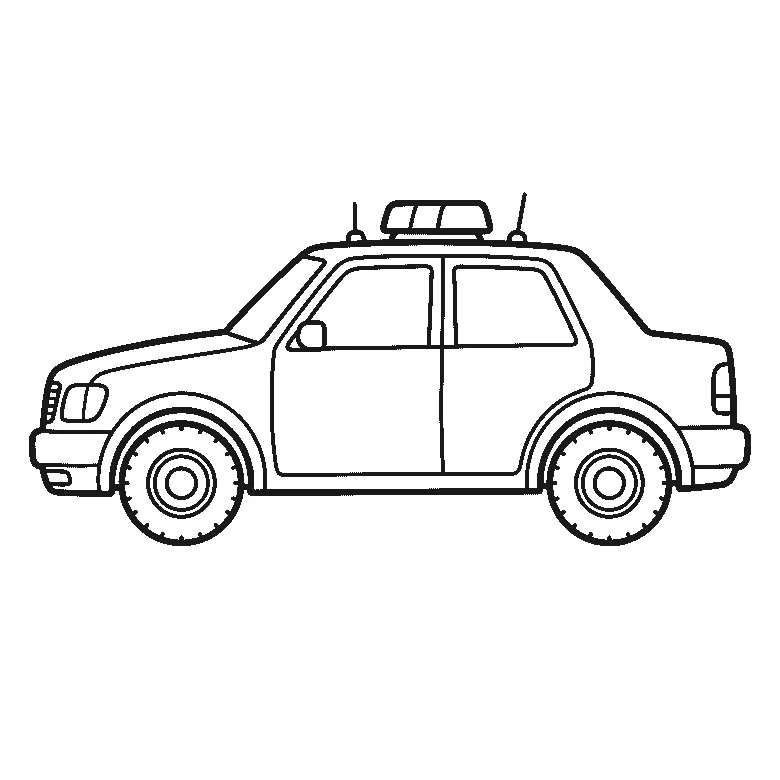
Police car colouring page
A patrol car in side view with a roof light bar, two aerials and completely plain door panels.
Colouring outline drawn by us.
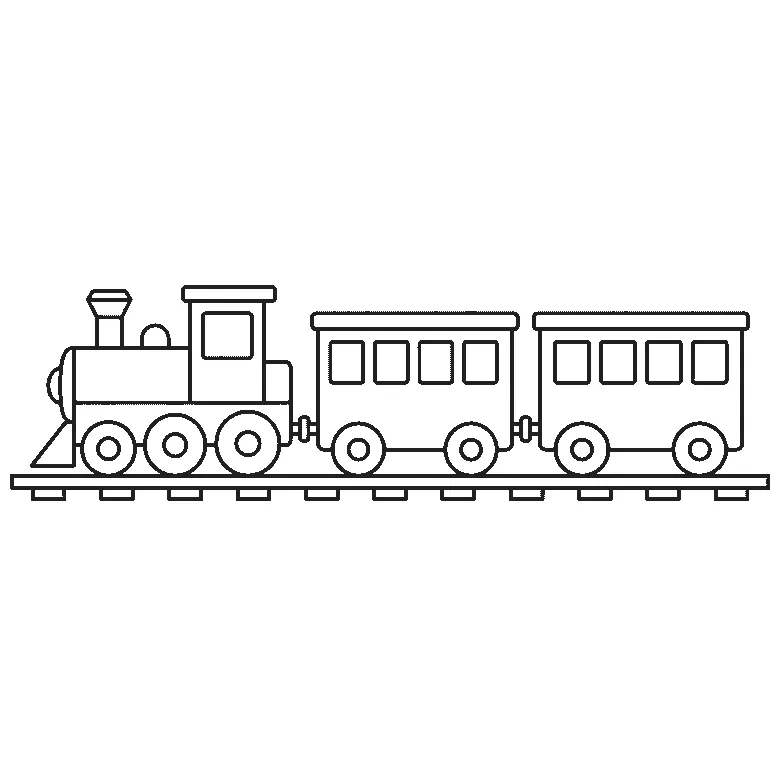
Train colouring page
A locomotive and two carriages on a straight track, drawn as simple boxes with big square windows.
Colouring outline drawn by us.
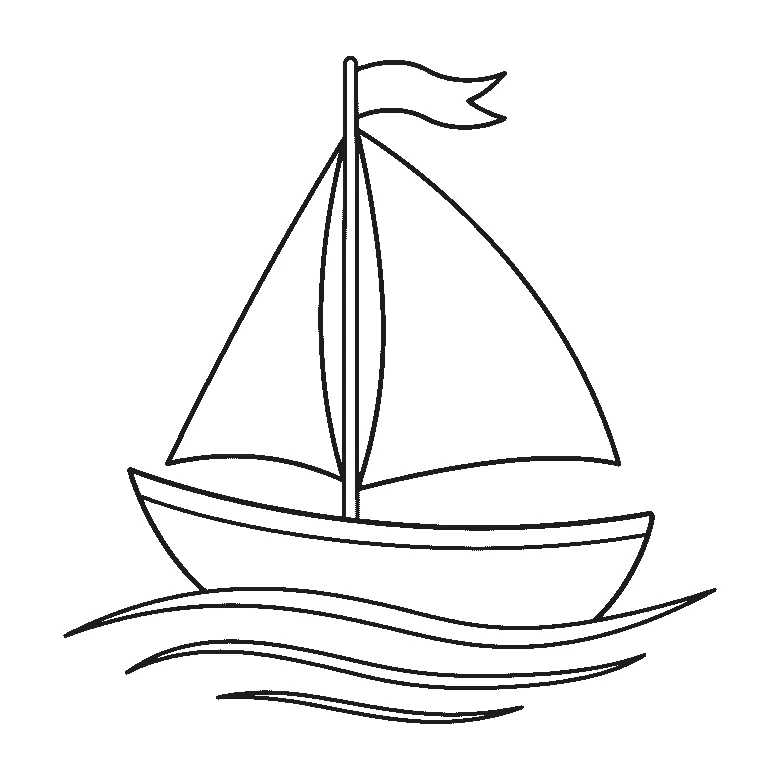
Boat colouring page
A sailing boat with two blank triangular sails and three curved water lines, drawn large and simple.
Colouring outline drawn by us.
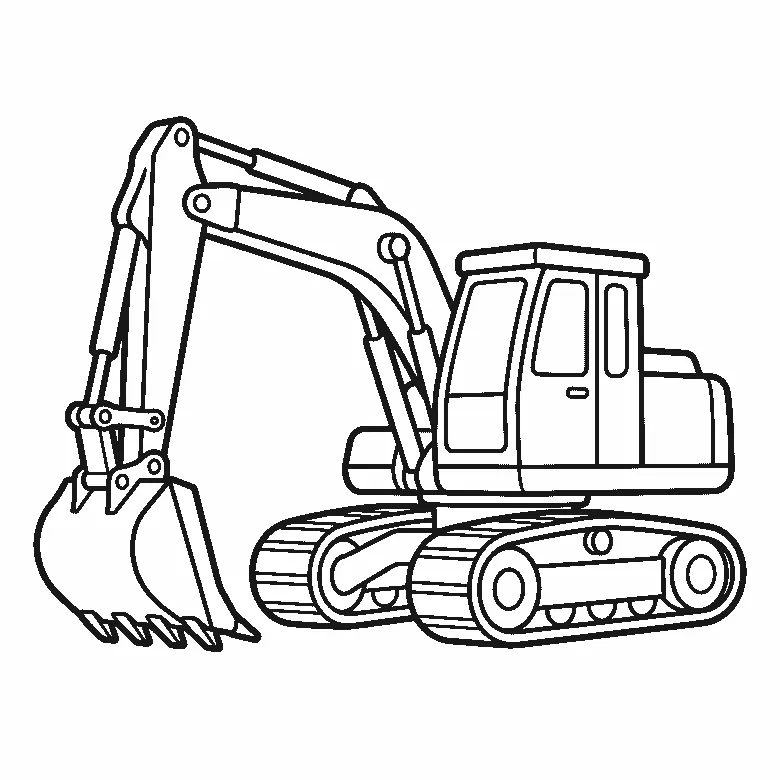
Digger colouring page
A tracked digger with a jointed arm and a toothed bucket, drawn from a three-quarter angle.
Colouring outline drawn by us.
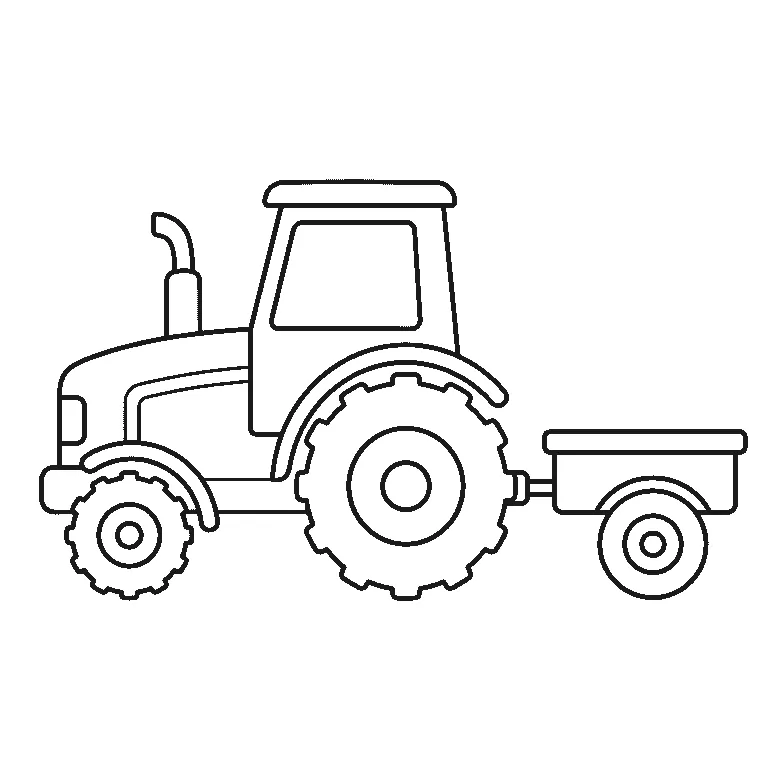
Tractor colouring page
A tractor with one huge lugged rear wheel and a small front one, pulling a two-wheeled trailer.
Colouring outline drawn by us.
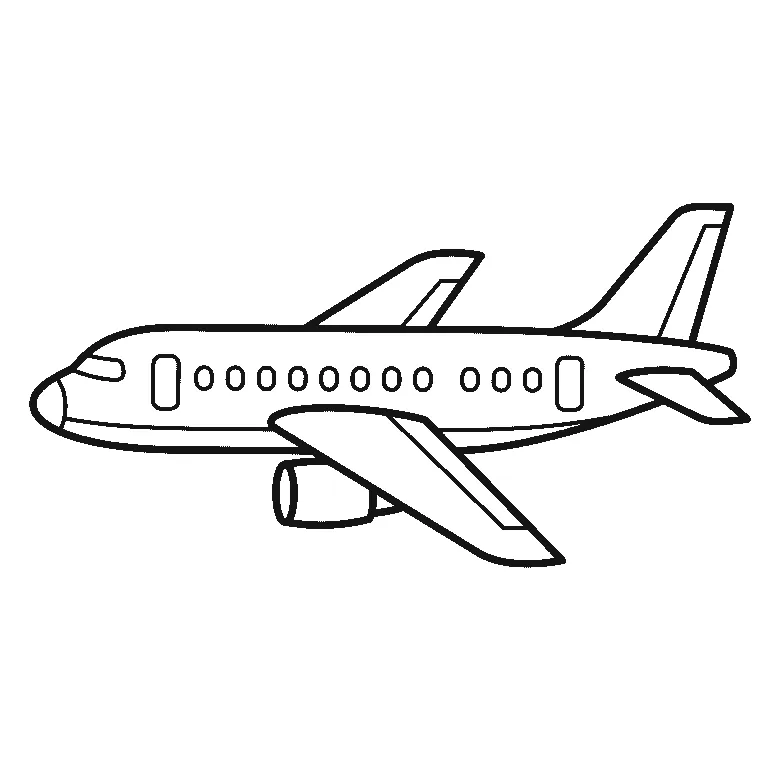
Aeroplane colouring page
A passenger aeroplane in level flight seen from the side, with a row of cabin windows, two wings and a tall swept fin, free as an A4 PDF.
Colouring outline drawn by us.
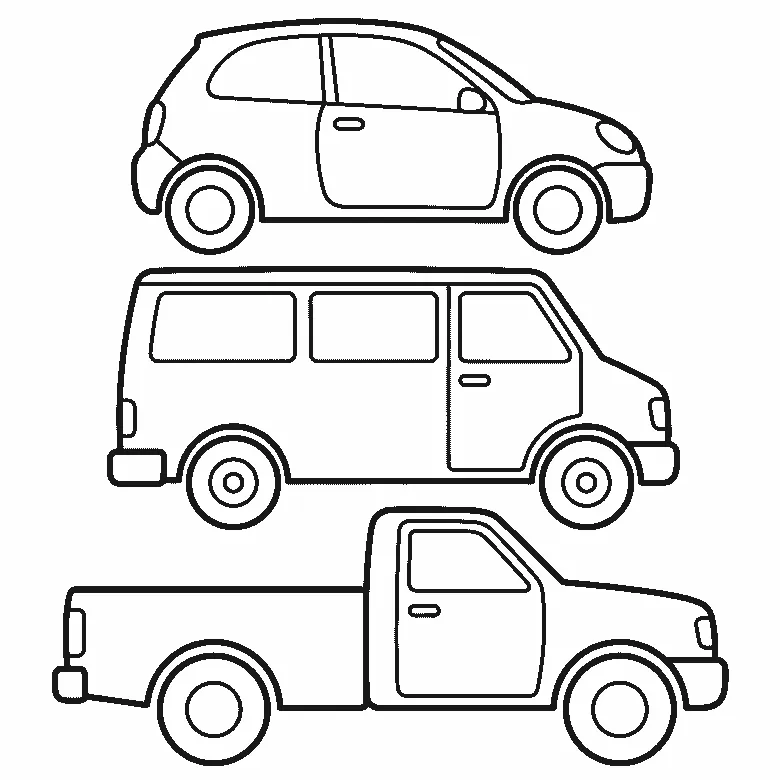
Car colouring page
Three vehicles stacked down the page, hatchback, van and pick-up, with every panel left blank to fill.
Colouring outline drawn by us.
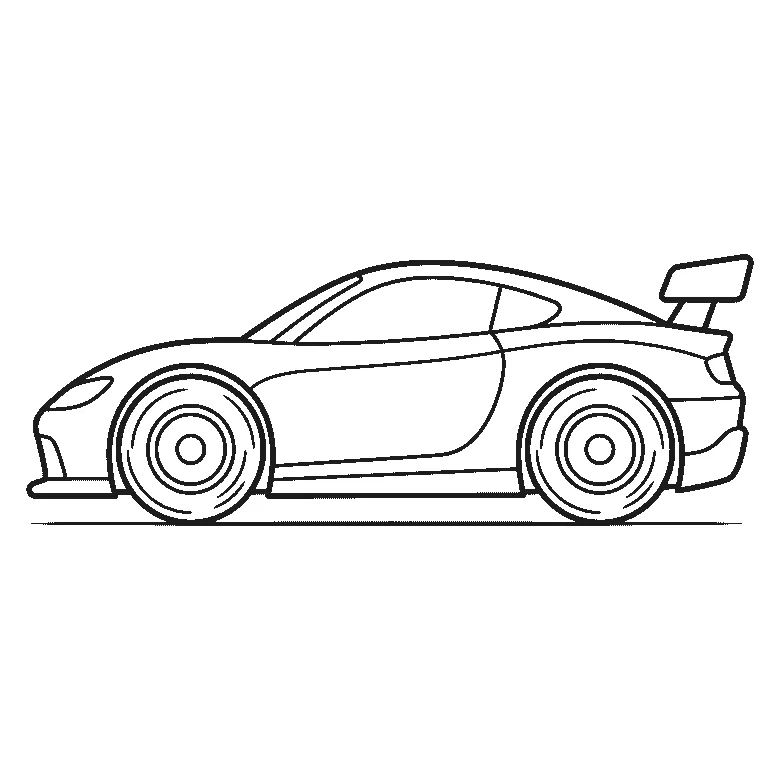
Racing car colouring page
A racing car seen from the side, with a bare body panel, a rear spoiler and spoked wheels, ready for any paint scheme you invent.
Colouring outline drawn by us.
Fire engine colouring page
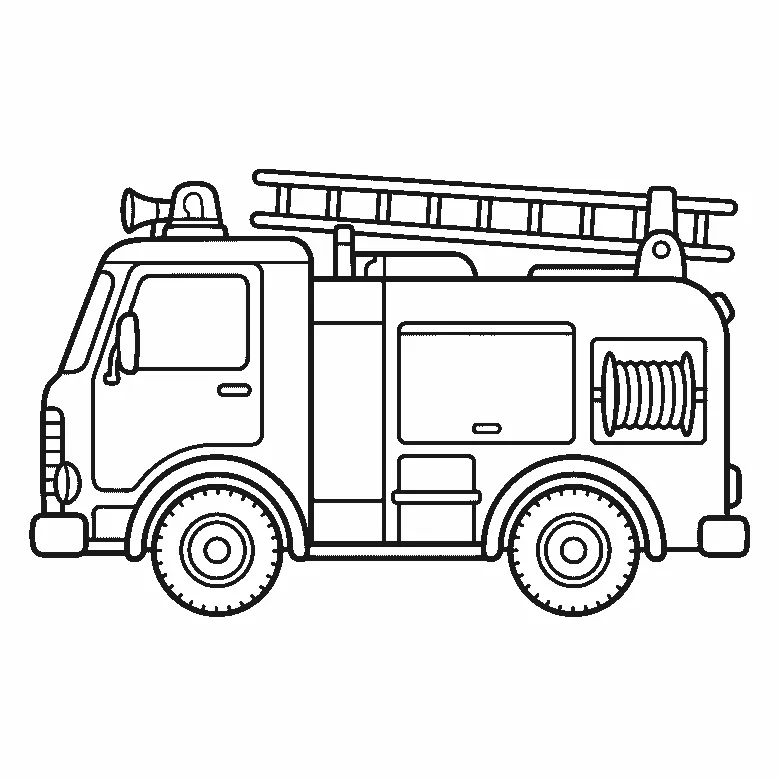
A side view of a fire engine with its ladder, beacon, horn, hose reel and treaded wheels drawn in clean outline.
Colouring outline drawn by us.


