
PDF · A4 · 14 KB · Free, no sign-up. For home and classroom use.
Digger colouring page
A tracked digger with a jointed arm and a toothed bucket, drawn from a three-quarter angle.
A digger sits at a three-quarter angle facing left, so both the side of the machine and a little of its front are visible. The cab is a tall box with large glazed panels and a door with a handle. Behind it the body extends back over the tracks. From the front of the body a boom rises, joints, and comes down as an arm, with hydraulic rams drawn alongside both sections as cylinders with rods coming out of them. At the end of the arm is a bucket with five teeth along its lip, resting on the ground. Underneath, two caterpillar tracks run round large drive wheels with rollers between them.
The tracks are the busiest part and they are drawn with real structure: a continuous band running round the wheels, with the individual track links marked along it and a row of small rollers inside. Filling the band as one shape and leaving the link marks showing is the quick version. Colouring alternate links dark is the slow version and it makes the machine look like it could move.
The arm is where the drawing is most legible and most fun to colour. The boom and the arm are two long closed shapes, the rams beside them are two more, and the joints between them are drawn as circles. Because every one of those is separate, the whole arm can be built from four tones of one colour and it will read as a jointed mechanism rather than as a bent stick.
The bucket and its five teeth are the smallest closed shapes on the page and the natural place for the darkest colour. A dark bucket at the end of a bright arm is what the eye follows, and the five teeth are small enough that leaving them white against a dark bucket reads as steel wear rather than as unfinished work.
The cab glass is a set of large panels and is the one part worth leaving white. Filled, it makes the cab a solid block; left as paper, it reads as glass and gives the top half of the machine some air. A very light grey with the paper showing through is the compromise, and it suits the flat angled panes better than a strong colour does.
Yellow is the colour this shape is usually painted, and it works here immediately, but nothing on the drawing insists. Because there is no badge and no lettering anywhere on the machine, an orange, red or blue digger is exactly as consistent with the outline. The one useful rule is to keep the tracks and the bucket darker than the body, because those are the parts that touch the ground on a real machine and a colourist who ignores that ends up with a drawing that floats.
One plain fact is drawn here. The cylinders alongside the boom and the arm are hydraulic rams: a piston inside a sealed tube, moved by oil under pressure, and they are what make an arm this size able to lift. That is why they are drawn as two-part shapes with a narrower rod emerging from a wider barrel — the visible length of the rod is exactly how far the ram has extended, and it is the one part of a machine like this you can watch working from a distance.
Print at actual size on plain A4 paper. The track links and the five bucket teeth are the details a smaller print merges. If markers are the plan, feed in a sheet of thicker card, because the body and the cab are broad areas that invite being coloured solidly. Cut out along the outline and the digger comes away with the arm extended, which makes a long awkward silhouette; cutting along the top of the tracks instead gives a flat base to stand it on.
Before you print
- Fill the track band as one shape and let the link marks show, or colour alternate links dark for a slower finish.
- Build the arm from four tones of one colour: boom, arm and the two rams beside them.
- Put the darkest colour on the bucket and leave the five teeth white against it.
- Leave the cab glass white, or use a very light grey with the paper showing through.
- Keep the tracks and bucket darker than the body, so the machine sits on the ground instead of floating.
Published Updated 645 words
More in this section
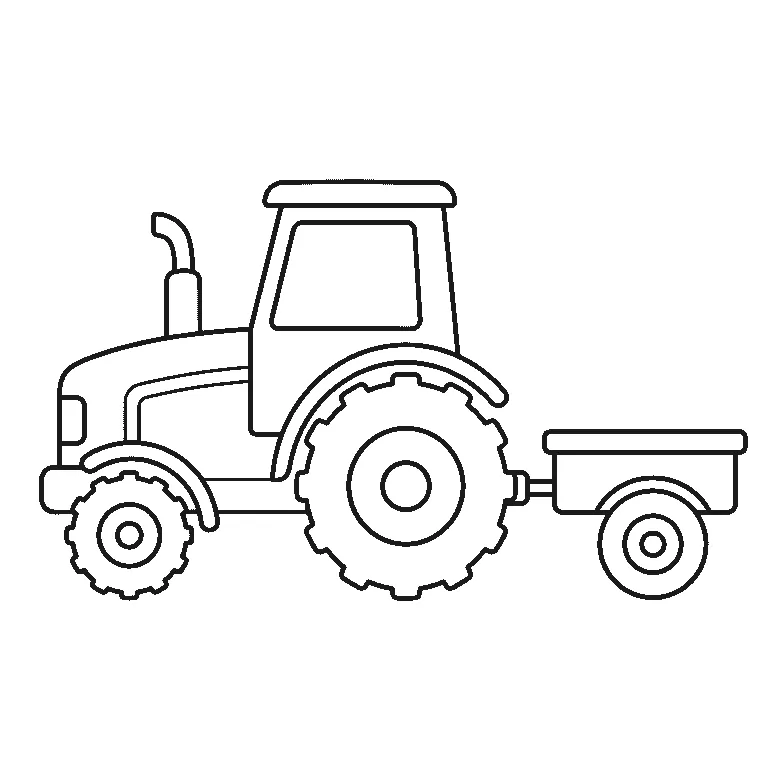
Tractor colouring page
A tractor with one huge lugged rear wheel and a small front one, pulling a two-wheeled trailer.
Colouring outline drawn by us.
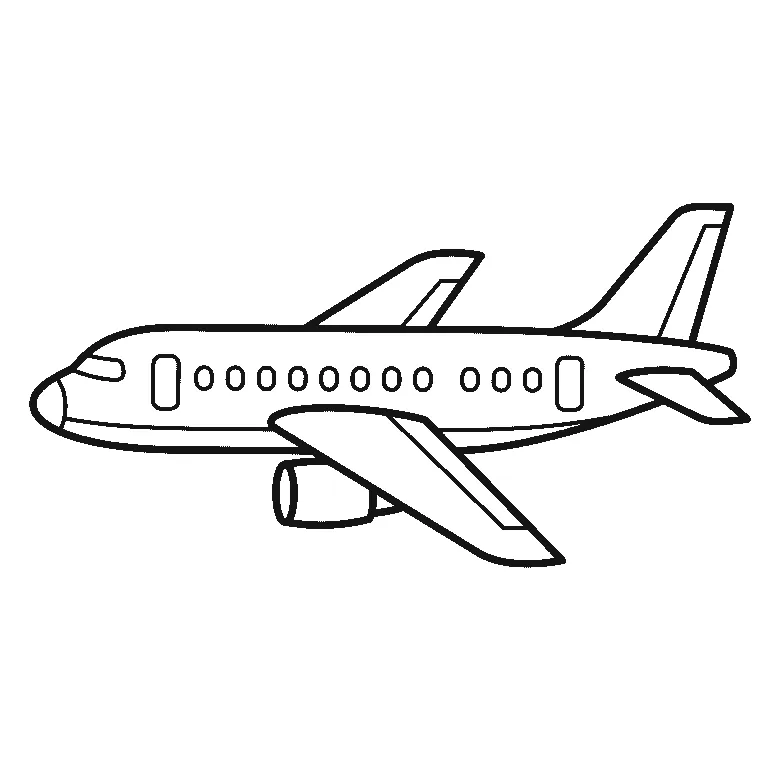
Aeroplane colouring page
A passenger aeroplane in level flight seen from the side, with a row of cabin windows, two wings and a tall swept fin, free as an A4 PDF.
Colouring outline drawn by us.
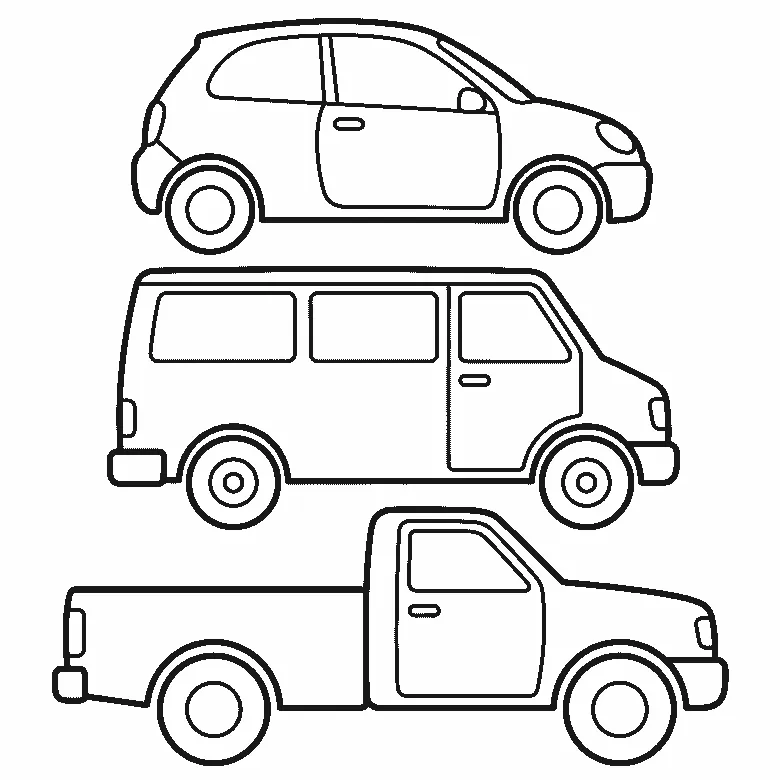
Car colouring page
Three vehicles stacked down the page, hatchback, van and pick-up, with every panel left blank to fill.
Colouring outline drawn by us.
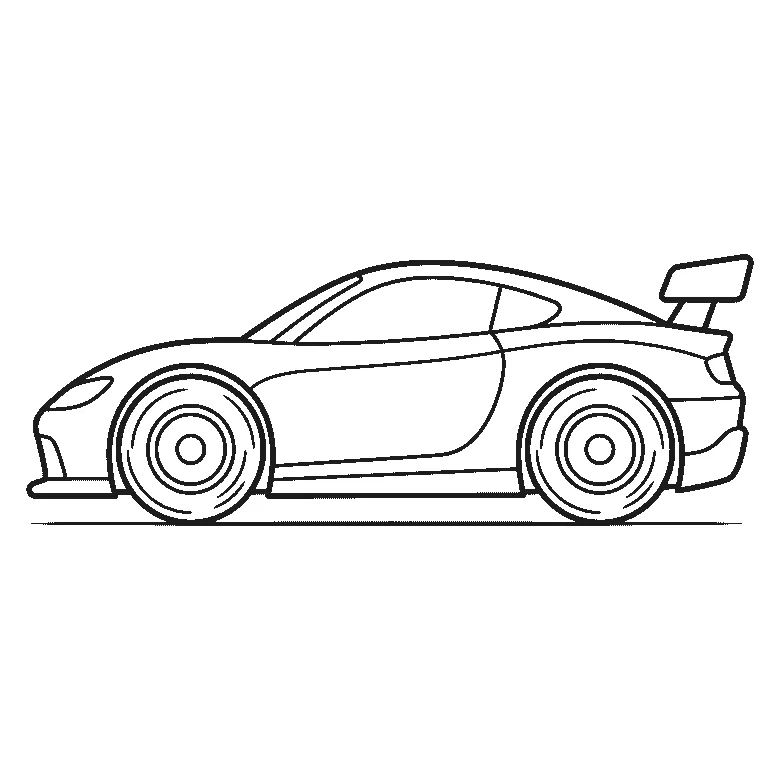
Racing car colouring page
A racing car seen from the side, with a bare body panel, a rear spoiler and spoked wheels, ready for any paint scheme you invent.
Colouring outline drawn by us.
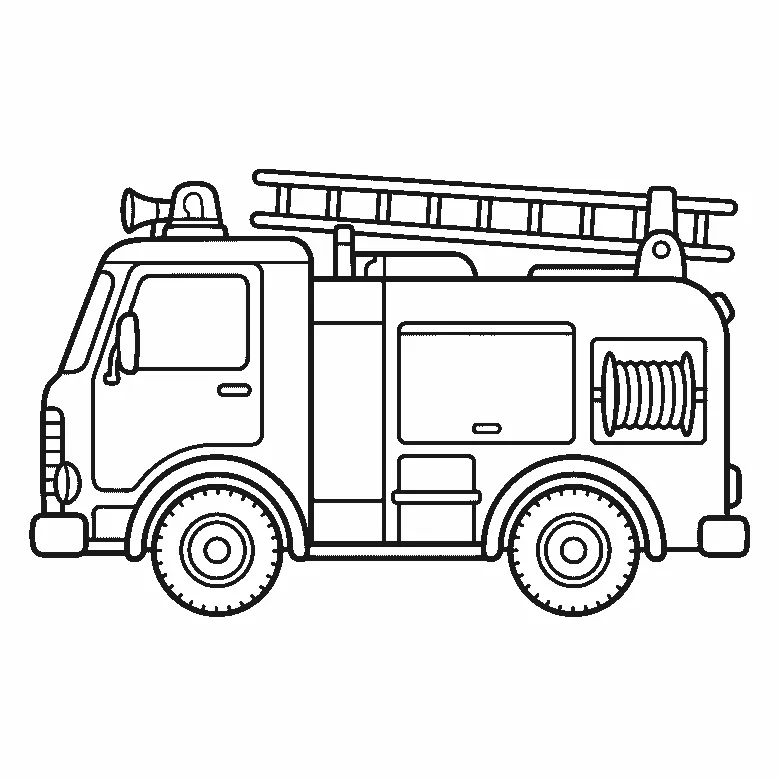
Fire engine colouring page
A side view of a fire engine with its ladder, beacon, horn, hose reel and treaded wheels drawn in clean outline.
Colouring outline drawn by us.
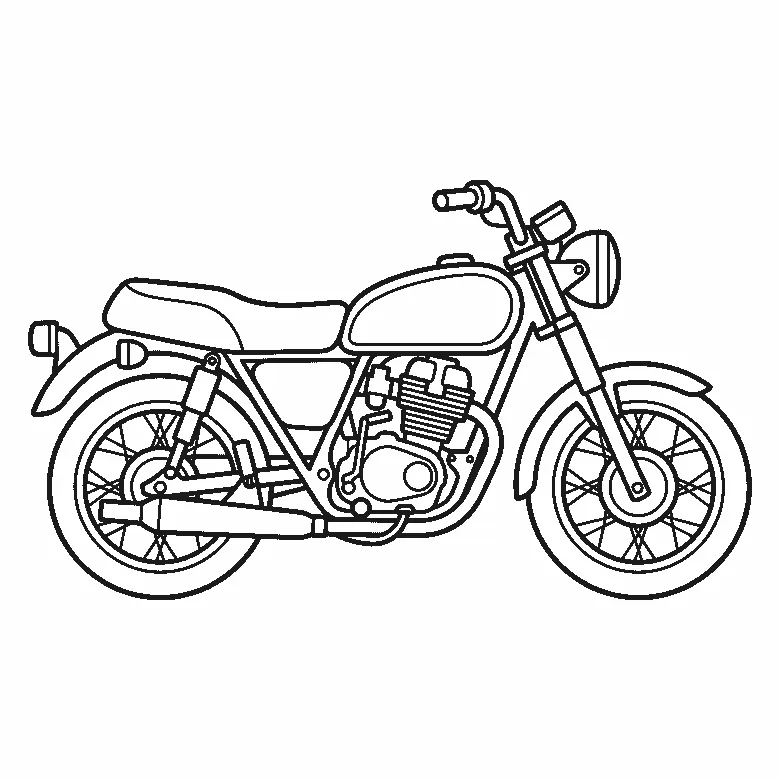
Motorbike colouring page
A motorbike in side view with spoked wheels, an engine, a headlamp and completely plain bodywork.
Colouring outline drawn by us.
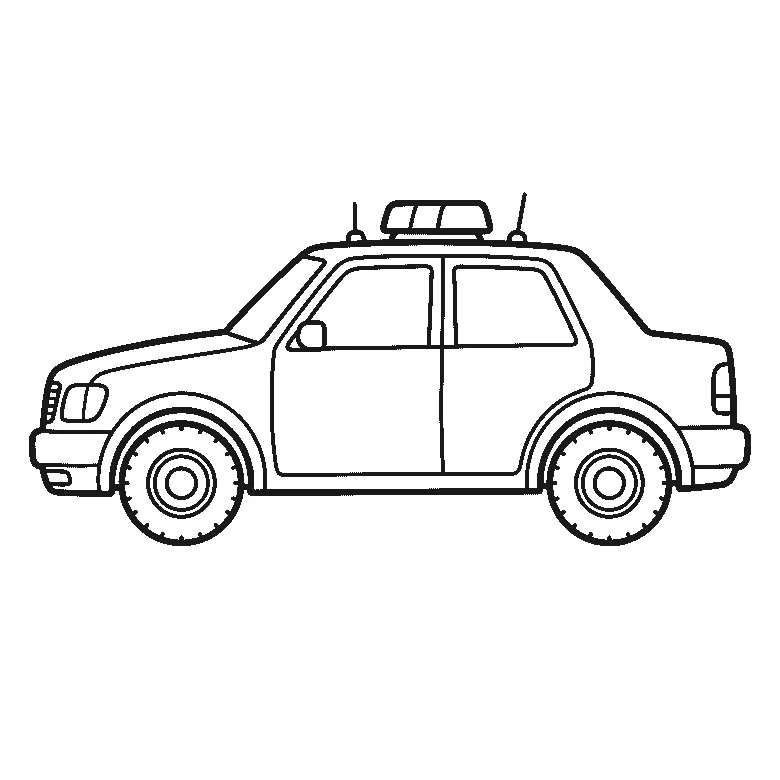
Police car colouring page
A patrol car in side view with a roof light bar, two aerials and completely plain door panels.
Colouring outline drawn by us.
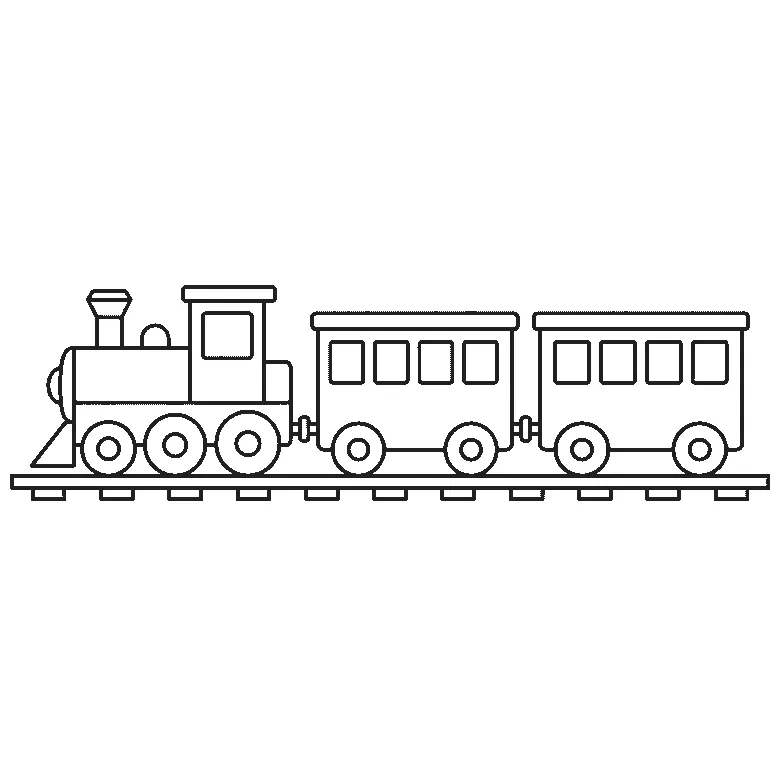
Train colouring page
A locomotive and two carriages on a straight track, drawn as simple boxes with big square windows.
Colouring outline drawn by us.
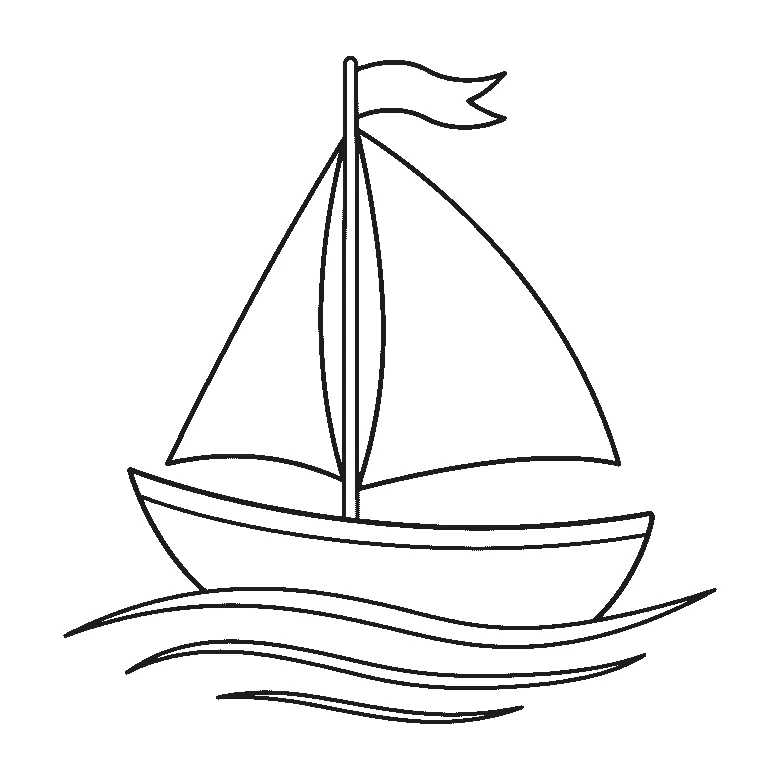
Boat colouring page
A sailing boat with two blank triangular sails and three curved water lines, drawn large and simple.
Colouring outline drawn by us.


