
PDF · A4 · 8 KB · Free, no sign-up. For home and classroom use.
Boat colouring page
A sailing boat with two blank triangular sails and three curved water lines, drawn large and simple.
A sailing boat sits on the water in side view, drawn large and centred. The hull is one long curved shape with a deck line running along the top of it. A single mast stands up from the middle, and two triangular sails hang from it, a larger one on one side and a smaller one on the other, with a narrow lens-shaped area against the mast between them. A small pennant flies at the masthead. Under the hull, three long curved lines suggest the water. The sails and the hull are completely blank — there are no numbers, no letters and no emblems anywhere on the drawing.
This sheet is about as open as a drawing gets: four large closed shapes and almost nothing else. That makes it a good page for a wide tool and a young hand, and it makes it a slightly difficult page for anyone who wants detail, because the drawing supplies none. What it supplies instead is space, and a blank triangular sail is a large and inviting surface to fill.
The two sails are the whole sheet. Left white they read as canvas. Filled flat they read as flags. Given stripes drawn in by hand — horizontal bands across the larger sail, or a single diagonal — they read as a boat somebody designed, and because both sails are plain triangles, any pattern put on one has an obvious answer on the other.
The hull is the second large area and the one place a dark colour belongs. A dark hull under pale sails is what gives the drawing weight at the bottom, which matters on a sheet where everything else is white and the boat could otherwise look like it is floating above the page. The deck line divides the hull into a broad lower shape and a narrow upper band, so those two can differ.
The three water lines under the hull are bare curves, not closed shapes. They cannot be filled — they can only be drawn over, or a colour can be laid across the whole area under the boat so the white lines show through it. That second approach is the one that makes water look like water, and it is quicker than trying to follow three thin curves with a pencil.
The pennant at the masthead is the only small shape on the sheet and therefore the only place where a fine tool is required at all. It is worth using a colour there that appears nowhere else, because it is the highest point of the drawing and the eye travels up the mast to it.
One plain point about the rig is visible in the outline. The smaller sail at the front of a boat like this is a jib and the larger one behind the mast is a mainsail, and the reason there are two rather than one is that the air moving between them does more work than either sail would do alone. That is also why the drawing keeps a narrow gap between them at the mast rather than letting them meet.
Print at actual size on plain A4 paper. There is very little on this sheet that a smaller print would damage, which makes it a good candidate for printing two to a page if your printer offers it — though at that size the pennant and the water lines start to go. Card is worth loading if markers are the plan, since the two sails are large flat fields and flat fields are where bleed shows. Cut out along the hull and the sails and the boat comes away as one shape with an obvious flat bottom, which stands up on a shelf against a folded strip.
Before you print
- Draw your own stripes onto the two blank sails; whatever goes on one has an obvious answer on the other.
- Give the hull a dark colour so the boat has weight at the bottom of the sheet.
- Lay colour across the whole area under the boat and let the three white water lines show through it.
- Use the deck line to split the hull into two tones, a broad lower shape and a narrow upper band.
- Put an otherwise unused colour on the masthead pennant; the eye travels up the mast to it.
Published Updated 626 words
More in this section
Digger colouring page
A tracked digger with a jointed arm and a toothed bucket, drawn from a three-quarter angle.
Colouring outline drawn by us.
Tractor colouring page
A tractor with one huge lugged rear wheel and a small front one, pulling a two-wheeled trailer.
Colouring outline drawn by us.
Aeroplane colouring page
A passenger aeroplane in level flight seen from the side, with a row of cabin windows, two wings and a tall swept fin, free as an A4 PDF.
Colouring outline drawn by us.
Car colouring page
Three vehicles stacked down the page, hatchback, van and pick-up, with every panel left blank to fill.
Colouring outline drawn by us.
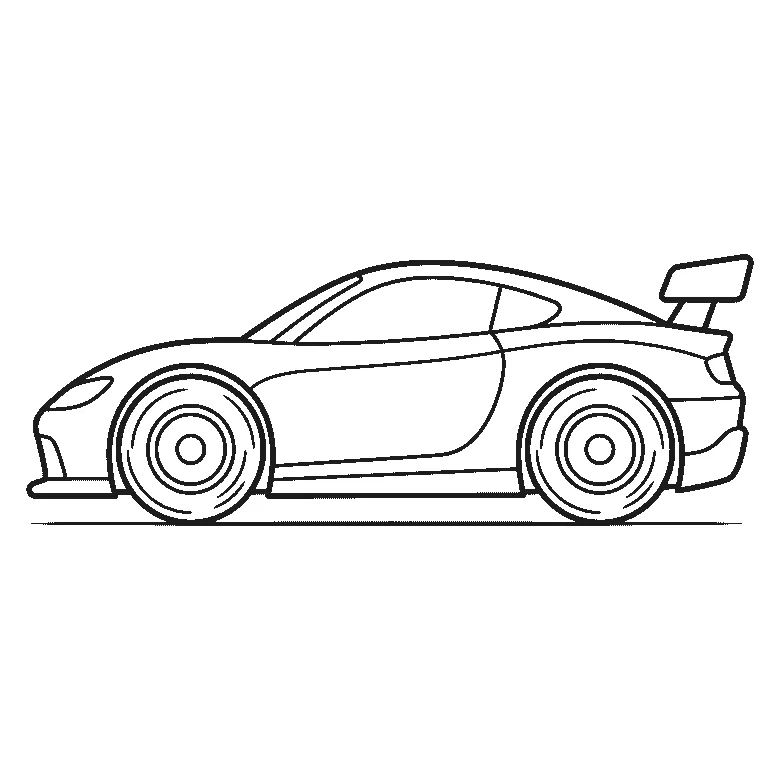
Racing car colouring page
A racing car seen from the side, with a bare body panel, a rear spoiler and spoked wheels, ready for any paint scheme you invent.
Colouring outline drawn by us.
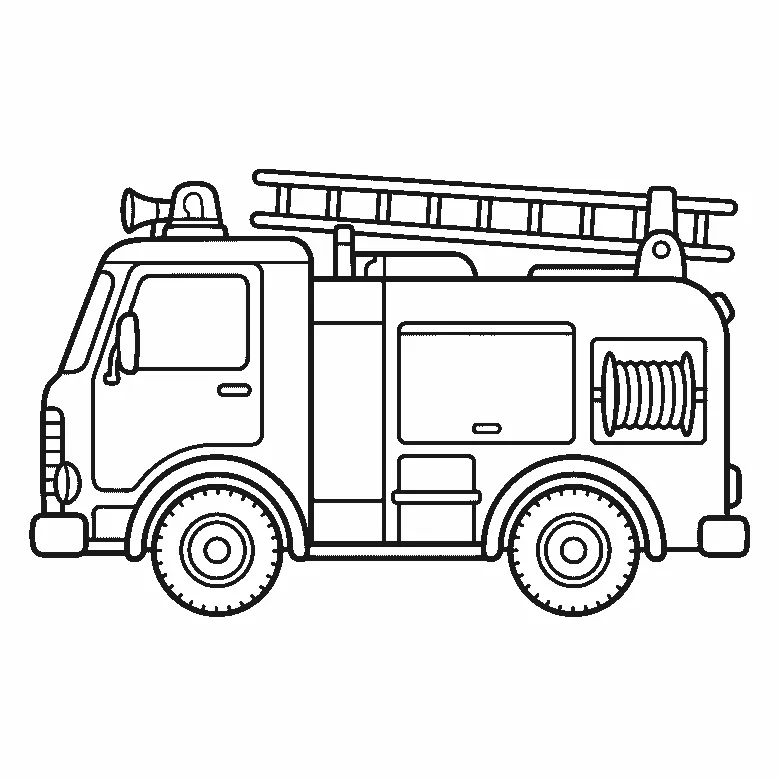
Fire engine colouring page
A side view of a fire engine with its ladder, beacon, horn, hose reel and treaded wheels drawn in clean outline.
Colouring outline drawn by us.
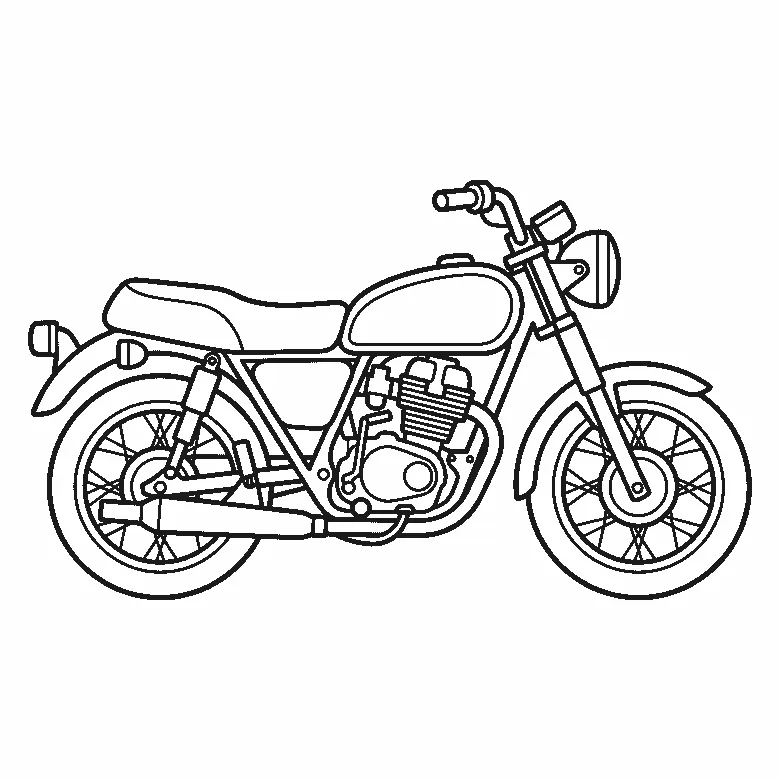
Motorbike colouring page
A motorbike in side view with spoked wheels, an engine, a headlamp and completely plain bodywork.
Colouring outline drawn by us.
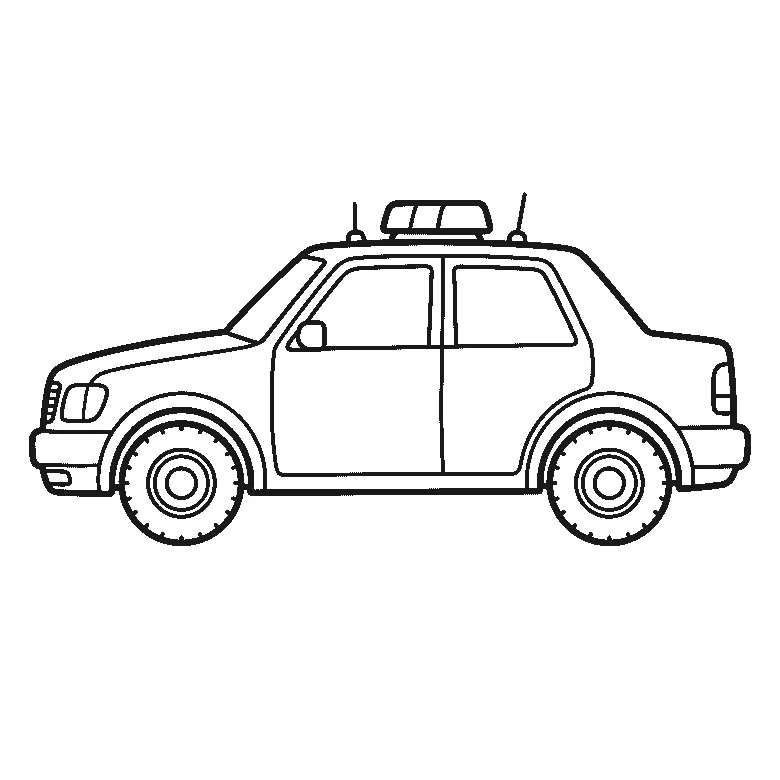
Police car colouring page
A patrol car in side view with a roof light bar, two aerials and completely plain door panels.
Colouring outline drawn by us.
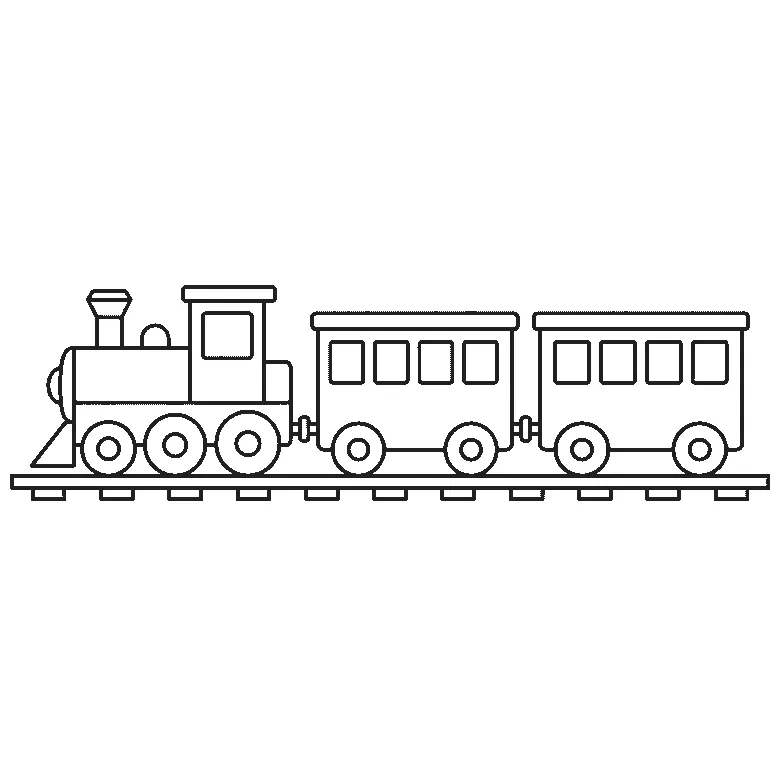
Train colouring page
A locomotive and two carriages on a straight track, drawn as simple boxes with big square windows.
Colouring outline drawn by us.


