
PDF · A4 · 17 KB · Free, no sign-up. For home and classroom use.
Bee colouring page
One bee on a wide flower, its body already divided into four stripe panels to fill.
A bee sits on a large flower, seen from the side and facing left. One round eye with a filled pupil takes up much of the head, two curved antennae rise from it, and a fringed collar separates the head from the body. The body behind the collar is divided by thick bands into four separate closed stripe panels that get narrower towards the tail. Two large wings sweep back over the body, each divided by heavy veins into a few broad sections. Six small legs hang below, drawn as strings of little bean shapes. Under all of it is a flower with a big oval centre ringed by wide petals.
The four stripe panels are the whole point of the drawing. They are closed, they are large, and they are already separated for you, so the classic yellow-and-black alternation takes about a minute and comes out clean. The bands between them are part of the outline rather than gaps, so filling every other panel and leaving the ones between it white also works and reads just as clearly.
The wings are the second decision. They are drawn as closed shapes divided by veins, which means they can be filled — but a bee's wings are transparent, and leaving them white with only their veins coloured is what makes them look like wings rather than like leaves. A very light grey or blue laid inside each section, with the paper still showing through, is the middle course and is worth trying on one of the two before committing to both.
The flower under the bee is the largest single area on the sheet and the fastest to fill. Its oval centre is one broad shape and the petals around it are wide and separate. Because the flower carries no detail at all, it is where a strong flat colour does the most work: a bright ground under the bee lifts the whole page, and it can be done with a crayon in under a minute while the fiddly parts wait.
The legs are the narrowest lanes here. Each is drawn as a chain of small bean-shaped segments, which is more forgiving than a single thin line because each segment is a closed shape, but they are still small enough that a broad tip will merge two of them. A sharp pencil is the tool; leaving the legs white against a coloured flower is also a real option and keeps them legible.
Yellow and black across the body is what the outline invites and there is nothing to argue with it. If you want something else, the safest change is to keep the alternation and swap the colours, because it is the alternating rhythm rather than the particular hues that makes the shape read as a bee. The collar between head and body is drawn as a fringe of short strokes, so it takes a lighter, scruffier fill than the smooth panels behind it.
Two plain facts sit in this drawing. The fuzz that the collar stands for is real: a bee's body carries branched hairs, and pollen sticks to them, which is how pollen travels from one flower to another. And the antennae are not decoration but the bee's main sense organs, which is why they are drawn long and forward rather than tucked back — they do most of the work that eyes and a nose would do on an animal with a face.
Print at actual size on plain A4 paper so the leg segments and the wing veins keep the width they were drawn at. If markers are the plan, use them on the flower and the stripe panels and switch to pencil for the legs and the collar, or the small work will merge. Cut out, the bee comes away cleanly along its own outline, and the flower separates from it as a second shape if you cut between the legs and the petals.
Before you print
- Alternate the four body panels, or fill every other one and leave the rest white; both read as a bee.
- Leave the wings mostly white and colour only their veins, so they read as transparent.
- Fill the flower first with a crayon; it is the biggest area and it lifts the whole sheet.
- Use a sharp pencil on the leg segments, which a broad tip will merge into one lane.
- Give the fringed collar a scruffier, lighter fill than the smooth panels behind it.
Published Updated 658 words
More in this section
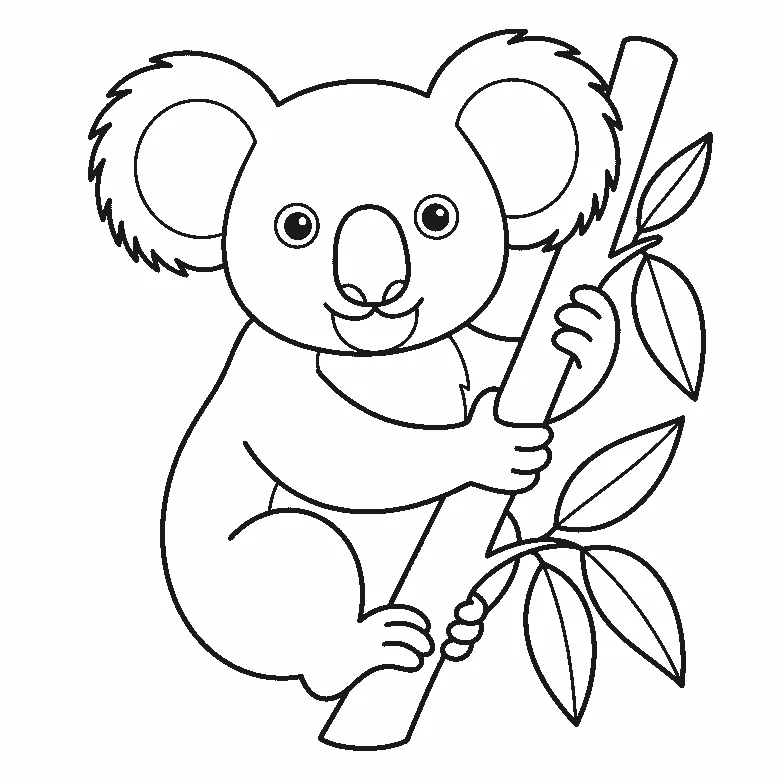
Koala colouring page
A koala hugging a eucalyptus branch, facing forward, with two very large fringed ears.
Colouring outline drawn by us.
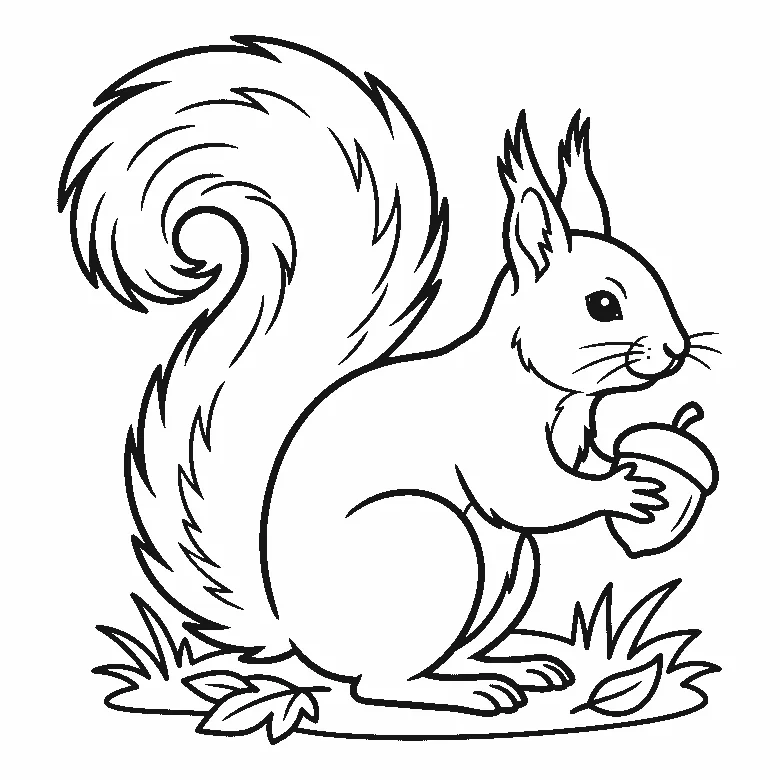
Squirrel colouring page
A squirrel in profile holding an acorn, with a very large curled tail drawn as separate strands.
Colouring outline drawn by us.
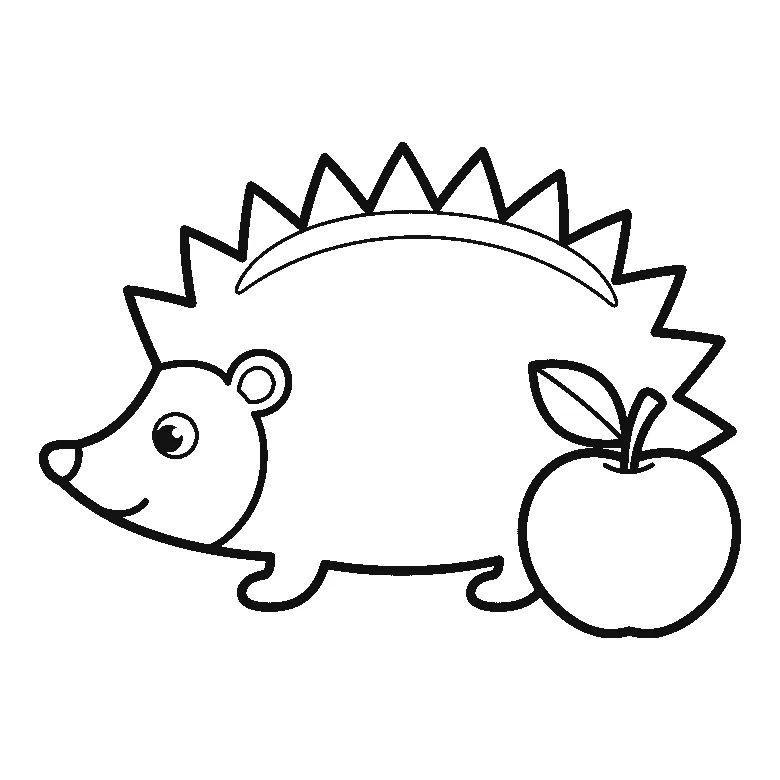
Hedgehog colouring page
A hedgehog in profile beside an apple, its whole back drawn as one row of big triangular spikes.
Colouring outline drawn by us.
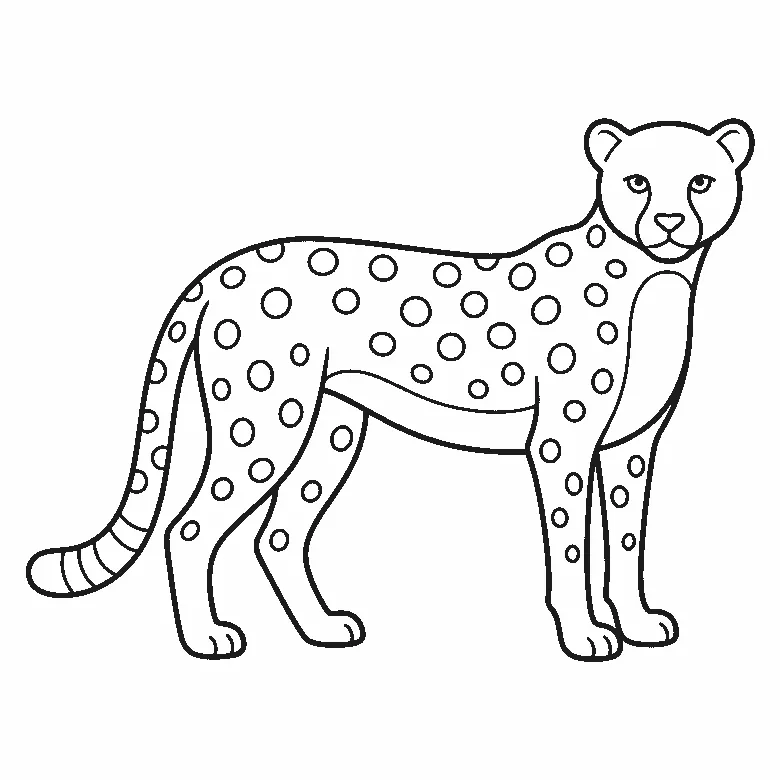
Cheetah colouring page
A cheetah in profile with its head turned to you, covered in solid round spots and a banded tail tip.
Colouring outline drawn by us.
Leopard colouring page
A leopard with its head turned to you, its coat drawn as open rosette rings of different sizes.
Colouring outline drawn by us.
Parrot colouring page
A parrot on a branch with a big hooked beak, a folded wing of broad feathers and three long tail feathers.
Colouring outline drawn by us.
Chameleon colouring page
A chameleon on a branch with a spiral tail, a spiked spine and a body already banded for you.
Colouring outline drawn by us.
Snail colouring page
A snail crossing a big toothed leaf, its shell a wide spiral of broad bands to fill one by one.
Colouring outline drawn by us.
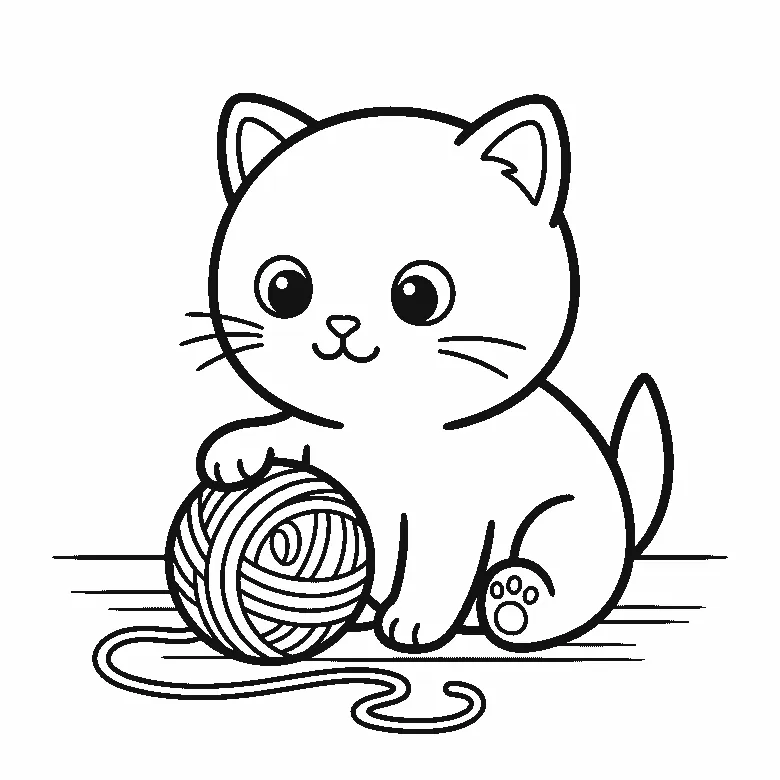
Kitten colouring page
A round-headed kitten sitting with one paw on a ball of wool, the loose thread trailing away across the floor, free as an A4 PDF.
Colouring outline drawn by us.
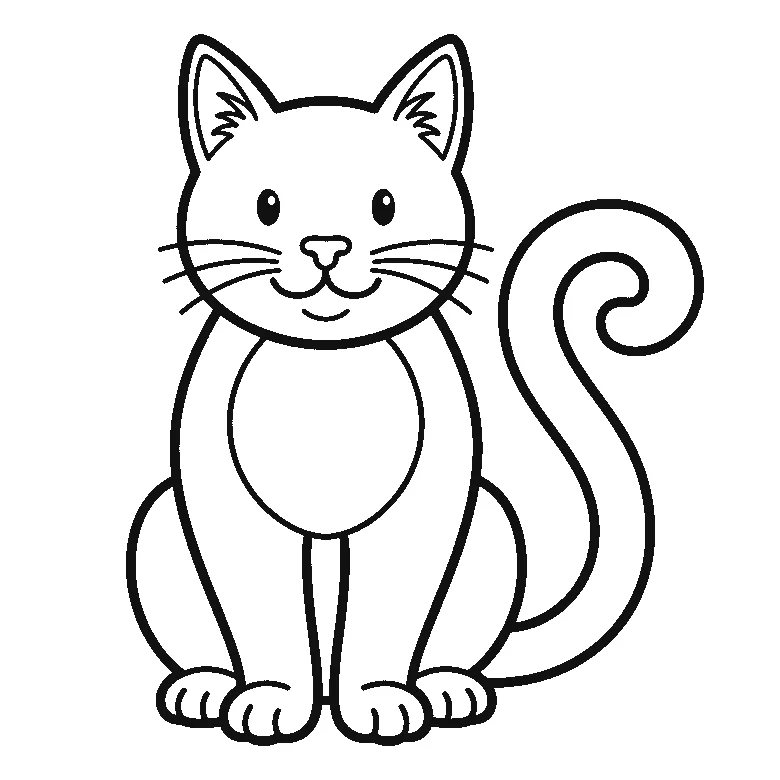
Cat colouring page
An upright, forward-facing cat with tufted ears and a curled tail, in thick black outlines on one A4-size sheet.
Colouring outline drawn by us.
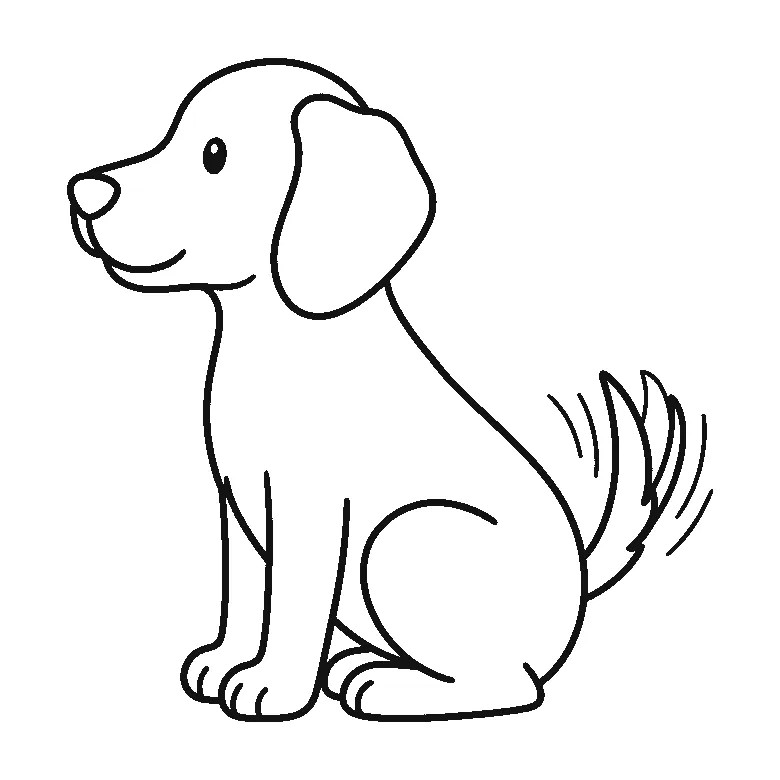
Dog colouring page
A dog in profile with one floppy ear and a feathered tail, drawn in open black outlines and ready to print at actual size.
Colouring outline drawn by us.
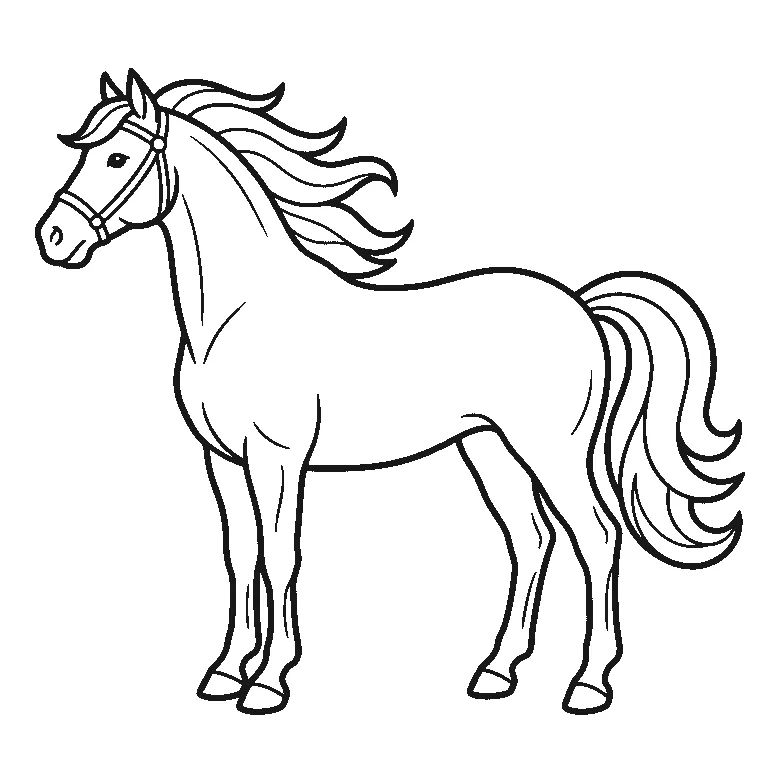
Horse colouring page
A horse standing in profile in its bridle, with a long streaming mane and full tail, on one printable A4-size sheet.
Colouring outline drawn by us.


