
PDF · US Letter · 27 KB · Free, no sign-up. For home and classroom use.
Farm coloring page
A barn, a windmill, three animals and a smiling sun in one full-page farmyard scene.
This is a whole scene rather than a single subject. A barn stands to the right with a shingled roof, a hayloft window with hay showing in it, a wide double door and a plank wall; a windmill with four latticed sails and a lattice tower rises to the left. Rail fences run across the front and behind. In the yard a spotted cow grazes with its head lowered and both eyes toward the viewer, a pig stands beside it, and a hen with one round eye stands to the right. Rolling fields, three clouds and a smiling sun with two round eyes fill the background.
Because it is a scene, the useful way in is by layer rather than by object. The sky and the fields are the two big background areas; the barn and the windmill are the built layer; the fences and the three animals are the front. Working back to front — sky, then fields, then buildings, then animals — means every stroke lands on paper that is still empty, and no color has to be steered around something already finished.
The barn roof is the densest patch of small shapes on the page: rows of overlapping shingles, dozens of them. Filling every shingle is a long sitting. Laying one color across the whole roof and pressing harder along the bottom edge of each row is much faster and reads as a shingled roof from any distance, because what the eye picks up is the row lines rather than the individual tiles.
The windmill sails are the opposite kind of problem: four long lattices, each divided into a grid of small rectangles, standing against white sky. Left white with only their frames colored, they read as an open lattice, which is what they are. Filled, they become four solid blades and the windmill turns into a different object. Both are legitimate and the first is both faster and more accurate.
The three animals are the smallest and most detailed part of the drawing and they are worth doing last, when the yard around them is settled. The cow's patches are separate closed shapes, so they can go dark against a light body without any care at all; the pig is one smooth outline; the hen has a comb, a wattle and a fanned tail that are each a separate shape. All three have their eyes already drawn as filled dots.
The plank wall of the barn and the rails of the fences are the two places where a single direction of stroke matters. Planks run vertically and rails run horizontally, and following each of them with the pencil rather than across it makes them read as wood. It is a small thing that costs nothing and it is the difference between a barn and a red rectangle.
One plain point about the windmill is drawn here. Its sails are latticed rather than solid because a windmill's blades were originally frames that had cloth spread across them, and how much cloth was spread controlled how much wind the mill caught. That is why the frame is drawn as an open grid — on a real mill you would be looking through it at the sky, which is exactly what leaving it white reproduces.
Print at actual size on plain letter paper. This drawing is a crowded one, and a smaller print closes up the roof shingles and the windmill lattice first. Regular copier paper is fine for pencils and crayons; if markers are the plan, the sky and the fields are enormous flat areas and will need heavier card stock. There is nothing to cut out here — the sheet is a picture rather than a set of objects, and it suits a wall or a fridge door whole.
Before you print
- Work back to front: sky, fields, buildings, then the three animals in the yard.
- Lay one color across the barn roof and press harder along each row line instead of filling every shingle.
- Leave the windmill sails white and color only their frames; they read as the open lattice they are.
- Stroke the barn planks vertically and the fence rails horizontally, and both read as wood.
- Do the cow's patches dark against a light body; they are separate closed shapes and need no care.
Published Updated 632 words
More in this section
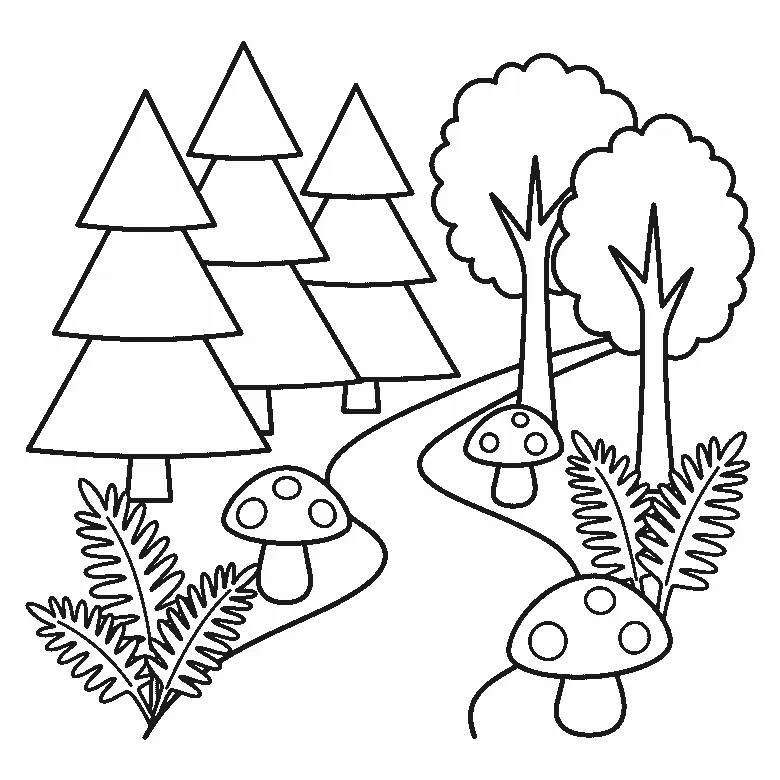
Forest coloring page
Three firs, two round-crowned trees, a winding path, three spotted mushrooms and two ferns.
Coloring outline drawn by us.
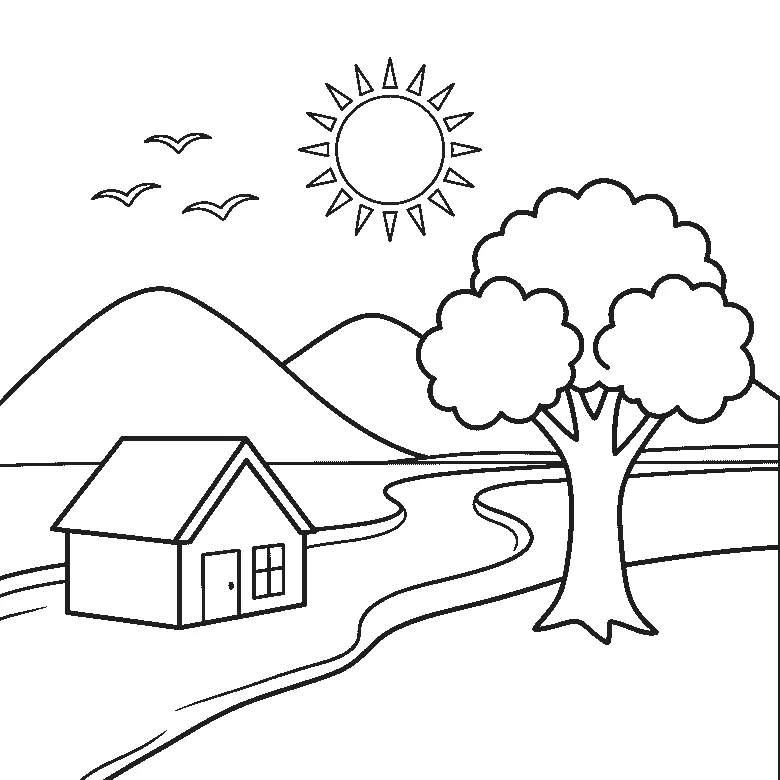
Landscape coloring page
Hills, a winding river, a broad tree, a small house and a plain faceless sun in one open scene.
Coloring outline drawn by us.
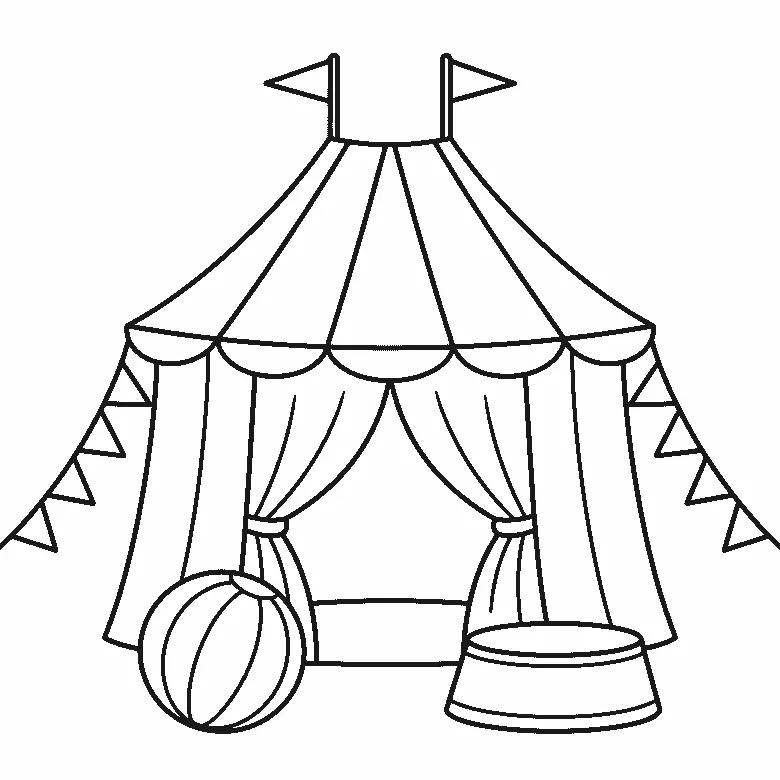
Circus coloring page
A big top tent with a six-panel roof, curtains tied back, bunting, a striped ball and a podium.
Coloring outline drawn by us.
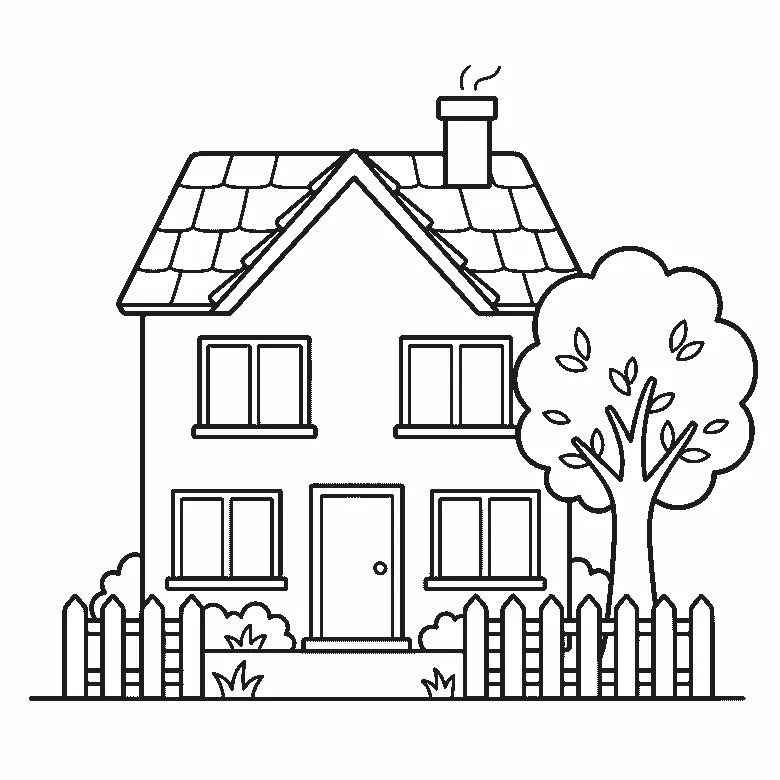
House coloring page
A two-story house seen straight on, with a tiled roof, a smoking chimney, a picket fence and a tree at the side, free as a US Letter PDF.
Coloring outline drawn by us.
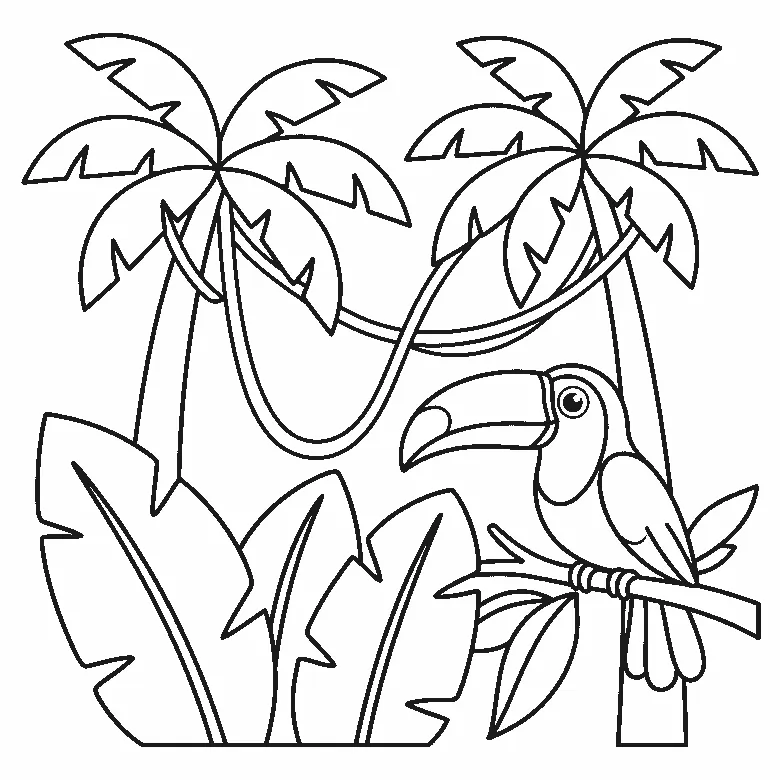
Jungle coloring page
Two palm trees, a looping vine, a bank of big notched leaves and a toucan on a branch, free as a US Letter PDF.
Coloring outline drawn by us.


