
PDF · US Letter · 15 KB · Free, no sign-up. For home and classroom use.
Turkey coloring page
One turkey in profile with a wide fanned tail and a folded wing, drawn large on a US Letter sheet.
A single turkey stands in profile facing left, filling most of the page, with a plain straight ground line under its feet and nothing else in the frame. Its tail opens behind it as a wide fan drawn in two overlapping rows of rounded feathers, the back row taller and the front row shorter, so the fan has depth instead of being one flat arc. The body is a large rounded shape, the folded wing sits across it as a stack of broad overlapping feathers, and the head carries one round eye with a filled pupil, a hooked beak, a long wattle hanging beside it and a snood above.
The fan is where most of the time goes, and it is the part that rewards a plan. Each feather is a closed shape, so nothing can leak from one into the next, and the two rows mean there are two natural bands of color available: one scheme for the back row and another for the front. Working from one edge of the fan to the other, rather than jumping around it, is what keeps a repeating sequence from breaking, and a repeating sequence is what makes a fan look deliberate.
The body and the wing are the two large open areas. The wing is drawn as overlapping feather shapes rather than as a solid panel, which gives it its own rhythm at a bigger scale than the tail; the body around it is one broad field with almost nothing inside it. Filling the body last, after the wing and the fan are settled, means the widest shape on the page is the one you finish on, and any small overlap from the wing lands on a color that is already there.
The head is small and holds four separate things: the beak, the wattle hanging from it, the snood over it, and the eye. All four are close together, and a broad tip will take two of them at once. A sharpened pencil or a fine-tipped pen suits the head; the fan and the body do not care what you use. The eye is already filled black on the page, which is the one place on the sheet where the drawing has made a decision for you.
The familiar reading is browns and bronzes across the body and warmer reds and oranges through the fan, with the wattle red. It will look right. It is not required by anything on the page: a fan is a row of separate closed shapes and takes a rainbow as readily as it takes a set of browns. A useful middle course on this sheet is to keep the head and body honest and let the fan do whatever it likes, since the fan is the half a reader looks at first.
A few plain facts about the bird are visible in the outline. The fleshy flap hanging beside the beak is the wattle and the one draped over it is the snood; both are skin rather than feather, which is why they are drawn smooth while everything else on the head is not. The wide fan is a display posture and not the way the tail sits at rest. And the feet are drawn with three forward toes each, which is what the outline gives you to color and is worth looking at before you fill them as one shape.
The ground line is a single straight rule running the width of the drawing. Left white it simply anchors the bird; given a color it becomes ground, and a narrow band of color under the feet does more to settle the figure on the page than anything else you can add. It also gives a clean place to cut: trimming along it leaves a turkey that stands upright when the sheet below is folded back.
Print at actual size on plain letter paper so the feather divisions in the fan stay as open as they were drawn. Fit-to-page shrinks them first, and they are what the sheet is for. If markers are coming out, run it on heavier card stock, because a fully colored fan puts a great deal of ink into one half of the page. Two copies is worth the second sheet here: the same fan colored under two different rules produces two drawings that do not look related.
Before you print
- Work the fan from one edge to the other so a repeating color sequence does not break in the middle.
- Give the back row of tail feathers one scheme and the front row another, and the fan gains depth.
- Save the body for last, so any overlap from the wing lands on color that is already down.
- Keep a fine tip for the head, where the beak, wattle and snood sit within a pencil-width of each other.
- Color a narrow band under the feet along the ground line; it settles the bird on the page.
Published Updated 728 words
More in this section
New Year coloring page
A clock at midnight, a firework burst, four balloons, a horn, a party hat and seven stars, printable at actual size.
Coloring outline drawn by us.
Christmas coloring page
Six separate holiday shapes on one sheet, from holly wreath to jingle bell, free as a US Letter PDF.
Coloring outline drawn by us.

Christmas tree coloring page
One decorated tree with a star, baubles, light strings and five wrapped gifts, in black outline on letter paper.
Coloring outline drawn by us.
Birthday coloring page
A two-tier cake with three lit candles, a stack of two gifts and three balloons, printable at actual size.
Coloring outline drawn by us.
Thanksgiving coloring page
A fan-tailed turkey and a spilling cornucopia in black outline, sized for letter paper and ready to print.
Coloring outline drawn by us.

Valentine's Day coloring page
One large heart, two small ones, an open envelope with a heart seal, and a long-stemmed rose tied with a bow.
Coloring outline drawn by us.
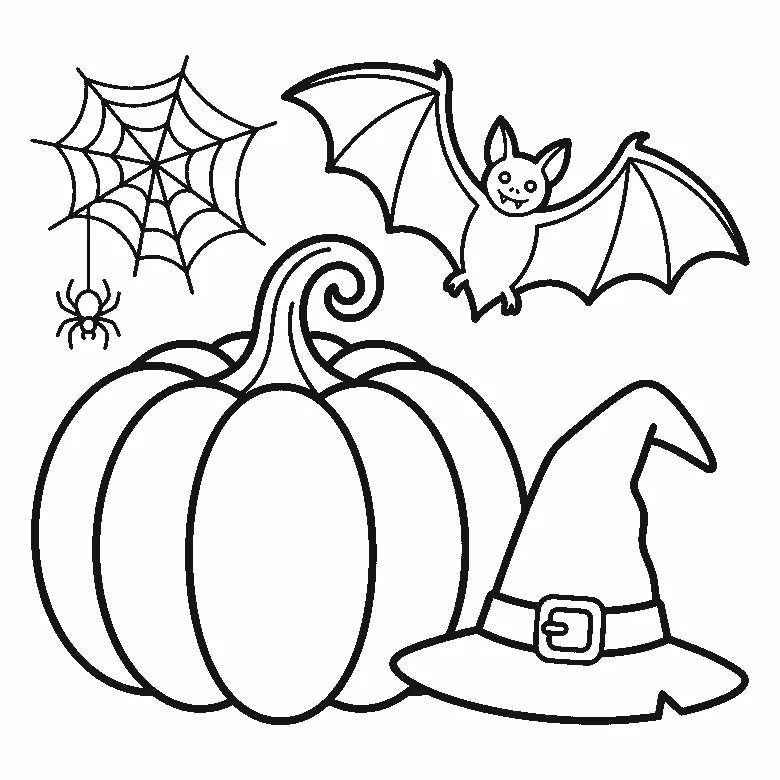
Halloween coloring page
A pumpkin, a bat, a hanging spider and a buckled witch hat on one printable sheet, black outlines on white.
Coloring outline drawn by us.
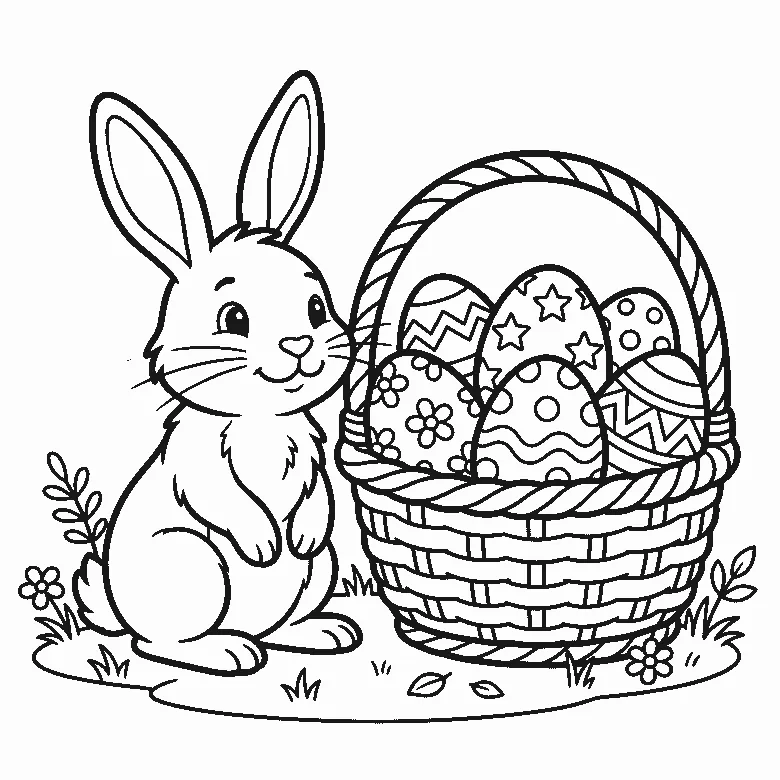
Easter coloring page
A rabbit in profile beside a woven basket of six patterned eggs, drawn in black outline for printing at letter size.
Coloring outline drawn by us.
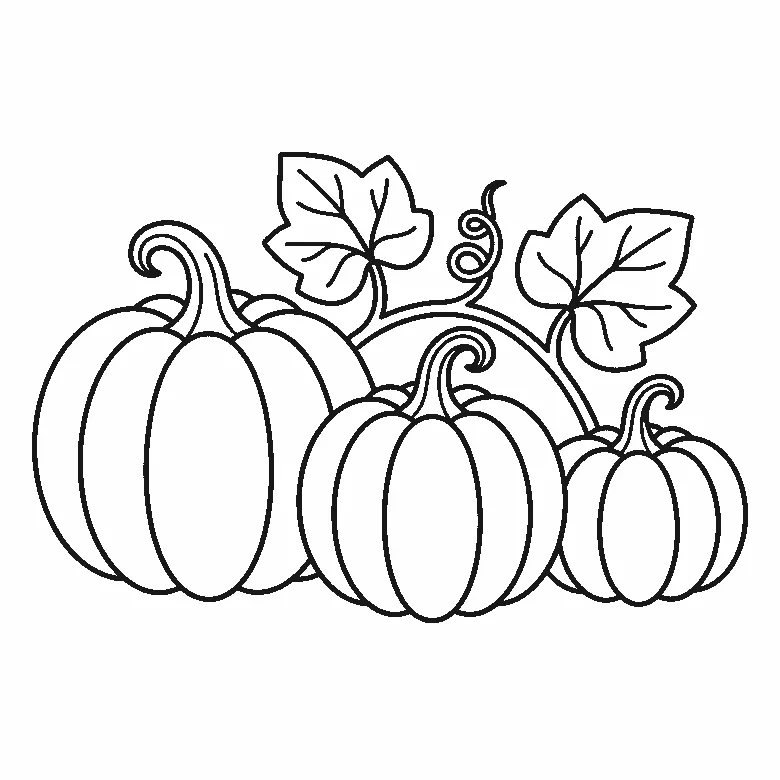
Pumpkin coloring page
Three ribbed pumpkins with curled stems, a vine with two broad leaves and a tendril running behind them.
Coloring outline drawn by us.
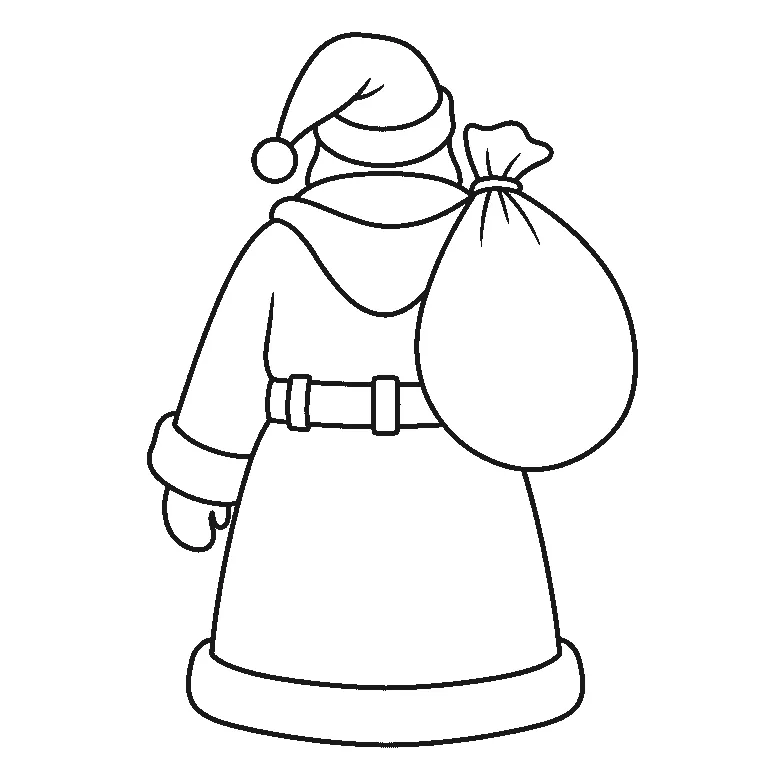
Santa coloring page
Santa drawn from behind in a belted coat with fur cuffs, a pointed hat with a pom-pom, and a sack over one shoulder.
Coloring outline drawn by us.
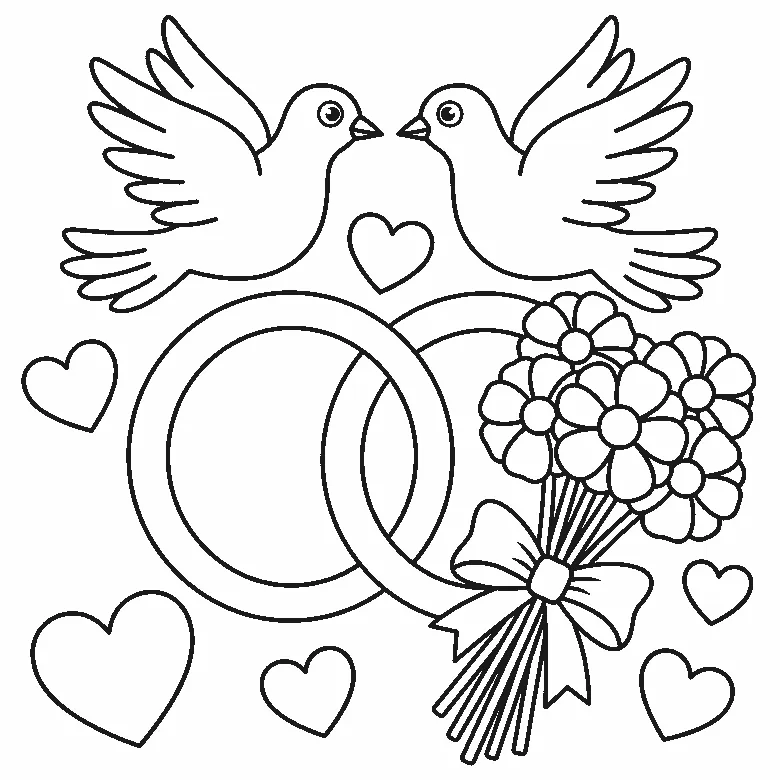
Wedding coloring page
Two interlocking rings, a pair of doves, a tied bouquet and six loose hearts on one sheet, free as a US Letter PDF.
Coloring outline drawn by us.


