
PDF · US Letter · 15 KB · Free, no sign-up. For home and classroom use.
Pumpkin coloring page
Three ribbed pumpkins with curled stems, a vine with two broad leaves and a tendril running behind them.
Three pumpkins stand together on this sheet, each a different size, each carrying the deep vertical ribs that give a pumpkin its shape. The stems are drawn curled rather than cut flat, the way they come away from a vine. Behind the group a vine runs across the page with two broad leaves and one curling tendril. Nothing else appears: no ground line, no fence, no lettering. It is black outline on white, with the three shapes overlapping just enough that they read as one group instead of three separate drawings.
Fall is a season rather than a single date, so this is a sheet that can stay out for weeks. It works on a table while dinner cooks, and it works taped inside a window where low afternoon light comes through the color. The largest pumpkin can be cut out on its own and stood against a bowl as a small decoration. A household that marks the season by setting real pumpkins on a step can put a colored one on a door and have it do the same job indoors.
The ribs are the real work on this drawing. Each pumpkin is divided into curved segments, and the way those segments are shaded decides whether the fruit looks round or flat. Choose one side of the sheet as the light source and hold to it. On every rib, press harder along the edge that faces away from that light and ease off as the rib turns toward it. Applying that rule consistently across all three pumpkins, even where the shapes overlap, does more than any detail added inside a single segment.
Three pumpkins of different sizes invite a decision: one color for the whole group, or three related ones. A single orange used throughout ties them into a set and lets size alone separate them. Three shades instead, deep on the largest, lighter on the middle one, palest on the smallest, pushes the group apart and gives the eye a place to start. Either reads well on the page. What tends to fall apart is three unrelated colors, which turns a group into three drawings that happen to share a sheet.
The curled stems are woody rather than green, and they are the only part of the drawing that is not smooth. A flat brown will do the job. A gray-green with brown worked into the shadowed side is closer to the thing itself, and the curl offers an obvious place to show it, since the underside of a hook is always darker than its top. Keeping the stems duller than the bodies also stops them from competing with the ribs for attention at the top of the page.
The vine, its two broad leaves, and the single tendril sit behind the pumpkins, and the coloring should keep them there. Anything laid down lightly recedes, so a pale or muted green across the leaves will hold the back plane without any other trick. The leaves are broad enough to show their veins if a slightly darker green is run along them with a sharp point. The tendril is the thinnest line on the page, and it is best saved for the end, once the hand has settled.
There is no ground beneath the pumpkins and no sky behind them, which leaves the white of the paper with a job to do. It can stay white, in which case the group floats and the outlines stay crisp. It can take a wash of pale color across the whole background, which pushes the pumpkins forward. It can also take a horizon: one straight line drawn behind the group, colored below and left blank above, is enough to seat all three on something without building a scene.
Orange fits this outline and needs no defense, but pumpkins grow in more colors than one. White ones, pale blue-green ones, and squat deep red-orange ones are all real, and every one of them fits these lines without a single change to the drawing. A group of one white, one orange, and one pale green reads as a harvest arrangement rather than a single crop. The ribs still need their shading either way; on a white pumpkin the shadow simply becomes a light gray instead of a darker orange.
The file is built at US Letter size and laid out with white space around the group, so the whole vine fits on the page and there is a margin to hold while cutting. Heavier card stock takes a marker without bleeding through and stands on its own once a pumpkin is cut free. Thin copy paper suits the window better, where light passing through the color does more for the sheet than any amount of paper weight.
Before you print
- Darken each rib along one edge only, and keep the light coming from the same side on all three pumpkins.
- Leave a narrow band of bare paper down the ribs that face the light instead of reaching for a lighter color.
- Keep the vine and leaves paler than the pumpkins so the back layer stays behind them.
- Give the stems a gray-green rather than a flat brown, and press harder where each stem curls under.
- Save the tendril for last and use a sharp point; it is the thinnest line on the sheet.
Published Updated 793 words
More in this section
Santa coloring page
Santa drawn from behind in a belted coat with fur cuffs, a pointed hat with a pom-pom, and a sack over one shoulder.
Coloring outline drawn by us.
Wedding coloring page
Two interlocking rings, a pair of doves, a tied bouquet and six loose hearts on one sheet, free as a US Letter PDF.
Coloring outline drawn by us.
Turkey coloring page
One turkey in profile with a wide fanned tail and a folded wing, drawn large on a US Letter sheet.
Coloring outline drawn by us.
New Year coloring page
A clock at midnight, a firework burst, four balloons, a horn, a party hat and seven stars, printable at actual size.
Coloring outline drawn by us.
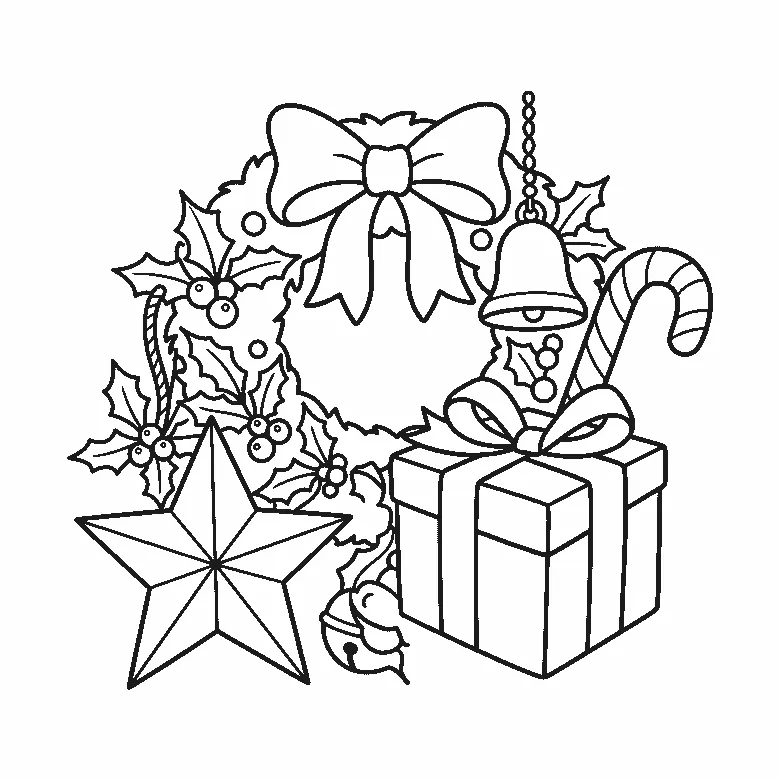
Christmas coloring page
Six separate holiday shapes on one sheet, from holly wreath to jingle bell, free as a US Letter PDF.
Coloring outline drawn by us.
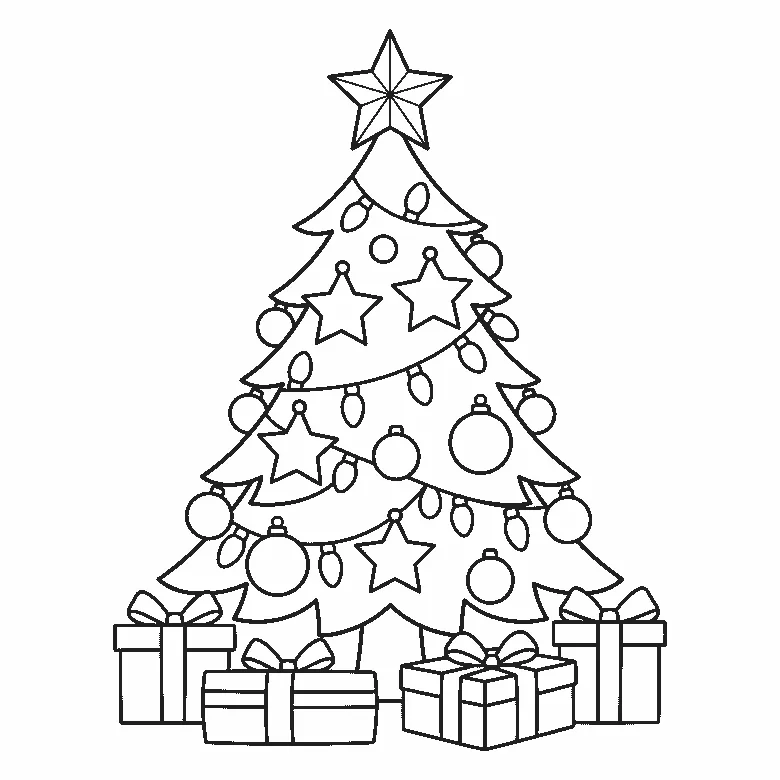
Christmas tree coloring page
One decorated tree with a star, baubles, light strings and five wrapped gifts, in black outline on letter paper.
Coloring outline drawn by us.
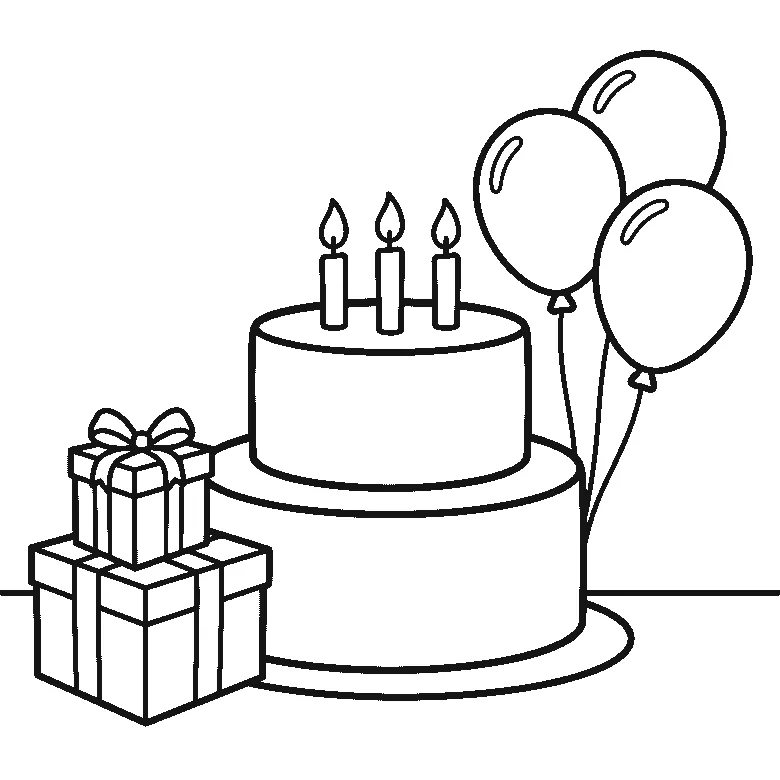
Birthday coloring page
A two-tier cake with three lit candles, a stack of two gifts and three balloons, printable at actual size.
Coloring outline drawn by us.
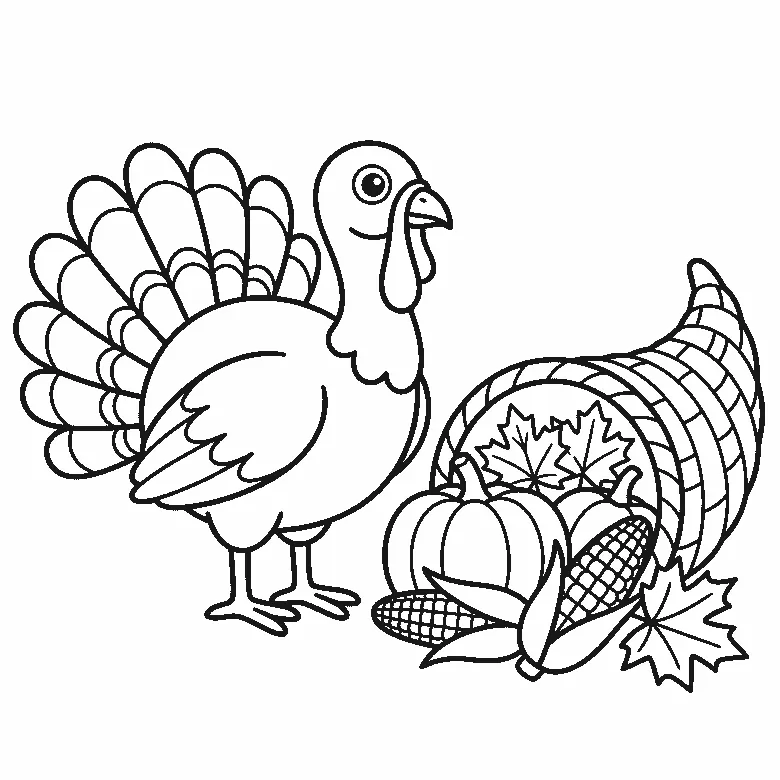
Thanksgiving coloring page
A fan-tailed turkey and a spilling cornucopia in black outline, sized for letter paper and ready to print.
Coloring outline drawn by us.
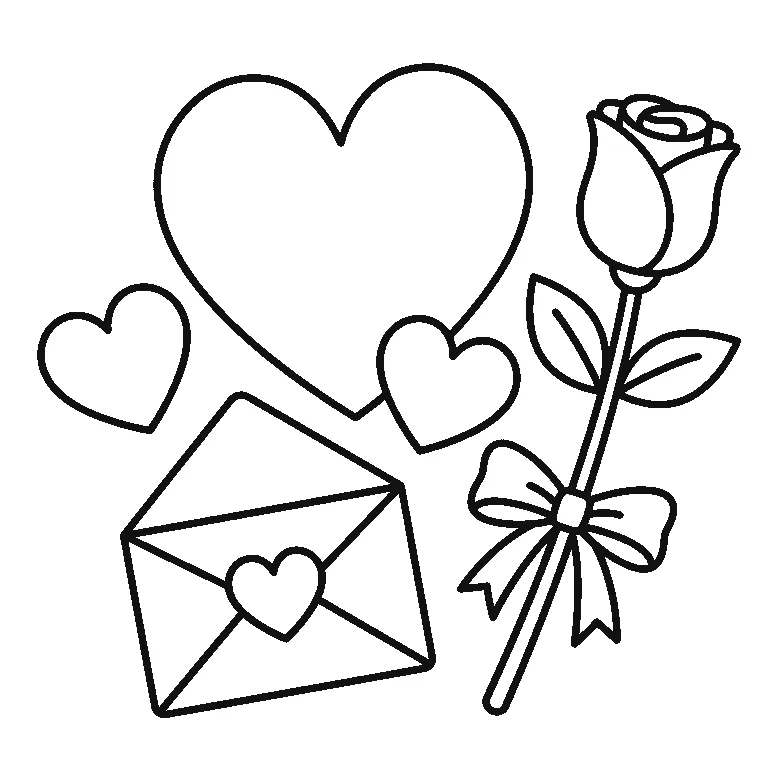
Valentine's Day coloring page
One large heart, two small ones, an open envelope with a heart seal, and a long-stemmed rose tied with a bow.
Coloring outline drawn by us.
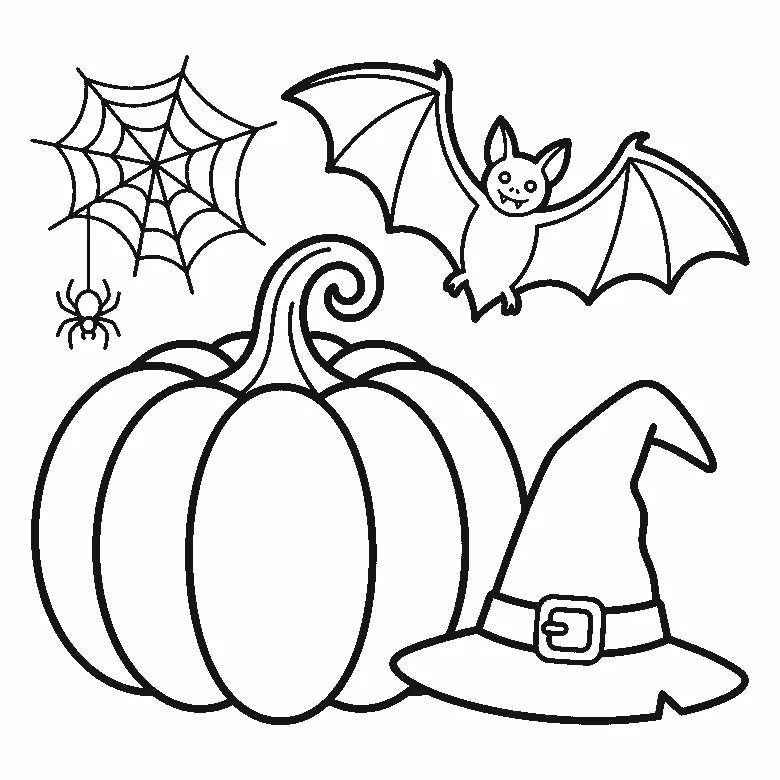
Halloween coloring page
A pumpkin, a bat, a hanging spider and a buckled witch hat on one printable sheet, black outlines on white.
Coloring outline drawn by us.
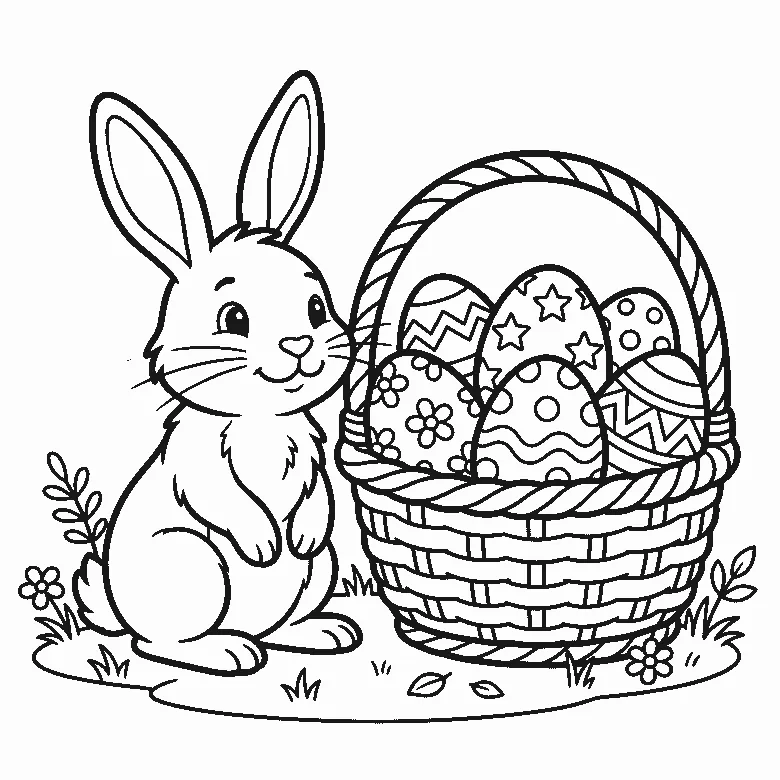
Easter coloring page
A rabbit in profile beside a woven basket of six patterned eggs, drawn in black outline for printing at letter size.
Coloring outline drawn by us.


