
PDF · US Letter · 9 KB · Free, no sign-up. For home and classroom use.
Santa coloring page
Santa drawn from behind in a belted coat with fur cuffs, a pointed hat with a pom-pom, and a sack over one shoulder.
Santa is drawn from behind on this sheet. He wears a belted coat with a band of fur at the hem and at both cuffs, a pointed hat with a pom-pom hanging from the tip, and he carries a sack tied at the neck over one shoulder. No face is drawn, because from this angle there is no face to draw. He is walking away from whoever is looking at him, and every line on the page describes the back of him.
A back view reduces the figure to one readable silhouette, and that shape holds together through the uses a sheet like this can be put to. It can go on the front of a card with a greeting written in above the figure. It can be cut out and hung in a window so the shape reads from the street. Cut smaller and punched through the hat, it becomes a gift tag with a clear back for a name. Colored flat and left on the table, it fills the stretch between the wrapping and the meal.
The coat is the largest area on the page, and the belt cuts it into two unequal fields: a wide back above and a shorter skirt below. If red goes down on it, lay the color in one direction across both fields rather than filling them separately, because a change of stroke direction at the belt line will show once the whole coat is covered. A second, darker pass along the side away from the light rounds the back out and stops it from reading as a flat shape.
The fur at the hem and the cuffs is the one place on this drawing where doing less gets more. Left as bare paper, it already reads as white fur against a filled coat. A light gray, applied only where the band turns under at the bottom edge and inside each cuff, gives it depth without making it look soiled. Short strokes running outward from the coat suggest the texture; a solid line drawn all the way around the fur takes that softness straight back out again.
The pointed hat should carry the same color as the coat and be filled in the same sitting, while the pressure of the hand is still consistent, since a mismatch between hat and coat shows from across a room. The point falls over to one side, and the fold where it bends is worth a slightly darker touch. The pom-pom at the tip belongs with the fur rather than the hat: bare paper with a curve of gray tucked under it is enough to make it sit as a ball instead of a circle.
The sack is tied at the neck and slung over one shoulder, and its folds run outward from that tie. Following those folds with the direction of the strokes is what makes it read as cloth rather than a bag-shaped area. A tan, a soft brown, or a dull green all suit it, and any of them keeps it clearly apart from the coat. The knot itself is small and busy, so leaving a little white between the tie and the gathered fabric below stops the two from merging into one shape.
The belt is a dark band across the middle of the figure, and it carries most of the structure on this sheet. Filled in near-black, it splits the two halves of the coat and lets the whole silhouette read at a glance. The buckle should stay lighter than everything touching it. A pale yellow, or a square of untouched white left inside the dark band, will look like metal on its own, and lines added inside the buckle generally cost more than they return.
Because no face is drawn, nothing on the sheet fixes what he looks like, and nothing has to come out right for the figure to work. There is no skin tone to settle on and no expression to color around, which removes the part of a character drawing that is hardest to recover from once it has gone wrong. What remains is a silhouette built from a few large fields, and large fields are forgiving. The sack stays tied, so whatever is inside it is left to whoever is coloring.
We laid the file out at US Letter size with the figure centered and white space on all four sides, so it prints unscaled and there is a margin for scissors if the shape is going to be cut free. Heavier card stock holds a punched hole for a tag and will not curl once a large red area has been filled in. On thin paper, work the coat with a lighter hand, since the biggest field is where a marker is most likely to soak through.
Before you print
- Leave the fur hem, cuffs, and pom-pom as bare paper, and shade them with a light gray only where they turn under.
- Fill the coat first and the belt after, so the dark band sits over a finished field rather than beside a gap.
- Follow the folds of the sack outward from the knot with your strokes instead of coloring straight across it.
- Keep the buckle lighter than everything around it and it will read as metal without a single added line.
- Color the hat and the coat in one sitting so the two reds match under the same hand pressure.
Published Updated 801 words
More in this section
Wedding coloring page
Two interlocking rings, a pair of doves, a tied bouquet and six loose hearts on one sheet, free as a US Letter PDF.
Coloring outline drawn by us.
Turkey coloring page
One turkey in profile with a wide fanned tail and a folded wing, drawn large on a US Letter sheet.
Coloring outline drawn by us.
New Year coloring page
A clock at midnight, a firework burst, four balloons, a horn, a party hat and seven stars, printable at actual size.
Coloring outline drawn by us.
Christmas coloring page
Six separate holiday shapes on one sheet, from holly wreath to jingle bell, free as a US Letter PDF.
Coloring outline drawn by us.

Christmas tree coloring page
One decorated tree with a star, baubles, light strings and five wrapped gifts, in black outline on letter paper.
Coloring outline drawn by us.
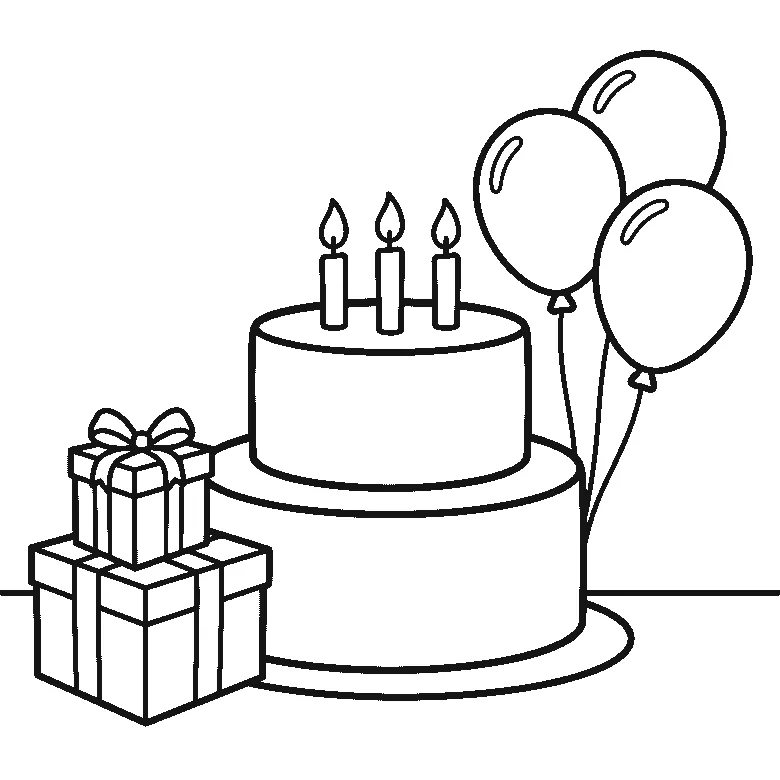
Birthday coloring page
A two-tier cake with three lit candles, a stack of two gifts and three balloons, printable at actual size.
Coloring outline drawn by us.
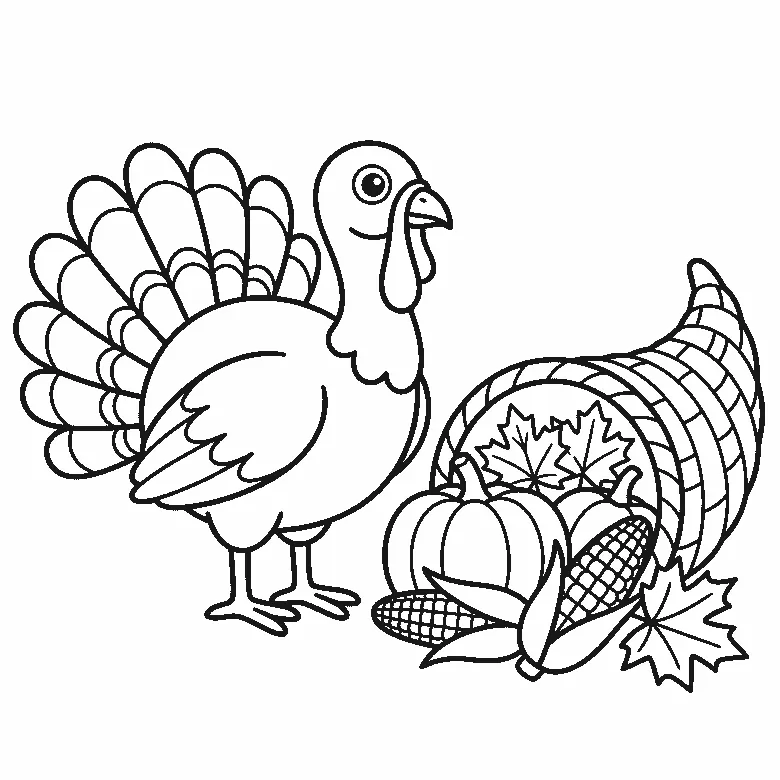
Thanksgiving coloring page
A fan-tailed turkey and a spilling cornucopia in black outline, sized for letter paper and ready to print.
Coloring outline drawn by us.
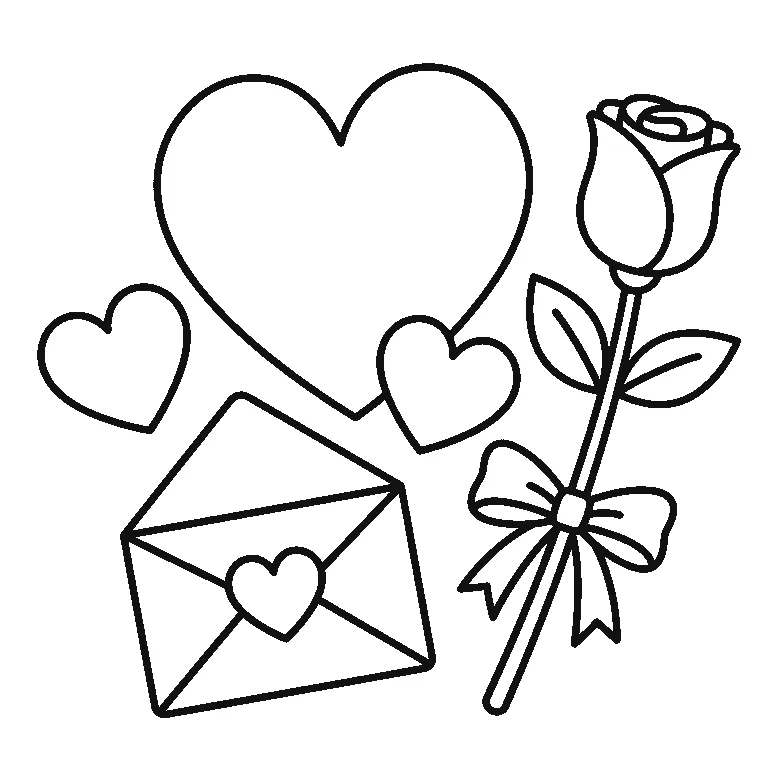
Valentine's Day coloring page
One large heart, two small ones, an open envelope with a heart seal, and a long-stemmed rose tied with a bow.
Coloring outline drawn by us.
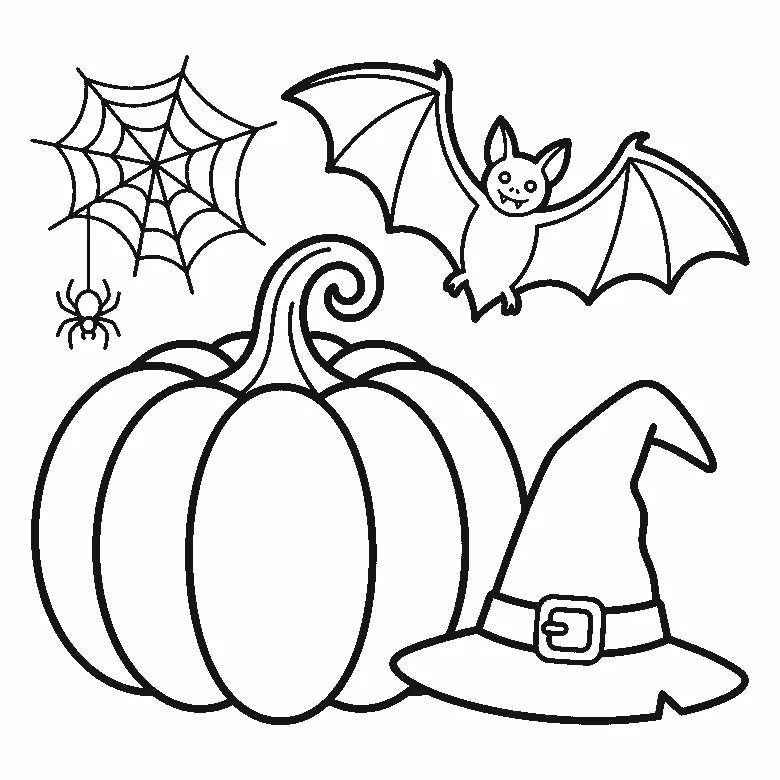
Halloween coloring page
A pumpkin, a bat, a hanging spider and a buckled witch hat on one printable sheet, black outlines on white.
Coloring outline drawn by us.
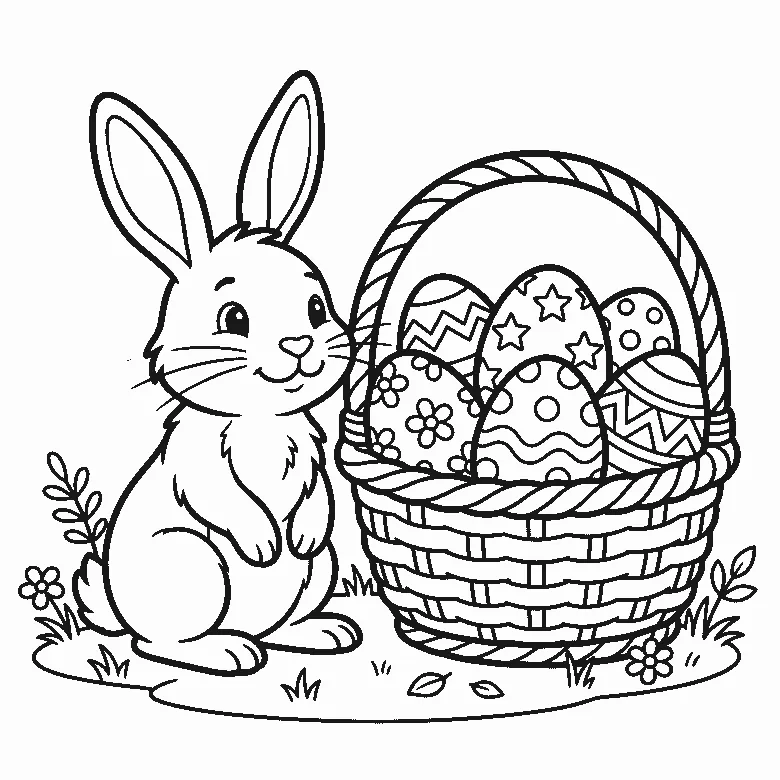
Easter coloring page
A rabbit in profile beside a woven basket of six patterned eggs, drawn in black outline for printing at letter size.
Coloring outline drawn by us.
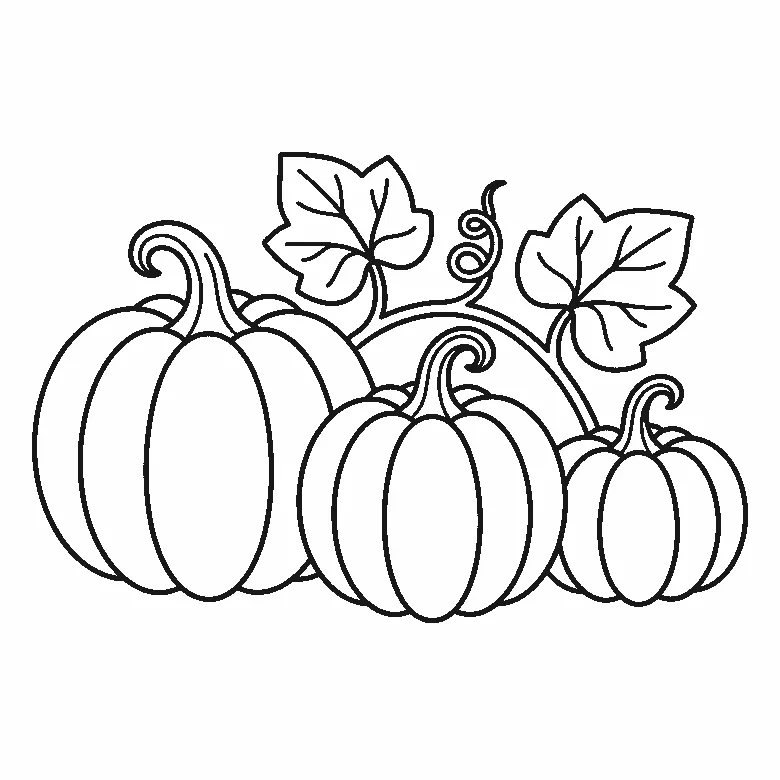
Pumpkin coloring page
Three ribbed pumpkins with curled stems, a vine with two broad leaves and a tendril running behind them.
Coloring outline drawn by us.


