Woodland animal coloring pages
A fox, a wolf, a bear, a fawn, an owl, a squirrel, a hedgehog and a songbird — the animals of the woods and the field edge, one to a sheet.
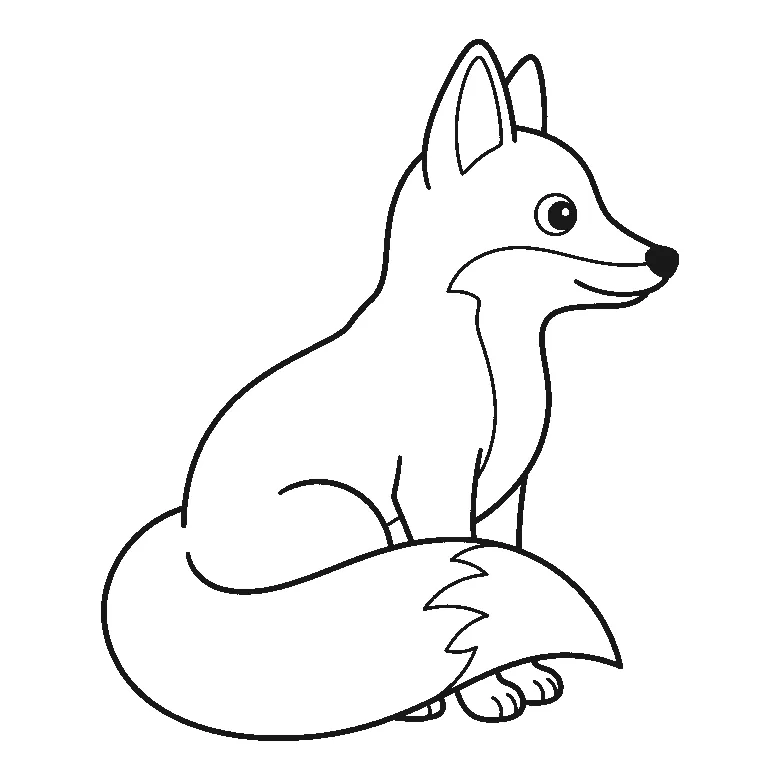
Fox coloring page
A sitting fox in profile with a huge bushy tail curled around in front, free to print at letter size.
Coloring outline drawn by us.
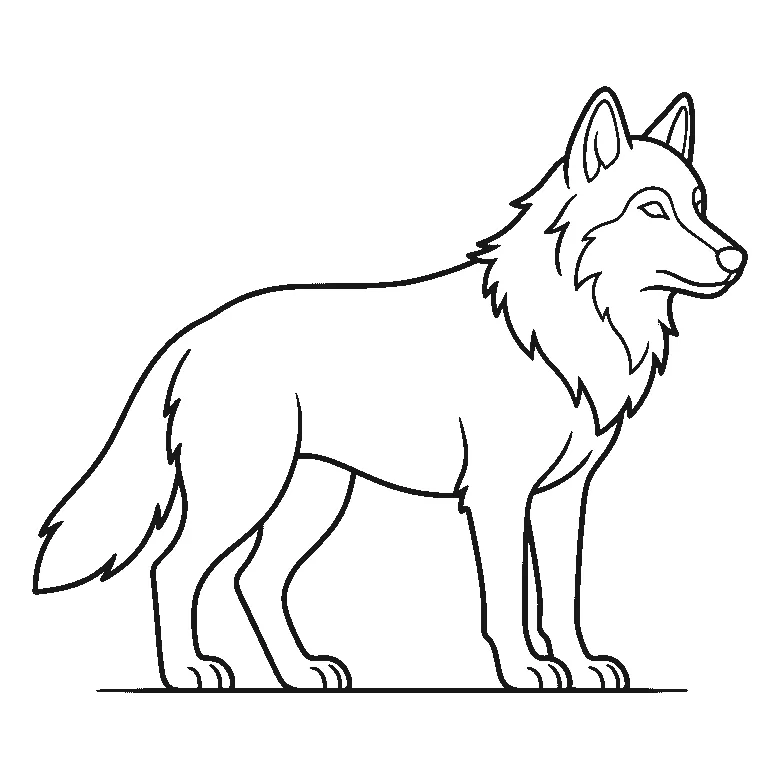
Wolf coloring page
A wolf in profile on a ground line, with a heavy neck ruff and a thick brush tail, printable free at US Letter size.
Coloring outline drawn by us.
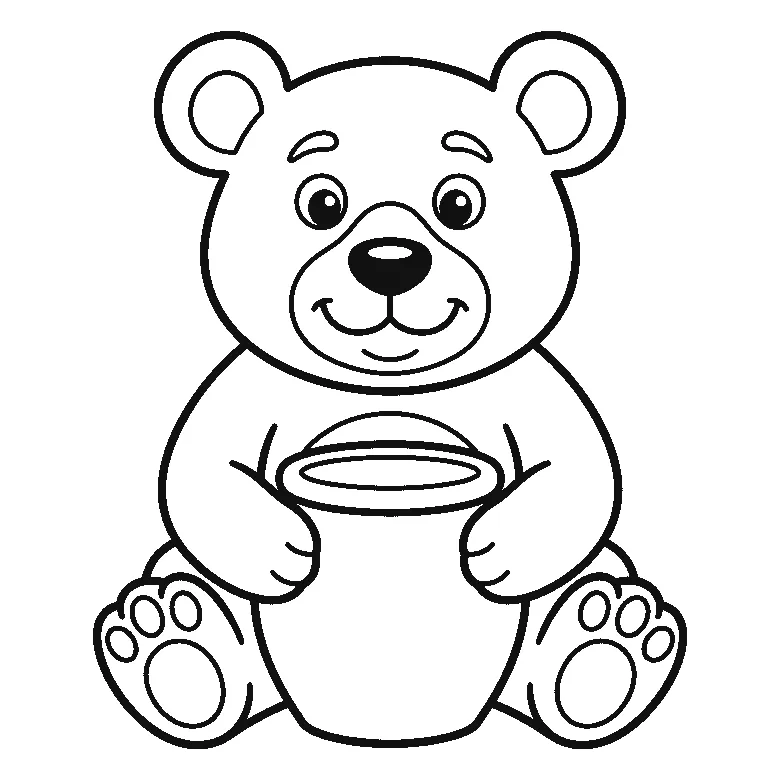
Bear coloring page
A round bear sitting with a honey pot in its paws, drawn in thick black outlines and free to print at letter size.
Coloring outline drawn by us.
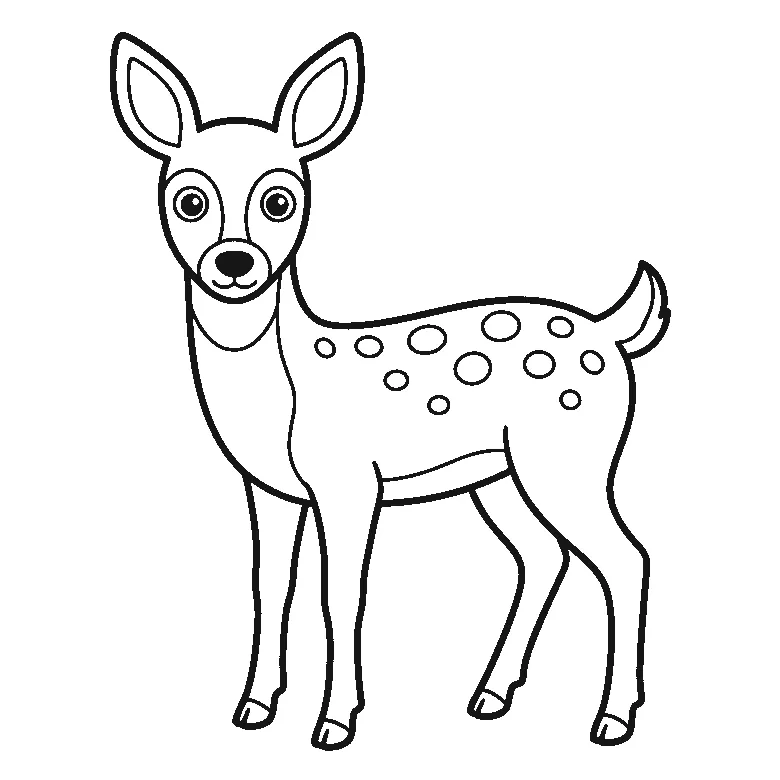
Deer coloring page
A young spotted fawn in profile, head turned forward, with rows of oval spots along the flank to fill one by one.
Coloring outline drawn by us.
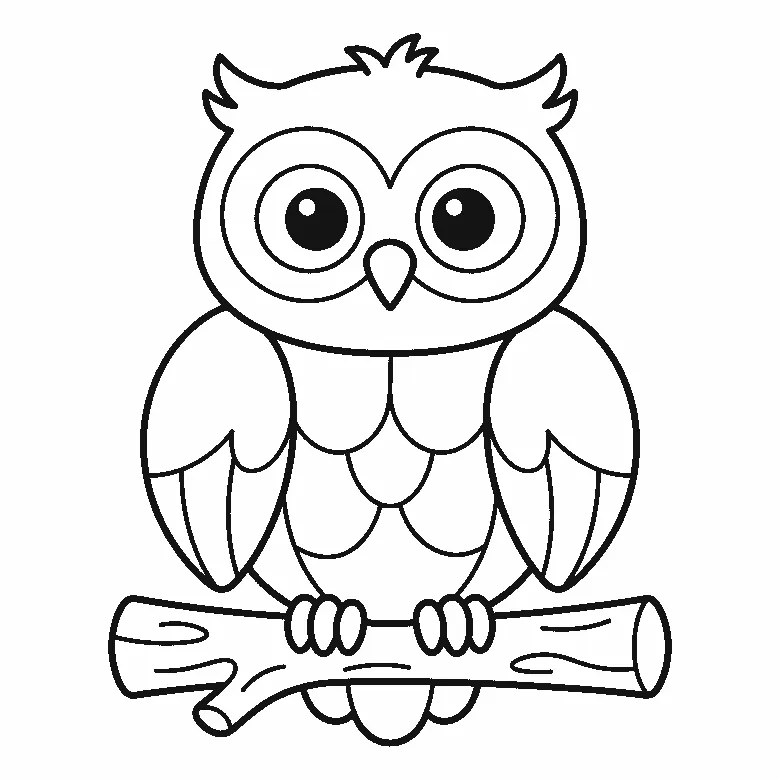
Owl coloring page
A front-facing owl on a thick branch, with two big round eyes and rows of wing feathers to fill in.
Coloring outline drawn by us.
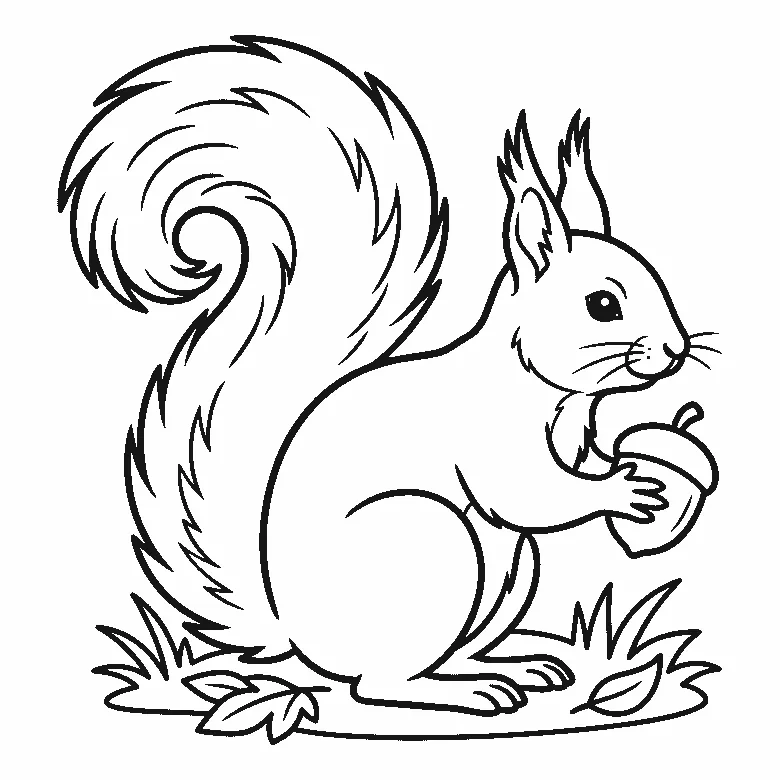
Squirrel coloring page
A squirrel in profile holding an acorn, with a very large curled tail drawn as separate strands.
Coloring outline drawn by us.
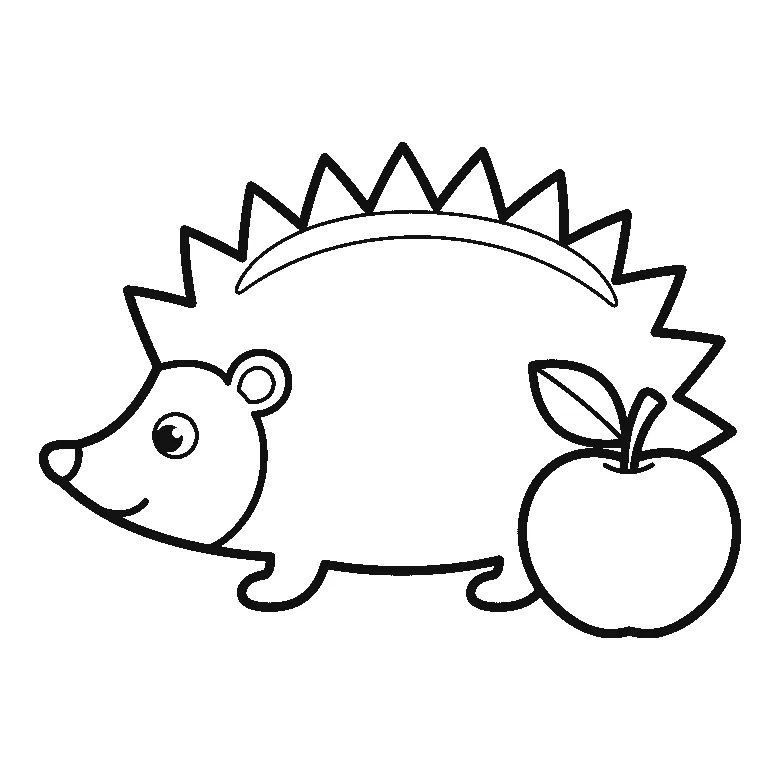
Hedgehog coloring page
A hedgehog in profile beside an apple, its whole back drawn as one row of big triangular spikes.
Coloring outline drawn by us.
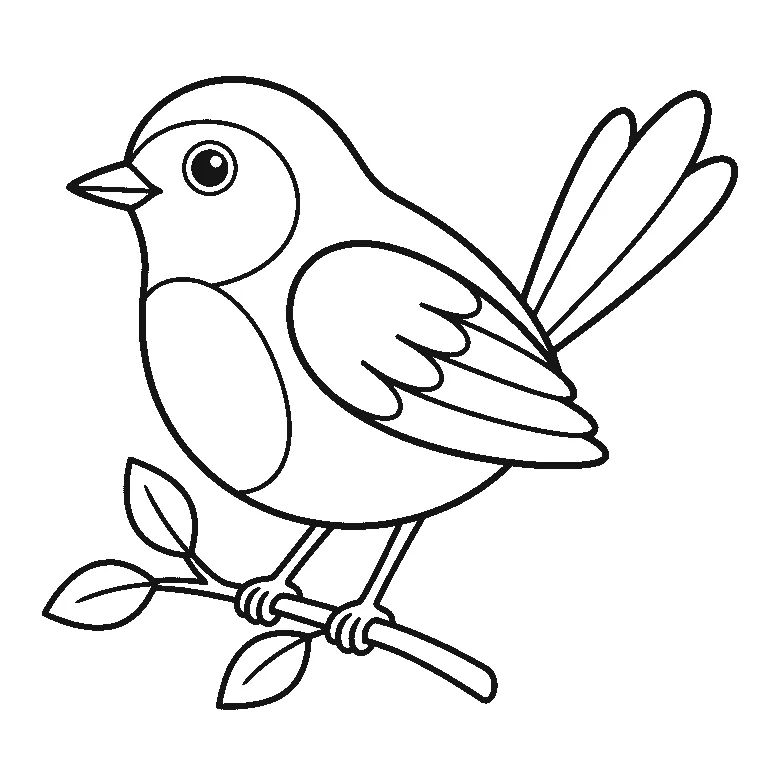
Bird coloring page
Free letter-size printable: a plump songbird perched on a leafy twig, with a long layered tail worth taking slowly.
Coloring outline drawn by us.


These are the animals of the woods and the field edge: fox, wolf, bear, deer, owl, squirrel, hedgehog and bird. The line between this page and the zoo page is not about which animal is more impressive; it is about where the animal lives when nobody is looking after it. A fox walks through gardens on two continents, a squirrel is in every park with an oak in it, and a wolf and a bear still live wild in the woods of North America. That is what puts them here rather than behind a fence.
The drawings share a way of being built, which is the practical reason to keep them together. The fox, the wolf, the bear, the deer and the squirrel are each one animal in profile, drawn as broad curved panels with a handful of interior lines for the muzzle, the ears and the chest, and every one of them carries a tail that is the largest single decision on its sheet. The fox's is bushy and curled around in front of it. The wolf's is a thick brush. The squirrel's is very large and drawn as separate strands, so it can be filled as one mass or worked strand by strand into something much slower.
The bear is the easiest sheet on the page and a good one to start a young hand on. It is a round bear sitting with a honey pot in its paws, and almost the whole drawing is a few very large closed fields with generous outlines around them, so there is very little to slip out of. The honey pot is the one small shape, which makes it the natural place for the one strong color on an otherwise brown page.
The deer and the hedgehog both hand you a pattern without being pattern sheets. The deer is a young spotted fawn in profile with its head turned forward, and the rows of oval spots along its flank are separate closed shapes to fill one at a time, sitting on a coat that is otherwise wide open. The hedgehog has its whole back drawn as a single row of big triangular spikes, which is a repeat large enough for a crayon and regular enough that an alternating scheme works across it — worth counting the spikes before starting one, because a pattern that runs out at the end of the row is hard to hide.
The owl and the bird both sit on a branch, and they are opposites in where the detail sits. The owl faces you from a thick branch with two big round eyes and rows of wing feathers, so the interest is in the front of the bird and the face is already drawn for you. The songbird is in profile on a leafy twig with a long layered tail worth taking slowly, so the interest is at the back. Printed side by side they make an obvious pair, and the two branches give the pages a common horizon if they are hung together.
Color is easier to guess on this page than on any other in the animal section, because these are the animals a reader has most likely seen. A red fox, a gray wolf, a brown bear, a fawn a shade lighter than its mother: all of that will look right, and all of it is entirely optional. There is nothing on any of these sheets that argues with a blue fox, and a whole page of animals each in an impossible color is a perfectly good afternoon.
Medium follows the size of the shapes rather than the animal. On the bear, the wolf and the fox, a crayon covers a large field fast and the waxy skipping reads as fur rather than as a mistake. On the squirrel's tail strands, the deer's spots, the hedgehog's spikes and the owl's feather rows, a sharpened colored pencil reaches into a corner that a crayon tip rounds off. Markers give the flattest fill of all and will show through plain paper on these broad-bodied drawings, so a spare sheet underneath or heavier card stock is worth the trouble.
Printing is the same as everywhere else here: plain letter paper, actual size rather than fit-to-page, and black and white rather than color, since the color is about to be added by hand anyway. The rest of the animal sheets — the ones from further away, the pets, the small crawling things and the dinosaurs — are on the Animals page, one tap back up from here.
Published Updated 8 sheets760 words