
PDF · US Letter · 11 KB · Free, no sign-up. For home and classroom use.
Wolf coloring page
A wolf in profile on a ground line, with a heavy neck ruff and a thick brush tail, printable free at US Letter size.
This wolf stands in profile, upright and still, on a plain horizontal line that runs across the bottom of the page. Nothing else is drawn: no trees, no moon, no background. The profile gives you the whole animal in one continuous outline, from the pointed ears at the top through the long muzzle, down the back and out to a thick brush tail. Because the head is turned in profile, only one eye is visible, drawn narrow and set well forward. The rest of the sheet is white.
The ruff around the neck is the busiest part of the drawing. It is built from short strokes that fan outward, so the outline there is a run of small pointed shapes rather than one smooth curve. Those little wedges are what make the neck look thick, and they are also the easiest place to lose control of a crayon. Fill them in the direction they point, from the neck outward, and stop at the tip of each one. If two run together it will not ruin anything, but the fanned effect softens.
The body, the upper legs and the tail are the wide open areas here, and they are where a full page of color actually gets laid down. One workable order runs back to front: tail, then hindquarters, then the barrel of the body, then the shoulders and neck, then the head last, once the hand has settled. The ground line is worth deciding early. Left white, the wolf reads as a cut-out standing on nothing; filled in with a flat band, it turns into ground and the animal suddenly has somewhere to be.
Colored pencil suits this drawing better than almost anything else, because a coat is not one flat color and pencil lets you build it in layers, laying a light tone across the whole body and then pressing harder along the back and the top of the tail. Crayon gives a warmer, blunter result and covers the large areas fast. Markers work if you accept flat blocks; the thick outline will hold them, but the fine strokes of the ruff and the narrow eye will disappear under a broad nib.
Gray is the plain choice for this coat, often with a paler chest and a darker line down the spine, and browns, near-black and near-white all belong to wolves too. If you want the drawing to look like an animal, keep the muzzle and the underside lighter than the back. If you would rather not, the outline does not care. A blue wolf with a white ruff on a green ground line prints exactly as well, and the tail is a large enough shape to carry a color that would be too loud anywhere else.
A wolf carries its tail straight out or low rather than curled over the back, and the tail on this sheet is drawn that way. The ears are upright and pointed, never folded over. The heavy ruff around the neck and shoulders is longer fur than the fur on the flanks, which is why the outline there is broken and feathered instead of a clean line. Giving the ruff a slightly different tone from the body makes that difference visible, and it is the one choice that most changes how heavy the animal looks.
Print on plain letter paper at actual size, since the fanned strokes of the ruff are the first thing to go muddy if the page is scaled down to fit. Card stock is the better choice for markers, because a thin sheet will let ink through onto whatever is underneath and the body is a large area of solid ink. We laid the PDF out for US Letter with a margin all the way around, so nothing important sits in the zone a printer clips.
A finished wolf works well trimmed along the outline and glued to a dark background, because the profile is a single readable silhouette and the ruff gives the edge some interest. Folded in half, the sheet also makes a plain card with a lot of room inside. The ground line runs the full width of the page beneath the paws, so a trimmed sheet keeps a horizon under the animal instead of ending at its feet. Cut above that line instead and the wolf comes away as a standing silhouette.
Before you print
- Color the ruff outward from the neck, following the direction each short stroke points.
- Decide early whether the ground line stays white or becomes a filled band of ground.
- Keep the muzzle and chest lighter than the back if you want the coat to look like fur.
- The single narrow eye is the smallest shape on the page, so leave it for a sharp point.
- Card stock is worth it here, because the body is a large area of solid marker ink.
Published Updated 727 words
More in this section
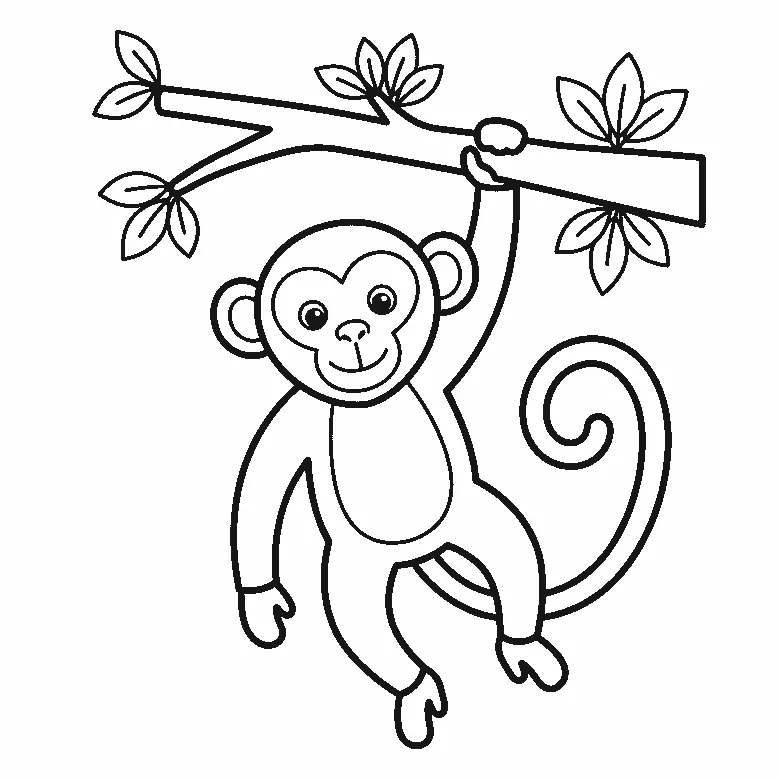
Monkey coloring page
A monkey swinging one-handed from a leafy branch with its tail curled into a spiral, free to print on US Letter.
Coloring outline drawn by us.
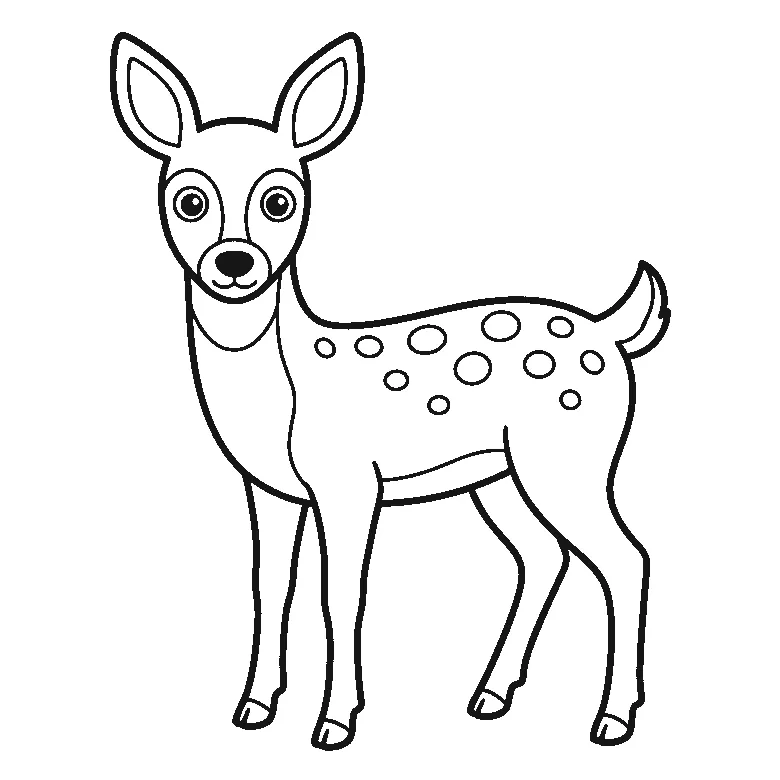
Deer coloring page
A young spotted fawn in profile, head turned forward, with rows of oval spots along the flank to fill one by one.
Coloring outline drawn by us.
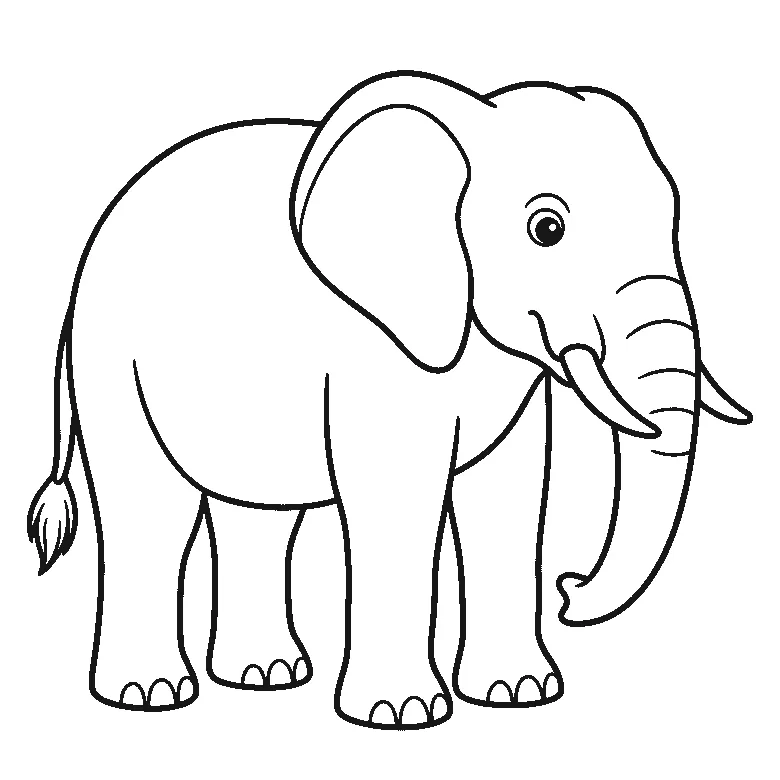
Elephant coloring page
An elephant in profile with a wide ear, two short tusks and a curling trunk, drawn in broad areas that fill fast.
Coloring outline drawn by us.
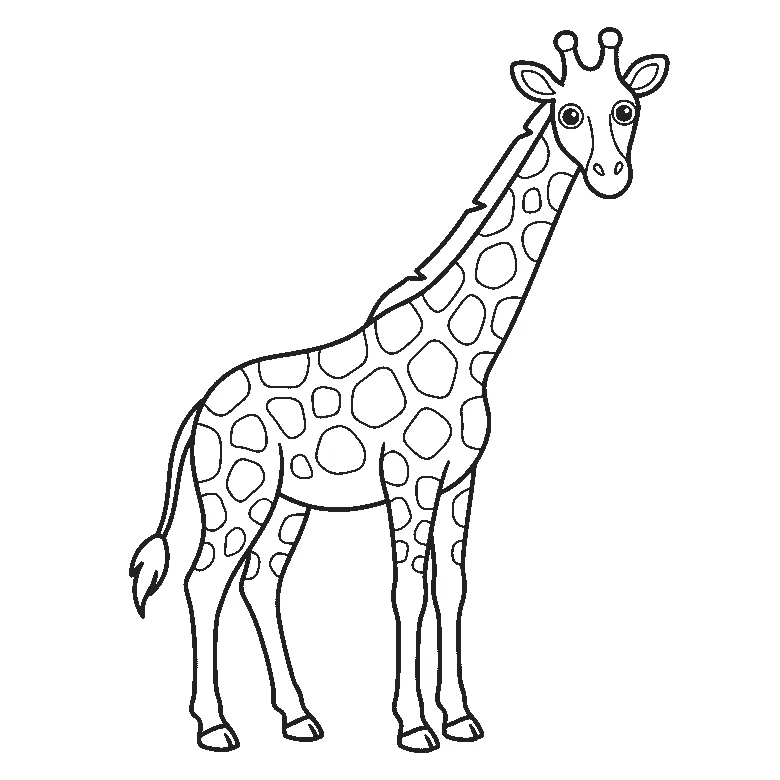
Giraffe coloring page
A tall giraffe in profile, patched from cheek to hoof, with dozens of small rounded shapes to color one at a time.
Coloring outline drawn by us.
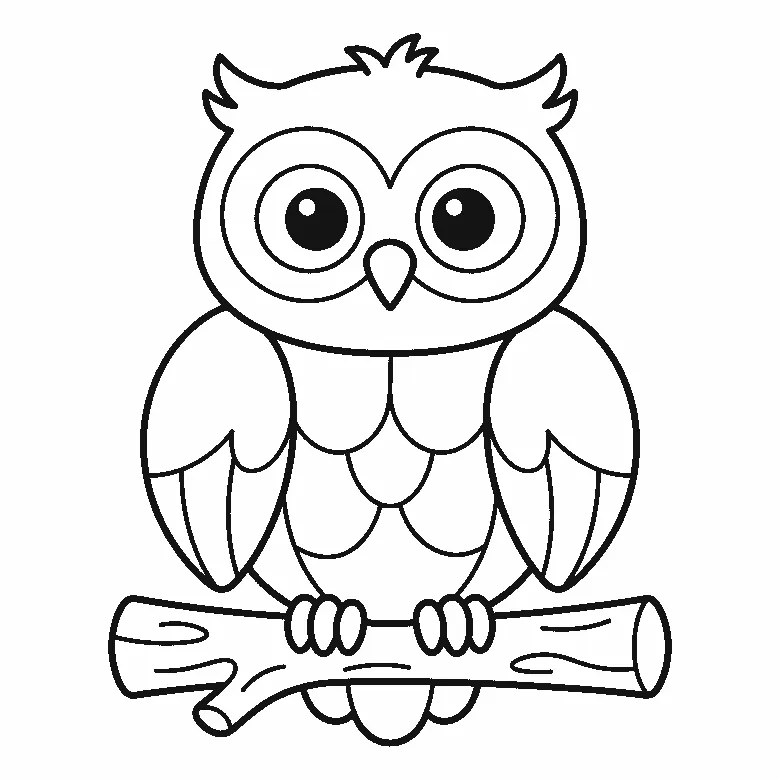
Owl coloring page
A front-facing owl on a thick branch, with two big round eyes and rows of wing feathers to fill in.
Coloring outline drawn by us.
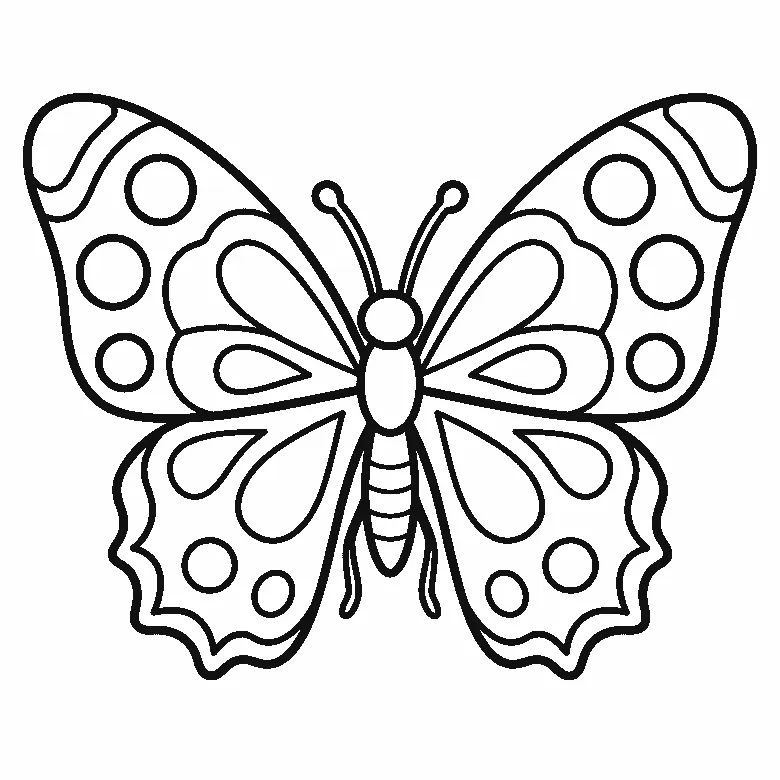
Butterfly coloring page
Wide open wings patterned in circles and teardrops, symmetrical enough to color one half at a time.
Coloring outline drawn by us.
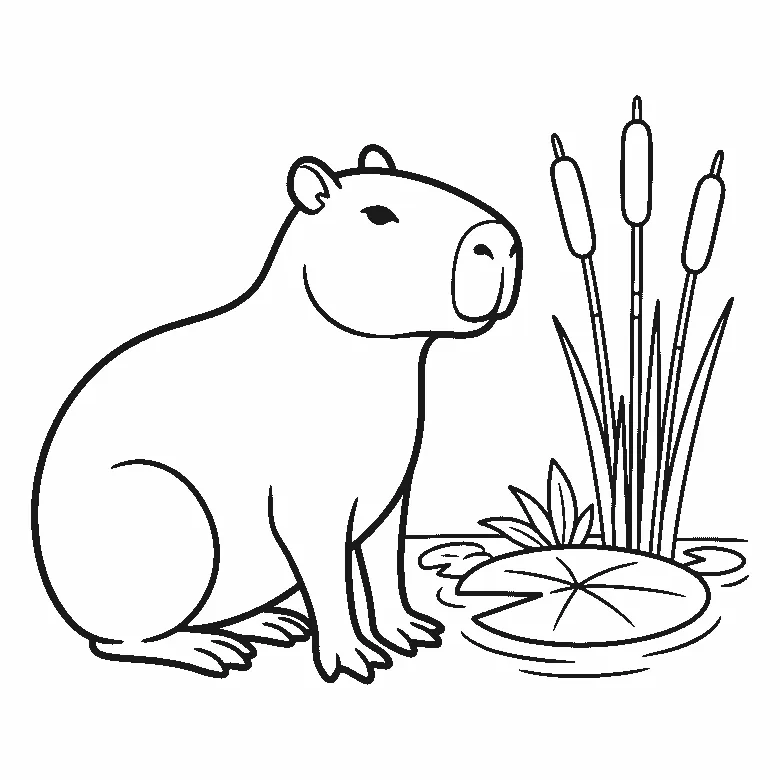
Capybara coloring page
A capybara sitting at the water's edge beside a lily pad and three cattails, in plain black outlines.
Coloring outline drawn by us.
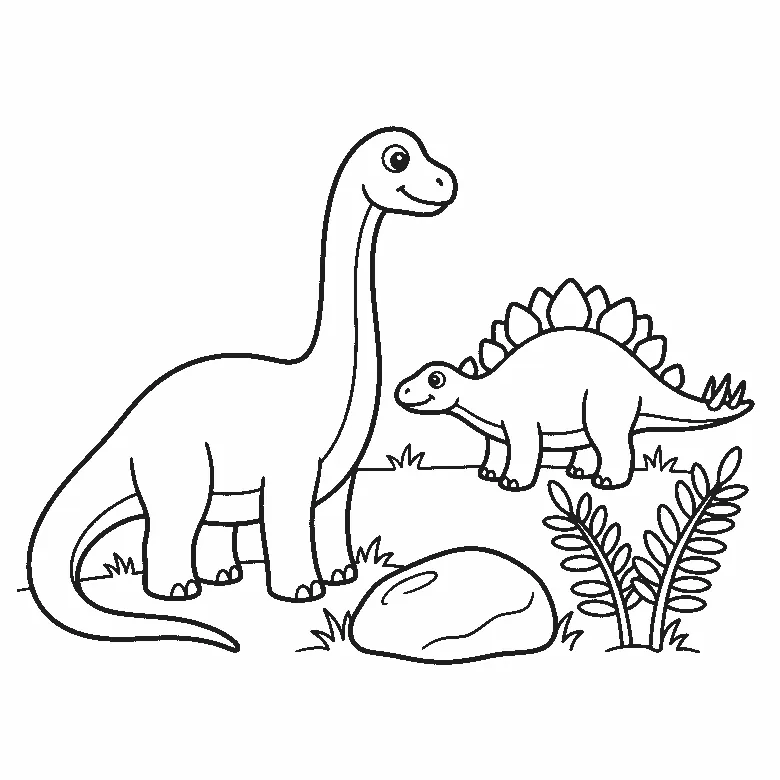
Dinosaur coloring page
Two dinosaurs, a boulder, a fern and tufts of grass in black outline, ready to print on letter paper.
Coloring outline drawn by us.
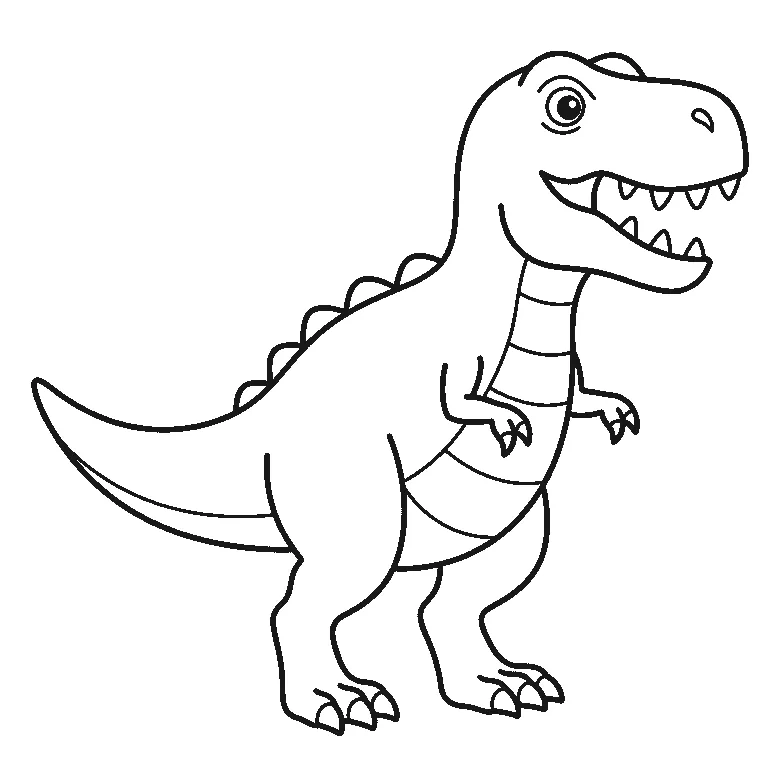
T. rex coloring page
A T. rex in profile with an open mouth, pointed teeth, small arms and a long tail, on plain white.
Coloring outline drawn by us.
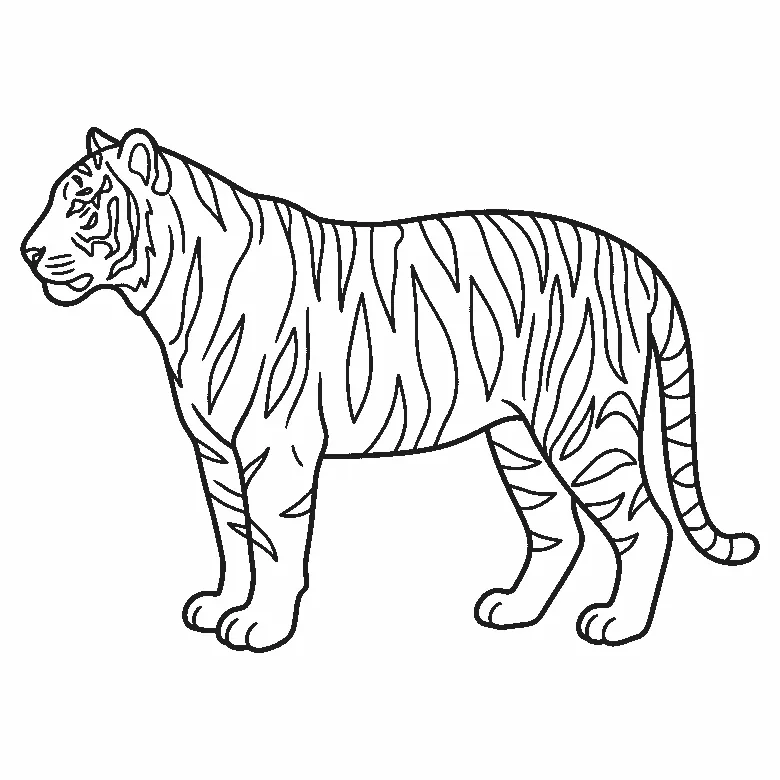
Tiger coloring page
One tiger standing in profile with every stripe drawn as a closed shape you can color inside.
Coloring outline drawn by us.
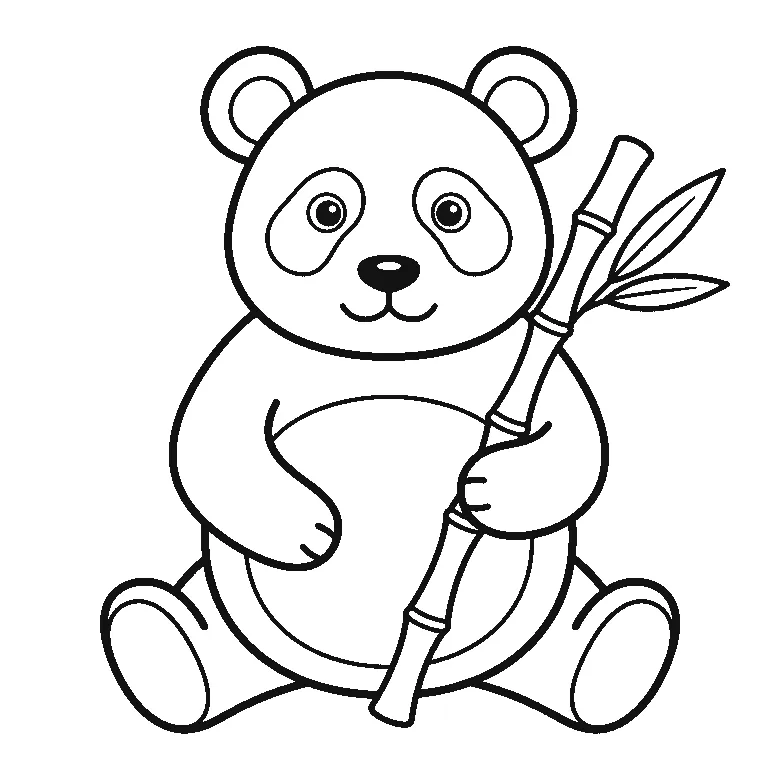
Panda coloring page
A giant panda sitting upright with a bamboo stalk, drawn as a small set of large closed shapes.
Coloring outline drawn by us.
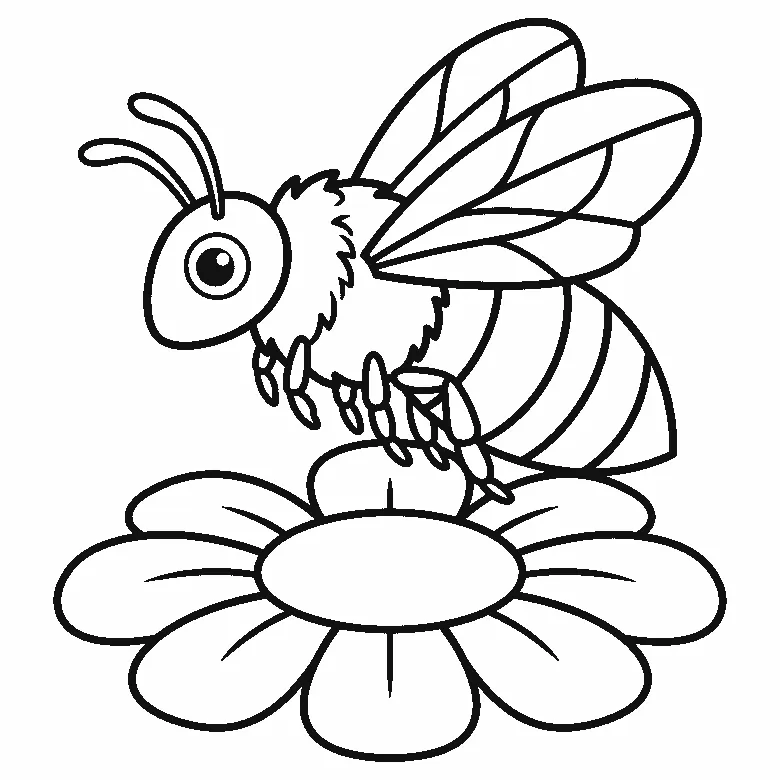
Bee coloring page
One bee on a wide flower, its body already divided into four stripe panels to fill.
Coloring outline drawn by us.


