
PDF · A4 · 17 KB · Free, no sign-up. For home and classroom use.
Unicorn colouring page
A standing unicorn in profile with a spiral horn and a long wavy mane, free to print as an A4-size PDF.
Side view, standing still, all four legs on the ground: that is the pose on this page. The unicorn faces one direction with a single eye showing, and a spiral horn rises from the forehead, its twist drawn as a series of ridges climbing to a point. The mane falls in long wavy locks along the neck, and the tail repeats those same waves down behind the hind legs. Black outlines on white, nothing behind the animal, no ground line under the hooves.
Two kinds of area sit on this sheet and they want different treatment. The body, neck and upper legs form large calm shapes with plenty of room inside them. The mane and tail are the opposite, a run of narrow ribbons stacked against each other, each one closed off by its own outline. The horn sits between the two, small overall but divided into ridges along its length. Deciding early how you will treat the mane, all one colour or a colour per lock, saves you from changing your mind halfway down the neck.
Filling the body first gives you a base tone to judge everything else against, since the mane and tail read very differently over white than they do beside a coloured coat. Once the body is down, work the mane one lock at a time from the crest of the neck towards the shoulder, then match the tail to whatever you settled on. Leave the horn for last. It is the smallest area with the most internal line work, and it deserves a fresh hand rather than a tired one.
Coloured pencil is the natural fit for the mane, because you can run a stroke along the direction of each wave and let the lock curve rather than fighting it, and because layering two close tones down one lock gives it depth without any blending skill. Crayon covers the body quickly but struggles between the narrow mane lines. A fine marker will fill a single lock cleanly if you stay inside it, though a broad marker tip will jump the outline. Metallic gel pen belongs on the horn, where a small amount of shine goes a long way.
White sits easily on a coat drawn in outline like this one, and white is genuinely an option here: leave the body untouched, colour only the mane, tail and horn, and the drawing still looks complete because the outlines carry the whole shape. A pale grey shadow under the belly and along the far legs, added with a light hand, keeps a white body from reading as unfinished. Or ignore all of it. A mane that runs through several colours across its locks is one of the versions this page invites, and it suits these long wavy shapes better than realism does.
A unicorn is an animal out of storytelling rather than one anybody has met, which means there is no correct version to get wrong. The one constant across the old descriptions is the single horn, and this drawing keeps it central, rising straight from the forehead in a spiral. The rest of the body follows a horse closely enough that if you have ever looked hard at a horse's legs, that knowledge is useful here, particularly around the hocks and the angle of the hooves.
Use plain A4 paper and choose actual size when the print dialogue offers to shrink the page, because fit-to-page thins the outlines and the horn's ridge lines are the first thing to suffer. Heavier card is the better surface if markers are coming out, and it also stands up on its own afterward. A second copy is worth printing when the mane colour is undecided, so one sheet can take the safe choice and the other can take the strange one.
When it is done, the unicorn makes a good folder cover or the front of a homemade card, and it is large enough that the mane still reads from across a room if you pin it up. Cutting it out is more work than it looks, because the wavy mane and tail have a lot of edge, so a rough cut just outside the outline is usually the better call. Taken on its own terms, this sheet leans on long flowing lines down the mane and tail rather than on small repeated detail.
Before you print
- Decide before you start whether the mane is one colour or a colour per lock, then keep to it down the tail as well.
- Save the horn for last and use a fine tip, since its ridges are the tightest shapes on the page.
- Follow each wave with your stroke direction rather than colouring straight across the mane.
- A plain white body works here if you add a light grey shade under the belly and far legs.
- Cut just outside the outline instead of following every curve of the mane exactly.
Published Updated 725 words
More in this section
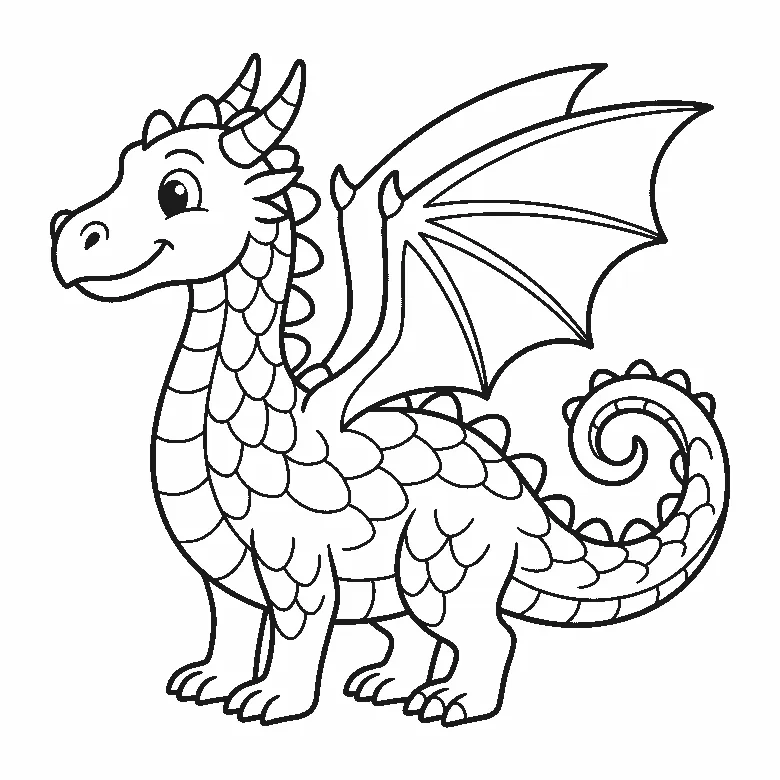
Dragon colouring page
A friendly dragon with two horns, a spiked back and one open wing, drawn in clean black outlines for A4 paper.
Colouring outline drawn by us.
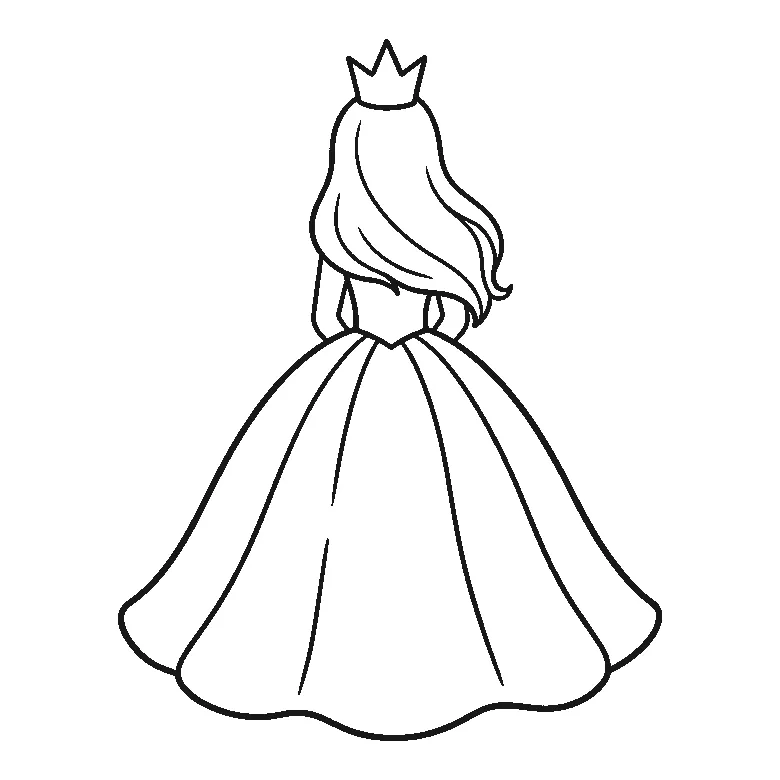
Princess colouring page
A princess seen from behind in a wide ball gown with a small crown, free to print at A4.
Colouring outline drawn by us.
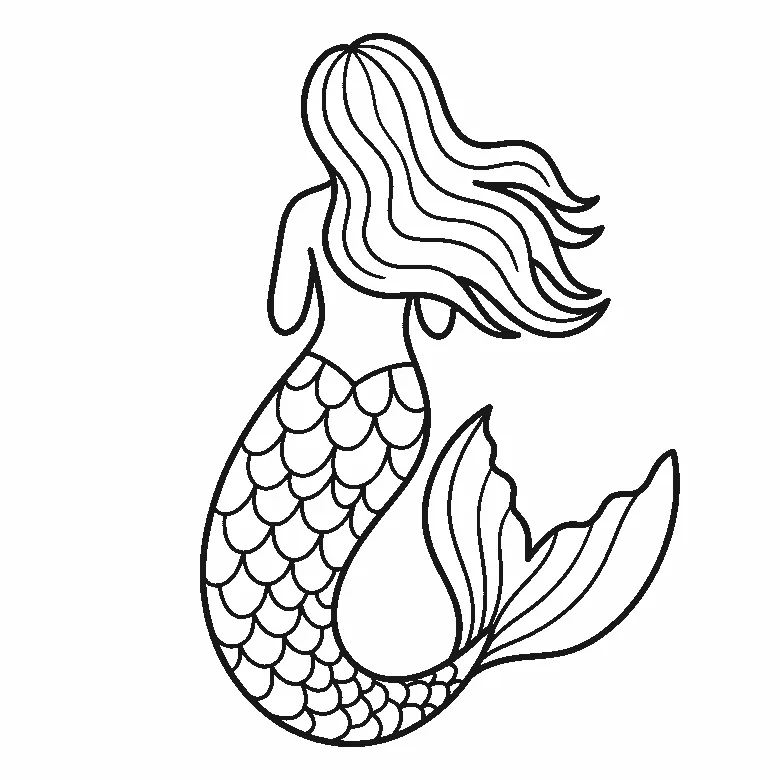
Mermaid colouring page
A mermaid seen from behind with a long scaled tail curling to a wide fin, free to print on A4.
Colouring outline drawn by us.
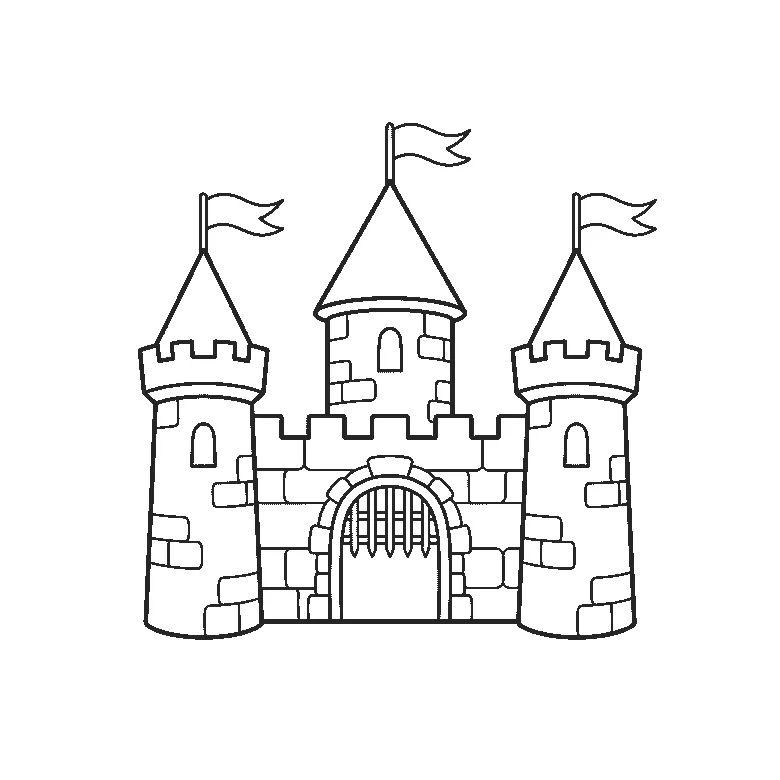
Castle colouring page
A three-towered castle with pennants, battlements and a portcullis, drawn small and centred on the sheet.
Colouring outline drawn by us.
Pirate colouring page
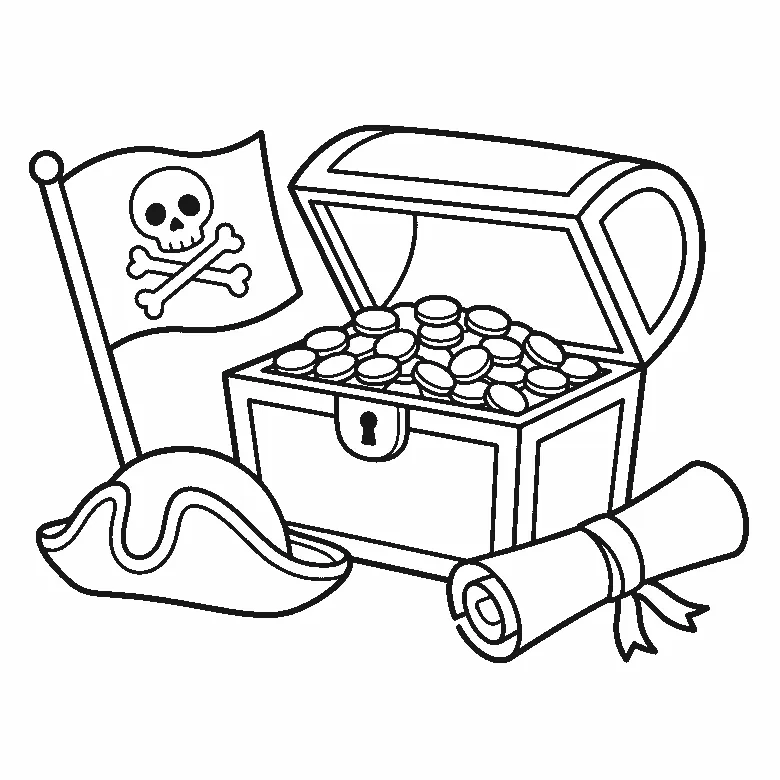
A treasure chest heaped with plain coins, a skull flag, a tricorn hat and a blank rolled map on one sheet.
Colouring outline drawn by us.
Witch colouring page
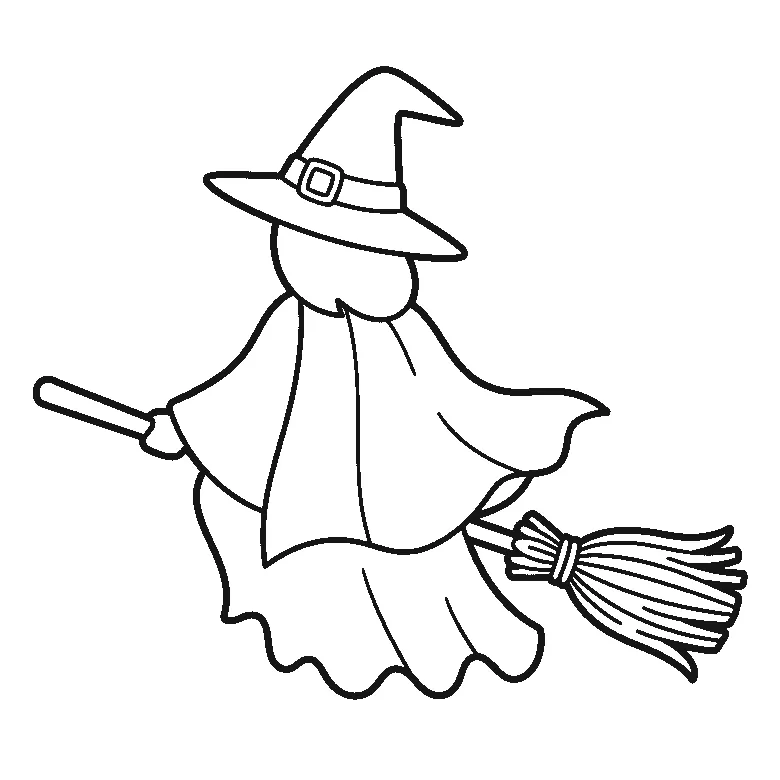
A witch seen entirely from behind on a broomstick, with no face drawn at all and a long scalloped cloak.
Colouring outline drawn by us.
Knight colouring page
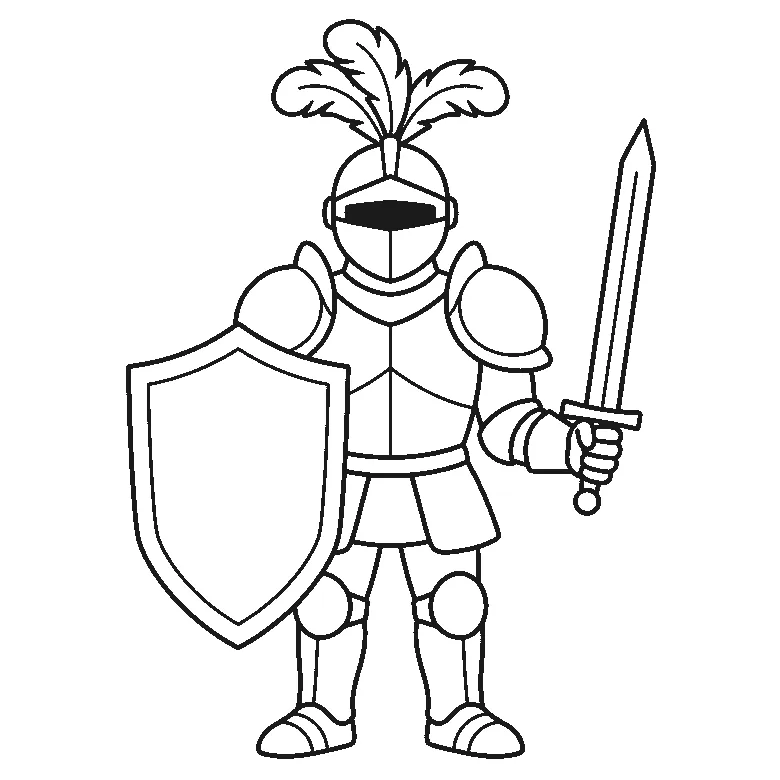
A knight in plate armour with the visor closed, a plain shield in one arm and a raised sword in the other.
Colouring outline drawn by us.
Robot colouring page
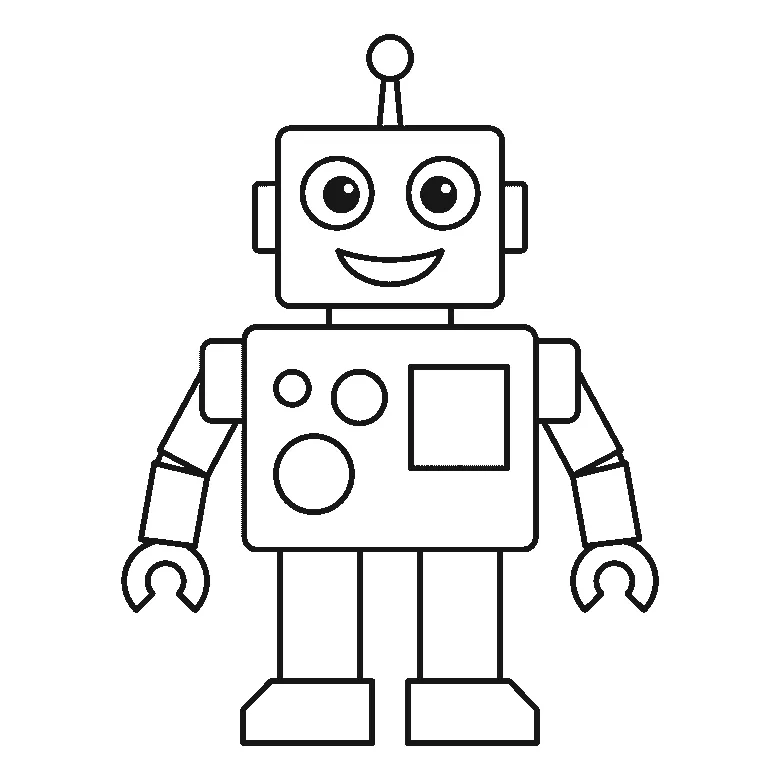
A boxy robot standing front on, built from rectangles and circles, with pincer hands and an aerial, free as an A4 PDF.
Colouring outline drawn by us.
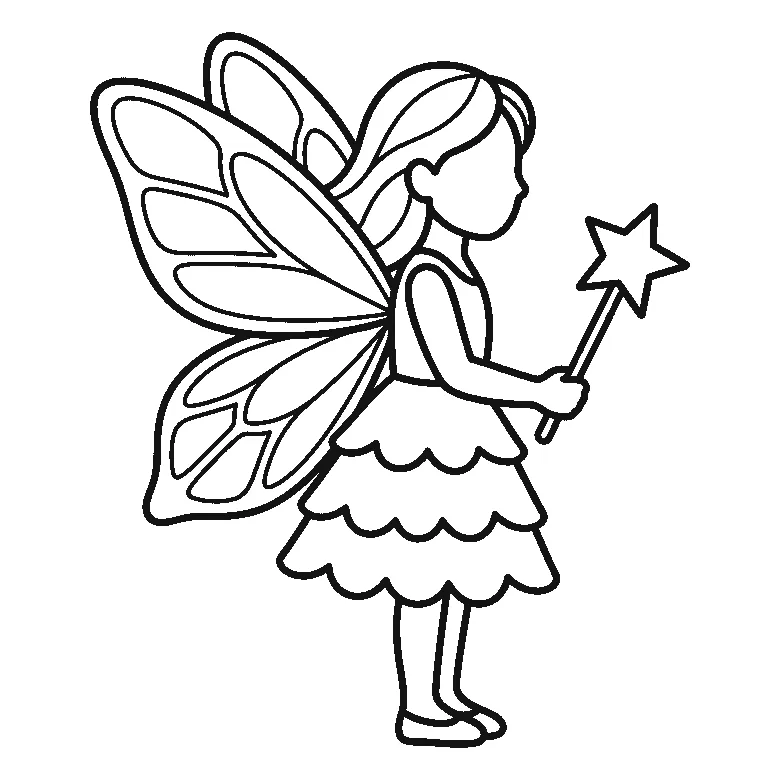
Fairy colouring page
A fairy standing in profile with a blank face, two large butterfly wings and a star-tipped wand, free as an A4 PDF.
Colouring outline drawn by us.


