
PDF · A4 · 15 KB · Free, no sign-up. For home and classroom use.
Fairy colouring page
A fairy standing in profile with a blank face, two large butterfly wings and a star-tipped wand, free as an A4 PDF.
One figure stands alone on this page. There is no background behind her and no ground line under her feet, so the whole sheet is the fairy and the white around her. She is drawn in profile facing right, and her face is left completely blank: the outline gives a forehead, a small nose and a chin, and nothing at all is drawn inside it. Long hair sweeps back from the crown and falls behind her past the shoulder, with one small pointed lock standing up at the back of the head and an ear drawn as a closed shape at the side. She wears a sleeveless top over a skirt built in three tiers, each tier finished with a row of rounded scallops. Both legs are bare and end in flat shoes, and one arm reaches forward and down to hold a slender wand with a five-pointed star at its tip.
The wings carry most of the line work on the sheet. Each of the two near wings is drawn twice around its edge — a thick outer outline with a second line just inside it — so a narrow band runs the whole way round before the interior begins. Inside that band the wing is divided into long closed panels by veins that are themselves drawn as pairs of lines, and every one of those veins runs back to the single point where the wings meet her back. The upper near wing holds four panels and the lower one holds five, so the two are not a matching pair and a scheme built on the assumption that they are will run out one panel short.
That band around the rim is the detail worth deciding about first, because it connects. It is one continuous shape that runs around the outside of a wing and also threads between all of its panels, which means whatever colour goes on it appears everywhere at once and holds the wing together. Left white it reads as a pale rim and the panels float; filled in a single tone it reads as the wing's frame; filled darker than the panels it turns the wing into stained glass. The decision is easier to make now than after four panels are already down.
A butterfly's wing is stiffened by veins that branch outward from where the wing joins the body, which is why the panels on this drawing fan from one point rather than sitting in a grid. Working outward from that point, in the same order the veins run, keeps the panels in a sensible sequence and makes it easy to see which one is next. The far side shows a third, narrower wing above the near pair, drawn the same way and mostly hidden behind them; giving it a paler version of whatever the near wings get is enough to push it back without any shading.
The skirt is three closed tiers stacked from waist to hem, and its scallops are the only repeated shape on the page. Three approaches all work and they are not the same amount of work. One colour across all three tiers, then a second pass pressed harder along each scalloped edge, takes the least time and still reads as layers. A different tone per tier, palest at the top, gives the skirt depth without any blending. Alternating two colours scallop by scallop takes the longest and is the one to count before starting, since the pattern has to meet itself at the end of every row.
The wand and the star are small and they are the natural place to break the colour scheme. The star is one closed shape with a single thick outline, large enough for a metallic gel pen to sit inside without touching the line. The shaft is a narrow strip drawn as two parallel lines, and it passes through the hand and carries on a short way below it, ending in a slanted cut — that stub is easy to miss and colours as part of the wand rather than part of the hand. The hand itself is a simple mitt with a thumb curled over the shaft, and it wants the same tone as the arm rather than a colour of its own.
The blank face leaves a decision the drawing declines to make. A flat colour laid across it will read as skin against the hair beside it, and left white it reads as light, since every outline around it already carries the shape. A fine pen can add features afterward, on top of a dry fill, and this is one of the few places on the sheet where an addition cannot be undone. Fairies come out of folklore rather than from any one book, so there is no fixed appearance to get wrong: wings, hair, dress and star can go in any colours at all, and a fairy in grey and white is as correct as a fairy in every colour in the box.
Print at actual size on plain A4 paper rather than fit-to-page, because the vein pairs in the wings and the double line of the wand shaft are the first things to close up when the page is shrunk. Card is worth reaching for if markers are coming out, since the three skirt tiers and the wing panels are large closed areas that soak up ink. Cut out along the outer line and the figure comes away in one piece, though the star sits on a thin shaft and leaving a small tab of paper around it is the safer trim. Left whole, the sheet already has a bottom edge that looks finished, because the feet sit near the foot of the drawing with the white below them.
Before you print
- Decide what the narrow band around each wing gets before you fill a single panel — it threads between all of them and appears everywhere at once.
- Count the panels first: four in the upper near wing, five in the lower, so a two-colour alternation lands differently on each.
- Work the wing panels outward from the point where the veins meet her back, and you will never lose your place.
- Keep a metallic or gel pen for the star alone; it is one closed shape and a small amount of shine covers it.
- Colour the short stub of shaft below the hand as part of the wand, not as part of the fingers.
Published Updated 962 words
More in this section
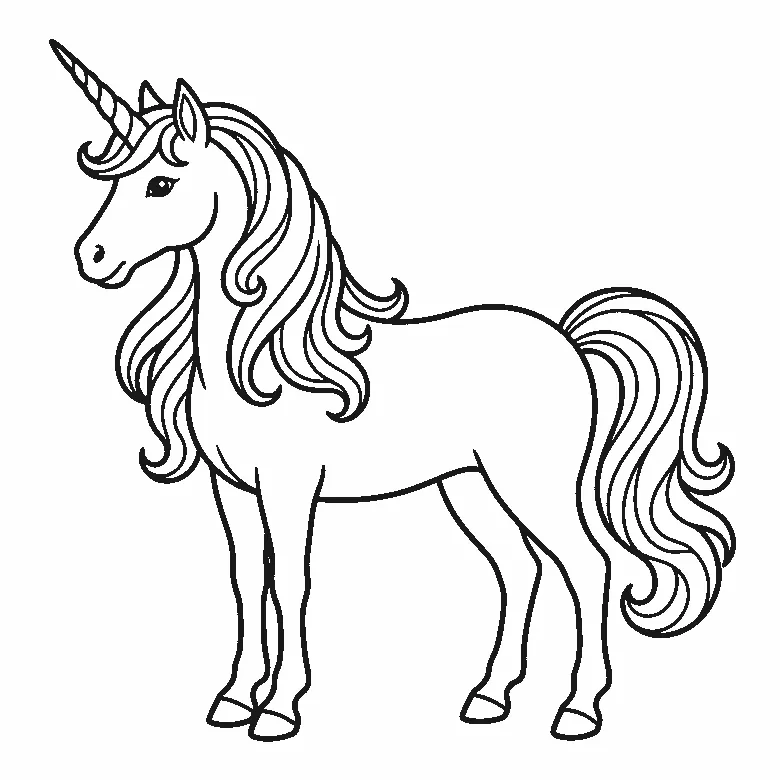
Unicorn colouring page
A standing unicorn in profile with a spiral horn and a long wavy mane, free to print as an A4-size PDF.
Colouring outline drawn by us.
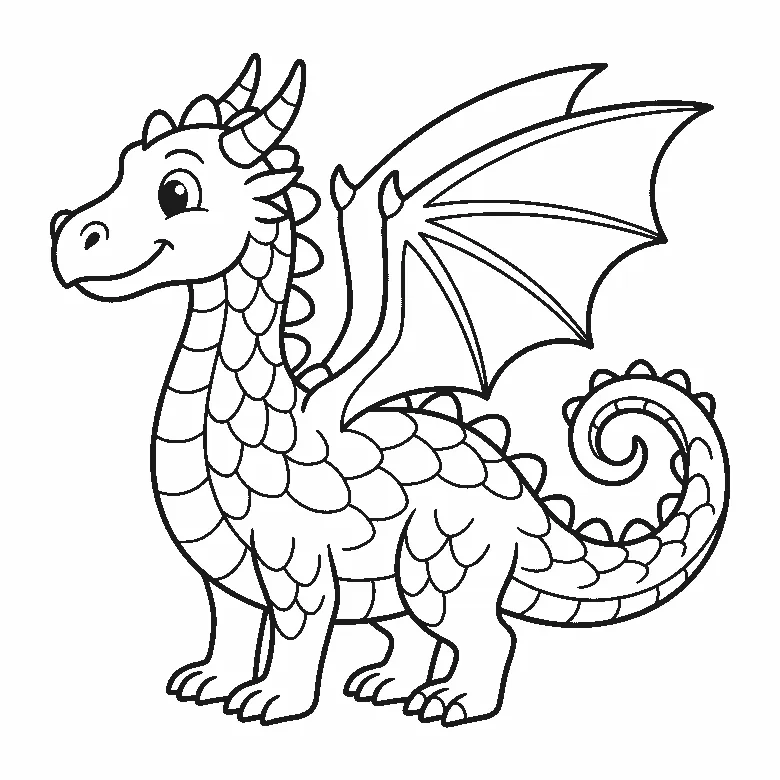
Dragon colouring page
A friendly dragon with two horns, a spiked back and one open wing, drawn in clean black outlines for A4 paper.
Colouring outline drawn by us.
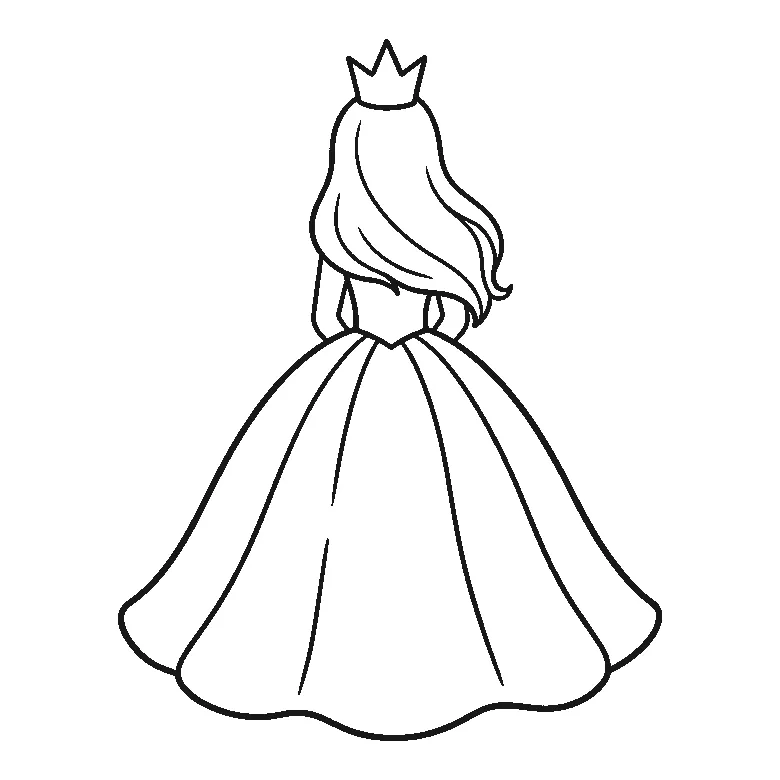
Princess colouring page
A princess seen from behind in a wide ball gown with a small crown, free to print at A4.
Colouring outline drawn by us.
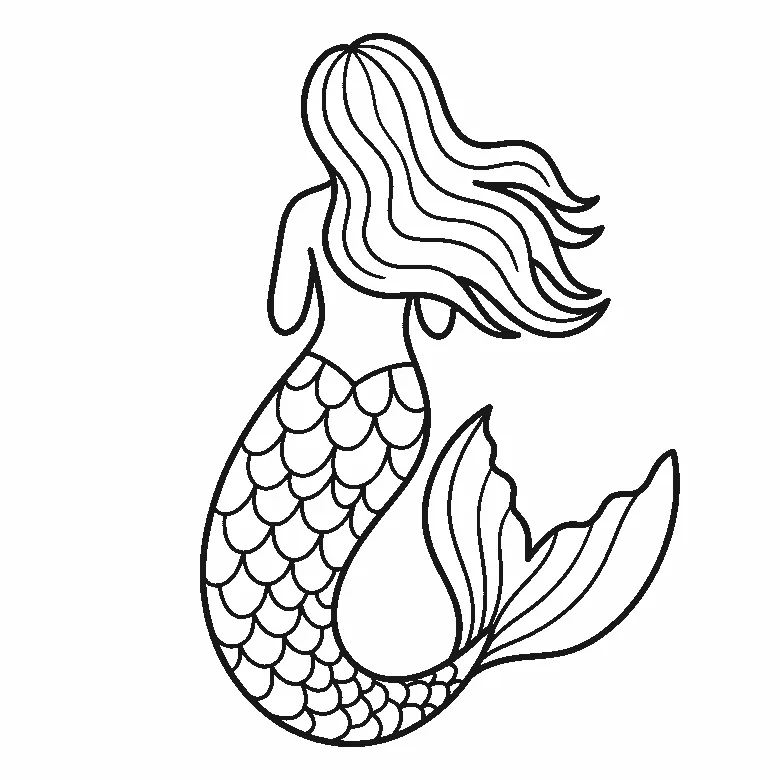
Mermaid colouring page
A mermaid seen from behind with a long scaled tail curling to a wide fin, free to print on A4.
Colouring outline drawn by us.
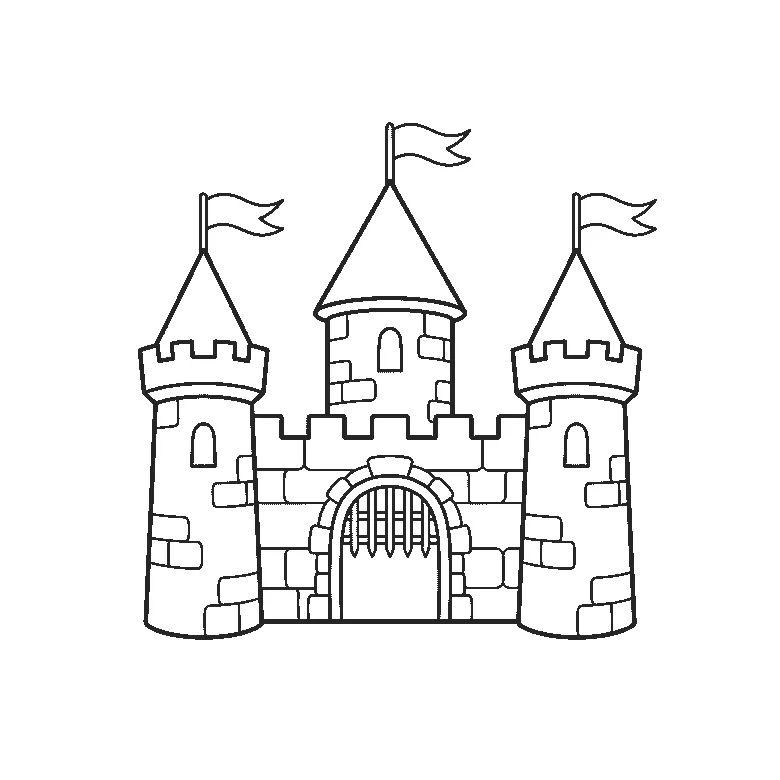
Castle colouring page
A three-towered castle with pennants, battlements and a portcullis, drawn small and centred on the sheet.
Colouring outline drawn by us.
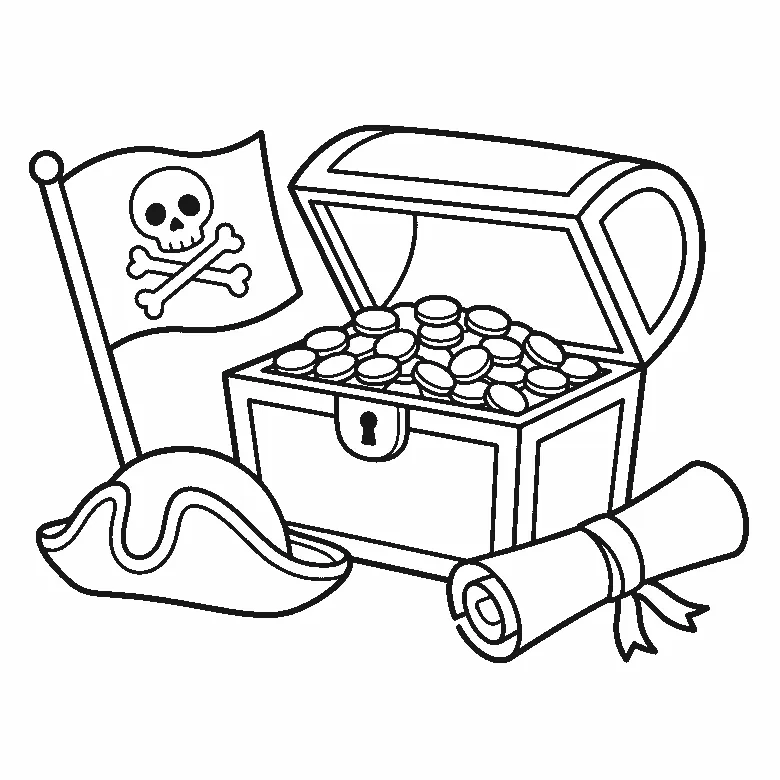
Pirate colouring page
A treasure chest heaped with plain coins, a skull flag, a tricorn hat and a blank rolled map on one sheet.
Colouring outline drawn by us.
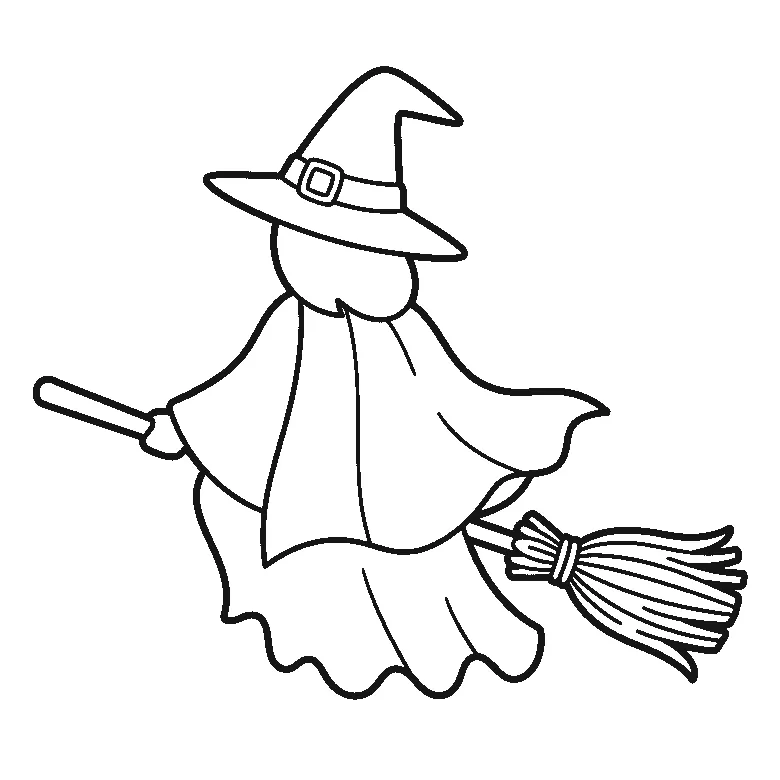
Witch colouring page
A witch seen entirely from behind on a broomstick, with no face drawn at all and a long scalloped cloak.
Colouring outline drawn by us.
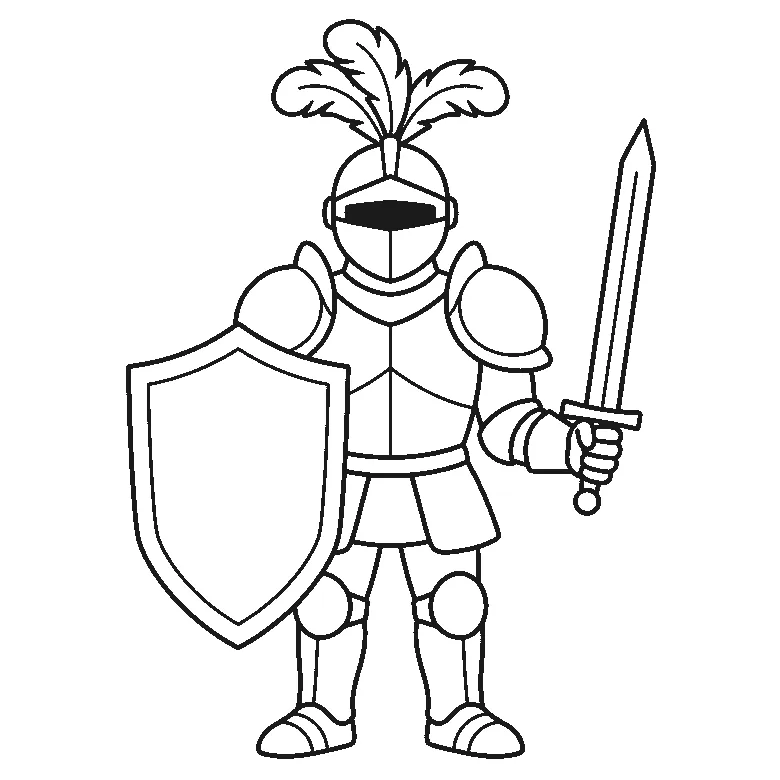
Knight colouring page
A knight in plate armour with the visor closed, a plain shield in one arm and a raised sword in the other.
Colouring outline drawn by us.
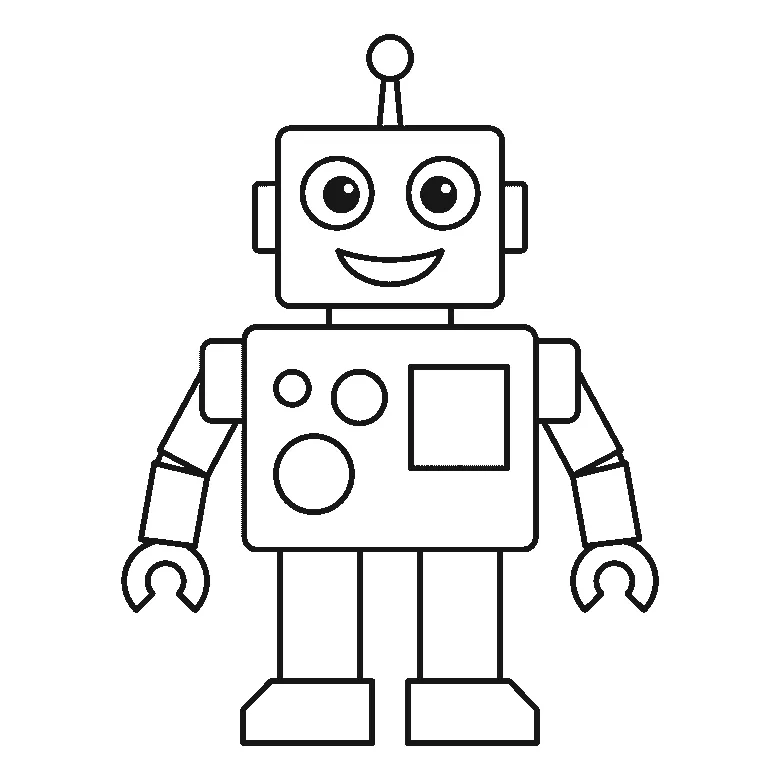
Robot colouring page
A boxy robot standing front on, built from rectangles and circles, with pincer hands and an aerial, free as an A4 PDF.
Colouring outline drawn by us.


