
PDF · A4 · 21 KB · Free, no sign-up. For home and classroom use.
Dragon colouring page
A friendly dragon with two horns, a spiked back and one open wing, drawn in clean black outlines for A4 paper.
Everything on this page belongs to one animal seen from the side: a dragon standing on all four legs, head turned in profile with a single round eye, two horns sweeping back from the skull, a row of spikes running the length of the spine, one bat-like wing opened out from the shoulder, and a tail that curls around at the end. Scales are drawn across the body as small repeated shapes. The expression is friendly rather than fierce. All of it is black outline on white with no background.
The open wing is the largest single area, and it is not one shape but several: the membrane is divided by the arm bones that stretch it, so it arrives as a set of panels fanning out from the shoulder. The body underneath is the next biggest region, though the scale pattern breaks it into many small cells rather than leaving it clear. Between those two sit the spikes along the back, each a closed triangle, and the four legs. The tail's curl is thin work all the way to the tip.
The scales are the decision that shapes the whole page. Colouring every cell individually is the longest route through this drawing, and it leaves the body reading as a dense patterned surface. Filling straight over them in one tone, letting the outlines show through as texture, takes a fraction of the time and still looks deliberate. A middle path works too: one base colour across the body, then a second colour dropped into scattered scales so the pattern flickers without demanding that you fill all of it.
The wing panels take marker better than anything else here, because a flat even fill makes the membrane look stretched and thin, which is what a wing should look like. Coloured pencil is the tool for the scales, since a sharp point reaches into each small cell and a blunt one does not. Crayon suits the spikes and the legs, where the shapes are simple and a little unevenness reads as texture rather than as a mistake. Whatever you use, test it on a corner first if the paper is thin.
Green with a lighter belly settles naturally onto this shape and it works, especially if the wing membrane goes a shade warmer than the body so the two separate clearly. Red with black horns is another combination that sits well on the drawing. Neither is required of you. A dragon in blues with a purple wing looks entirely at home on this drawing, and because the horns, spikes and claws are separate enclosed shapes, they can take a contrasting colour without disturbing anything else on the page.
Dragons appear in stories told all over the world and they do not agree with each other about much. Some are winged, some are not; some are serpents without legs at all. The version drawn here follows the four-legged, two-winged type familiar from European storytelling, shown with only the near wing open so the body stays readable. The bat-like structure of that wing, a membrane stretched over long finger bones, is borrowed from a real animal even though the dragon is not one.
Print at actual size on plain A4 paper rather than letting the printer scale it down, because the scale cells are the smallest shapes on the sheet and shrinking them closes the gaps between the lines. If markers are going anywhere near it, print on card instead, since the wing takes a lot of ink in one place and thin paper will buckle and bleed. Two copies let one person take the scales seriously while another colours straight over them, which is a fair way to share a drawing.
Finished, this one holds up well mounted on a larger sheet of coloured paper, with a small border left around the cut edge so the wing tip and the tail curl do not get lost. It also works as a folder cover, where the spiked back lines up neatly along the top edge. The same small scale shape repeats across the whole body of this sheet, so pick it when you want something to sit with for a while rather than something to finish quickly.
Before you print
- Choose your scale approach first: fill every cell, colour straight over them, or scatter a second tone through a few.
- Use a sharp coloured pencil for the scales and save markers for the wing panels.
- Colour the wing membrane a shade away from the body so the two do not merge.
- Print on card if you plan to fill the whole wing with marker, since it takes a lot of ink at once.
- Mount the cut-out on coloured paper with a border so the tail curl and wing tip stay visible.
Published Updated 704 words
More in this section
Princess colouring page
A princess seen from behind in a wide ball gown with a small crown, free to print at A4.
Colouring outline drawn by us.
Mermaid colouring page
A mermaid seen from behind with a long scaled tail curling to a wide fin, free to print on A4.
Colouring outline drawn by us.
Castle colouring page
A three-towered castle with pennants, battlements and a portcullis, drawn small and centred on the sheet.
Colouring outline drawn by us.
Pirate colouring page
A treasure chest heaped with plain coins, a skull flag, a tricorn hat and a blank rolled map on one sheet.
Colouring outline drawn by us.
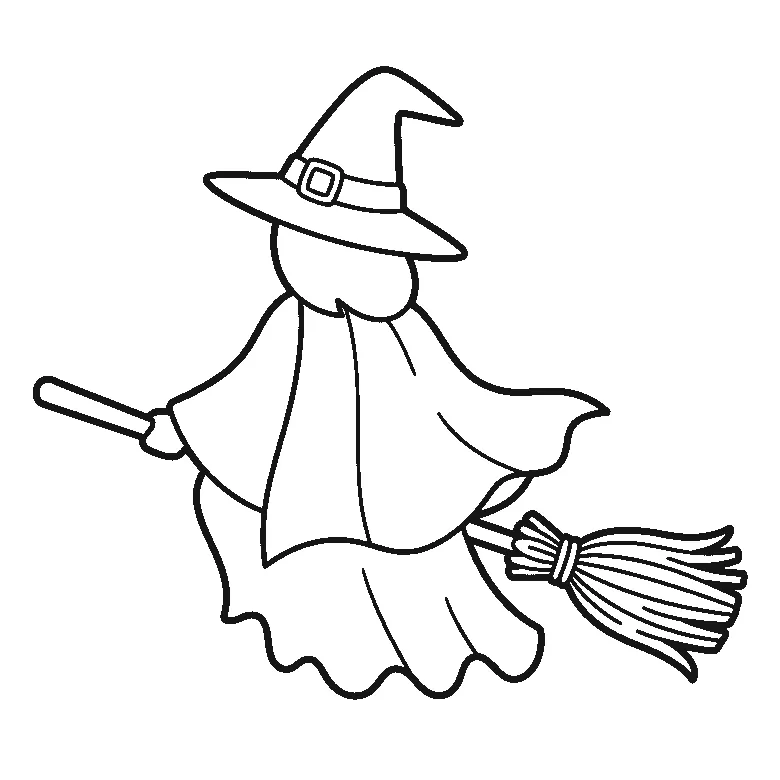
Witch colouring page
A witch seen entirely from behind on a broomstick, with no face drawn at all and a long scalloped cloak.
Colouring outline drawn by us.
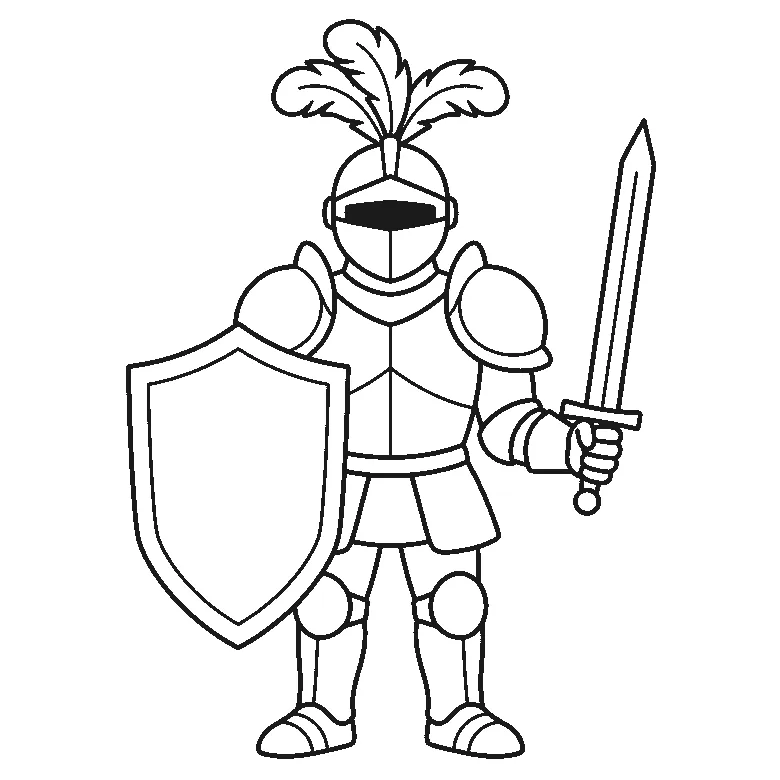
Knight colouring page
A knight in plate armour with the visor closed, a plain shield in one arm and a raised sword in the other.
Colouring outline drawn by us.

Robot colouring page
A boxy robot standing front on, built from rectangles and circles, with pincer hands and an aerial, free as an A4 PDF.
Colouring outline drawn by us.
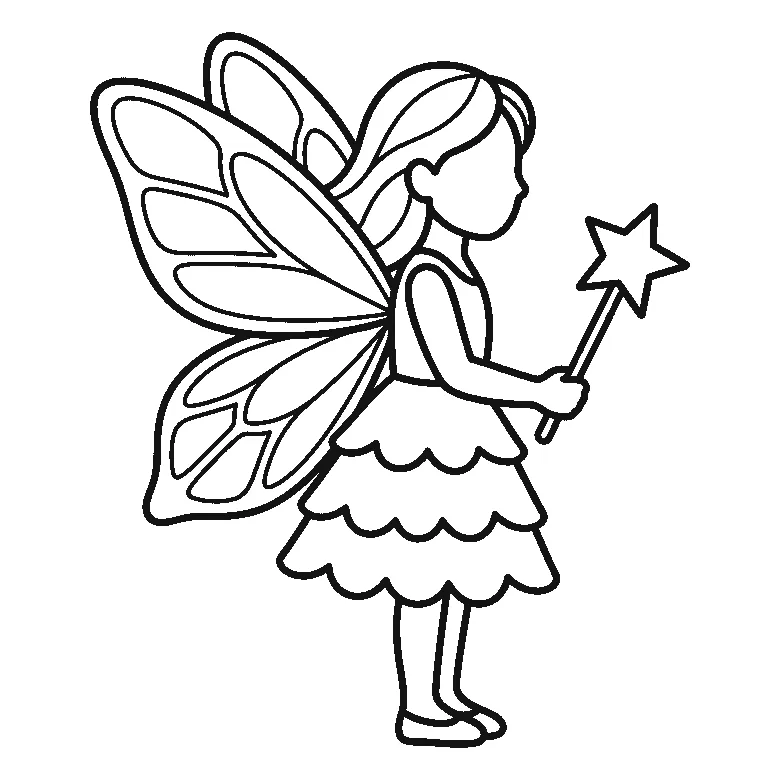
Fairy colouring page
A fairy standing in profile with a blank face, two large butterfly wings and a star-tipped wand, free as an A4 PDF.
Colouring outline drawn by us.
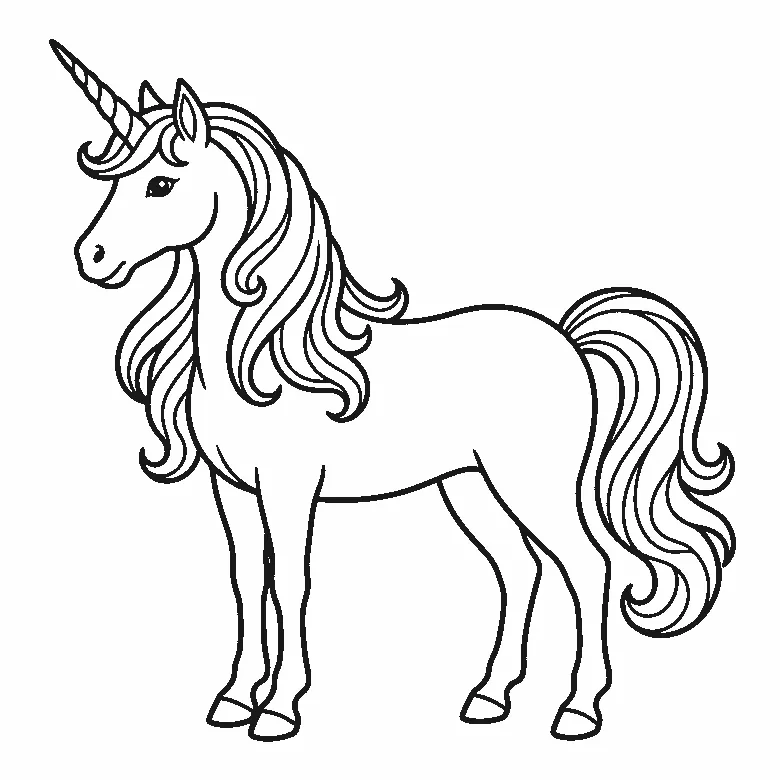
Unicorn colouring page
A standing unicorn in profile with a spiral horn and a long wavy mane, free to print as an A4-size PDF.
Colouring outline drawn by us.


