
PDF · A4 · 10 KB · Free, no sign-up. For home and classroom use.
Princess colouring page
A princess seen from behind in a wide ball gown with a small crown, free to print at A4.
The princess on this sheet is turned away from you. Her gown starts narrow at the waist and opens into a wide bell that takes up most of the lower half of the page, broken into long folds that fall from the waist to the hem. Her hair runs down her back in loose waves, well past her shoulders, and a small crown sits high on her head. No face is drawn, because there is no face to see from this angle. What you get instead is a sheet made almost entirely of cloth, hair, and one narrow band of crown.
The skirt is the largest open space here, and it is worth deciding what to do with it before anything else touches the paper. The folds divide it into tall panels, some wide, some barely wider than a pencil. If you fill every panel the same flat shade, the folds vanish. If you shade one side of each panel a little darker and leave the other side lighter, the cloth starts to turn. A quick way to keep that consistent is to pick one side of the page as the light side and darken every panel edge that faces away from it.
Coloured pencil suits the skirt better than almost anything else, because you can lay a pale layer over the whole gown and then go back over the fold edges a second and third time without losing the outline. Markers give a flatter, louder result and will move through thin copier paper to whatever is underneath, so slide a spare sheet behind the page. Crayon skips over the tooth of the paper and leaves a grainy texture that reads well as heavy fabric. A gel pen is too slow for an area this size, though it is useful on the crown.
Court colours are an easy default: deep blue, wine red, or a soft rose gown with gold at the crown. Nothing on the sheet requires them. A gown in seven stacked stripes, one per fold, is just as valid, and so is a green and orange pairing that no court palette accounts for. The hair is the other place to decide early, since it sits directly against the gown and the two large areas will either agree or argue. Brown, black, corn yellow and copper all sit quietly. Blue or lilac hair turns the whole sheet into something stranger, which is a fine place to end up.
The crown is the smallest thing on the page and the easiest to ruin. Its points are narrow, and a marker tip wider than the shape will flood past the outline in a single stroke. Use a sharp pencil there, keep the pressure light, and build the colour in short passes rather than one hard scrub. Pressing hard into a small shape leaves a slick patch that later colour sits on top of rather than sinking into, so a heavy first pass is hard to take back. If you want the crown to read as metal, leave a bare white gap along one edge of each point.
The hair is drawn as long waves rather than single strands, which means you are colouring a handful of big ribbon shapes rather than thousands of lines. Fill them in the direction the wave runs, following the curve with the pencil instead of scribbling across it, and the hair will look like it hangs. Leaving a thin pale streak along the top of each wave is enough to suggest shine without adding a single new line. If the gown ends up dark, a lighter hair colour keeps the two from merging into one solid mass at the shoulders.
Print it on plain A4 paper at actual size rather than fit-to-page, so the gown keeps its full width and the outlines stay the weight we drew them. If markers are the plan, heavier card is worth the swap, since it takes the ink without buckling and stops the colour reaching the next page in the stack. Two copies are better than one when two people are colouring, and they also let you test a colour scheme on the first before committing on the second. We laid the sheet out with a clear margin, so nothing important sits where a printer refuses to print.
When the sheet is done, the wide skirt makes it a good candidate for a window, since light coming through the back brings up the fold shading. It also folds cleanly in half for a card, with the crown landing near the top of the front panel. Looked at on its own, the sheet stays a quiet one all through: no scenery, no creature, and no background pattern competing for attention. It is one figure on white, and what it asks for is a long quiet fill across a few large shapes rather than a lot of small separate pieces.
Before you print
- Pick one side of the page as the light side, then darken the fold edge that faces away from it in every skirt panel.
- Use a sharp coloured pencil on the crown points, where a tip wider than the shape will flood past the outline.
- Fill each wave of hair along its curve rather than across it, and leave a pale streak on top for shine.
- Slide a spare sheet under the page before using markers, because the gown is one large stretch of ink.
- Print two copies if you want to test a colour scheme on the first before committing on the second.
Published Updated 819 words
More in this section
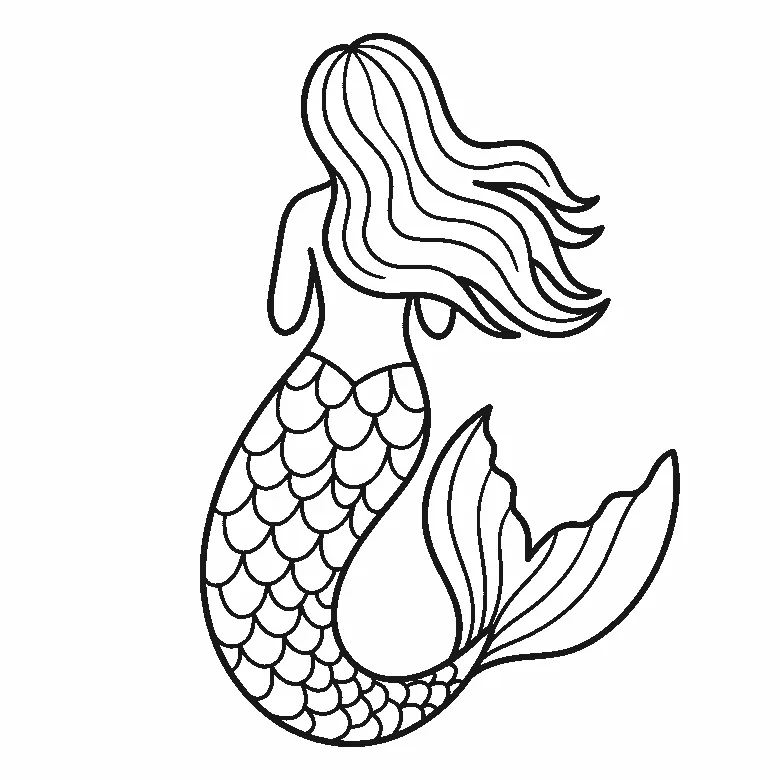
Mermaid colouring page
A mermaid seen from behind with a long scaled tail curling to a wide fin, free to print on A4.
Colouring outline drawn by us.
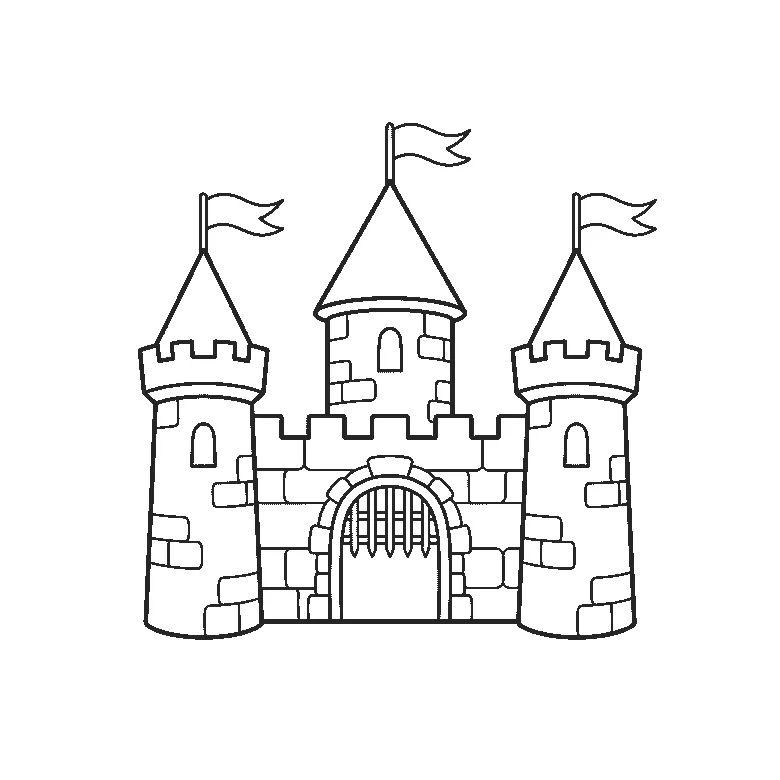
Castle colouring page
A three-towered castle with pennants, battlements and a portcullis, drawn small and centred on the sheet.
Colouring outline drawn by us.
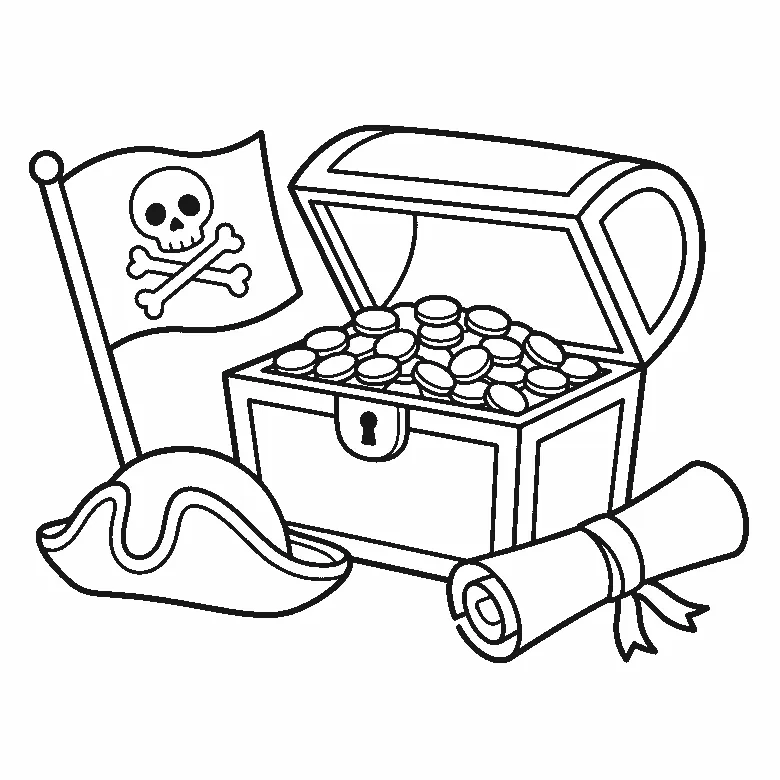
Pirate colouring page
A treasure chest heaped with plain coins, a skull flag, a tricorn hat and a blank rolled map on one sheet.
Colouring outline drawn by us.
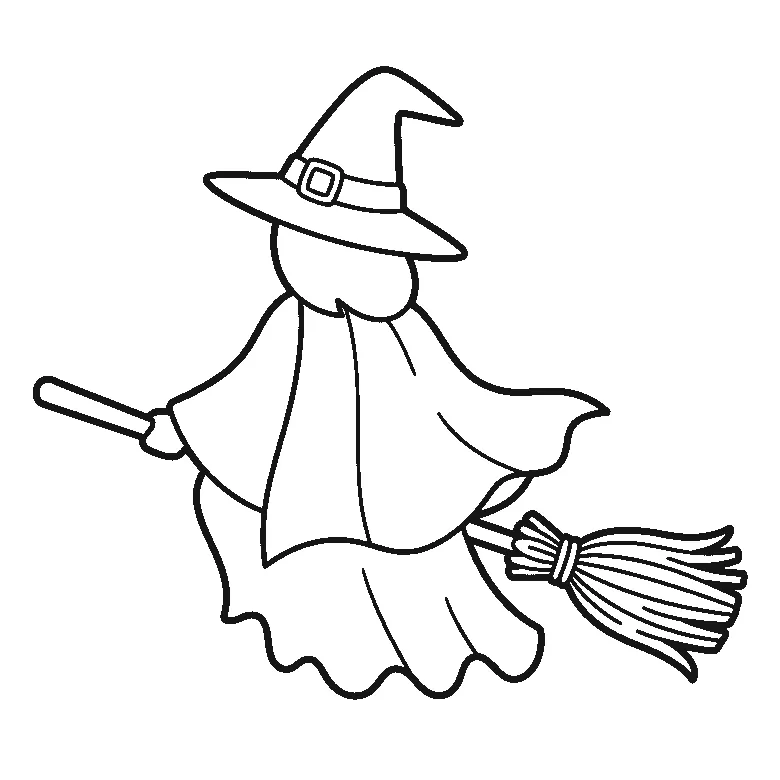
Witch colouring page
A witch seen entirely from behind on a broomstick, with no face drawn at all and a long scalloped cloak.
Colouring outline drawn by us.
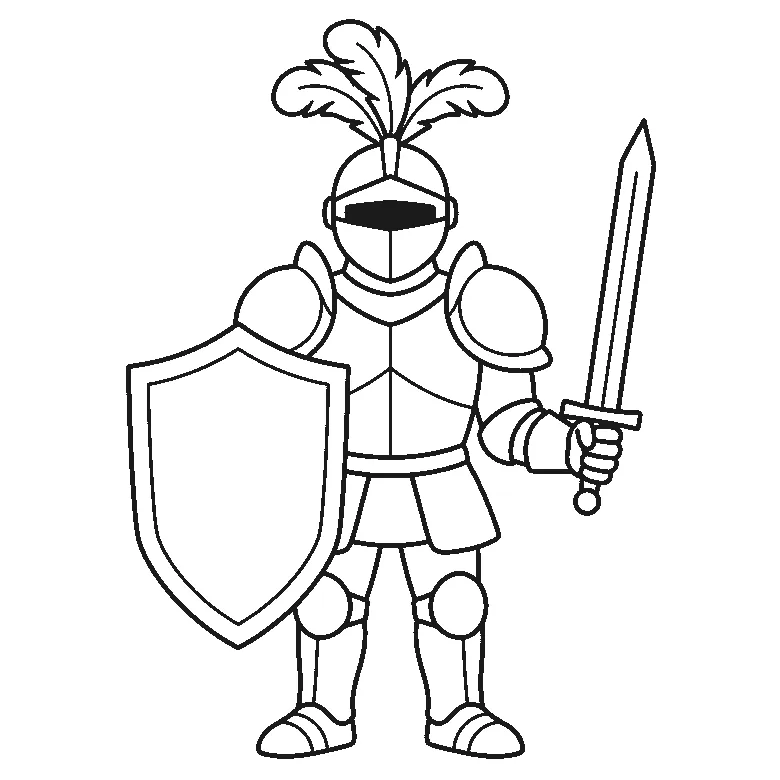
Knight colouring page
A knight in plate armour with the visor closed, a plain shield in one arm and a raised sword in the other.
Colouring outline drawn by us.

Robot colouring page
A boxy robot standing front on, built from rectangles and circles, with pincer hands and an aerial, free as an A4 PDF.
Colouring outline drawn by us.
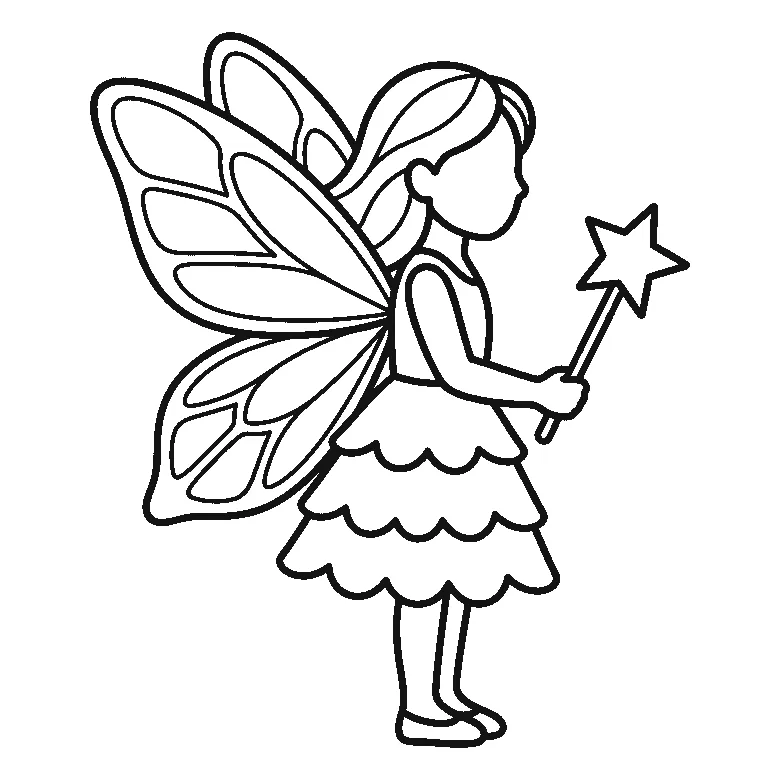
Fairy colouring page
A fairy standing in profile with a blank face, two large butterfly wings and a star-tipped wand, free as an A4 PDF.
Colouring outline drawn by us.
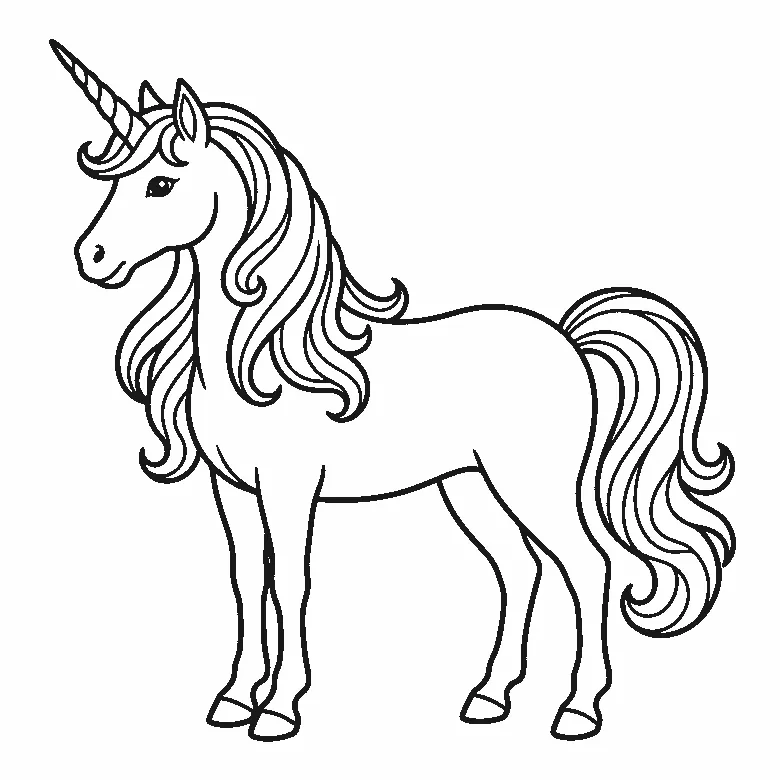
Unicorn colouring page
A standing unicorn in profile with a spiral horn and a long wavy mane, free to print as an A4-size PDF.
Colouring outline drawn by us.
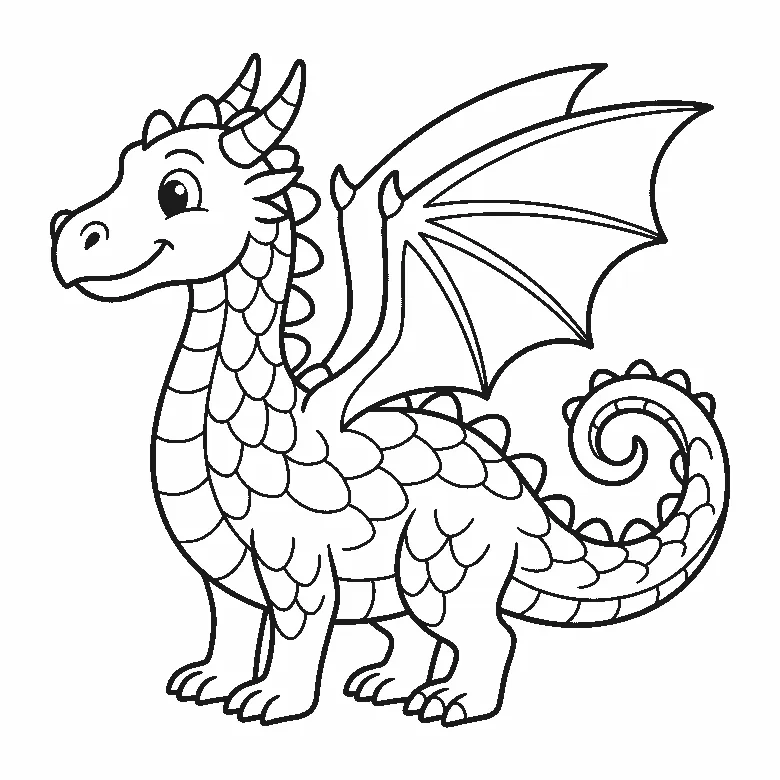
Dragon colouring page
A friendly dragon with two horns, a spiked back and one open wing, drawn in clean black outlines for A4 paper.
Colouring outline drawn by us.


