Seasons
Sheets for the turns of the year — spring blossom, a summer beach, autumn leaves, a winter scene and a snowman in a top hat.
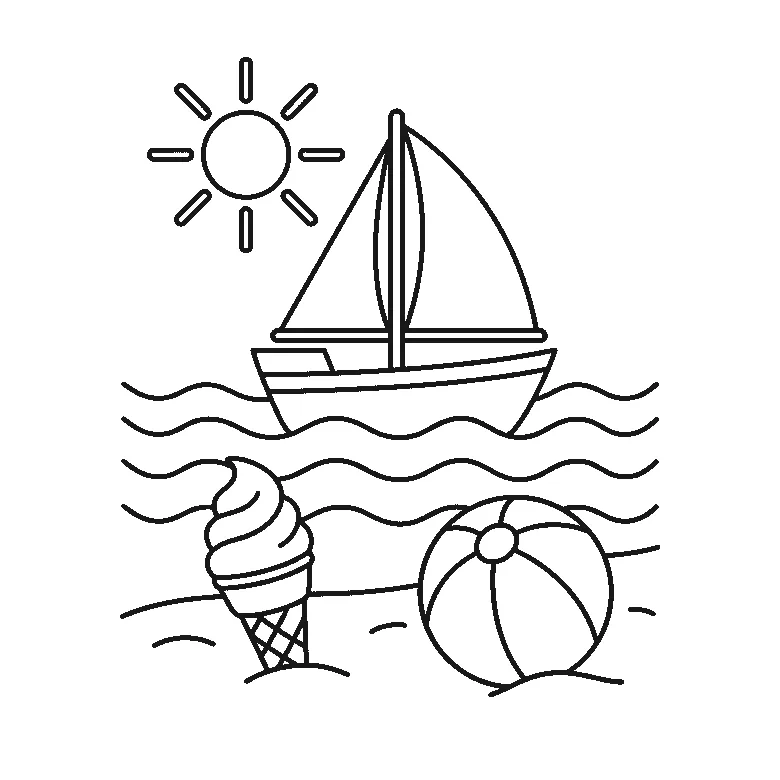
Summer colouring page
A sun, a two-sail boat on waves, an ice cream cone and a paneled beach ball, drawn as one open outline scene.
Colouring outline drawn by us.
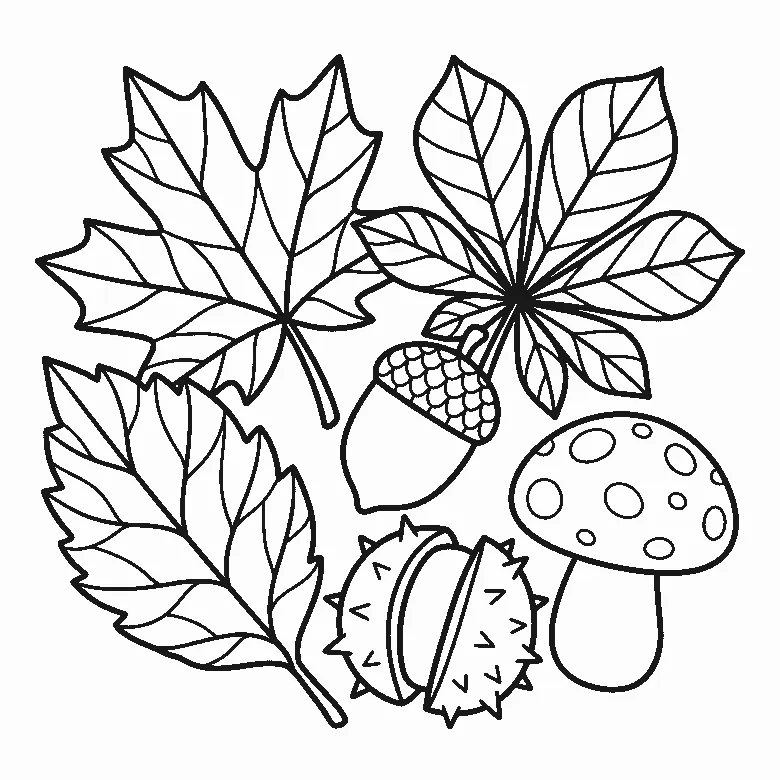
Autumn colouring page
A maple leaf, a chestnut leaf, an acorn, a split spiny case and a spotted mushroom, in plain black outline.
Colouring outline drawn by us.
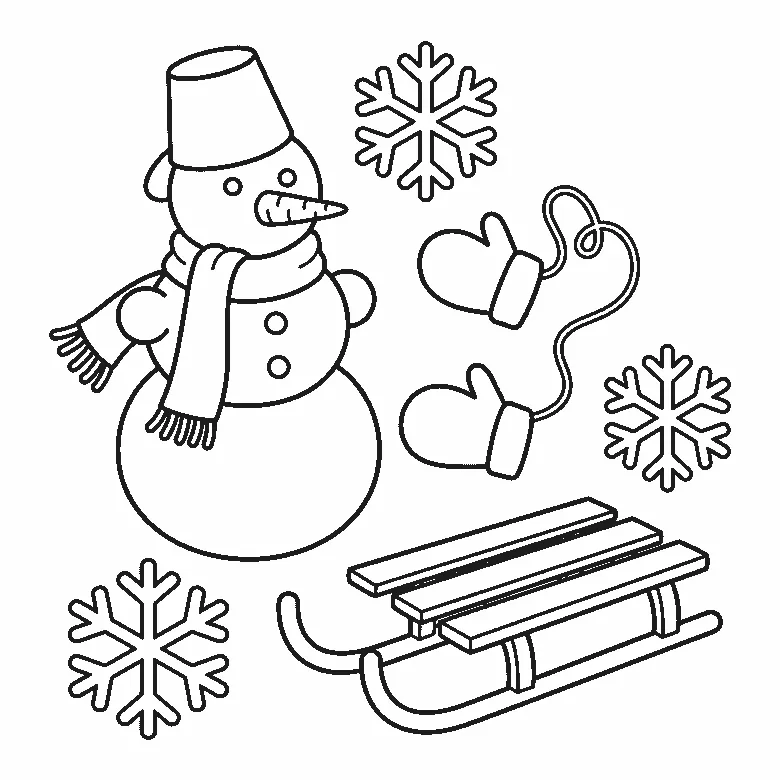
Winter colouring page
A snowman in a bucket hat and fringed scarf, mittens on a cord, three snowflakes and a wooden sledge.
Colouring outline drawn by us.
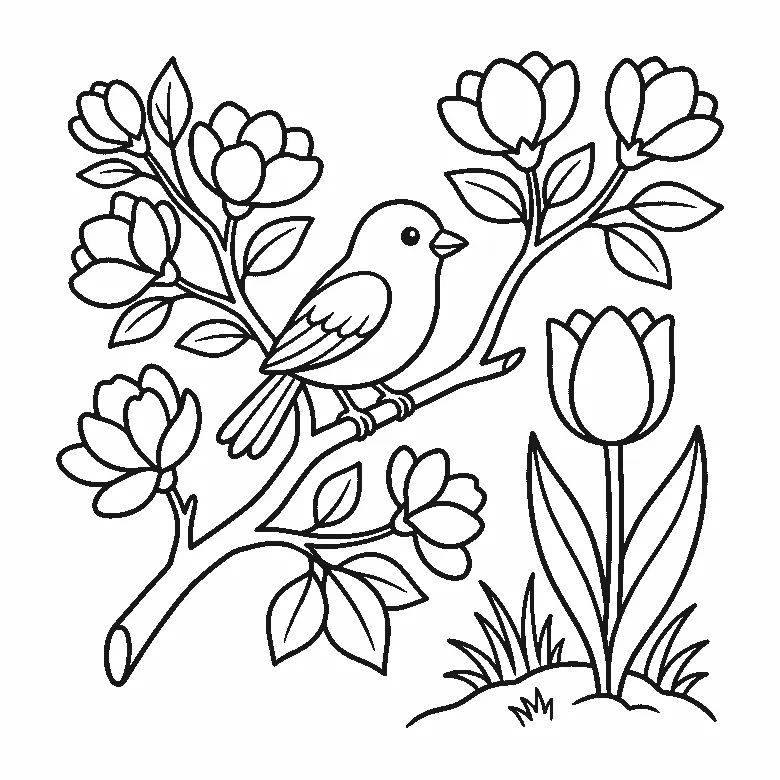
Spring colouring page
A blossom branch with a small bird perched on it, and a tulip rising from a tuft of grass, in black outline.
Colouring outline drawn by us.
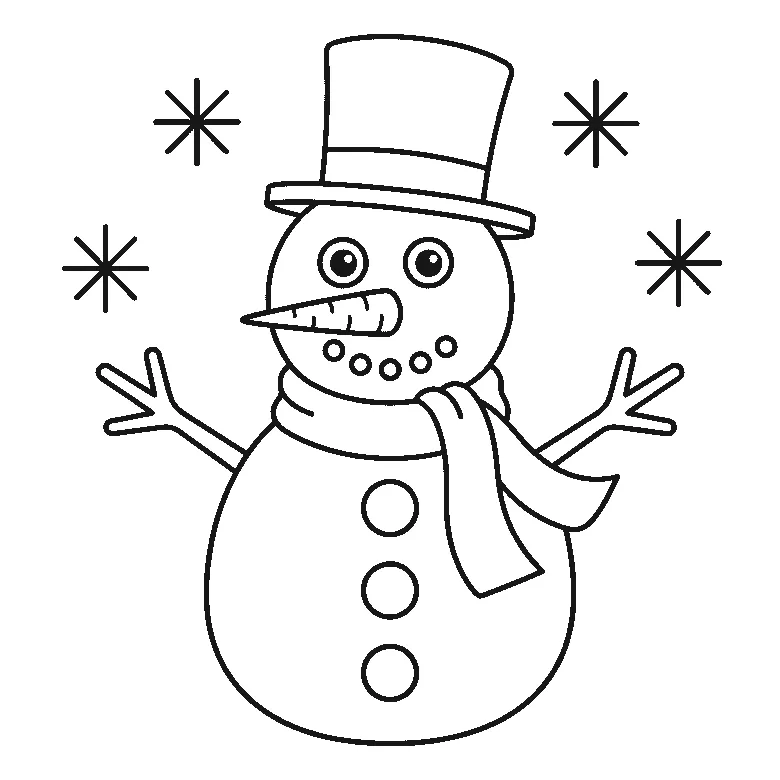
Snowman colouring page
A two-ball snowman in a top hat and scarf, with twig arms and four snowflakes, on one A4-size sheet.
Colouring outline drawn by us.


Seasons is a small set built around the year: one sheet for spring, one for summer, one for autumn, one for winter, and a snowman that stands on its own. The first four were drawn as a group rather than gathered one at a time, so the line weight and the amount of open white space stay close from sheet to sheet. If you print the whole section, you get a run of pages that sit together on a wall or in a folder without one of them looking like it came from somewhere else.
The spring sheet is built around blossom. Blossom is a shape that repeats without repeating exactly: the same little flower turns up again and again at slightly different angles, some petals overlapping their neighbours, some standing clear against the paper. That gives the page a lot of small enclosed areas and not much heavy mass. It rewards a light hand and it also survives a fast, loose fill, because the outlines are close enough together that stray colour reads as depth rather than as a mistake.
Summer is the beach sheet. A beach scene splits naturally into broad horizontal bands — sky, water, sand — which means large regions to fill and comparatively few tiny ones. That makes it quick to finish in one sitting, and forgiving if you are working with markers or with a chunky crayon that cannot get into a corner. A colour decision is built into the drawing itself, since the boundary between water and sand does the composing for you.
Autumn is the leaves. Leaves carry veins, and veins are the fine interior line work that gives a colouring page its detail without making it crowded. Maple, oak and other broad-leaved trees turn before they drop, so the sheet is drawn for the part of the year when a single leaf can hold several colours at once. You can treat each leaf as its own small study and use a different scheme on every one, or commit to one palette across the page and let the shapes carry the variety.
The winter sheet is a scene rather than a subject, and snow is white, which is the one thing a colouring page cannot hand you — white is what the paper already is. So it is drawn to work as an outline against untouched paper: the snow can stay empty while the colour goes into everything around it. That inverts the usual job. Instead of filling the main subject, you are defining it by what you put next to it, and the page is composed to make that possible.
The snowman sheet takes that idea and gives it a single figure. He is built from two stacked snowballs, and almost the whole of him is the same white the paper already is, so the hat, the scarf, the carrot nose and the three buttons carry the entire colour scheme between them. Four snowflakes hang in the air around him, drawn as bare six-spoked stars that cannot be filled at all — only washed behind, so the white spokes show. On this sheet, leaving paper alone does more of the work than any colour does.
Picking between them usually comes down to how much time you have and what you are holding. Summer for broad areas and a short session. Spring or autumn when you want to sit with something and work into small shapes. Winter or the snowman when you want to leave the subject blank and put your thinking into what surrounds it. None of them is more finished than the others; they differ in where the line work is concentrated, not in how carefully they were drawn.
There is a reason to print the whole set even if you only want one today. Side by side, the sheets show the same idea handled several ways: blossom scatters small units across the page, the beach stacks large bands, the leaves cluster mid-size shapes with interior detail, and the two winter pages leave their subject blank. Colouring them in order is a way of watching one drawing problem get several different answers, and the sequence follows the year, so the set has an obvious way to hang.
Every sheet in this section is a black-outline drawing on plain white, laid out for A4 paper. We built each PDF at A4 size so it prints without scaling, and every sheet has a PNG preview of the whole page, so you can see it before you commit a page to it. Regular copier paper takes pencil and crayon fine; card holds up better if you plan to use markers that bleed through, or if the finished page is going on a door or a fridge and needs to stay flat.
Published Updated 5 sheets798 words