
PDF · A4 · 11 KB · Free, no sign-up. For home and classroom use.
Summer colouring page
A sun, a two-sail boat on waves, an ice cream cone and a paneled beach ball, drawn as one open outline scene.
This sheet is a scene rather than a single object. A sun sits high on the page with its rays drawn as separate straight spikes that do not touch the disc. Below it a sailboat carries two sails, a tall one and a shorter one, riding a set of wave lines that run across the sheet. On the sand at the bottom there is an ice cream cone with a scoop on top, and a beach ball divided into panels. Black outline, white paper, nothing shaded in.
Four open areas dominate this summer page: the sun's disc, the two sails, the water below the wave lines, and the sand. The sails are the cleanest large shapes here and take a flat fill well. The water is the trickiest, because the wave lines split it into long thin bands that a thick crayon will cross without meaning to. The beach ball's panels are narrow wedges, and the gap between the sun and its rays is the one place where white space is doing real work.
A useful order runs top to bottom: sun and rays, then the sails, then the water, then the sand and the two objects sitting on it. Doing the water in one direction, following the wave lines rather than cutting across them, keeps the bands looking like bands. Press lightly on the rays, which are narrow enough that a hard stroke turns two of them and the white between them into a single wedge. The scoop and the cone are small enough that a sharpened point beats a blunt one.
Watercolour pencil earns its place on the water, because a wash pulled sideways along the bands blends them without erasing the wave lines. Crayon is right for the sand, where the skipping and the grain read as texture instead of a mistake. Markers do the sails and the ball panels well, flat and bright, but they bleed under the wave lines and turn the sea into one block. Coloured pencil handles the sun nicely, layered from the outside of the disc inward towards the middle.
Yellow sun, blue water, white sails, tan sand: that set keeps the four objects separate from one another. The beach ball is the built-in exception, since its panels invite a different colour each and nothing about a beach ball says which. A sunset version, with the sun orange and the water a deep purple, changes the whole mood without changing a single line. The scoop can be any flavour you like, and leaving the cone uncoloured keeps it clearly separate from the scoop sitting above it.
A sailboat rigged like this one carries a large sail behind the mast and a smaller one in front of it. Sails are cut as flat panels of cloth and only take their curve once they hold wind, which is why the drawn ones bow rather than stand straight. A beach ball is made the way the drawing shows: flat panels joined edge to edge, tapering at both ends, so that pieces cut from a sheet become a sphere once they are sealed and filled with air.
Actual size, plain A4 paper, and no fit-to-page. The gap between the sun's disc and its rays is the first thing to close up when a printer scales the sheet down. Heavier stock is worth using if a watercolour pencil is going to get wet, since plain paper buckles as soon as a brush touches it. Two copies side by side make sense here because the scene splits naturally, one person taking the sky and sea, the other taking the beach.
Taped in a window this one reads as a small poster, since the wave lines carry across the full width and give it a horizon. Cut along the waterline and you get two pieces, a sky-and-sea half and a beach half, which can be mounted on card with a gap left between them. This sheet holds a whole setting rather than a single subject, sky and sea and sand together, so the background choices matter here as much as the objects do.
Before you print
- Leave the white gaps between the sun's rays alone, since they are what make the rays read as separate spikes.
- Follow the wave lines with your strokes instead of crossing them, so the water keeps its bands.
- Give each panel of the beach ball its own colour, because the wedges are too narrow to blend.
- Colour the scoop and leave the cone bare so the two shapes stay distinct.
- Use card if you plan to wet a watercolour pencil, because the wide sea area buckles plain paper.
Published Updated 684 words
More in this section
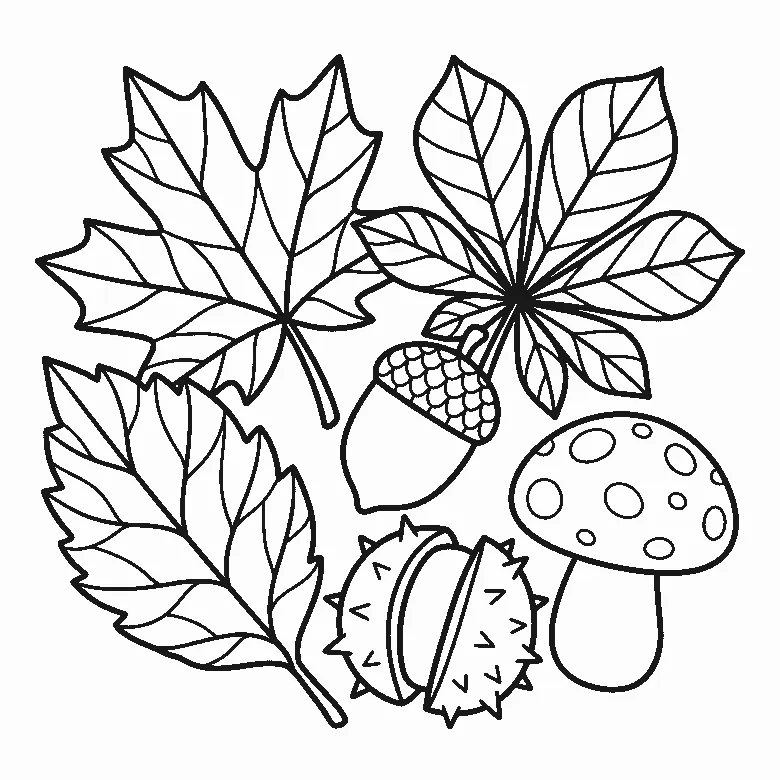
Autumn colouring page
A maple leaf, a chestnut leaf, an acorn, a split spiny case and a spotted mushroom, in plain black outline.
Colouring outline drawn by us.
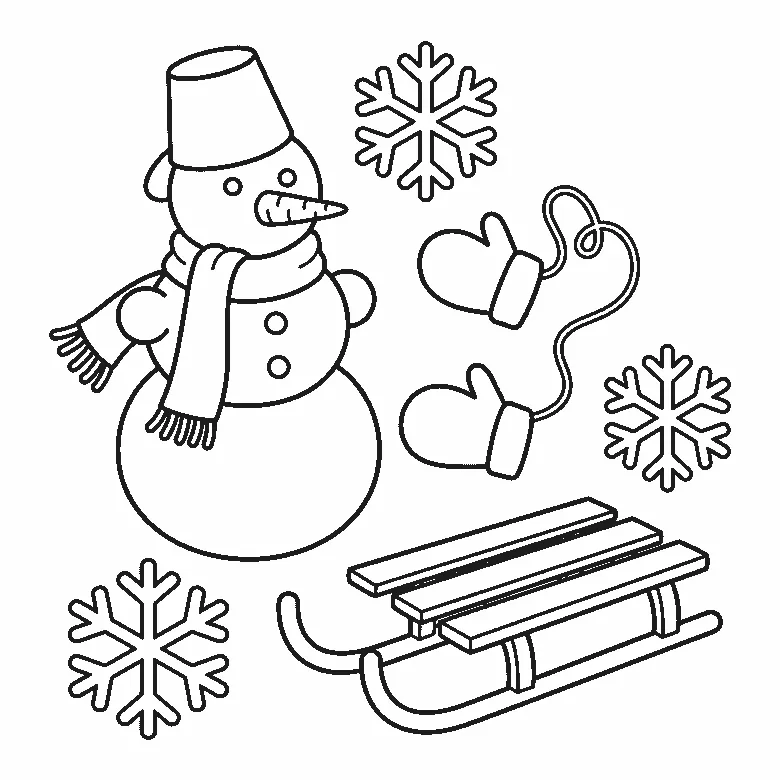
Winter colouring page
A snowman in a bucket hat and fringed scarf, mittens on a cord, three snowflakes and a wooden sledge.
Colouring outline drawn by us.
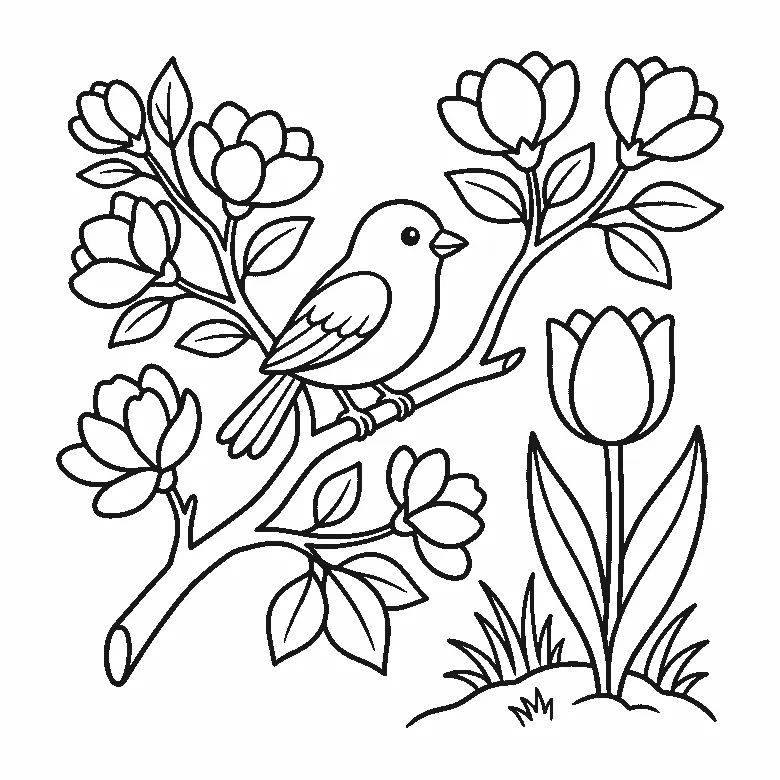
Spring colouring page
A blossom branch with a small bird perched on it, and a tulip rising from a tuft of grass, in black outline.
Colouring outline drawn by us.
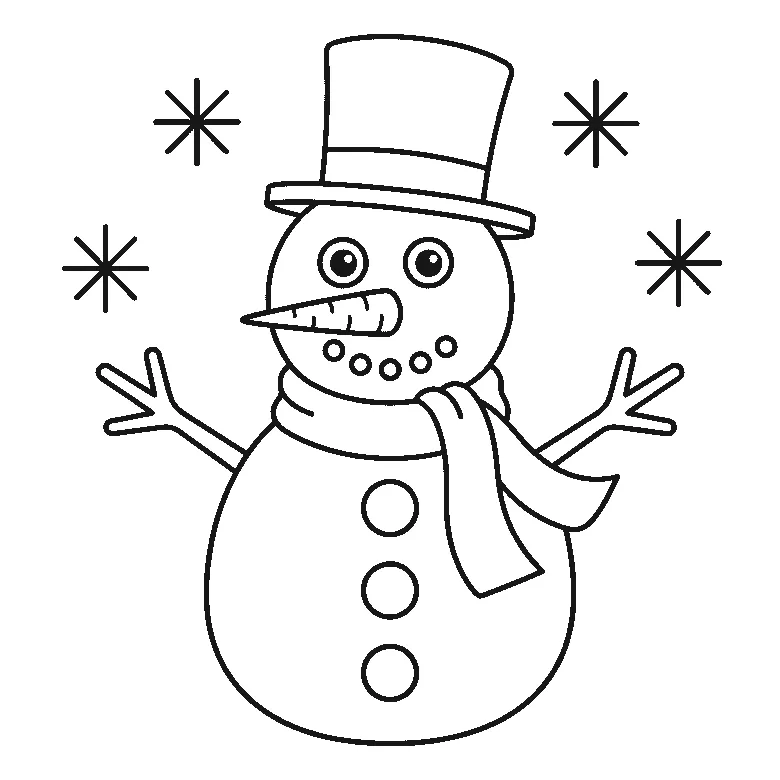
Snowman colouring page
A two-ball snowman in a top hat and scarf, with twig arms and four snowflakes, on one A4-size sheet.
Colouring outline drawn by us.


