
PDF · A4 · 25 KB · Free, no sign-up. For home and classroom use.
Spring colouring page
A blossom branch with a small bird perched on it, and a tulip rising from a tuft of grass, in black outline.
Rather than a group of separate objects, this page is arranged as one small scene. A branch comes in carrying blossom, a bird sits on it turned in profile, and a tulip stands beside the branch on its own stem out of a tuft of grass. The branch and the tulip do not touch, but they sit close enough to read together, and the empty paper around them stands in for air rather than for nothing. There is no horizon line, so neither plant is rooted in any particular place.
The branch itself is drawn with a slight bend in it rather than running straight across, and it thins as it goes, with a couple of short side twigs. Its outline is a pair of lines with a little irregularity in them, which is what keeps it from reading as a plain stick. Bark takes colour well in short strokes running along the length rather than across it. Keeping the branch a muted brown or grey leaves the blossom free to carry the bright part of the page.
Blossom appears on the branch in two states. Some flowers are fully open, drawn as rounded petals spread around a small centre, and the rest are still closed buds, drawn as tight teardrops held against the twig. That difference is worth using. If the open flowers and the buds take the same colour, the branch looks uniform; if the buds go a shade deeper than the open petals, the branch looks as though it is partway through opening, which is what a blossoming branch actually looks like.
The bird is small and sits in profile, so one eye, one wing and the near leg gripping the branch are all that show. Profile is the forgiving view for a bird: beak, head, back and tail sit along a single clean silhouette, and there is no far side to reconcile with the near one. Inside the outline there are a few divisions for the head, the wing and the tail, and those three areas are enough to make it look like a particular bird without naming one.
The tulip beside the branch is a cup on a single stem, with its petals drawn as three visible curves meeting at the rim and two long leaves rising from the stalk. A tulip's petals overlap, and the drawing keeps that overlap visible, which is an invitation to shade one petal slightly darker where it sits behind another. The leaves are broad and want a green that is not the same green as the grass below them, or the flower loses its footing against the tuft it grows from.
The tuft of grass at the base is a handful of blades at different heights, drawn as narrow spikes with a little lean to them. It is the loosest part of the sheet and the fastest to finish. Nothing about it needs to be neat. Running one green up the blades and then a second, darker green along a few of them on one side gives the tuft some depth, and a touch of that darker green under the tulip stem settles the plant onto something.
Spring is a season of things sent to people, and this sheet is built with that in mind. Coloured and folded, it works as the front of a card for a birthday, a get well note, or no occasion at all. The tulip alone, cut out with a narrow white border left around it, makes a name marker for a place setting, and the bird on its branch is the right shape to tape inside a window where light comes through the paper. It also does perfectly well as a page that stays whole.
We set the file at A4 with margins that keep the branch and the grass clear of the paper's edge, so no printer trims the tips off. The whole drawing is black outline on white with no shaded areas, so it prints cleanly at a draft quality setting. Printer paper is enough for pencils and crayons. Card is worth reaching for if the page is heading towards a card front or a place marker, since it stands up on a table instead of curling over.
Before you print
- Give the closed buds a deeper shade than the open petals so the branch reads as opening.
- Keep the bird's eye small and dark; it is the one mark that sets the whole face.
- Use two greens: one for the tulip leaves, a different one for the grass tuft.
- Stroke the bark along the length of the branch, not across it.
- Shade the petal sitting behind another slightly darker so the tulip cup does not flatten.
Published Updated 707 words
More in this section
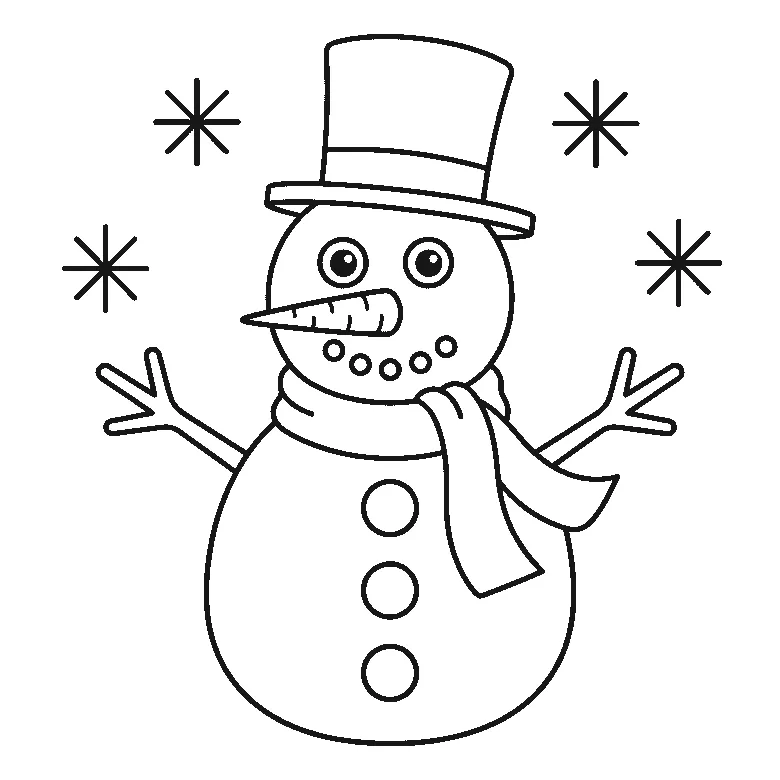
Snowman colouring page
A two-ball snowman in a top hat and scarf, with twig arms and four snowflakes, on one A4-size sheet.
Colouring outline drawn by us.
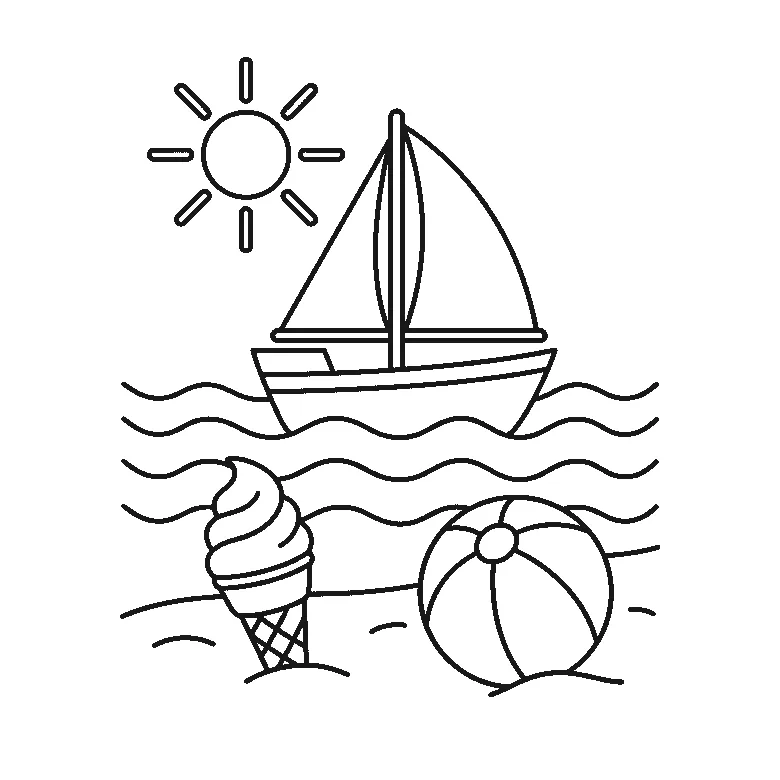
Summer colouring page
A sun, a two-sail boat on waves, an ice cream cone and a paneled beach ball, drawn as one open outline scene.
Colouring outline drawn by us.
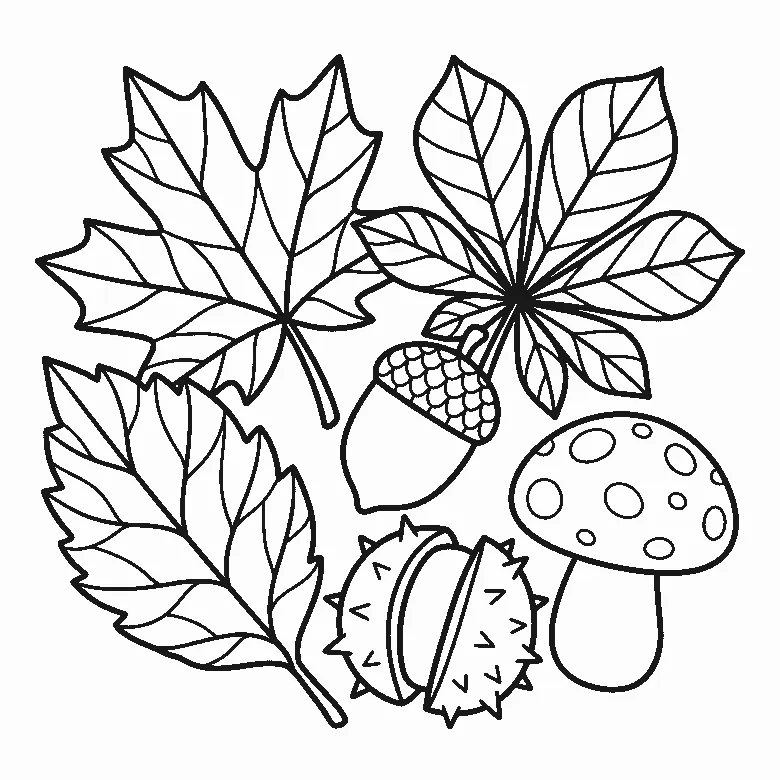
Autumn colouring page
A maple leaf, a chestnut leaf, an acorn, a split spiny case and a spotted mushroom, in plain black outline.
Colouring outline drawn by us.
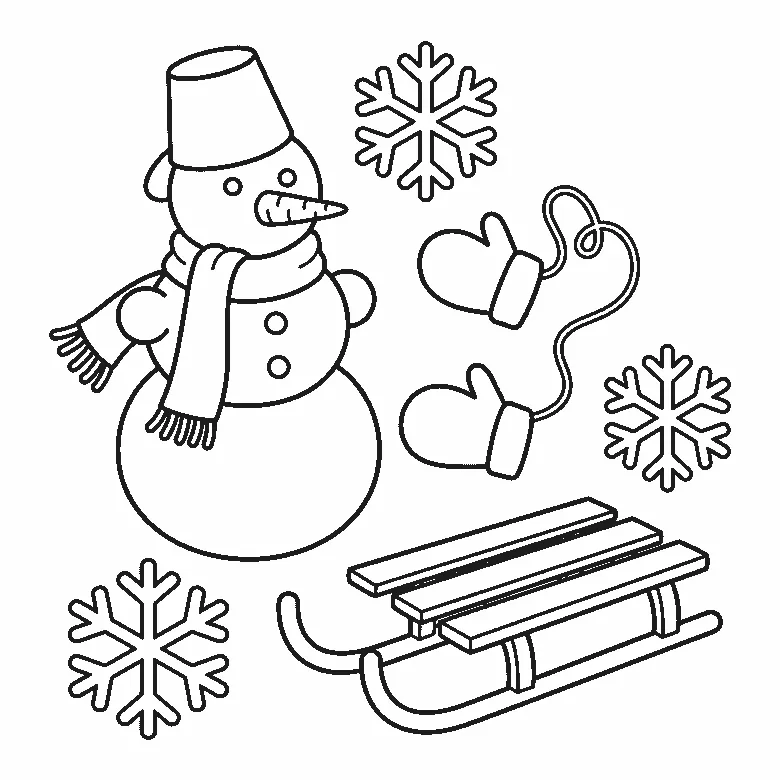
Winter colouring page
A snowman in a bucket hat and fringed scarf, mittens on a cord, three snowflakes and a wooden sledge.
Colouring outline drawn by us.


