
PDF · A4 · 31 KB · Free, no sign-up. For home and classroom use.
Animal mandala colouring page
A circular mandala of paw prints and rounded ear shapes around an eight-petal flower, free as an A4-size PDF.
The sheet holds one circle, centred on the page with clean white margin all around it. At the middle sits a flower with eight petals, and every ring that follows is built outward from that flower. The rings alternate: a band of paw prints, then a band of rounded shapes that read as animal ears, curved across the top and tapering where they meet the ring beneath. No faces are drawn anywhere on it. There are no eyes, no muzzles, no whiskers, so the animal half of this animal mandala is carried entirely by silhouette. Black outline, white paper, nothing else.
A ring-by-ring order works better here than wandering. Fill the eight petals at the centre first, since they set the tone everything else has to sit against, then move to the innermost band of paws and work outward one complete ring at a time. Colouring a whole ring in a single sitting keeps the pressure even, and even pressure is what makes a ring look like a ring rather than a row of unrelated shapes. If you skip around instead, the circle tends to look patchy in a way that is hard to fix later without going over everything a second time.
Look closely at a single paw print before you commit to a plan for all of them. Each one is a larger pad with smaller toe pads set above it, and the toe pads are the smallest enclosed shapes on the whole sheet. They are where a blunt crayon or a fat marker tip will get you in trouble: press hard and the pigment crawls over the outline, and once two toe pads have run together the print stops reading as a print. A sharpened coloured pencil, held light, is the safer instrument in that band. Save your heavy hand for the ears, which are generously open.
The widest open areas are not the motifs at all. They are the gaps between rings, the background wedges where one band ends and the next begins. Those wedges are worth deciding about early. Leave them white and the mandala floats, each ring separated by air. Fill them with a single quiet shade and the whole circle tightens into one solid disc. Fill them with alternating shades and you have added a ring the drawing did not originally have, which is a perfectly good thing to do and something this sheet takes well because its geometry is so regular.
Medium changes the character of it more than colour does. Crayon skips slightly over the tooth of plain printer paper, which gives the ears a soft mottled surface that suits them. Coloured pencil layers, so you can lay down a pale coat over an entire ring and then go back and deepen only the outer edge of each shape, which makes the ring look curved. Markers give the flattest, boldest fill and the most trouble: on thin paper they bleed through and often creep past a thin outline. Gel pens are good for adding small marks inside the ear shapes once the base colour is dry.
Real animal colouring is an option, not an obligation. Paw pads run from pink through grey to black, ears are brown or tan or black or white, and a mandala coloured in that range looks warm and grounded. But nothing here is a portrait of any particular animal, so an entirely invented scheme is just as correct. Two colours alternating ring by ring reads as deliberate. A slow shift from warm at the centre to cool at the rim makes the circle look lit from inside. Rainbow order around the rim works too, since the shapes are evenly spaced.
Print it on plain A4 paper at actual size rather than fit-to-page, so the circle keeps its true proportions and the margin stays even. If markers are the plan, feed the printer a sheet of thicker card or slip a scrap page underneath to catch what soaks through. Printing two copies puts the same rings on two sheets, and because the symmetry is strict, two different colour orders read as two different designs.
The shapes in this mandala come from a recognisable subject, paw prints and ears, rather than from pure geometry alone. That gives it a different finish. Trimmed to a circle just outside the outer ring and mounted on a square of dark paper, it works as a wall piece. Taped in a window it will glow through, since the open background wedges pass light. It also folds cleanly into a card front, and because the design is symmetrical you can cut it in half down any axis through the centre flower and still have two halves that each look complete.
Before you print
- Fill the eight centre petals first, since every ring you colour afterward gets read against them.
- Keep a pencil sharp for the small toe pads inside each paw print; a blunt tip runs them together.
- Decide early whether the background wedges between rings stay white, because that choice changes the whole circle.
- Alternate two shades ring by ring if you want the paw bands and the ear bands to separate clearly.
- Slide a scrap sheet under the page before using markers, since the open ear shapes hold a lot of ink.
Published Updated 787 words
More in this section
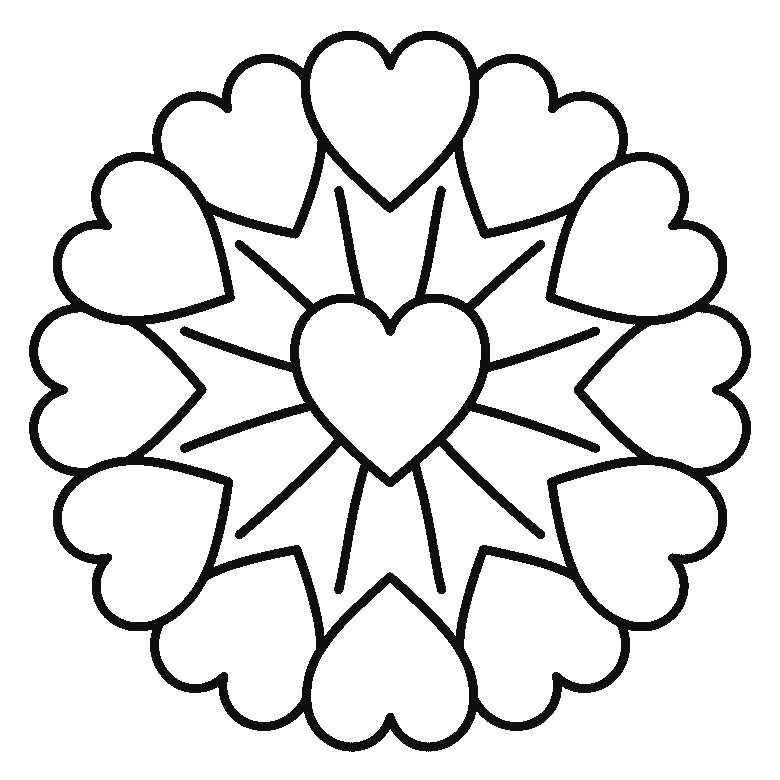
Heart mandala colouring page
One heart on a starburst at the centre, ringed by two rows of larger hearts pointing inward. Free A4-size PDF.
Colouring outline drawn by us.
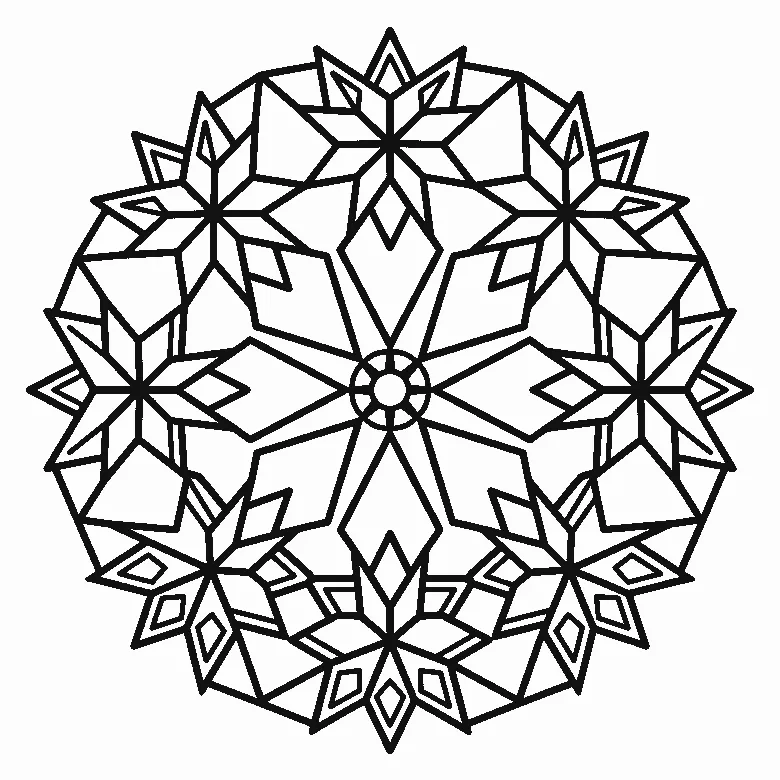
Star mandala colouring page
Eight-pointed stars and faceted diamonds in rings around a small ringed centre, free to print on A4 paper.
Colouring outline drawn by us.
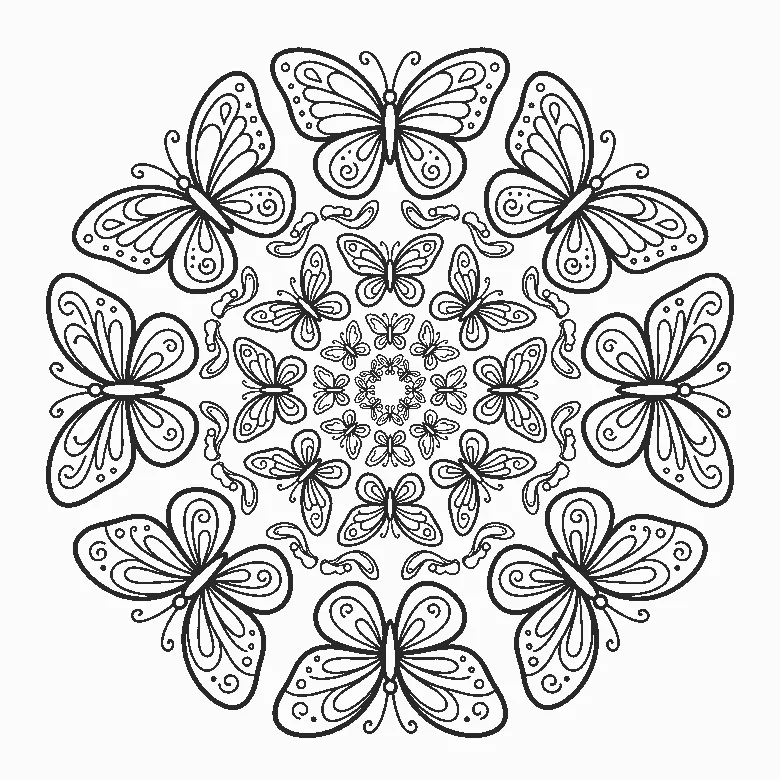
Butterfly mandala colouring page
Four rings of butterflies in one circle, drawn as clean black outlines and free to print on A4 paper.
Colouring outline drawn by us.
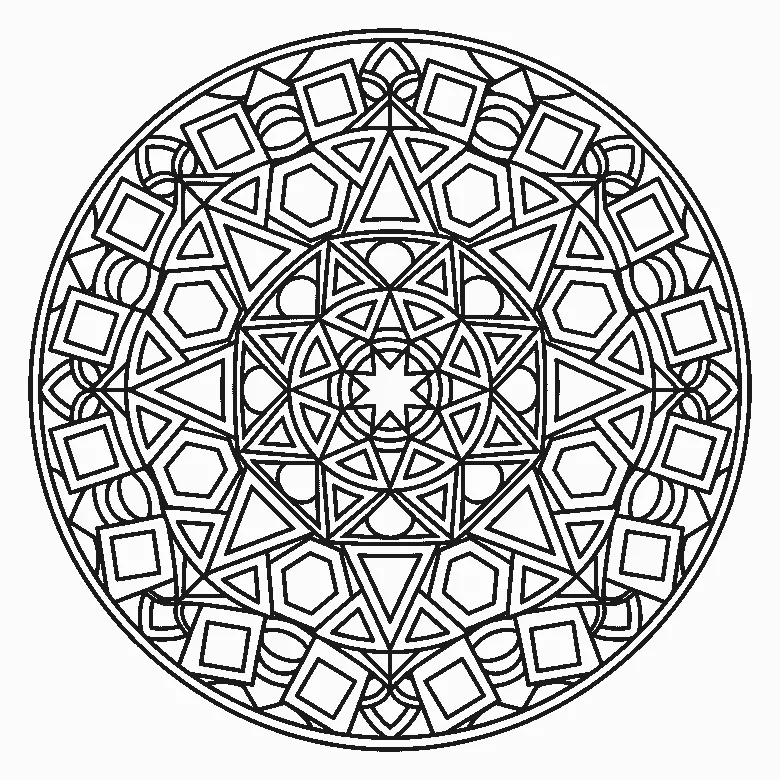
Geometric mandala colouring page
An eight-point star at the centre, rings of squares, triangles and pentagons around it, ready to print.
Colouring outline drawn by us.
Abstract mandala colouring page
Teardrop and leaf shapes layered in rings around a small round centre, on one free A4-size sheet.
Colouring outline drawn by us.
Flower mandala colouring page
Eight petals of leaf sprigs around a ringed centre, held inside a scalloped border for slow, quiet colouring.
Colouring outline drawn by us.


