
PDF · US Letter · 7 KB · Free, no sign-up. For home and classroom use.
Robot coloring page
A boxy robot standing front on, built from rectangles and circles, with pincer hands and an antenna, free as a US Letter PDF.
The robot on this sheet stands facing forward with its arms held slightly away from its sides, and it is built entirely from simple shapes. The head is a rounded rectangle, wider than it is tall, with a small knob standing out from each side where ears would be. A thin antenna tapers up from the top of the head and finishes in a small ball. Below the head a short neck joins a large rounded rectangle for the body, two straight legs drop from it, and each leg stands on a trapezoid foot that is wider at the bottom than at the top.
The face is drawn and it is friendly. Two large circles hold filled pupils with a small white highlight left inside each one, and beneath them a wide curved line closes into a crescent for a smile. Those three shapes are the only marks on the head, and they are already dark on the page, so nothing needs to be added to them. Leaving the head one flat color with the eyes and mouth untouched is the whole job; anything more competes with the shapes that are doing the work.
The chest carries four panels and they are the reason to spend time on this sheet. Three plain circles of clearly different sizes sit on the left — a small one, a medium one below and to the right of it, and a large one under both — and a single large empty square panel sits on the right. Nothing is drawn inside any of the four. They are the natural place to put the colors that appear nowhere else, and giving the three circles one color at three depths, palest in the smallest, ties them together as a set of buttons rather than three unrelated dots.
Each arm is drawn in two straight segments meeting at an angle, with a joint line across the bend, so there is an upper arm and a forearm to treat separately. The shoulders are small rounded rectangles set slightly apart from the body. The hands are open pincers, each a thick C with two blunt prongs, and they are the only shapes on the robot that are not closed all the way round. Coloring the two arm segments in two tones of one color makes the elbow read as a joint; coloring both the same makes the arm read as a single rod, and both are legitimate.
The legs and feet are the plainest part of the page and the fastest to finish. Two identical rectangles, two identical trapezoids, no lines inside any of them. Because they are the only shapes that repeat exactly, they are also where a mistake shows first: if the two legs end up different tones the robot leans, even though nothing has moved. Doing both legs in one sitting, with the same pressure, is the simplest way to keep them matched.
Nothing here has a required color, which is the advantage of a made-up subject. Metal grays and blues are the obvious reading and a robot in pink, orange or green is exactly as correct. A scheme that works with very little planning is to pick one color for every large panel — head, body, legs — a second for the smaller parts — shoulders, forearms, feet, antenna — and leave the chest circles and the square panel for a third that appears only there. That gives a finished figure with three colors and no decisions left over.
There is a piece of drawing craft on this sheet worth noticing. Everything about this robot is built from rectangles and circles with no curved contours anywhere except the pincers and the smile, and yet it reads as a character rather than as a stack of boxes. What does that is the arrangement: the head is wider than it is tall, the eyes sit high and far apart, and the smile is wide. Those three proportions are what a drawing uses to make a face look friendly, and they work here on a shape that has nothing organic about it at all.
Print at actual size on plain letter paper rather than fit-to-page, so the ball on the antenna and the joint lines on the arms keep their weight. This is one of the sheets that suits markers well, because almost every area is a large closed rectangle with a thick outline and there is nothing narrow for the ink to feather across; card stock is worth it if that is the plan. Cut out along the outline and the figure comes away in one piece, although the antenna is thin enough that leaving a small tab of paper around it is the safer trim.
Before you print
- Leave the eyes and the smile exactly as drawn; they are already dark and adding to them only competes.
- Give the three chest circles one color at three depths, palest in the smallest, so they read as a set.
- Use two tones of one color on each arm and the elbow reads as a joint.
- Color both legs in the same sitting at the same pressure, or the robot leans without moving.
- One color for the large panels, one for the small parts, one kept only for the chest — three colors finish the whole figure.
Published Updated 789 words
More in this section
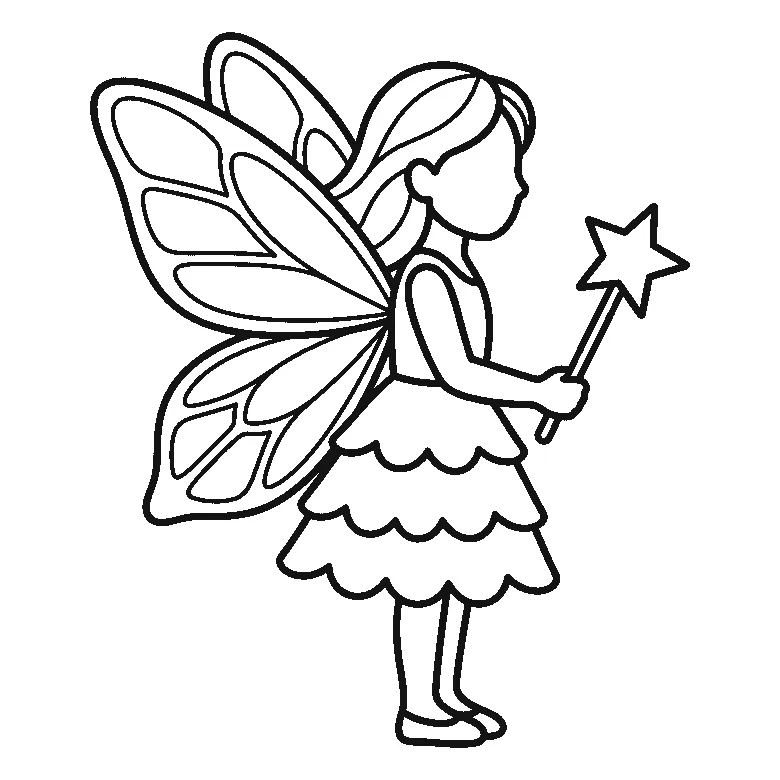
Fairy coloring page
A fairy standing in profile with a blank face, two large butterfly wings and a star-tipped wand, free as a US Letter PDF.
Coloring outline drawn by us.
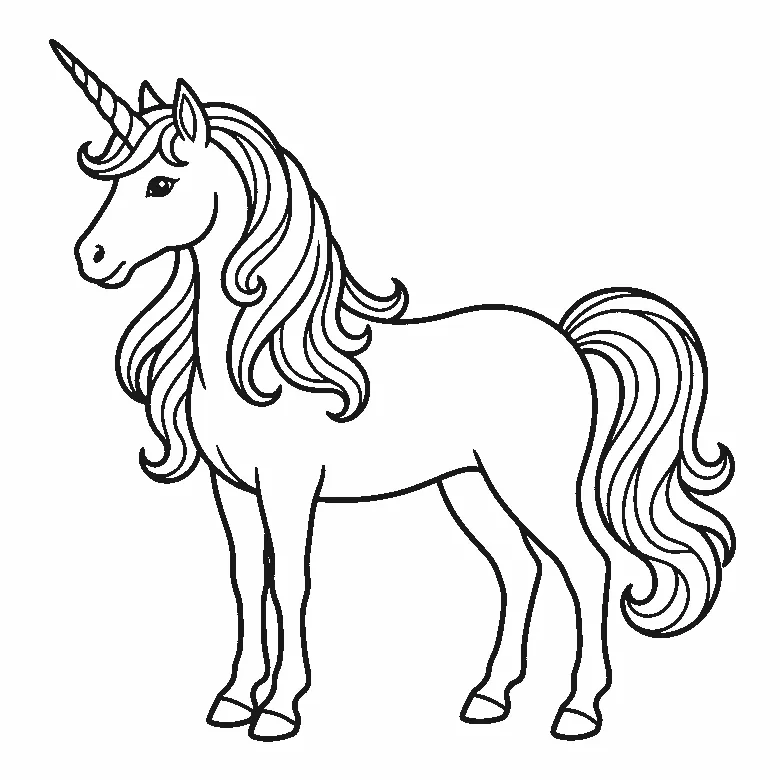
Unicorn coloring page
A standing unicorn in profile with a spiral horn and a long wavy mane, free to print as a letter-size PDF.
Coloring outline drawn by us.
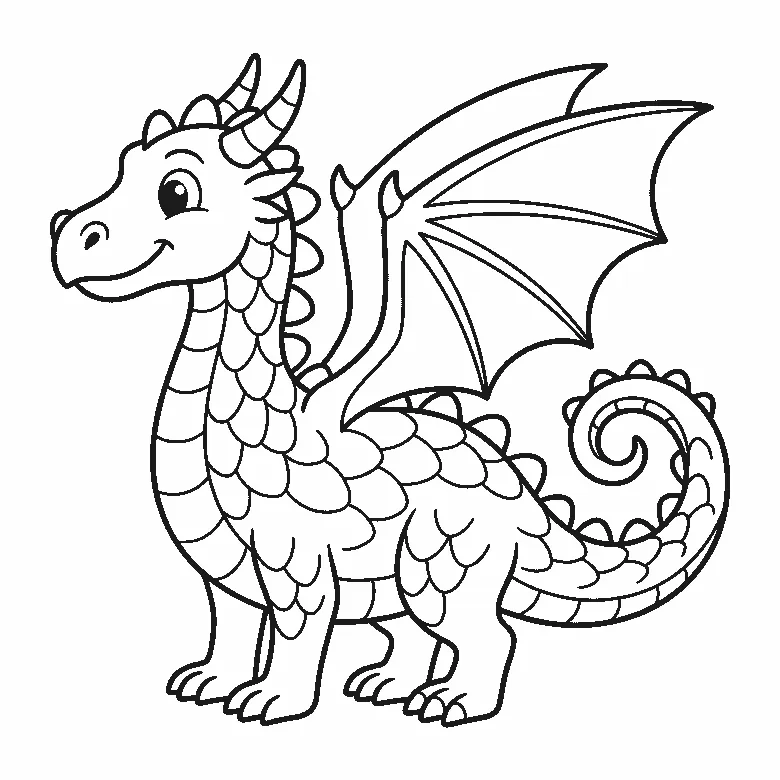
Dragon coloring page
A friendly dragon with two horns, a spiked back and one open wing, drawn in clean black outlines for letter paper.
Coloring outline drawn by us.
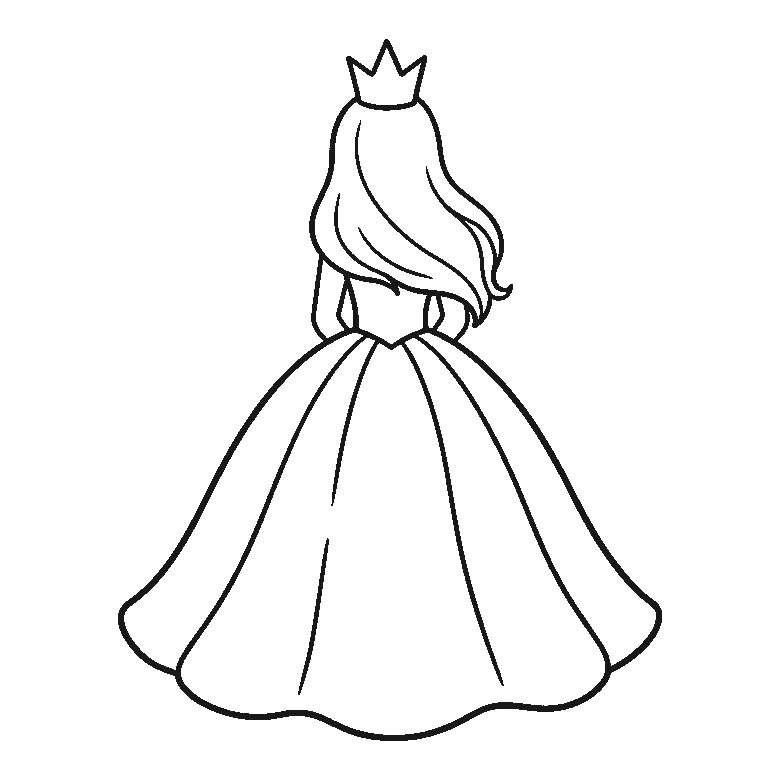
Princess coloring page
A princess seen from behind in a wide ball gown with a small crown, free to print at US Letter size.
Coloring outline drawn by us.
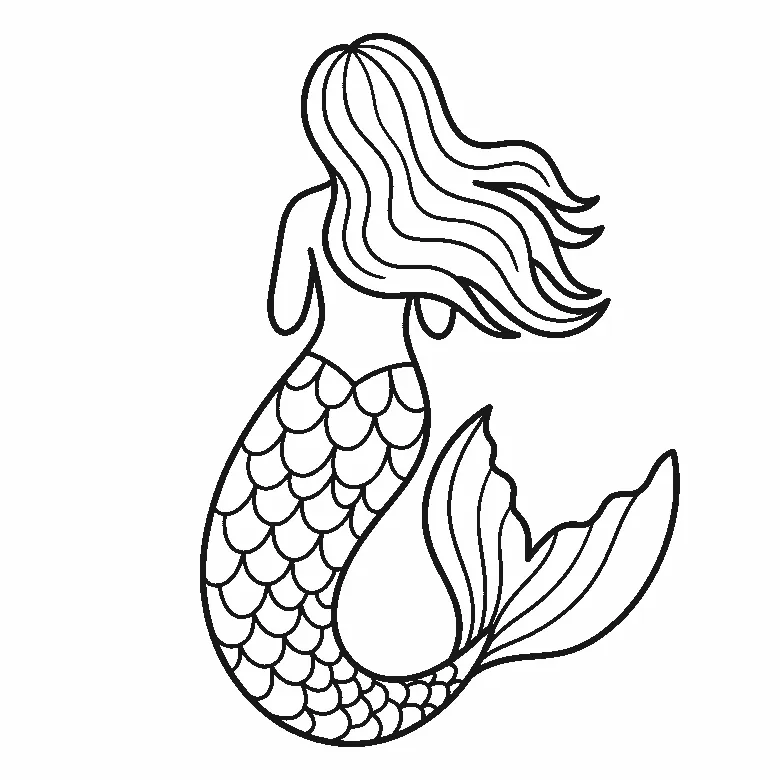
Mermaid coloring page
A mermaid seen from behind with a long scaled tail curling to a wide fin, free to print on US Letter.
Coloring outline drawn by us.
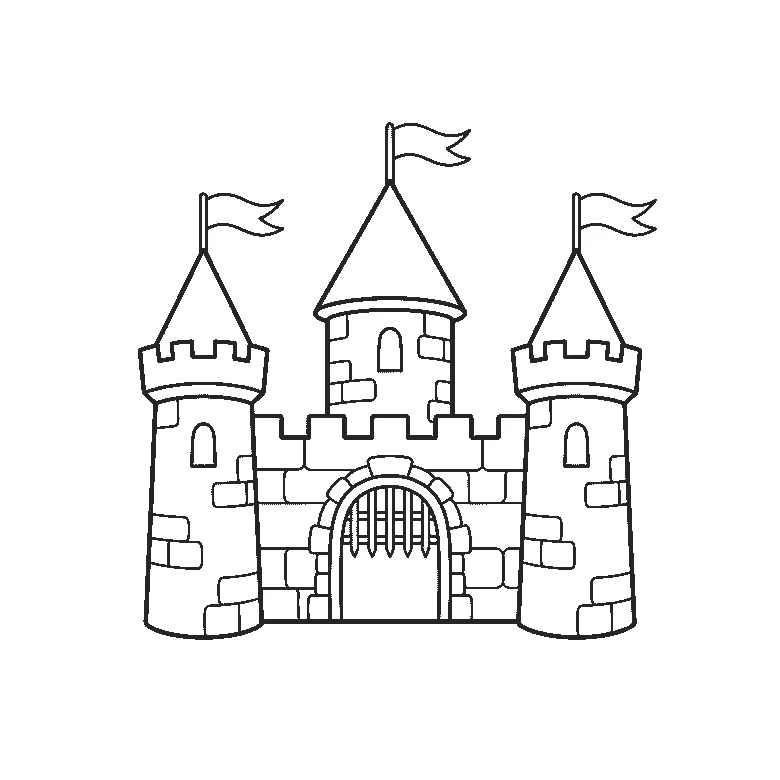
Castle coloring page
A three-towered castle with pennants, battlements and a portcullis, drawn small and centered on the sheet.
Coloring outline drawn by us.
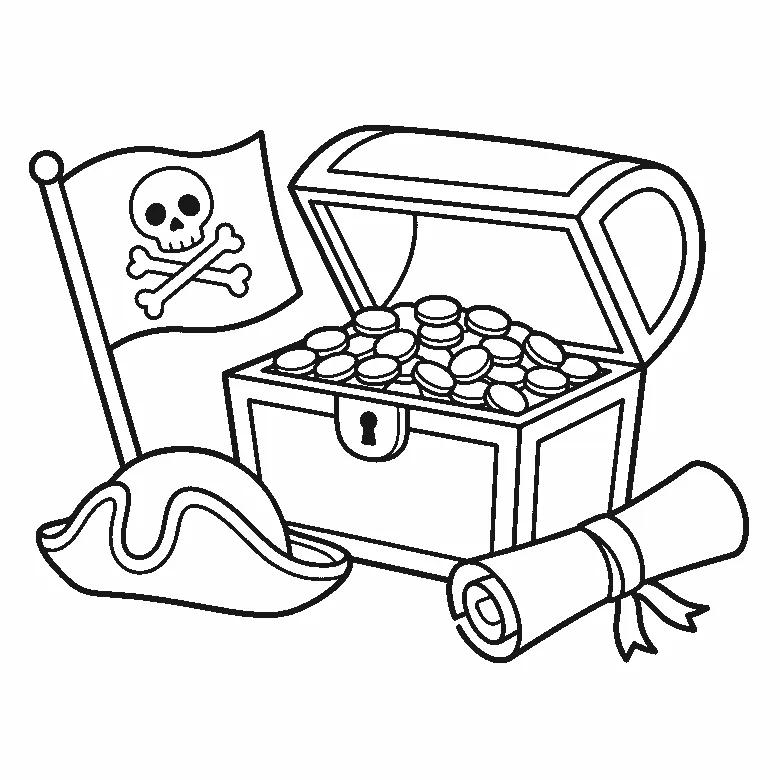
Pirate coloring page
A treasure chest heaped with plain coins, a skull flag, a tricorn hat and a blank rolled map on one sheet.
Coloring outline drawn by us.
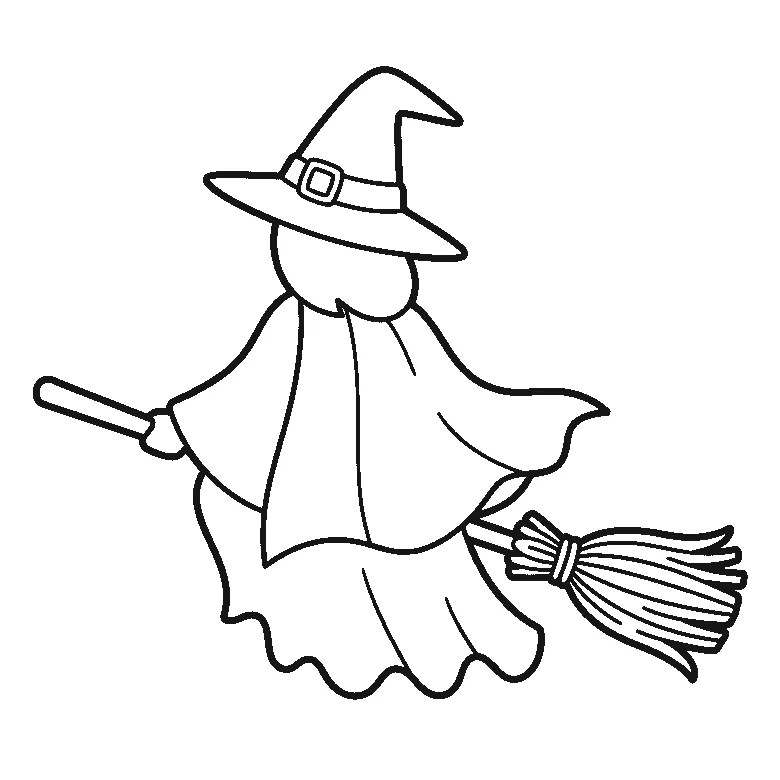
Witch coloring page
A witch seen entirely from behind on a broomstick, with no face drawn at all and a long scalloped cloak.
Coloring outline drawn by us.
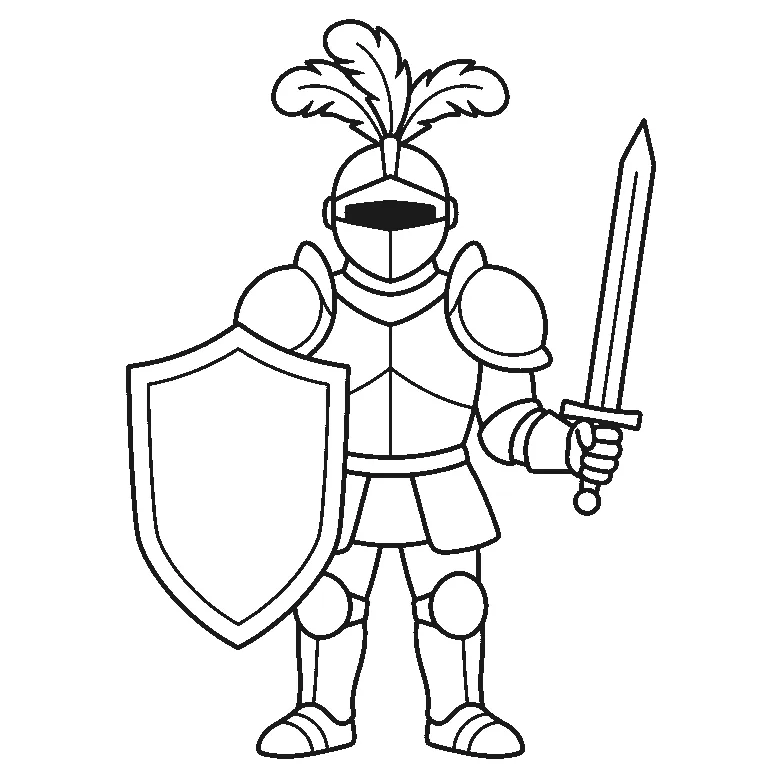
Knight coloring page
A knight in plate armor with the visor closed, a plain shield in one arm and a raised sword in the other.
Coloring outline drawn by us.


