
PDF · US Letter · 14 KB · Free, no sign-up. For home and classroom use.
Knight coloring page
A knight in plate armor with the visor closed, a plain shield in one arm and a raised sword in the other.
A knight stands facing the viewer in full plate armor. The visor is closed and no face is visible: the helmet is a smooth rounded shell with a single dark slot across it, and a plume of three broad feathers rises from the top. The armor is drawn as a small number of large plates rather than as fine detail — two rounded shoulder pieces, a chest plate, upper and lower arm sections, a skirt of overlapping bands, knee pieces and boots. A tall shield with a completely plain center panel is held on one arm, and a long straight sword is raised in the other hand.
The shield is the biggest empty area anywhere on this sheet and it is empty on purpose. There is no emblem, no lettering and no device on it, so it is a blank panel with a wide border and it will take whatever anybody puts there. Quartering it into four colors, giving it a single bold field, or drawing a device of your own into it are all things this sheet was left open for.
The armor is best treated as one material with many facets. Choosing a single gray or silver and then varying the pressure plate by plate — lighter on the chest and the shoulders that face you, darker on the arms and the skirt bands that turn away — makes the figure look metallic without any second color. A flat single-tone fill across every plate makes it look like a suit of clothes instead.
The plume is the one part of the drawing with a soft edge, and it is the natural place for a strong color against all that gray. Its three feathers are separate closed shapes, so they can be one color or three, and their combined area is small enough that even a very loud choice is not going to unbalance the sheet.
The visor slot is already filled dark on the page. That is the single darkest mark on the drawing and it is what makes the helmet read as closed rather than as an empty shape. Nothing needs to be added to it, and it also gives you a reference: any color darker than the slot will pull the eye away from the head, which is where you probably want it to stay.
The sword is one long narrow lane with a crossguard and a round pommel. Leaving the blade white and coloring only the crossguard and the grip is what makes steel look like steel on white paper, and it is faster than filling it. If the blade is colored, keeping a strip of white down one edge does the same job and takes one extra decision.
A little of the vocabulary is drawn here. The hinged plate covering the face is the visor, and the slot cut across it for seeing through is a sight. The overlapping bands at the waist are a fauld, made in strips so that the wearer can bend, which is why they are drawn as separate bands rather than as one solid piece — every place in this drawing where the armor is drawn in strips is a place a real suit had to move.
Print at actual size on plain letter paper. The sword and the plume are the two shapes a smaller print thins out. Heavier card stock is worth using if markers are the plan, mainly because the shield is a large flat field and a marker will show through it. Cut out along the outline and the knight comes away with the shield and the raised sword attached, which makes an awkward but very recognizable silhouette for a window.
Before you print
- Use one gray and vary pressure plate by plate; the armor reads as metal without a second color.
- Leave the shield's center panel for a device of your own, or quarter it into four colors.
- Put the loudest color on the three plume feathers; they are small enough to take it.
- Leave the sword blade white and color only the crossguard and grip, or keep a white strip down one edge.
- Do not color over the dark slot in the visor; it is what makes the helmet read as closed.
Published Updated 616 words
More in this section

Robot coloring page
A boxy robot standing front on, built from rectangles and circles, with pincer hands and an antenna, free as a US Letter PDF.
Coloring outline drawn by us.
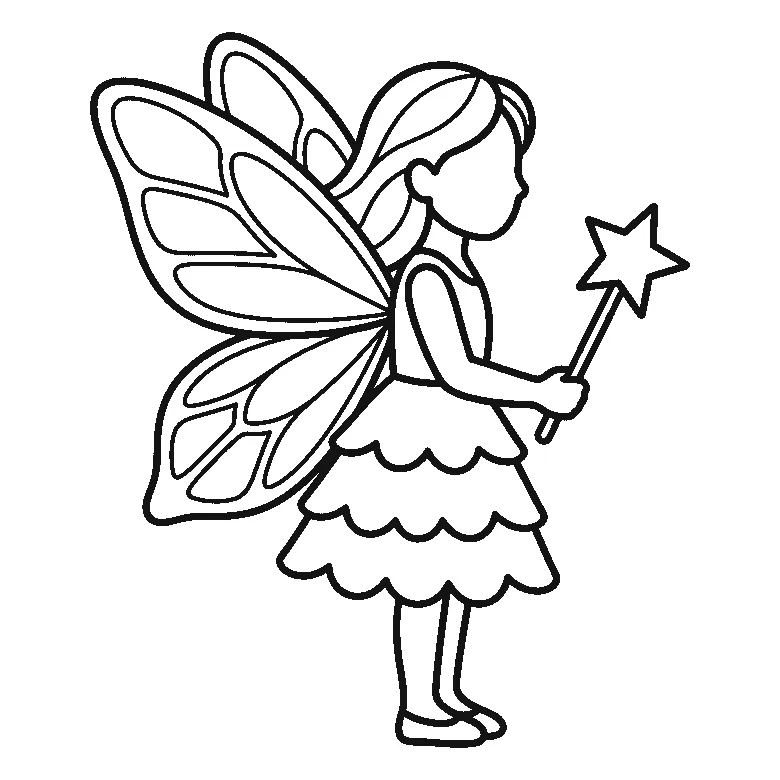
Fairy coloring page
A fairy standing in profile with a blank face, two large butterfly wings and a star-tipped wand, free as a US Letter PDF.
Coloring outline drawn by us.
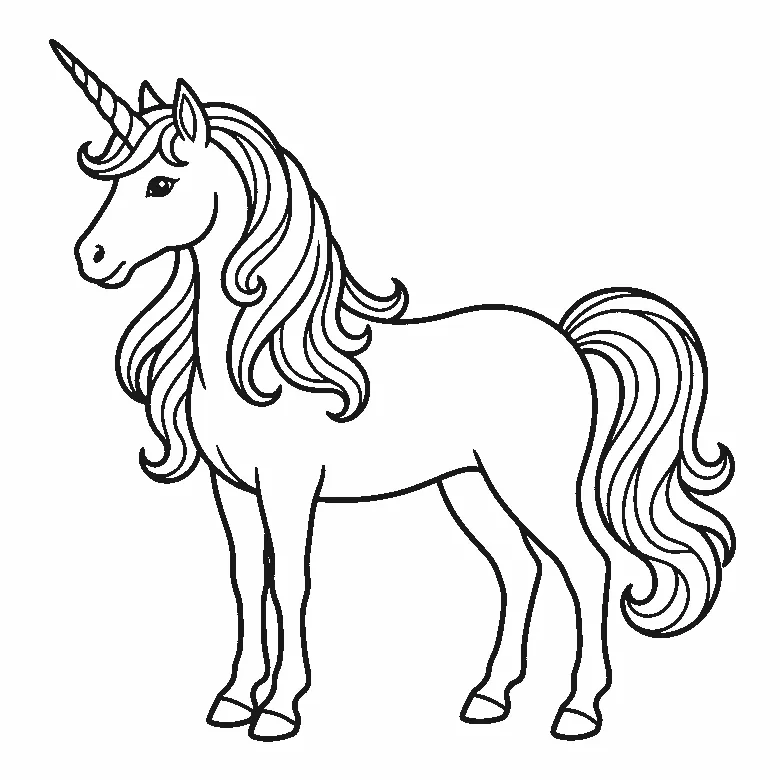
Unicorn coloring page
A standing unicorn in profile with a spiral horn and a long wavy mane, free to print as a letter-size PDF.
Coloring outline drawn by us.
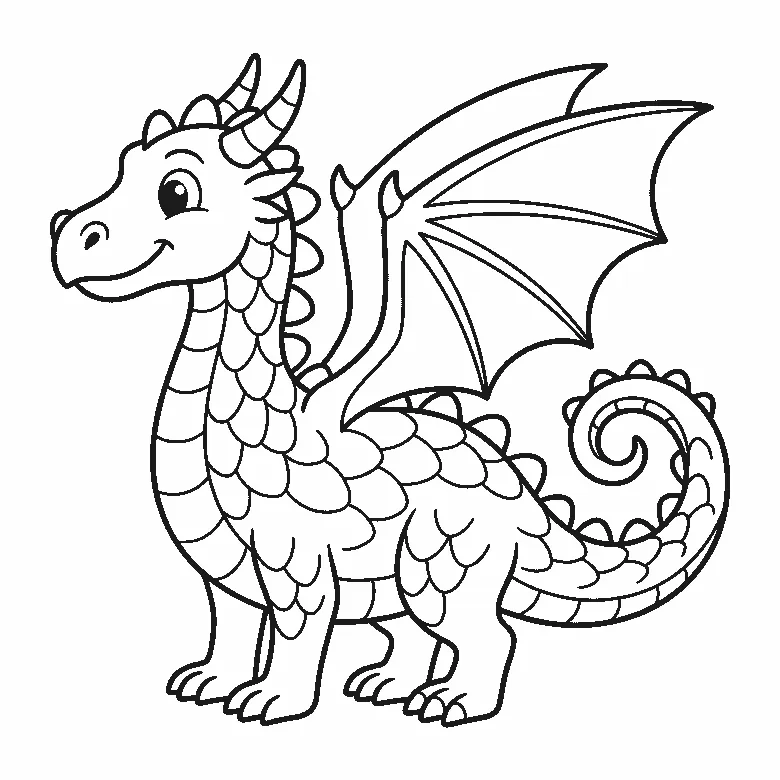
Dragon coloring page
A friendly dragon with two horns, a spiked back and one open wing, drawn in clean black outlines for letter paper.
Coloring outline drawn by us.
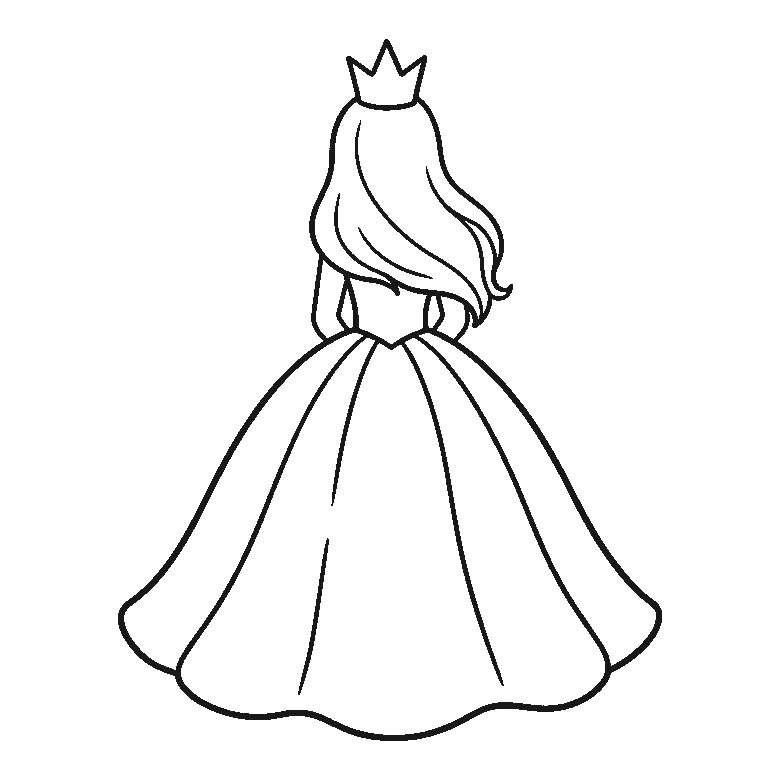
Princess coloring page
A princess seen from behind in a wide ball gown with a small crown, free to print at US Letter size.
Coloring outline drawn by us.
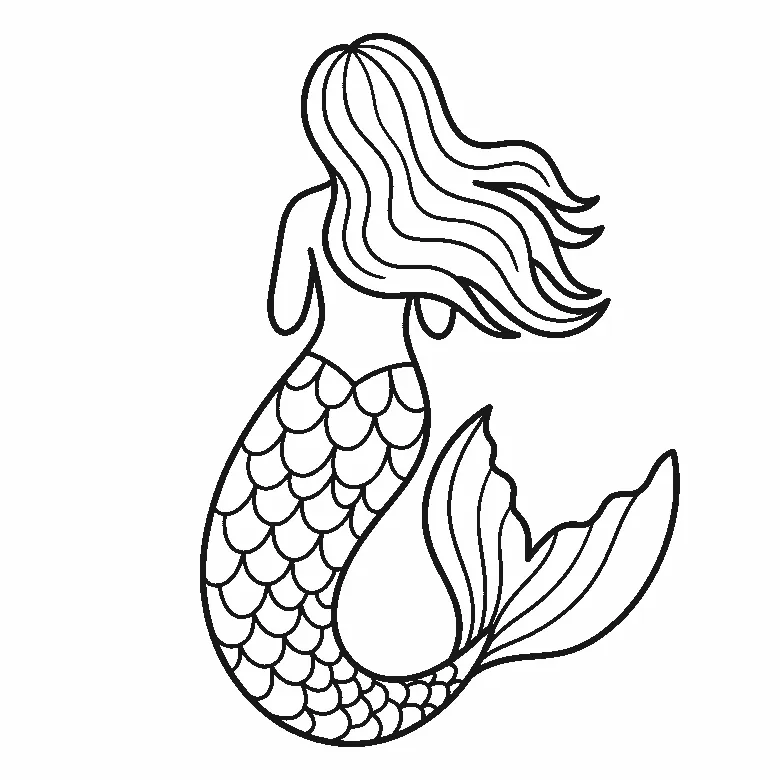
Mermaid coloring page
A mermaid seen from behind with a long scaled tail curling to a wide fin, free to print on US Letter.
Coloring outline drawn by us.
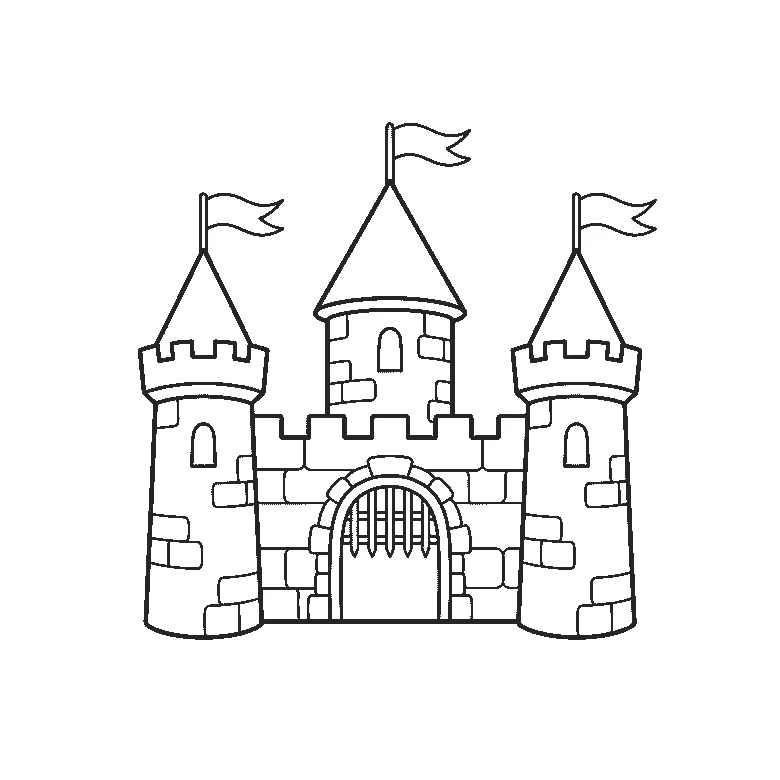
Castle coloring page
A three-towered castle with pennants, battlements and a portcullis, drawn small and centered on the sheet.
Coloring outline drawn by us.
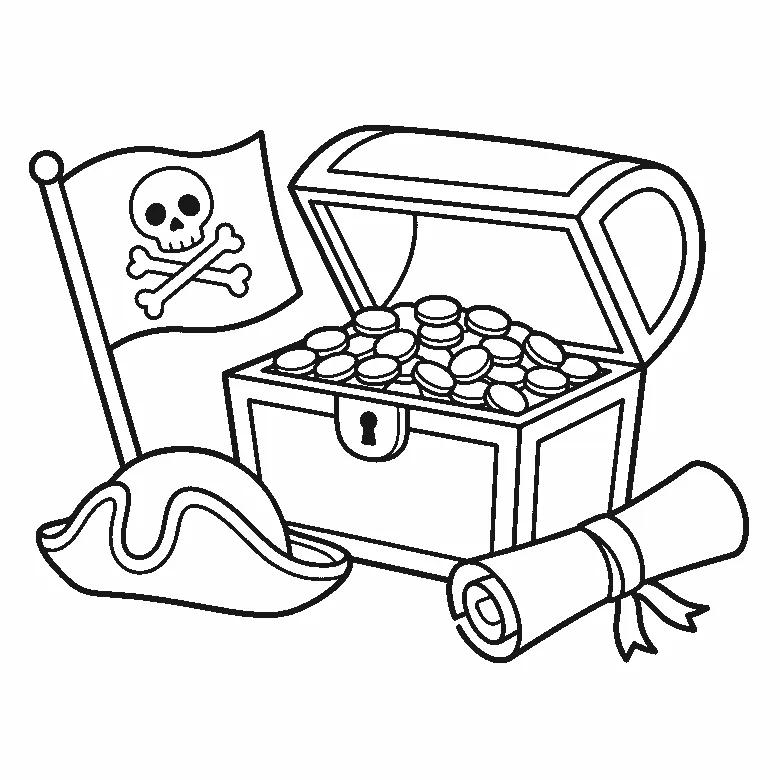
Pirate coloring page
A treasure chest heaped with plain coins, a skull flag, a tricorn hat and a blank rolled map on one sheet.
Coloring outline drawn by us.
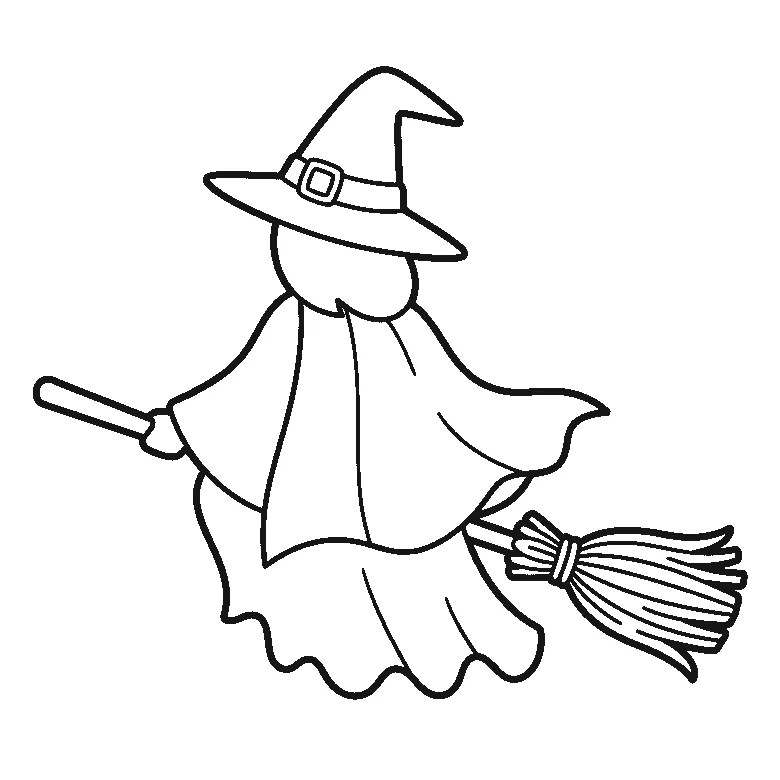
Witch coloring page
A witch seen entirely from behind on a broomstick, with no face drawn at all and a long scalloped cloak.
Coloring outline drawn by us.


