
PDF · A4 · 14 KB · Free, no sign-up. For home and classroom use.
Space colouring page
A rocket climbing past stars, a crescent moon and a ringed planet, drawn as clean outlines on A4 size.
This page is a scene rather than a single object. A rocket sits at the middle of it, pointed upward, with a rounded nose, a long body, three round portholes down that body, two fins at the base and a flame coming out beneath. A cloud sits below the flame, the kind a rocket leaves behind on the way up. Around all of that, filling the rest of the sheet, are stars, a crescent moon and a planet with a ring around it. Every element is a clean black outline with white inside, and the space between them is left open.
Start with the rocket body, because it is the largest single area and it sets the tone for everything else. The three portholes interrupt it, so decide early whether they are windows showing something or solid circles of colour. Once the body is down, the fins are the natural next step, and giving them a different colour from the body splits the silhouette into two parts, so the base stops blending into the long shape above it. The flame comes after, then the cloud below it, then the sky elements last so you can pick colours that do not collide with what is already on the page.
The flame is the one place on this sheet where layering pays off. A flame is not one colour, so put yellow down across the whole shape first, then come back with orange along the outer edges and leave the middle bright. Red at the very tips finishes it. This works with pencils, which build up, and with crayon if you press lightly on the first pass. It does not work with markers, which will not let a second colour sit on top of a first without turning muddy, so with markers pick one flame colour and commit.
The stars are small and there are many of them, which makes them the part of the page that punishes a heavy hand. Pressing hard with a coloured pencil on a shape that size pushes the point past the outline and the star loses its points. A light touch and two passes is one way to build the colour up without asking a single firm pass to do all of it. Gel pens are excellent here, and a metallic or white gel pen over a darkened sky is one of the few ways to make stars glow rather than just sit there. If you plan on a dark sky, colour the stars and the moon first and work the sky around them.
Space itself is famously black, which raises a real question on a page like this. A fully blacked-in sky makes the rocket and the ringed planet pop harder than anything else you can do, but it is a lot of area to cover evenly and it eats a marker or a crayon quickly. A deep blue or purple gets most of the effect with less work and looks better under uneven pressure. Leaving the sky white is also completely valid and keeps the drawing light and open, which suits the simple outlines. The sheet supports all three; they are just different pages at the end.
The ringed planet deserves more attention than its size suggests. Its ring passes in front of the planet on one side and behind it on the other, so colouring the ring in a different shade from the body makes that overlap read correctly instead of flattening out. Bands of alternating tone across the planet body, even two shades of the same colour, turn a plain circle into something that looks like it has weather. The crescent moon nearby is the opposite problem: it is a single simple shape, and the most striking thing to do with it is often nothing at all, leaving it as white paper against whatever sky you build.
Print this one at actual size on plain A4 paper. If a dark sky is the plan, heavier card is worth using, because a fully covered sheet of thin paper will buckle and marker will come through the back. We built the layout so the rocket sits clear of the margins and nothing important runs close to the paper's edge, which means it trims and mounts without losing a fin. Printing two copies lets one person try a white sky and another a black one, and the comparison is the interesting part.
When it is finished, the rocket is the piece worth cutting out. Trimmed along the outline, with the flame and the cloud left attached, it mounts on coloured card or a folder cover and reads clearly from a distance. The rest of the sheet can be cut up too, since the stars and the planet are separate shapes. This page holds a rocket, a cloud, a moon, a ringed planet and a wide field of stars, all separate objects competing for attention, so it is the sheet to pick when you want a long session with plenty of small decisions rather than a few large fields of colour.
Before you print
- Give the two fins a different colour from the rocket body so the shape reads from across the room.
- Lay yellow across the whole flame first, then bring orange in along the edges and red at the tips.
- Use a light touch on the stars, since pressing hard is what pushes the point past those small outlines.
- Colour the ring a different shade from the planet body so the part crossing in front stays legible.
- Print on heavier card if you plan to fill the sky, because a fully covered thin sheet will buckle.
Published Updated 845 words
More in this section

Heart colouring page
One big heart packed with small hearts, spirals and flowers, wrapped in a ribbon, free to print on A4 paper.
Colouring outline drawn by us.

Bouquet colouring page
Seven round flowers with wide petals, their stems bundled and tied with a broad ribbon bow.
Colouring outline drawn by us.
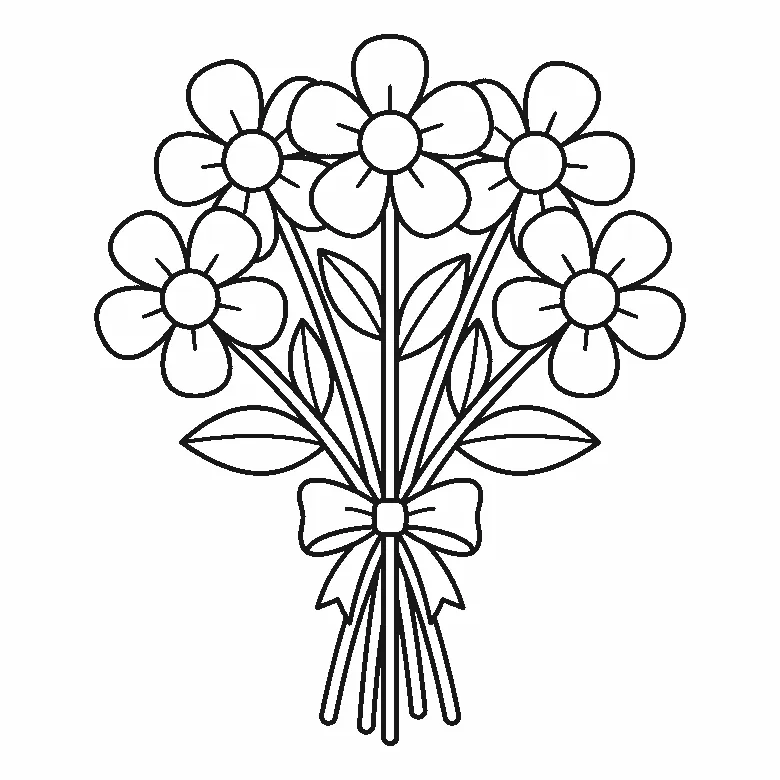
Flower colouring page
A tied bouquet of five round-petalled flowers, drawn as big open shapes on one printable A4 sheet.
Colouring outline drawn by us.
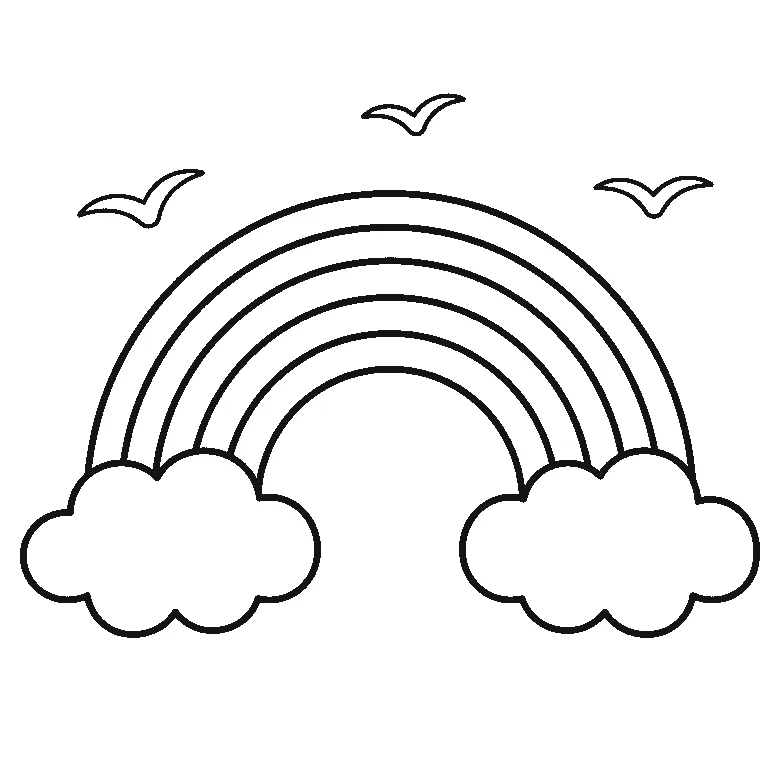
Rainbow colouring page
Six separate bands, a cloud at each end and three birds overhead, all in open outline on one A4 page.
Colouring outline drawn by us.


