
PDF · A4 · 12 KB · Free, no sign-up. For home and classroom use.
Axolotl colouring page
A side-view axolotl with feathery gills and a finned tail, drawn in thick black outlines for A4 paper.
The axolotl on this sheet is drawn in profile, so the whole animal reads as one long curve running from the blunt snout back to the tip of the tail. A single round eye sits high on the head. The mouth is wide and turns up a little at the corner, which is what gives the face its smile. Three feathery gill fronds branch off each side of the head and lean back over the shoulders. The tail flattens into a fin that runs along both its top and bottom edges. Black outline on white, no shading, no background scenery.
The biggest uninterrupted space is the body itself, the long stretch between the front legs and the base of the tail. No line crosses it, so one colour can travel the entire distance without stopping. The head is the second open area, broad and rounded. After that the shapes shrink quickly: each gill frond splits into narrow fingers, the toes come to points, and the fin tapers to a thin band near the tail tip. It helps to plan for two speeds of work, one broad and unhurried, one slow and small.
A sensible order is to do the gills first, while your hand is fresh and steady, then move to the head, then let the body and tail carry you out to the end. Working small-to-large this way means your hand rests on paper you have not coloured yet rather than on finished areas. If you press hard inside the gill fingers, the pigment builds against the outline and can push past it, so ease off there and save the firm pressure for the body, where a heavy fill actually looks good.
Crayon suits the body well because the wide stretch takes a broad stroke without effort, though crayon tends to skip inside the gill fingers and leave the paper showing. Coloured pencil handles those fingers cleanly and lets you build the body up in layers, going over the same patch twice for a deeper tone. Markers give the flattest, most solid fill and make the thick outline look even blacker beside them, but they soak through ordinary printer paper, so slide a spare sheet underneath. A gel pen is useful last, for a bright dot in the eye or a run of tiny marks along the fin.
A pale pink body with gills in a deeper pink or red is one way to take it, and it works nicely here because the gill fronds are separate shapes and can carry a stronger colour than the body without fighting it. Axolotls also come in mottled browns and greys, and a body coloured in scattered dark patches over a lighter base looks convincing. None of that is required. A green axolotl with orange gills is just as finished a drawing, and the outlines will hold whatever you decide.
An axolotl is a salamander, an amphibian that spends its whole life in water instead of leaving it for land the way most of its relatives do. The feathery fronds on its head are real gills, kept on the outside of the body rather than tucked away, and they are the reason the head looks so much wider than the animal itself. The wide flat mouth is not actually a smile, it is just the shape of the jaw, and the upturned corner still carries that expression across the whole face on the page.
Print it on plain A4 paper at actual size rather than fit-to-page, so the outlines stay the weight they were drawn at and the gill fingers do not close up. If markers are the plan, a sheet of thicker card holds the ink without bleeding and keeps the back of the page clean. Printing two copies at once is worth doing when two people want to colour side by side, and it also gives you a spare in case the first attempt at the gills goes somewhere unexpected.
Finished, the axolotl trims well. Cut around the outer edge, including the fan of gills, and the shape holds together as a single silhouette you can tape to a window, where light through the paper makes a pale body glow. It also works folded into a card, with the tail curving towards the fold. The gills are the most delicate small work anywhere on this sheet, a fan of narrow fingers that asks for a slower hand than the long open sweep of the body does.
Before you print
- Colour the gill fronds before anything else, while your hand is steadiest.
- Keep pressure light inside the narrow gill fingers so the colour does not creep past the outline.
- Lay a spare sheet under the page if you use markers, since A4 paper lets them through.
- Give the long body one continuous colour, then vary the tail fin to separate it from the back.
- Cut around the outer edge, gills included, and tape the whole silhouette to a window.
Published Updated 746 words
More in this section
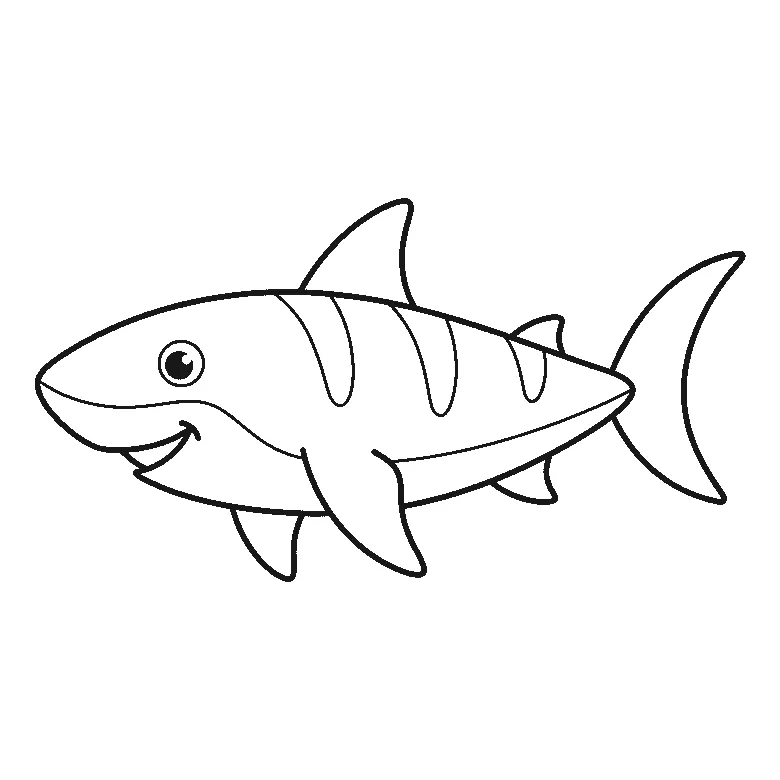
Shark colouring page
One shark in profile, tall dorsal fin to crescent tail, printable on A4 paper with no background.
Colouring outline drawn by us.
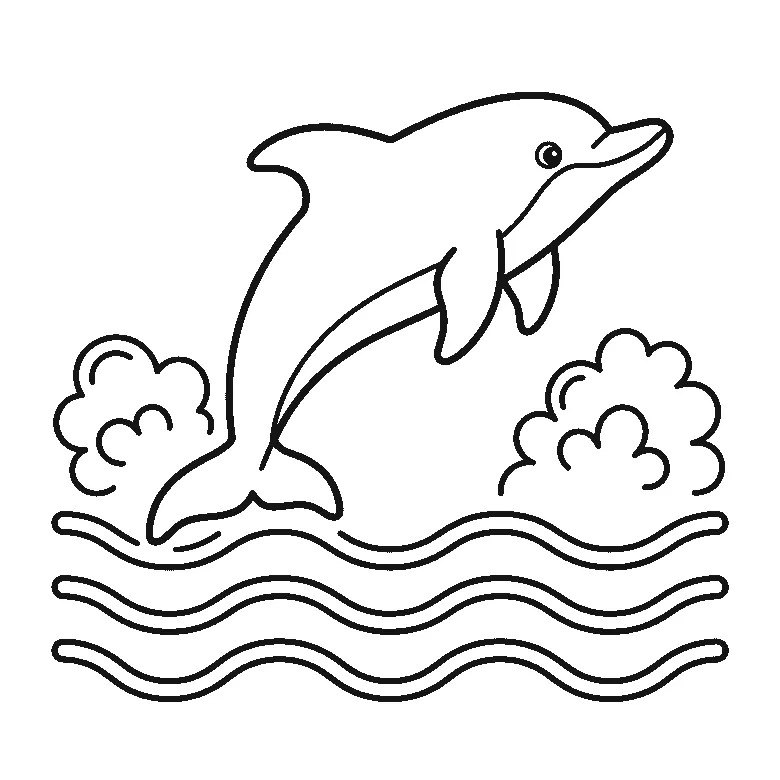
Dolphin colouring page
A leaping dolphin above three wave lines, drawn in thick black outline and free to print as an A4 PDF.
Colouring outline drawn by us.
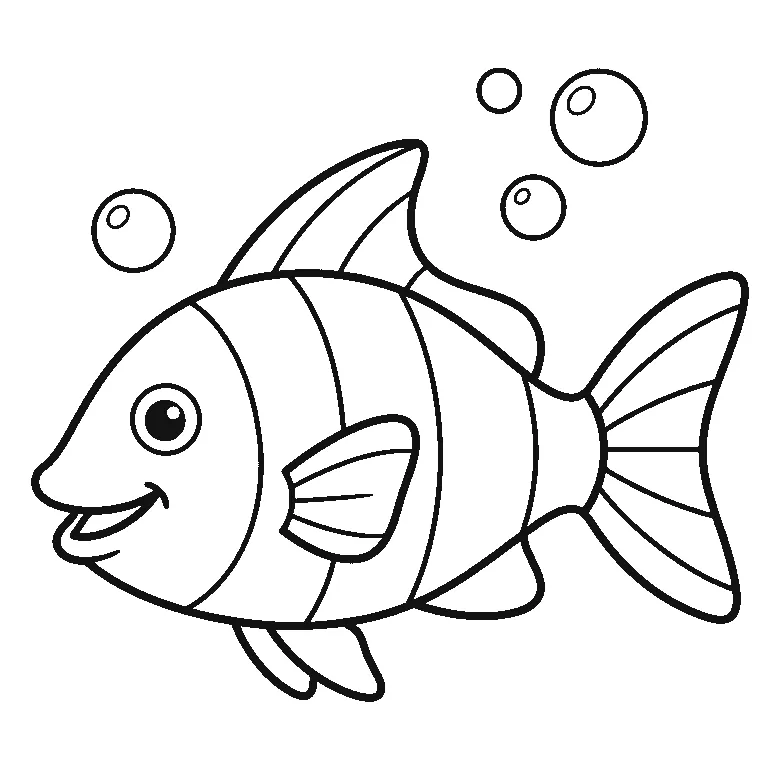
Fish colouring page
A broad striped tropical fish with three bubbles beside it, free to print at full A4 size in clean outline.
Colouring outline drawn by us.
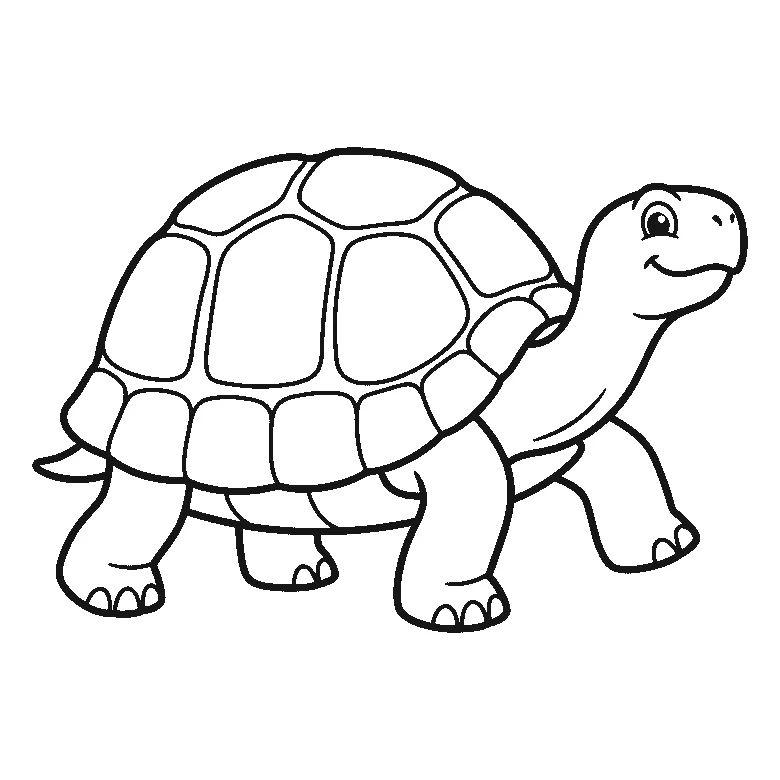
Turtle colouring page
A turtle mid-step with a large domed shell divided into plates, ready to print free on A4 paper.
Colouring outline drawn by us.


