
PDF · A4 · 21 KB · Free, no sign-up. For home and classroom use.
New Year colouring page
A clock at midnight, a firework burst, four balloons, a horn, a party hat and seven stars, printable at actual size.
Eight kinds of object share this page and no two of them touch. A large clock face sits low and central, drawn as a double ring with twelve plain tick marks inside it and two straight hands standing together at the top. Above it a firework burst opens as a ring of long straight rays around one small round centre. Four balloons float at the sides on long curved strings, two to the left and two to the right. A party horn with a spiral tip lies at the bottom left, a cone party hat with a round pompom stands at the bottom right, and seven small stars fill the gaps between them.
There is no writing anywhere on this sheet, and that is deliberate rather than an omission. The clock carries tick marks and no numerals, and no year appears on any surface. It means the page does not expire: the same file prints in any year, and the empty face is also the largest single area on the sheet, which makes it the natural place for the boldest colour on the page.
The firework is the busiest object and the one to do first. Its rays are long, narrow and closed at both ends, so they hold colour without leaking, but they are also the shapes a broad tip will bridge. Filling alternate rays and leaving the ones between them white gives a burst that reads at arm's length; filling all of them in one colour gives a solid star. The small circle at the middle is worth leaving until last, because whatever goes there decides how the whole burst reads.
The four balloons are the easy weight on the page. Each is one closed oval with a small knot at the bottom and a long curved string, and there is nothing inside any of them. That makes them the place to try a light circular fill with a darker edge, which is what makes a flat oval look round. The strings are thin enough that a marker tip will swallow them, so a pencil or a fine pen is the tool for those, and drawing over them in a second colour is easier than trying to fill them.
The seven stars are five-pointed and small, and they are what stops the page looking like four separate drawings. Giving them all one colour, or leaving all seven white on a coloured ground, ties the corners together. The party hat and the horn are the two objects with a shape nothing else on the sheet repeats: a plain cone and a tight spiral. The spiral in particular is one continuous lane, and following it from the outside in with a sharp pencil is the neatest small job on the page.
A clock's hands standing together at the top is how a drawing says midnight without writing anything down, and it is the only element here that has to stay where it is. Everything else can be any colour. A conventional reading gives the clock a gold rim, the balloons a mix, the fireworks warm colours and the stars yellow, and it will look like what it is. Nothing on the outline argues with a green clock and blue fireworks.
The twelve tick marks are the smallest repeated shapes on the sheet, and they sit inside the rim rather than on it. Leaving them white and colouring the face around them is much quicker than filling twelve small dashes, and it reads better too, because a white mark on a coloured face is easier to see than a coloured mark on white. That is worth knowing before you start the clock, since the face is a big area and there is no going back once it is filled.
Print at actual size on plain A4 paper. Fit-to-page shrinks the tick marks and the balloon strings first, and those are the two things on this sheet that cannot afford it. Markers work well on the balloons and the clock face; on the firework rays they will bridge, so keep something finer for that corner. Cut out, the clock makes a round ornament with an obvious place for a hole above the rim, and the four balloons come away as four separate shapes that can be strung on real thread.
Before you print
- Fill alternate firework rays and leave the ones between them white; the burst reads from across the room.
- Leave the twelve tick marks white and colour the clock face around them rather than filling each one.
- Use a pencil or a fine pen on the balloon strings, which a marker tip will swallow whole.
- Follow the horn's spiral from the outside in with a sharp point; it is one continuous lane.
- Save the small circle at the centre of the firework until last and let the rays decide its colour.
Published Updated 718 words
More in this section
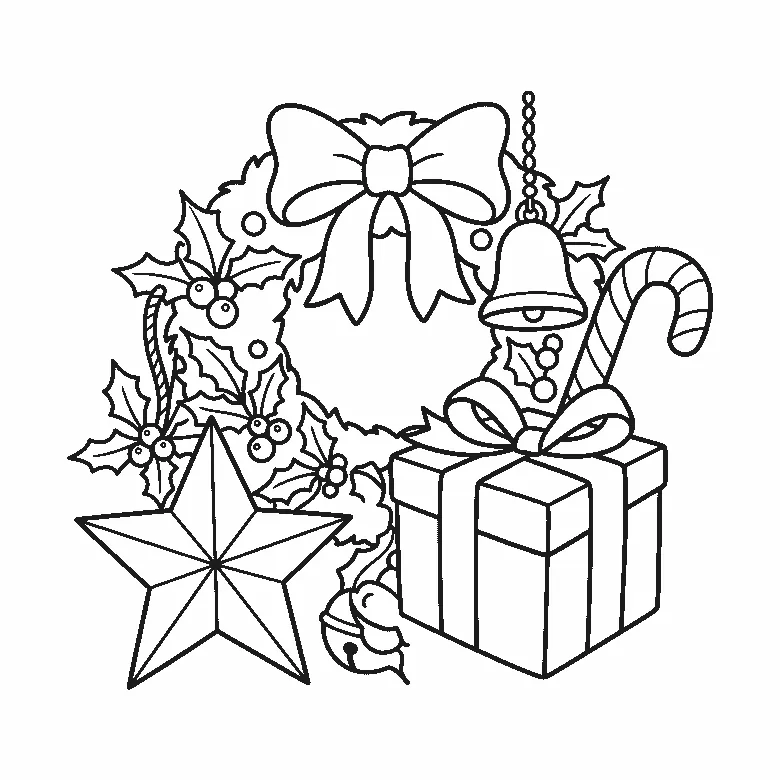
Christmas colouring page
Six separate holiday shapes on one sheet, from holly wreath to jingle bell, free as an A4 PDF.
Colouring outline drawn by us.
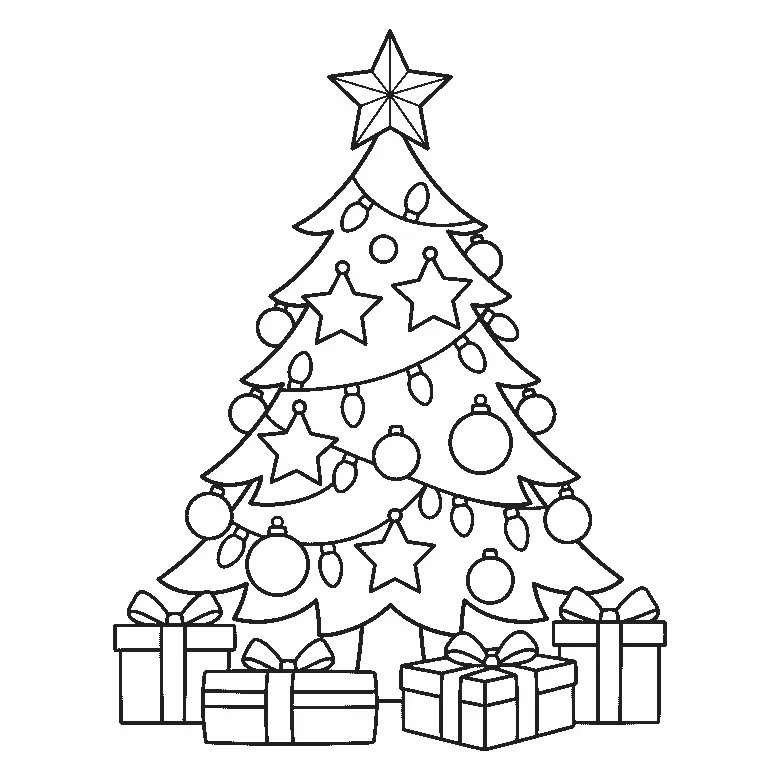
Christmas tree colouring page
One decorated tree with a star, baubles, light strings and five wrapped gifts, in black outline on A4 paper.
Colouring outline drawn by us.
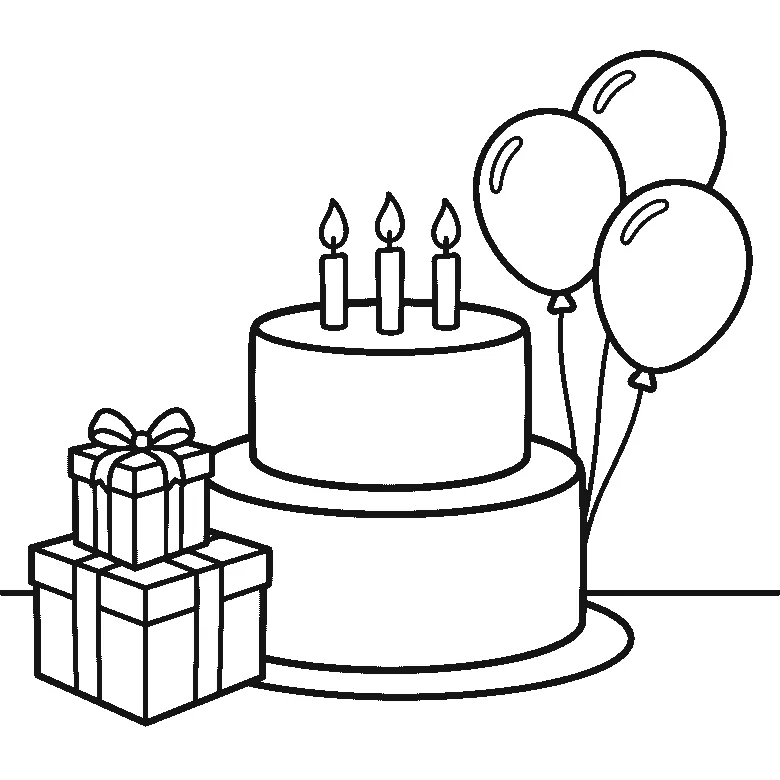
Birthday colouring page
A two-tier cake with three lit candles, a stack of two gifts and three balloons, printable at actual size.
Colouring outline drawn by us.
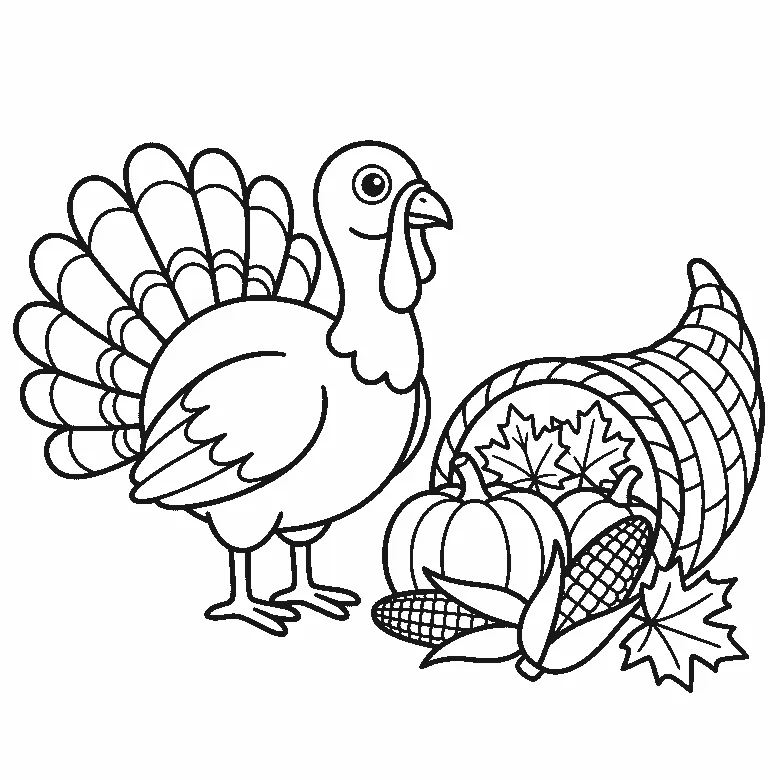
Thanksgiving colouring page
A fan-tailed turkey and a spilling cornucopia in black outline, sized for A4 paper and ready to print.
Colouring outline drawn by us.
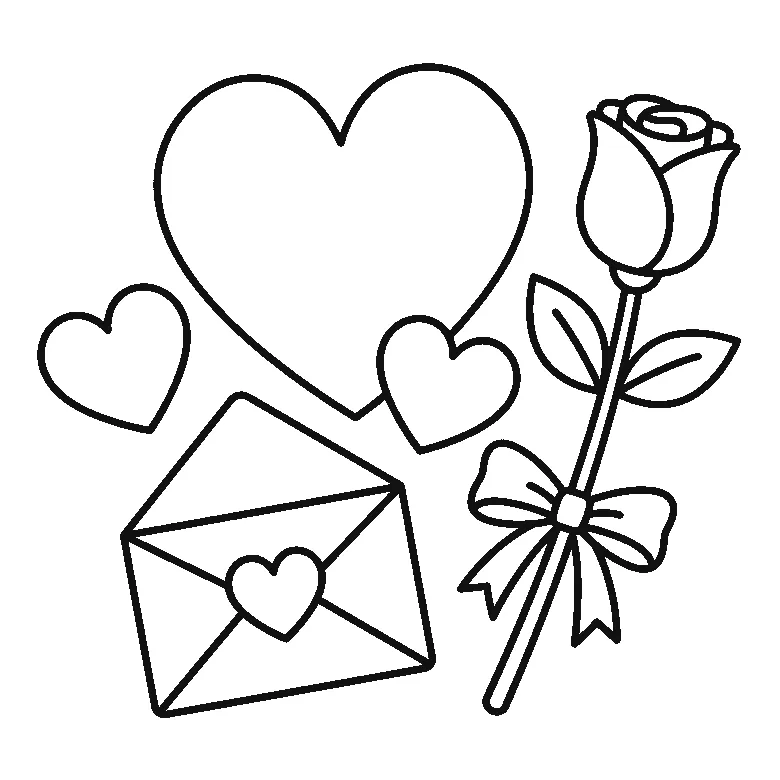
Valentine's Day colouring page
One large heart, two small ones, an open envelope with a heart seal, and a long-stemmed rose tied with a bow.
Colouring outline drawn by us.
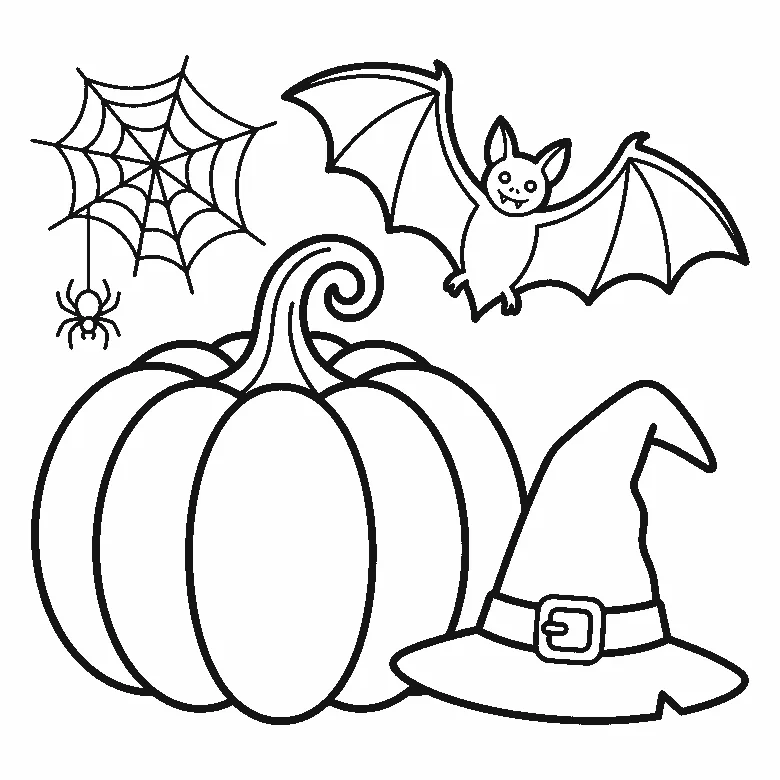
Halloween colouring page
A pumpkin, a bat, a hanging spider and a buckled witch hat on one printable sheet, black outlines on white.
Colouring outline drawn by us.
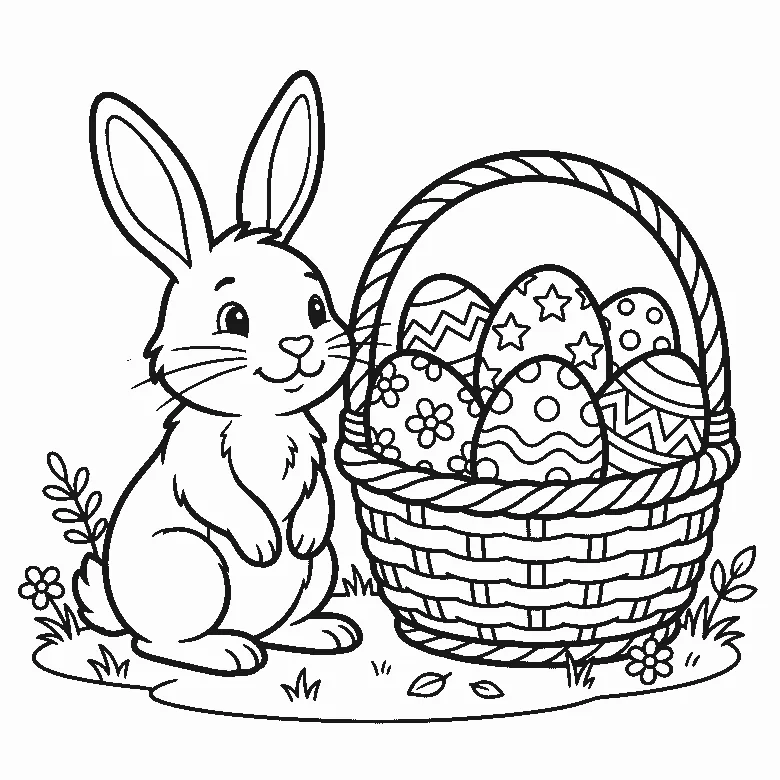
Easter colouring page
A rabbit in profile beside a woven basket of six patterned eggs, drawn in black outline for printing at A4 size.
Colouring outline drawn by us.
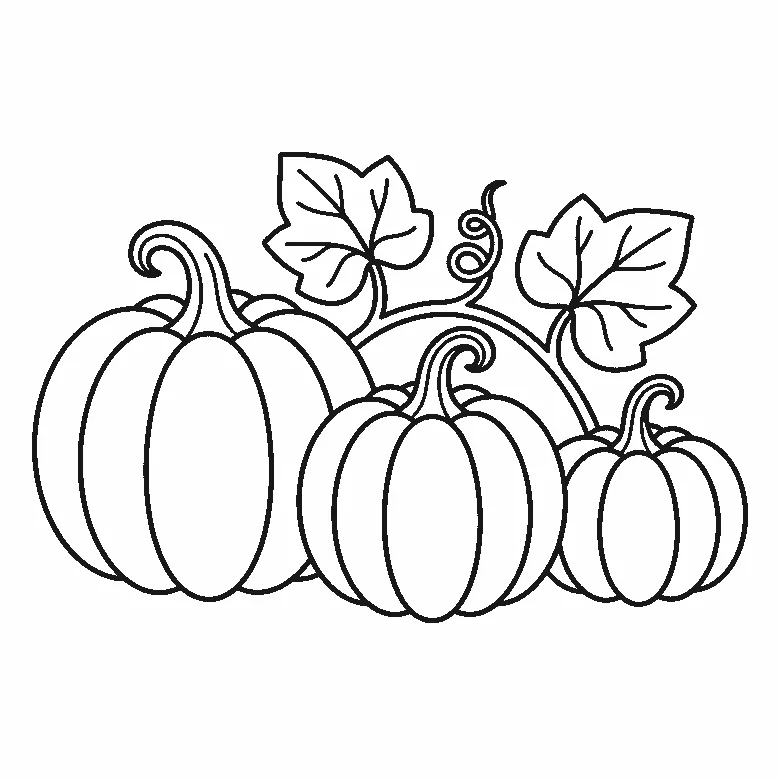
Pumpkin colouring page
Three ribbed pumpkins with curled stems, a vine with two broad leaves and a tendril running behind them.
Colouring outline drawn by us.
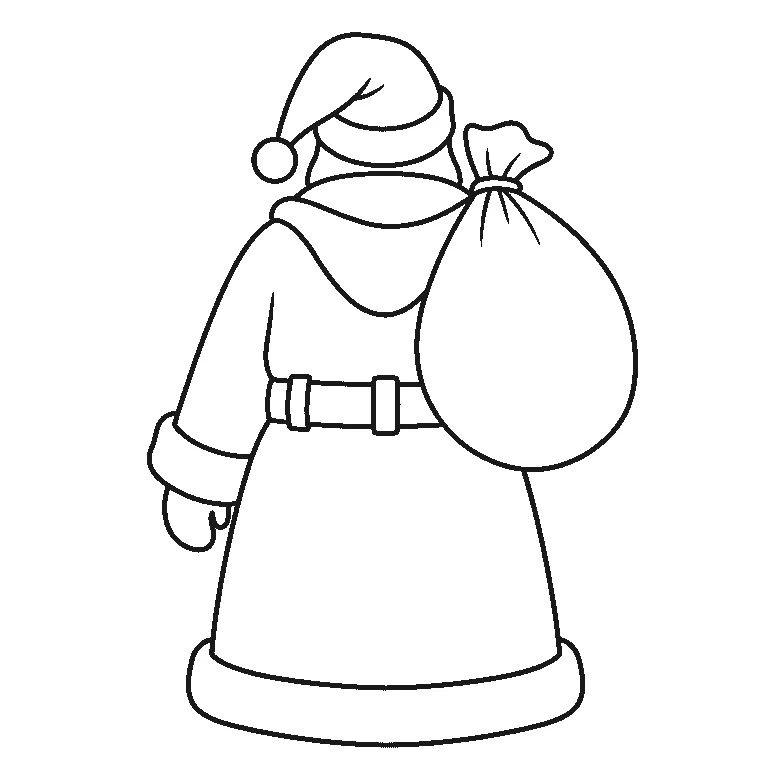
Santa colouring page
Santa drawn from behind in a belted coat with fur cuffs, a pointed hat with a pom-pom, and a sack over one shoulder.
Colouring outline drawn by us.
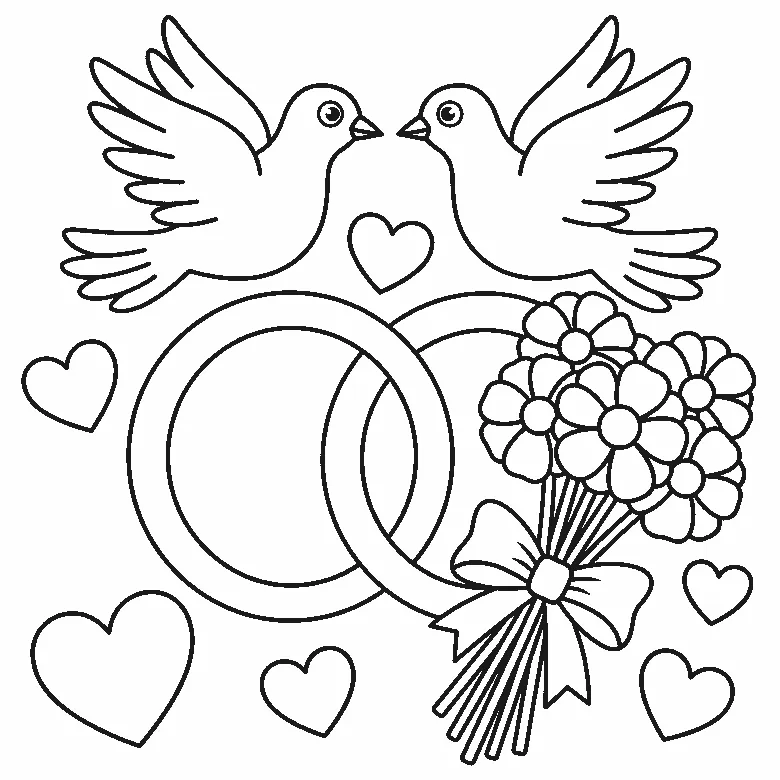
Wedding colouring page
Two interlocking rings, a pair of doves, a tied bouquet and six loose hearts on one sheet, free as an A4 PDF.
Colouring outline drawn by us.
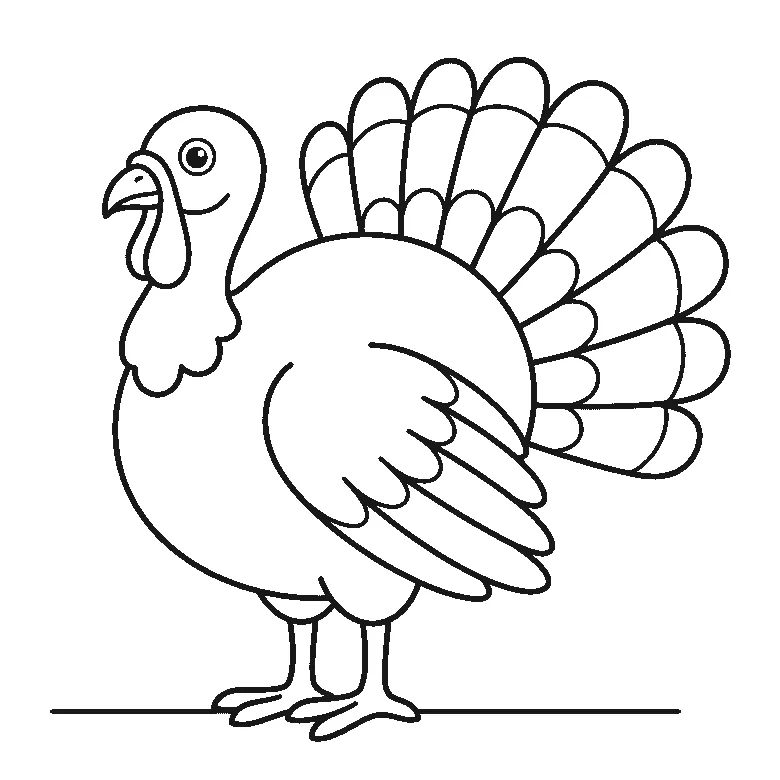
Turkey colouring page
One turkey in profile with a wide fanned tail and a folded wing, drawn large on an A4 sheet.
Colouring outline drawn by us.


